


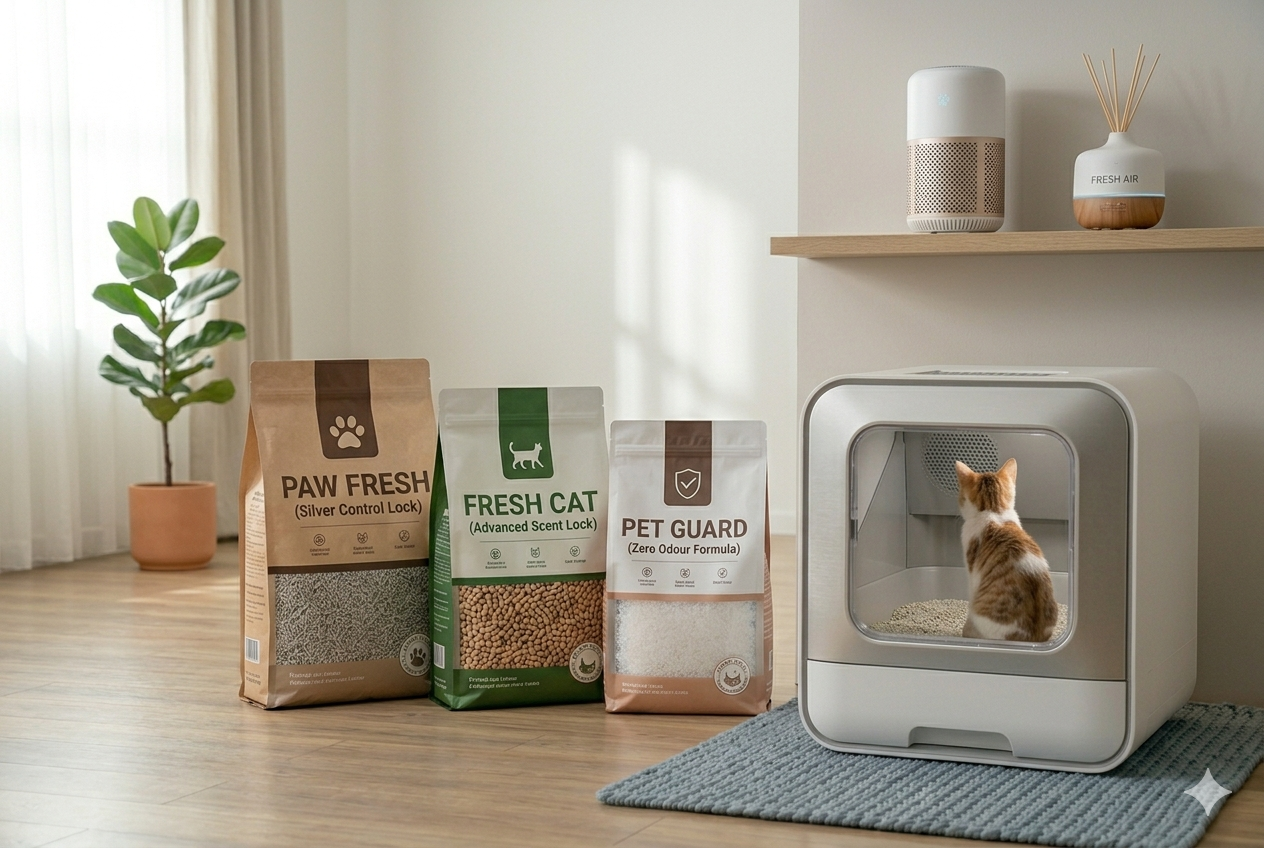

You scoop the litter box. You wash your hands. You walk back into the living room — and the smell follows you.
If you have been searching for the best cat litter for odour control, you are not alone. Litter box odour is the number one complaint from cat owners across the US and Canada, and the wrong litter makes it ten times worse. The good news? The right litter can make your home smell completely normal — even with multiple cats.
We tested and ranked the top options so you do not have to. Whether you are dealing with strong urine smell, multi-cat households, or a cat that refuses to use a smelly box, this guide covers everything.
Why Some Cat Litters Control Odour Better Than Others
Not all litter is created equal. Odour control comes down to three things: absorption speed, clumping ability, and odour-neutralising ingredients.
When urine sits in litter without being absorbed quickly, bacteria start to break it down and produce ammonia — that sharp, eye-watering smell. The faster the litter absorbs and seals moisture, the less odour escapes.
Carbon, baking soda, silica crystals, and plant-based enzymes are the most effective odour-neutralising ingredients. Litters without any of these are simply masking odour with fragrance — which does not work and often irritates your cat’s respiratory system.
What to Look for in the Best Cat Litter for Odour Control
Before buying, check these five things:
1. Clumping vs Non-Clumping
Clumping litter forms tight balls around urine so it can be scooped out completely. Non-clumping absorbs but leaves urine residue in the box. For odour control, clumping almost always wins.
2. Activated Carbon or Baking Soda
These neutralise ammonia at the source rather than covering it with scent. Look for these on the ingredient list.
3. Low or No Fragrance
Heavy perfume in litter is a red flag. It means the litter cannot control odour on its own. Many cats also refuse scented litter, which creates a whole new problem.
4. Dust Level
High-dust litter coats the box, the floor, and your cat’s paws — and carries bacteria and smell further. Low-dust formulas keep odour contained.
5. Multi-Cat Formula
If you have more than one cat, a standard litter will not keep up. Multi-cat formulas have higher absorption capacity and stronger odour neutralisers.
Best Cat Litter for Odour Control — Ranked
1. Clumping Clay with Activated Carbon — Best Overall
This is the gold standard for odour control. Activated carbon absorbs ammonia molecules directly rather than masking them. The clumps form hard and tight, making scooping clean and complete. Very little odour escapes between scooping sessions.
Best for: Most cat owners, single and multi-cat homes Scoop frequency: Once daily minimum
Our Recommended Pick Clumping clay litter with activated carbon.
2. Silica Crystal Litter — Best for Low Maintenance
Silica crystals absorb urine and trap odour inside the crystal structure. One crystal litter box can last up to a month with a single cat before needing a full change. There is no scooping of urine — just solids.
The odour control is excellent for the first two to three weeks, then drops off quickly as crystals become saturated. Change the entire box on schedule and the smell stays almost completely undetectable.
Best for: Owners who prefer less frequent scooping Scoop frequency: Solids daily, full change every 3–4 weeks
Recommended Silica crystal cat litter.
3. Plant-Based or Tofu Litter — Best Natural Option
Made from soy pulp, corn, or wheat, plant-based litters use natural enzymes to break down odour-causing bacteria. They are biodegradable, flushable in most areas, and very low dust.
Odour control is strong for the first 24–48 hours. With scooping twice daily it remains very effective. Slightly less powerful than clay or silica for strong urine smell, but a great choice for cats with respiratory sensitivities.
Best for: Eco-conscious owners, cats with dust sensitivities Scoop frequency: Twice daily recommended. Plant-based tofu cat litter.
4. Multi-Cat Clumping Formula — Best for Two or More Cats
Standard clumping litter cannot keep up with two or more cats using the same box. Multi-cat formulas use double the odour-neutralising agents and higher-density clay for faster absorption.
If you have multiple cats and your home smells despite daily scooping, switching to a multi-cat formula is the single biggest improvement you can make.
Best for: Homes with 2 or more cats Scoop frequency: Twice daily
Recommended Multi-cat clumping litter.
5. Baking Soda Infused Litter — Best Budget Option
Many affordable clumping litters now include baking soda as a built-in odour neutraliser. It is not as powerful as activated carbon or silica, but it is significantly better than plain clay.
Add a light layer of pure baking soda to the bottom of the box before filling for an extra boost. This is a reliable, wallet-friendly option that works well for single-cat homes with daily scooping habits.
Best for: Budget-conscious owners with one cat Scoop frequency: Once daily
Recommended Baking soda cat litter.
Litter Comparison Table
| Litter Type | Odour Control | Scooping Frequency | Dust Level | Price Range | Best For |
|---|---|---|---|---|---|
| Clumping Clay + Carbon | ⭐⭐⭐⭐⭐ | Once daily | Low–Medium | $$ | Most households |
| Silica Crystal | ⭐⭐⭐⭐⭐ | Solids only | Very Low | $$$ | Low-maintenance owners |
| Plant-Based / Tofu | ⭐⭐⭐⭐ | Twice daily | Very Low | $$ | Eco-conscious, sensitive cats |
| Multi-Cat Formula | ⭐⭐⭐⭐⭐ | Twice daily | Low | $$ | Multi-cat homes |
| Baking Soda Clay | ⭐⭐⭐ | Once daily | Medium | $ | Budget, single cat |
The Best Way to Get Rid of Litter Box Smell — Beyond the Litter
Even the best cat litter for odour control cannot overcome poor litter box habits. These steps make a bigger difference than most people realise.
Scoop Every Day — Without Exception
Urine and faeces left in the box for more than 12 hours are the primary cause of litter box smell. Even silica crystal litter needs daily solid removal. Daily scooping is non-negotiable for odour control.
Wash the Box Monthly
Bacteria build up on the walls and floor of the litter box and no litter can neutralise them. Wash the box with warm water and a small amount of unscented dish soap once a month. Avoid bleach — it reacts with ammonia in cat urine and creates toxic fumes.
Replace the Box Every 12–18 Months
Plastic scratches over time and bacteria embed in those scratches permanently. If your box is old and the smell never fully goes away even after washing, it is time for a new one.
Use a Box with a Lid — With Caution
Covered boxes contain smell better for the owner but can trap odour for the cat. Many cats refuse to use a smelly enclosed box. If you use a covered box, scoop twice daily and leave the flap open for ventilation.
Add an Air Purifier Near the Box
A small HEPA air purifier placed near the litter box catches airborne particles and ammonia. This is one of the most effective ways to reduce the smell in the surrounding room.
Recommended HEPA air purifier for pet odour.
Place the Box in a Well-Ventilated Area
Basements and enclosed bathrooms trap odour. A ventilated laundry room or utility area with some airflow makes a significant difference.
How Often Should You Change Cat Litter Completely?
Many owners scoop daily but forget about the full litter change. Here is a simple guide:
| Litter Type | Full Change Frequency | Top-Up Frequency |
|---|---|---|
| Clumping Clay | Every 2–4 weeks | Add litter as needed after scooping |
| Silica Crystal | Every 3–4 weeks (1 cat) | No top-up needed |
| Plant-Based | Every 1–2 weeks | Add litter as needed |
| Non-Clumping Clay | Every 1–2 weeks | Add litter as needed |
| Multi-Cat Formula | Every 1–2 weeks | Add litter as needed |
Fill the box to a depth of at least 3 inches. Shallow litter gives your cat nowhere to dig and bury waste, which dramatically increases smell.
Best Odour-Free Cat Litter for Cats with Sensitivities
Some cats are sensitive to dust, fragrances, or certain materials. If your cat sneezes near the box, paws at their face after using it, or avoids the box entirely, the litter itself could be the problem.
Low-dust options work best for sensitive cats: silica crystal, plant-based, and paper pellet litters all produce very little airborne dust. Avoid any litter marketed as “fresh scent” or “lavender” — these artificial fragrances are the biggest respiratory irritants.
If your cat has asthma, your vet may recommend unscented paper pellet litter as the safest option.
For more on cat health warning signs, read our guide on how to tell if your cat is sick.
Multi-Cat Homes — What Actually Works
The general rule is one litter box per cat plus one extra. With two cats you need three boxes minimum. With three cats, four boxes.
Even with multiple boxes, daily scooping is essential. In multi-cat homes, boxes can reach capacity quickly — especially if one cat has a urinary issue or drinks more water than average.
If one of your cats is drinking more water than normal, it is worth reading our guide on is it normal for cats to drink a lot of water — increased thirst can sometimes indicate a health issue that affects how often and how much a cat urinates.
Place boxes in different locations. Cats in multi-cat homes sometimes guard boxes, causing other cats to hold on longer — which increases the concentration of urine and worsens odour.
Signs Your Current Litter Is Not Working
- You can smell the box from another room within a few hours of scooping
- Your cat has started going outside the box
- The smell returns within 12 hours even after a full litter change
- There is dust covering the floor and surfaces around the box
- Your cat paws at their face or sneezes after using the box
If any of these sound familiar, it is time to switch litter types entirely — not just brands.
Frequently Asked Questions
What is the best cat litter for strong urine smell? Activated carbon clumping clay or silica crystal litter are the strongest options for controlling urine odour. Both neutralise ammonia at the source rather than masking it.
Is no odour cat litter actually possible? With the right litter, daily scooping, and a clean box, odour can be reduced to nearly undetectable levels. Silica crystal and activated carbon litters come closest to true odour elimination.
What is the best way to get rid of litter box smell in a small apartment? Use silica crystal litter, scoop solids daily, add a small HEPA air purifier near the box, and place the box in the most ventilated spot available. Avoid covered boxes in small spaces unless you scoop twice daily.
Can I mix baking soda into cat litter? Yes. Sprinkling a thin layer of plain baking soda at the bottom of the box before adding litter gives an additional odour-neutralising boost without harming your cat.
Why does my litter box still smell after scooping? Bacteria embedded in old plastic scratches, saturated litter that has not been fully replaced, or insufficient litter depth are the three most common causes. Try a complete clean, full litter replacement, and check the box for deep scratches.
How many litter boxes do I need to control odour? One per cat plus one extra. With daily scooping and the right litter, this setup keeps odour under control even in multi-cat homes.
Conclusion
The best cat litter for odour control is not the most expensive one — it is the one that matches your cat’s needs, your household size, and your scooping routine.
For most cat owners, activated carbon clumping clay hits the sweet spot of strong odour control, easy scooping, and consistent performance. Multi-cat homes should go straight to a multi-cat formula. Low-maintenance owners will love silica crystal. Eco-conscious owners should look at plant-based options.
Whatever you choose, pair it with daily scooping, a monthly box wash, and a full litter change on schedule — and your home will smell completely normal.
For more cat care advice, read our guides on how often should you bathe a cat, why is my cat shedding so much, and best cat food for indoor cats.
Always consult your vet if your cat’s litter box habits change suddenly — it can be an early sign of a health issue.
Also Read:
- Why Does My Cat Sleep So Much?
- Is It Normal for Cats to Drink a Lot of Water?
- How to Tell If Your Cat Is Sick
- Best Brush for a Long-Haired Cat
- How to Clean Cat Ears at Home