
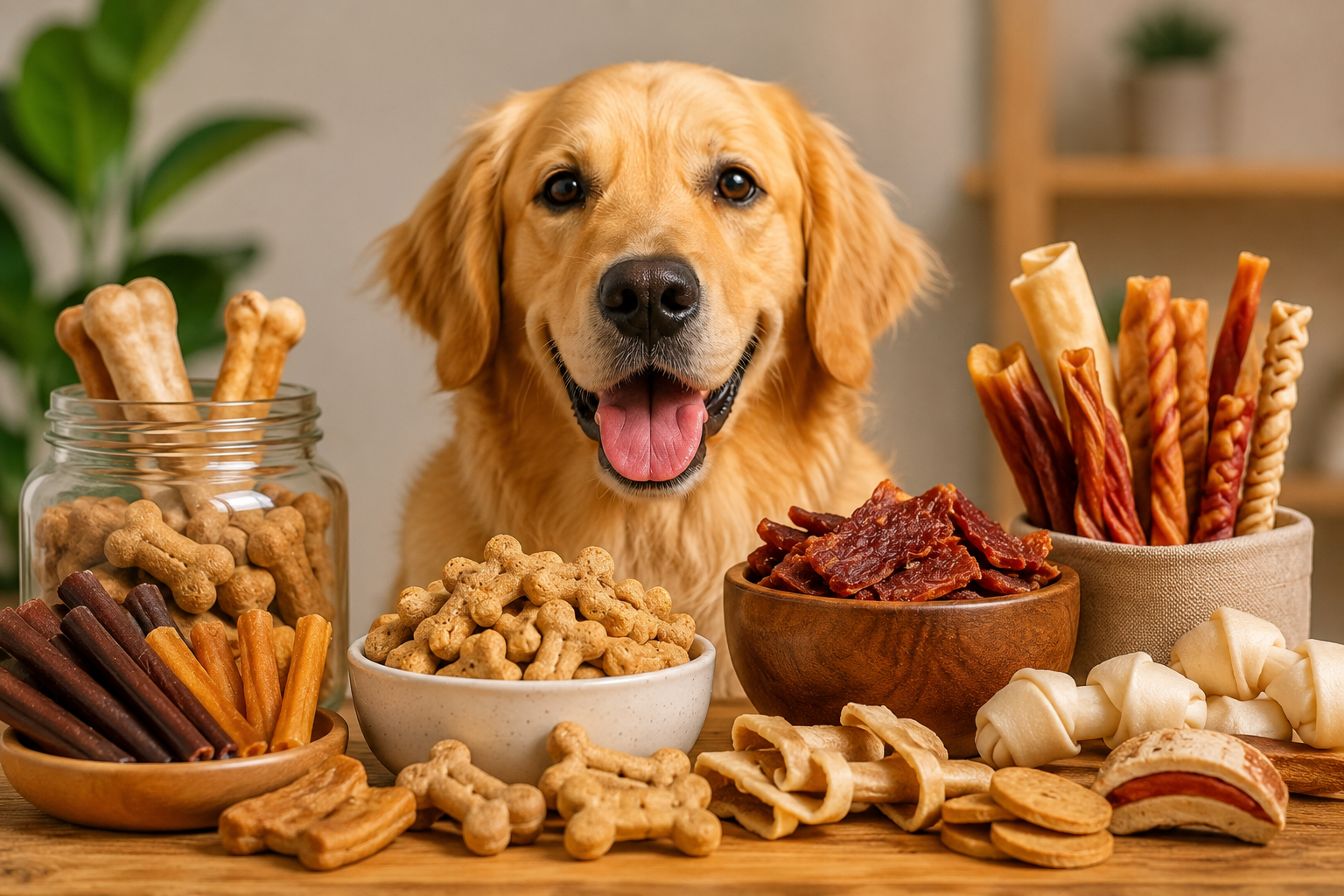

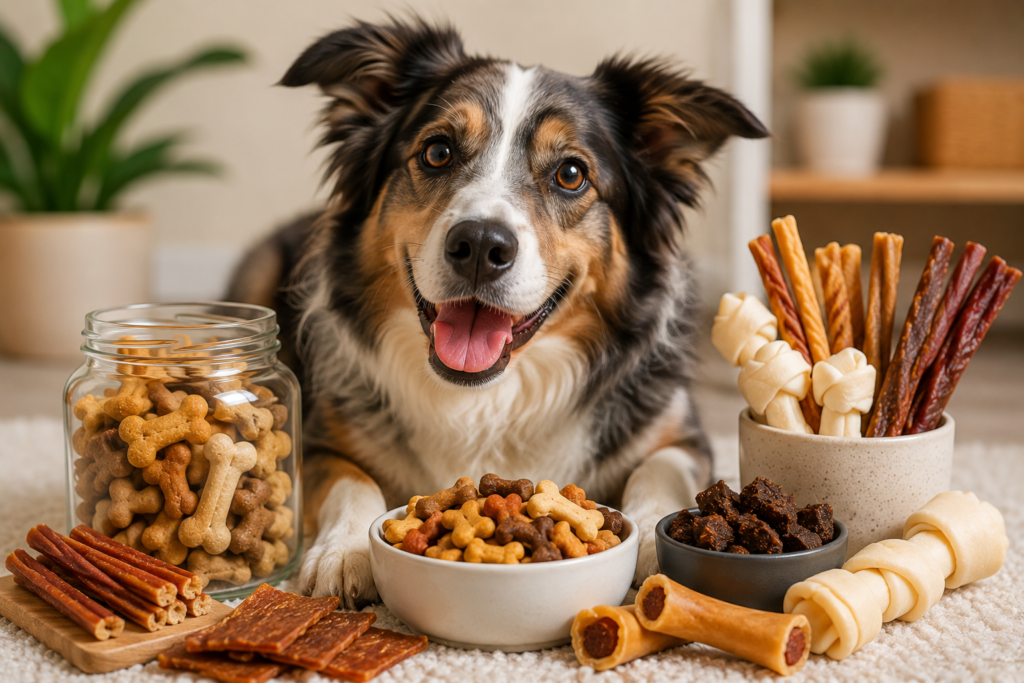
You say the word “treat” — barely above a whisper, sometimes just mouthing it — and your dog materializes from another room, tail going, ears up, sitting before you have even finished the sentence. It is one of the most reliable reactions in the entire animal kingdom, and it never gets old.
But not all treats are created equal. Some are genuinely good for your dog. Some are mostly sugar, fillers, and marketing. Some are perfect for training. Others are better as an occasional, slow-savored chew. This guide breaks down exactly what to look for, which treats work best for which purpose, and how to make treat time something that is not just fun — but actually good for your dog too.
My dog loves these chicken jerky treats! They’re healthy and real ingredients. He stays happy and well-fed.
Why Do Dogs Get So Excited About Treats?
Before getting into the “best of” lists, it is worth understanding why this reaction is so universal and so intense — because it explains almost everything about how to use treats effectively.
It is Pavlovian, and it is powerful. Dogs learn word-reward associations extremely fast, often after just a handful of repetitions. Once “treat” is linked to something genuinely rewarding, hearing the word alone triggers a dopamine response before the treat even appears — which is why your dog is already excited at the sound, not just the sight, of what is coming.
Dogs have a remarkably strong sense of smell tied to food anticipation. Even before you open the bag or the jar, the sound cue combined with faint residual scent in the air primes their expectation. This is also why the crinkle of a bag or the specific sound of a particular container often gets the same reaction as the word itself.
Treats tap into a dog’s core motivational drivers. Food is one of the most powerful primary reinforcers in dog behavior — alongside play and affection. This is exactly why treats are the backbone of virtually all modern positive reinforcement training.
The excitement itself is a sign of a healthy, secure relationship. A dog that responds enthusiastically to the promise of a treat is showing trust and anticipation, not just food-drive. It is one of the small daily moments that makes dog ownership genuinely joyful — which is exactly why videos capturing this reaction are so widely loved and shared.
What Makes a Genuinely Good Dog Treat?
Real, Recognizable Ingredients
The single most important thing to look for in any dog treat is a short, real ingredient list you can actually picture. A treat that lists a named protein (chicken, salmon, beef liver) first, followed by a handful of recognizable whole ingredients, is almost always a better choice than one with a long list of unpronounceable additives.
Ingredients that indicate a high-quality treat:
- A named animal protein listed first — chicken, salmon, duck, beef, or liver
- Whole food ingredients — sweet potato, pumpkin, oats, blueberries, carrots
- Natural preservatives — mixed tocopherols (vitamin E) or rosemary extract
Ingredients worth avoiding or limiting:
- Artificial colors and flavors — provide no nutritional value and offer no benefit to your dog
- Propylene glycol — a softening agent that keeps treats chewy but is unnecessary and best avoided
- Excessive sugar, corn syrup, or molasses — common in soft training treats to boost palatability, but nutritionally empty
- Vague terms like “meat by-product” or “animal digest” — lower quality and inconsistent sourcing
Recommend a specific single-ingredient or limited-ingredient treat here.
Appropriate Size and Texture for the Purpose
A treat’s size and texture should match what it is being used for — this matters more than most owners realize.
For training: small, soft, low-calorie pieces that can be delivered and consumed in under two seconds, so your dog’s focus returns to you immediately rather than lingering on chewing.
For long-lasting enjoyment: firmer, longer-lasting chews that keep a dog occupied for 15–30 minutes — useful for calming anxious energy or providing enrichment during a busy period at home.
For dental support: textured treats specifically designed to scrape plaque as your dog chews, distinct from soft treats that offer no dental benefit at all.
Calorie Awareness
Treats should never make up more than about 10% of your dog’s total daily caloric intake — a guideline recommended by veterinary nutritionists across the board. This is one of the most commonly overlooked contributors to unwanted weight gain in dogs, since treats are often given generously throughout the day without being counted against the day’s total food.
Practical tip: for dogs in active daily training, break treats into smaller pieces than the package suggests, or use a portion of your dog’s regular kibble as a “treat” during training sessions to avoid excess calories entirely.
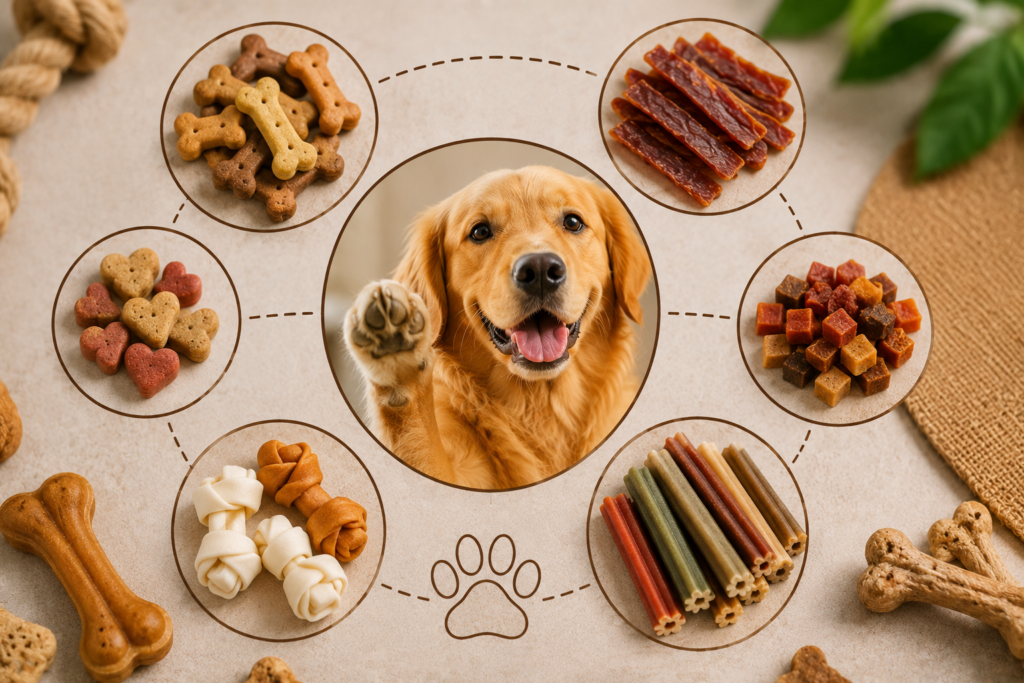
Best Treats by Purpose
Best Training Treats
Training treats have a very specific job: deliver a fast, high-value reward that keeps your dog motivated through repetition without filling them up or slowing down the session.
What to look for:
- Small, soft pieces that can be broken smaller if needed
- Low calorie count per piece — ideally under 3–5 calories per treat for frequent-use training sessions
- Strong smell and flavor — high-value treats like real meat, cheese, or liver-based options tend to hold attention better than biscuit-style treats during high-distraction training
Recommend a specific soft training treat here.
Best Long-Lasting Chews
For dogs that need mental stimulation, calming activity, or dental exercise, a longer-lasting chew serves a completely different purpose than a training treat.
What to look for:
- Appropriate firmness for your dog’s size and chewing strength — overly hard chews can risk tooth fractures in aggressive chewers
- Single-ingredient options — bully sticks, dehydrated sweet potato, or single-protein jerky strips are simple, digestible, and widely well-tolerated
- Supervised use — always monitor long-lasting chews, particularly with pieces that can break into smaller swallowable chunks toward the end
Recommend a specific long-lasting natural chew here.
Best Dental Treats
Dental treats are designed with texture and shape specifically to reduce plaque and tartar buildup as your dog chews — a genuinely useful category when chosen well.
What to look for:
- Veterinary Oral Health Council (VOHC) acceptance seal — this is the most reliable indicator that a dental treat has actual evidence behind its plaque-reduction claims, rather than just marketing
- Appropriate size for your dog’s mouth — a dental treat that is swallowed too quickly provides little to no dental benefit
Recommend a specific VOHC-accepted dental treat here.
Best Treats for Dogs With Sensitive Stomachs
If your dog has a sensitive stomach — something we cover in full detail in our complete guide to food for sensitive stomach dogs — treat selection matters just as much as food selection. Treats are exactly the kind of “extra” that commonly triggers flare-ups in otherwise well-managed sensitive dogs.
What to look for:
- Single named protein, matching whatever protein source is already working well in your dog’s main diet
- No artificial additives, and minimal ingredients overall
- Limited quantity — treats should be introduced one at a time when testing tolerance, never multiple new treats at once
Recommend a specific limited-ingredient sensitive stomach treat here.
Best Freeze-Dried and Single-Ingredient Treats
Freeze-dried raw treats — often single-ingredient options like freeze-dried liver, salmon, or chicken breast — have grown enormously in popularity, and for good reason. They retain much of the nutritional profile of raw meat while being shelf-stable and easy to handle.
What to look for:
- 100% single-ingredient labeling — no fillers or additives at all
- Sourced from a reputable manufacturer with third-party testing for pathogens, since freeze-dried raw products carry slightly higher handling considerations than cooked treats
Best Treats by Life Stage
Best Puppy Treats
Puppies need treats that are appropriately sized for small mouths, low in calories relative to their tiny stomachs, and soft enough to avoid any risk to still-developing teeth.
What to look for:
- Extra-small, soft pieces appropriate for a puppy’s mouth size
- Labeling appropriate for growth — some treats specify suitability for puppies specifically
- Avoid very hard chews until adult teeth are fully in, typically around 6 months of age
Best Adult Dog Treats
Adult dogs benefit from a mix of training treats for ongoing reinforcement and occasional long-lasting chews for enrichment — consistency in ingredient quality matters more than variety at this stage.
Best Senior Dog Treats
Senior dogs often have reduced dental health, slower metabolisms, and sometimes joint or digestive sensitivities that treats should account for.
What to look for:
- Softer textures to accommodate dental wear or missing teeth
- Lower calorie density, since senior dogs are often less active and more prone to weight gain
- Functional treats — some senior-specific treats include joint-supporting ingredients like glucosamine and chondroitin, providing a small additional benefit alongside the reward itself
Recommend a specific senior/joint-support treat here.
Treats by Breed Size
| Breed Size | Best Treat Traits | Watch Out For |
|---|---|---|
| Toy & Small (under 15 lbs) | Very small pieces, soft texture, low calorie count per piece | Overfeeding — small dogs hit their daily calorie limit quickly |
| Medium (15–50 lbs) | Standard training sizes, moderate chew firmness | Balancing treat calories with regular meals during active training |
| Large & Giant (50+ lbs) | Larger, more durable chews; higher-calorie training treats acceptable | Chew durability — large, powerful chewers can break down treats meant for smaller dogs too quickly, creating choking risk |
How Many Treats Is Too Many?
A simple, reliable guideline: treats should never exceed roughly 10% of your dog’s total daily calories. For most adult dogs of average size, this typically works out to somewhere between 3 and 5 small training treats per day if no other treats are given, though this varies significantly with treat calorie density and your dog’s size and activity level.
Signs you may be overdoing treats:
- Gradual weight gain despite no change in regular meals
- Your dog refusing regular meals in favor of waiting for treats
- Loose stools or digestive upset that improves when treat quantity is reduced
If you are doing frequent training sessions throughout the day, the best solution is not to cut treats out — it is to make each treat smaller, or substitute a portion of your dog’s actual kibble ration as the “treat” for a portion of the session.
Homemade Treats — A Simple, Safe Option
For owners who want full ingredient control, simple homemade treats are easy to make and let you avoid any concerns about additives entirely.
A basic, vet-friendly homemade treat recipe:
- 1 cup plain pumpkin puree (not pumpkin pie filling)
- 2 cups oat flour
- 1 egg
- Mix, roll thin, cut into small shapes, and bake at 350°F (175°C) for 20–25 minutes until firm
This produces a simple, digestible treat appropriate for most dogs, including many with sensitive stomachs, since it avoids common allergens like chicken, beef, or dairy entirely.
Ingredients to never use in homemade dog treats: chocolate, xylitol (a sugar substitute toxic to dogs, often found in peanut butter — always check labels), grapes or raisins, onions, or garlic. All of these are toxic to dogs even in small amounts.
FAQ — Best Dog Treats
Q: What is the healthiest treat for dogs? A: A single-ingredient, minimally processed treat — like freeze-dried liver, plain dehydrated sweet potato, or a limited-ingredient training treat with a named protein first — is generally the healthiest option, since it avoids fillers, artificial additives, and unnecessary sugar.
Q: How many treats a day is safe for a dog? A: As a general guideline, treats should make up no more than 10% of your dog’s total daily calories. For most adult dogs, this is roughly 3–5 small training treats per day if no other treats are given, though this varies by size and treat calorie density.
Q: What treats are best for training? A: Small, soft, low-calorie treats that can be consumed in under two seconds work best for training, since they keep your dog’s attention on you rather than on chewing. High-value options like real meat, cheese, or liver-based treats tend to hold focus best during distracting environments.
Q: Are dental treats actually effective? A: Dental treats with the VOHC (Veterinary Oral Health Council) acceptance seal have documented evidence of reducing plaque and tartar. Treats without this seal may still offer some mechanical cleaning benefit through chewing, but the evidence behind their specific claims is much less reliable.
Q: Can dogs with sensitive stomachs have treats? A: Yes — but treat selection matters just as much as food selection for these dogs. Choose single-ingredient or limited-ingredient treats matching a protein your dog already tolerates well, and introduce any new treat one at a time in small amounts to monitor tolerance.
Q: What human foods make safe treats for dogs? A: Plain cooked chicken, small pieces of carrot or apple (no seeds), plain pumpkin puree, and small amounts of plain unsweetened yogurt are all safe, healthy options many dogs enjoy as occasional treats. Always avoid chocolate, grapes, raisins, onions, garlic, and anything containing xylitol.
Conclusion
The best dog treats combine real, recognizable ingredients with the right size, texture, and calorie count for their specific purpose — whether that is fast-paced training, long-lasting enrichment, dental support, or simply a small daily moment of joy. Treats given thoughtfully, in appropriate amounts, are one of the simplest ways to support both your dog’s health and the bond you share.
And that reaction — the one where your dog seems to materialize out of thin air the moment they hear the word — is not just cute. It is a small, daily reminder of how much they trust you, and how much they genuinely look forward to the good things you bring into their day.
Also read: Best food for dogs with sensitive stomachs | Why does my dog eat grass? | Why does my dog lick his paws? | How often should I bathe my dog? | How long can a dog be left alone?