


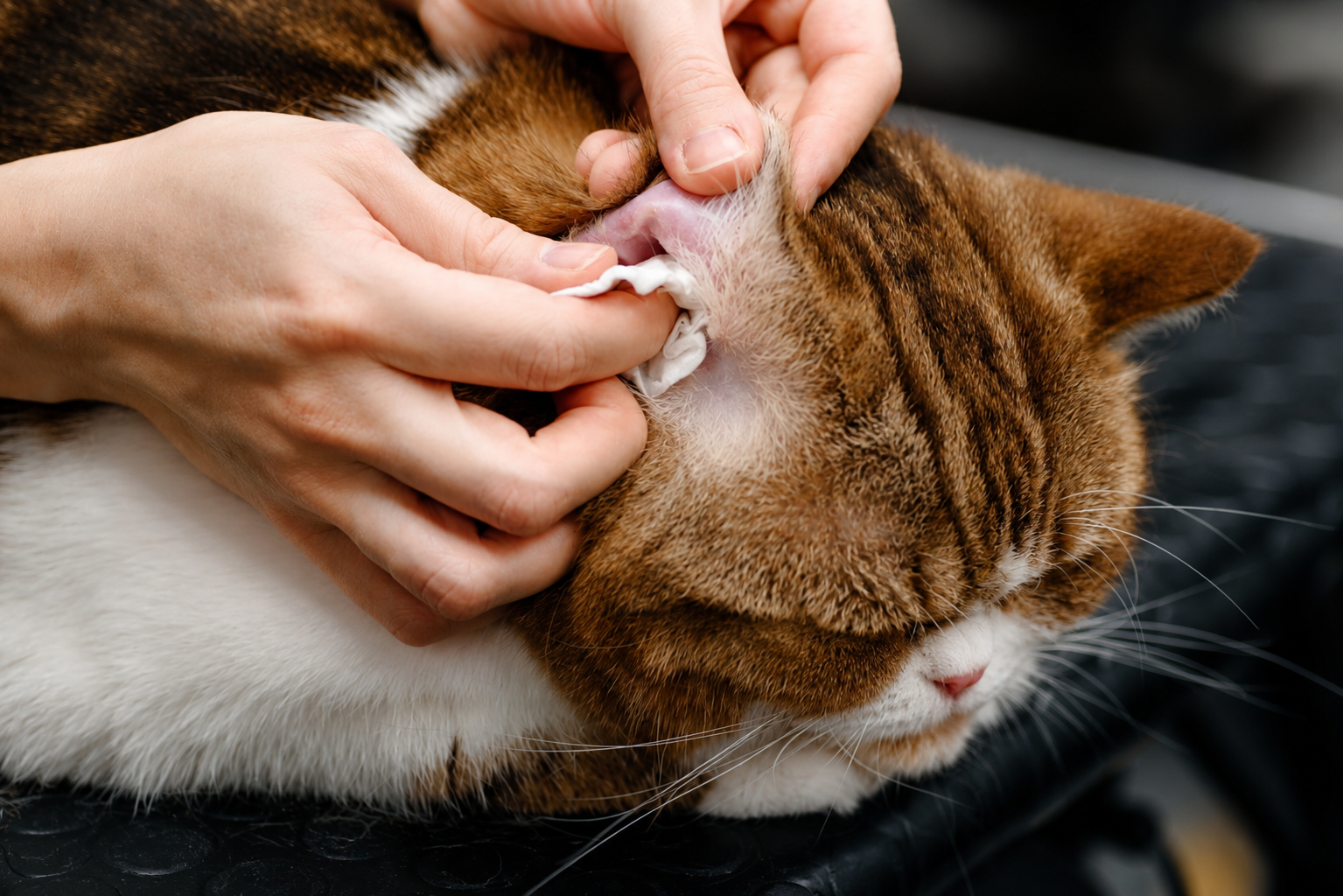

You notice your cat shaking their head more than usual. Or scratching at one ear repeatedly. Or you take a closer look and see something dark and waxy building up inside. You know something needs to be done — but the idea of cleaning your cat’s ears at home feels a little daunting if you have never done it before.
How to clean cat ears at home is simpler than most owners expect — when you know the right technique, the right products, and the right moment to stop and call your vet instead. This guide walks you through everything: how to tell if your cat’s ears need cleaning, a step-by-step cleaning method, how to identify and clean ear mites, natural remedies, and the warning signs that mean home cleaning is not enough.
Do Cat Ears Actually Need Cleaning?
Before reaching for a cotton ball, it is worth understanding whether your cat’s ears even need to be cleaned — because for many healthy cats, the answer is not very often.
Healthy cat ears are largely self-cleaning. A cat’s ear canal is designed to move debris and wax toward the outer ear naturally. A healthy ear looks pale pink, has minimal visible wax, no odour, and your cat shows no interest in scratching or shaking it.
However, certain cats need more frequent ear attention than others:
- Cats with large, open ears — such as Devon Rex or Cornish Rex — tend to accumulate wax faster
- Cats with folded ears — such as Scottish Folds — need extra monitoring as their ear structure limits airflow
- Cats that go outdoors accumulate more environmental debris
- Cats prone to ear mites or recurrent ear infections need regular monitoring
- Kittens in their first months sometimes need gentle cleaning as their ear canals mature
The rule is simple: clean your cat’s ears when they need it — not on a fixed schedule for its own sake. Over-cleaning a healthy ear removes protective wax and can irritate the delicate skin inside the canal.
What You Need to Clean Cat Ears at Home
Gather everything before bringing your cat in. Having to search for supplies mid-session while holding a wriggling cat is a recipe for an abandoned attempt.
You will need:
- A veterinarian-approved cat ear cleaning solution — never water, hydrogen peroxide, or alcohol
- Cotton balls or gauze pads — never cotton swabs (Q-tips) inside the ear canal
- Clean, dry towels — one to wrap your cat if needed, one for cleanup
- Treats — high value, reserved specifically for ear cleaning sessions
- A second person to help hold the cat — especially for your first few attempts
What to avoid:
- Cotton swabs inside the ear canal — they push debris deeper and risk puncturing the eardrum
- Hydrogen peroxide — too harsh for the sensitive skin inside a cat’s ear
- Rubbing alcohol — causes pain and irritation on delicate ear tissue
- Water — does not break down wax and can remain in the canal, creating conditions for infection
- Essential oils or olive oil as a regular cleaning solution — these are not appropriate substitutes for a proper ear cleaner
A good cat ear cleaning solution contains gentle agents that dissolve wax and debris, dry quickly, and have a neutral pH appropriate for feline ear tissue. Ask your vet for a recommendation, or look for one available at a pet store like Chewy or PetSmart that is specifically labelled for cats.
How to Clean Cat Ears at Home — Step by Step
Step 1 — Choose the Right Moment
Never attempt ear cleaning when your cat is active, agitated, or mid-play. Choose a moment when they are naturally calm and relaxed — after a meal, after a nap, during a quiet period in the day.
If your cat has never had their ears cleaned before, spend a few sessions simply touching their ears gently, rewarding with a treat, and walking away — before attempting any actual cleaning. Familiarity with the handling makes the real session significantly easier.
Step 2 — Position Your Cat Securely
Sit on the floor or a low chair with your cat in front of you or on your lap facing away. For cats that are likely to squirm, wrapping them gently but firmly in a towel — a technique known as the “cat burrito” — leaves only their head exposed and prevents scratching.
If you have a second person available, have them hold the cat’s body while you work. Two calm people produce far better results than one person struggling alone.
Step 3 — Examine the Ear First
Before applying anything, take a close look at the ear in good light. A healthy ear is pale pink, with minimal wax and no smell.
Do not proceed with home cleaning if you see:
- Thick, dark brown or black discharge
- A strong, unpleasant odour
- Redness, swelling, or rawness inside the ear
- Your cat flinching or crying when you touch the ear
- Any visible wound or bleeding
These signs indicate infection, ear mites, or another condition that requires veterinary diagnosis before any home treatment. Cleaning an infected ear without proper diagnosis can make things worse.
Step 4 — Apply the Ear Cleaning Solution
Hold the ear flap (pinna) gently upward to straighten the ear canal. Place the tip of the ear cleaner bottle at the opening of the canal — do not insert it deeply. Squeeze enough solution to fill the canal — typically 5 to 10 drops, but follow your specific product’s instructions.
Release the ear flap immediately after applying the solution.
Step 5 — Massage the Base of the Ear
With the solution inside, fold the ear flap down gently and massage the base of the ear firmly for 20 to 30 seconds. You will hear a soft squelching sound — this is the solution working through the wax and debris in the lower canal.
This massaging step is the most important part of the process. The solution needs time and movement to break down debris before your cat shakes it out.
Step 6 — Let Your Cat Shake
Release your cat and let them shake their head. This is normal and expected — the shaking brings loosened debris and solution up from the lower canal toward the outer ear where you can access it. Have a towel ready — the shake can distribute solution and debris across a surprising radius.
Step 7 — Wipe the Outer Ear
Using a cotton ball or gauze pad, gently wipe the visible parts of the outer ear — the folds and crevices of the pinna and the entrance to the canal. Only clean what you can see. Never push cotton into the ear canal.
Use a fresh cotton ball for each wipe until it comes away without significant debris. For most routine cleanings, two to three wipes are sufficient.
Step 8 — Reward Immediately
The moment the cleaning is done — even if it was not perfect — give your cat a high-value treat. Immediately. The reward must come before your cat has time to shake off the experience and associate it with stress.
With consistency, most cats go from actively resisting ear cleaning to merely tolerating it. Some cats — particularly those introduced to handling early — actually settle quite readily once the routine becomes familiar.
How to Clean Ear Mites in Cats at Home
Ear mites — Otodectes cynotis — are one of the most common causes of ear problems in cats, particularly in kittens and in cats that go outdoors or have contact with other animals.
How to Tell If Your Cat Has Ear Mites
Ear mites produce a very distinctive type of debris that is different from normal wax. Signs of ear mites include:
- Dark brown or black discharge that resembles coffee grounds or dried dirt
- Intense scratching at the ears — often leaving marks or hair loss around the ear
- Frequent, vigorous head shaking
- Redness and irritation inside the ear canal
- A slightly musty smell from the ears
- In severe cases — crusting, scabbing, or a haematoma (blood blister) on the ear flap from repeated scratching
The coffee-grounds appearance of the discharge is the most distinctive indicator. Normal earwax is tan to light brown and waxy. Ear mite debris is darker, drier, and more crumbly.
Can You Clean Ear Mites at Home?
Cleaning alone will not eliminate ear mites — it removes the debris they produce, but not the mites themselves. Effective ear mite treatment requires a miticide — a product that kills the mites directly. These are available as prescription treatments from your vet, or as over-the-counter options from pet stores.
The correct process for ear mites:
Step 1 — Confirm with your vet. Before treating at home, a vet visit to confirm ear mites versus a yeast or bacterial infection is strongly recommended. The treatments are very different — treating a bacterial infection as if it were ear mites, or vice versa, delays the right treatment and prolongs your cat’s discomfort.
Step 2 — Clean the ears first. Using a veterinarian-approved ear cleaner, clean the ears following the steps above to remove as much debris as possible. This allows the mite treatment to reach the skin surface more effectively.
Step 3 — Apply the mite treatment. Use a vet-recommended or veterinarian-formulated ear mite treatment according to the product instructions. Most treatments are applied directly into the ear canal once or twice and repeated over several weeks to catch mites at different life cycle stages.
Step 4 — Treat all pets in the household. Ear mites spread rapidly between animals. If one cat has ear mites, every cat and dog in the home needs to be treated simultaneously — even if they are showing no symptoms yet. Treating only the affected animal almost always leads to re-infestation.
Step 5 — Treat the environment. Ear mites can survive briefly in bedding and soft furnishings. Wash all pet bedding in hot water and vacuum soft furniture during the treatment period.
According to the American Association of Feline Practitioners, ear mites are highly contagious between cats and should be confirmed by a vet before home treatment begins — particularly because the symptoms overlap significantly with those of ear infections.
How to Clean Ear Mites in Kittens
Kittens are particularly vulnerable to ear mites — both because their immune systems are still developing and because they are more likely to have been exposed through their mother or littermates.
The cleaning process for kittens is the same as for adult cats — but gentler, with less solution, and with extra attention to warmth and calmness during and after. Very young kittens under 8 weeks should be seen by a vet before any home ear treatment. Their ear canals are smaller, more delicate, and more easily damaged by incorrect technique.
How to Clean Cat Ears Naturally — Home Remedies
Many cat owners ask whether there are natural alternatives to commercial ear cleaners. Here is an honest assessment:
What Has Some Basis in Use
Diluted apple cider vinegar: A very diluted solution (1 part apple cider vinegar to 1 part water) has been used by some owners as a mild ear cleaner. However, it should never be used if there is any redness, rawness, or irritation inside the ear — it will cause significant stinging and pain on broken skin.
Coconut oil (fractionated): A small amount of liquid coconut oil has been used to soften debris for easier removal. It is gentle on the skin but does not dissolve wax as effectively as a commercial cleaner and can leave residue.
What to Avoid
Any essential oils — tea tree, eucalyptus, peppermint — are toxic to cats and must never be used inside or around the ears. Olive oil and vegetable oils used regularly can create conditions for yeast growth inside the ear canal. Hydrogen peroxide and rubbing alcohol cause pain and damage.
The Honest Recommendation
A veterinarian-formulated ear cleaning solution costs very little and is significantly safer and more effective than any home remedy. For routine maintenance cleaning of a healthy ear, it is the right tool. Natural remedies are not appropriate substitutes for proper treatment of ear mites, infections, or any condition with discharge or inflammation.
How Often Should You Clean Your Cat’s Ears?
For most healthy cats — once a month is a reasonable baseline for checking the ears and cleaning only if needed. Many healthy cats with clean ears will go months without needing any cleaning at all.
Clean more frequently for:
- Cats recovering from an ear infection or mite infestation — as directed by your vet
- Cats with large, open ear canals that accumulate wax faster
- Outdoor cats that pick up more environmental debris
- Cats mid-treatment for ear mites — the cleaning schedule will be part of the treatment protocol
Never clean more than your vet recommends during active treatment — over-cleaning an already inflamed ear canal can delay healing.
Warning Signs That Mean a Vet Visit, Not Home Cleaning
Knowing when to stop and call your vet is as important as knowing how to clean. Home cleaning is appropriate for maintenance — it is not a treatment for infection or serious conditions.
See your vet if your cat has:
- Discharge that is thick, dark, or has a strong odour
- A head tilt that persists — this can indicate a middle or inner ear problem
- Loss of balance or walking in circles — vestibular disease or inner ear infection
- Visible swelling inside the ear canal
- A haematoma — a blood-filled swelling of the ear flap from repeated scratching
- No improvement after home treatment for ear mites
- Symptoms that keep returning after treatment
As we covered in our guide to how to tell if your cat is sick — ear-related symptoms like persistent head shaking, scratching, and tilting are behavioural changes worth acting on promptly. And as we discussed in our guide to how often cats should see the vet — annual wellness exams include an ear check that catches problems before they become serious.
Quick Reference — Cat Ear Cleaning at Home
| Situation | What to Do | Urgency |
|---|---|---|
| Light tan wax, no smell | Clean with ear solution | Routine — monthly check |
| Dark coffee-ground debris | Likely ear mites — vet first, then treat | Vet within 48 hours |
| Strong odour from ear | Possible infection — do not clean | Vet within 24 hours |
| Redness and swelling | Possible infection or injury | Vet within 24 hours |
| Head tilt or loss of balance | Inner ear issue — do not clean | Vet same day |
| Frequent scratching, no debris visible | Early mites or allergy | Vet within 48 hours |
| Healthy pink ear, no wax | No cleaning needed | Check again next month |
FAQ — How to Clean Cat Ears at Home
Q: How do I clean my cat’s ears at home if they won’t stay still? A: Wrap your cat securely in a towel — the cat burrito method — leaving only their head exposed. Work quickly and calmly with a second person holding the body. Keep the first session very short, reward immediately with a treat, and build up tolerance over multiple sessions. Forcing a full cleaning with a struggling cat causes stress that makes every future attempt harder.
Q: How to clean cat ears naturally without a commercial cleaner? A: For light surface cleaning of a healthy outer ear, a dry cotton ball or slightly damp gauze pad is sufficient for visible wax on the outer folds. For anything inside the canal, a veterinarian-formulated cleaner is strongly recommended over home remedies. No natural alternative matches the safety and effectiveness of a proper ear cleaner for canal cleaning.
Q: How often should I clean my cat’s ears at home? A: Check monthly and clean only when there is visible wax or debris worth removing. Many healthy cats need very little routine ear cleaning. Cats being treated for ear mites or infections should follow the cleaning schedule recommended by their vet.
Q: Can I use water to clean my cat’s ears? A: No. Water does not break down ear wax effectively and can remain inside the canal, creating warm and moist conditions ideal for bacterial or yeast growth. Always use a veterinarian-approved ear cleaning solution.
Q: How to clean ear mites in kittens at home? A: Kittens under 8 weeks should be seen by a vet before any home treatment. For older kittens, clean gently with a cat-appropriate ear cleaner first, then apply a kitten-safe ear mite treatment as directed. Treat all animals in the household simultaneously. Follow up with your vet if symptoms do not improve within one to two weeks.
Q: What does healthy cat earwax look like vs ear mites? A: Healthy earwax is light tan to pale brown, soft, and minimal. Ear mite debris is dark brown or black, dry, and crumbly — resembling coffee grounds. Any discharge that is dark, excessive, or has a strong smell is a sign that something is wrong and a vet should be consulted before home treatment begins.
Conclusion
How to clean cat ears at home is a skill every cat owner should have — and it is simpler than it looks once you have the right technique and the right tools. Clean gently, use only a veterinarian-approved ear solution, never insert anything into the canal, reward every session consistently, and above all — know when home cleaning is the right response and when a vet visit is needed instead.
Most ear problems in cats are very manageable when caught early. Regular monthly ear checks — even when no cleaning is needed — keep you informed about what is normal for your individual cat and help you notice when something has changed. That awareness, more than anything else, is what protects your cat’s ear health over the long term.
Also read: How often should you bathe a cat? | Best brush for a long-haired cat | How to tell if your cat is sick | How often should I take my cat to the vet? | Why is my cat not eating? | How long do indoor cats live?