
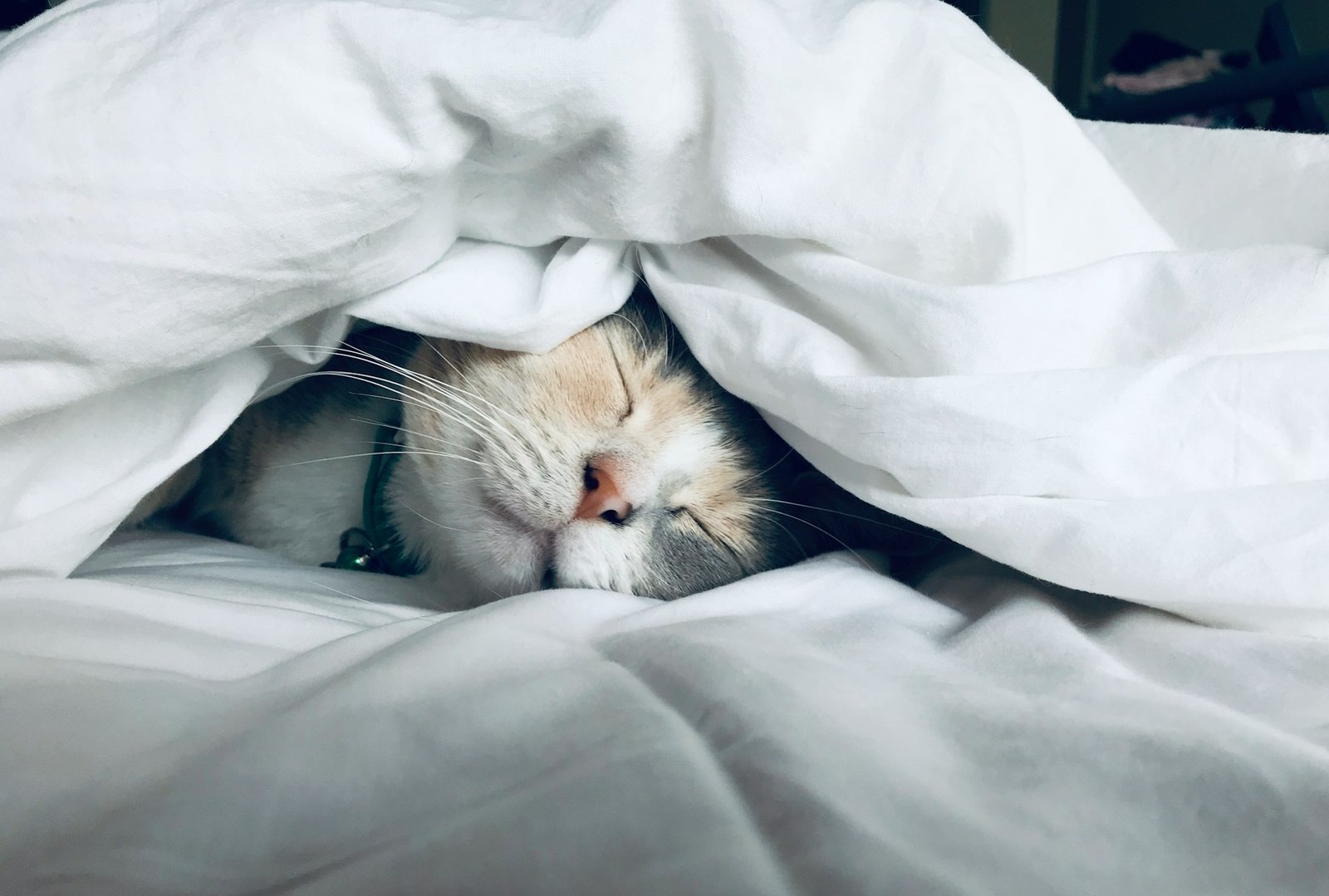

You glance over at your cat sound asleep Again. You could have sworn they were just sleeping an hour ago. And the hour before that. You find yourself wondering: is this normal? Is something wrong? Or is my cat just extraordinarily lazy?
The truth is, your cat’s sleep habits are completely natural and fascinating once you understand the science behind them. This guide explains exactly why cats sleep so much, how much sleep is normal at every life stage, what your cat’s sleeping positions and patterns reveal, and when excessive sleep is actually a warning sign worth a vet visit.
How Much Do Cats Sleep Per Day The Numbers
The average cat sleeps 12 to 16 hours per day. Some cats particularly older cats and kittens sleep as much as 20 hours per day.
To put that in perspective: if your cat lives to 15 years, they will have spent approximately 10 of those years asleep.
Average Cat Sleep Hours by Life Stage
| Life Stage | Average Sleep Per Day |
|---|---|
| Kittens (0-6 months) | 16-20 hours |
| Young adult cats (1-3 years) | 12-16 hours |
| Adult cats (3-10 years) | 12-14 hours |
| Senior cats (10+ years) | 16-20 hours |
So when you ask “how much do cats sleep?” the answer is: a lot. And that is perfectly normal.
Why Do Cats Sleep So Much? The Real Reasons
Reason 1 – Cats Are Hardwired as Predators
The most important reason cats sleep so much is their biology. Cats are obligate carnivores and natural predators even your pampered indoor house cat carries the genetic programming of a wild hunter.
Hunting requires short, explosive bursts of intense energy stalking, pouncing, chasing. This kind of activity is metabolically expensive. To recover and prepare for the next hunt, predators need long rest periods. Lions the most famous of all feline predators sleep 18-20 hours per day. Your domestic cat shares this same fundamental sleep strategy.
Your cat is not lazy. Your cat is conserving energy for the hunt even if the “hunt” is just pouncing on a toy mouse.
Reason 2 – Cats Are Crepuscular, Not Nocturnal
Many cat owners assume cats are nocturnal — but this is not quite accurate. Cats are crepuscular, meaning they are naturally most active at dawn and dusk. These are the times when their natural prey mice, birds, and small animals are also most active.
This means your cat’s natural sleep pattern peaks in the middle of the day and in the middle of the night which is why your cat may be bouncing off the walls at 5 AM and then completely comatose by 8 AM when you are heading to work.
Reason 3 – Cat Sleep Is Mostly Light Sleep, Not Deep Sleep
When you watch your cat sleeping, you might notice they look alert ears rotating to sounds, whiskers twitching, tail flicking occasionally. That is because most cat sleep approximately 75% is light sleep rather than deep sleep.
During this light sleep phase, your cat is resting but still monitoring their environment. Their brain is processing information. They can wake almost instantly if needed.
Deep sleep – what humans call REM sleep occurs in shorter cycles for cats, typically 6-7 minutes at a time. During deep sleep, you may notice your cat twitching, making small sounds, or moving their paws this is normal and indicates they are dreaming.
The high proportion of light sleep is another reason cats need so many total hours of rest the restorative quality of light sleep is lower than deep sleep, so more total hours are needed to achieve the same recovery.
Reason 4 – Weather and Temperature
Cat owners consistently report that their cats sleep more on cold, rainy, and grey days. This is not coincidence cats are highly sensitive to weather changes and naturally conserve energy when conditions are poor for hunting activity.
If you notice your cat sleeping more than usual on a rainy Tuesday, check the weather first before worrying about their health.
Reason 5 – Boredom
An under-stimulated indoor cat will sleep more than a mentally and physically engaged cat not because they need the sleep, but because there is nothing else interesting to do.
If your cat sleeps 18+ hours per day, seems sluggish when awake, and shows little interest in play boredom may be a contributing factor. Environmental enrichment (more on this below) can meaningfully reduce sleep hours by giving your cat something to engage with during their natural activity periods.
Do Cats Sleep at Night Or During the Day?
Both but the pattern depends on your individual cat and their environment.
Cats sleep during the day significantly more than most pet owners expect. Their crepuscular nature means midday is prime sleeping time. If you work from home and notice your cat asleep from 10 AM to 3 PM, that is completely normal cat sleeping behaviour.
Do cats sleep at night? Yes but not the same way humans do. Cats tend to have an active period around dawn (often frustratingly so for their owners) and dusk, with sleep periods at various points through the night.
Many cat owners find that cats gradually shift their sleep schedule to better match their owner’s routine particularly if the owner is the primary source of food and interaction. A cat whose owner sleeps from 11 PM to 7 AM will often adapt to sleep more during these hours, especially if encouraged.
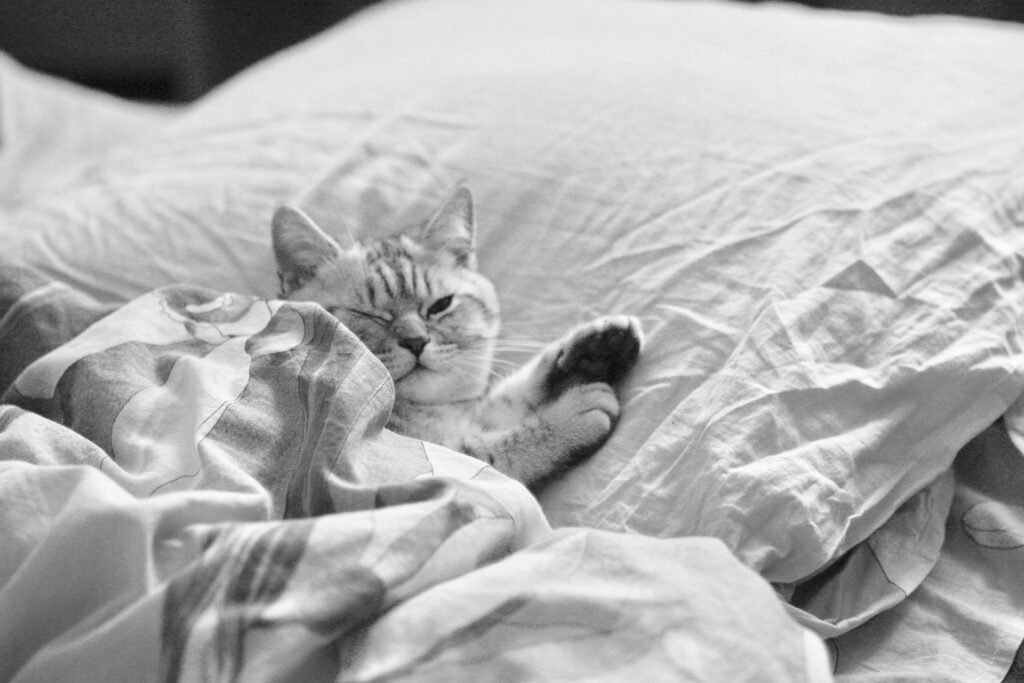
Why Does My Cat Sleep on Me or on My Pillow?
If your cat chooses to sleep on you or on your pillow, consider it a genuine compliment.
Cats sleep in locations they feel safe and comfortable. Sleeping is a vulnerable state predators do not sleep just anywhere. When your cat chooses your body or your pillow as their sleep spot, they are communicating that:
- They feel completely safe with you
- Your body warmth is appealing (cats love warmth)
- Your scent is comforting and familiar
- They want to be close to you even during rest
Should you let your cat sleep on your bed?
This is a personal decision. There are genuine pros and cons:
Benefits of sleeping with your cat:
- Many owners report lower stress and better sleep quality with a cat nearby
- Strengthens the human-cat bond
- Cats often settle quickly and sleep through the night once they are in a routine
Potential downsides:
- Cats may disturb your sleep during their active dawn period
- Allergy sufferers may have worse symptoms
- Some cats become overly dependent on sleeping with their owner
If you choose to let your cat sleep in your bedroom whether on your bed or in their own cat bed nearby consistency is key. Decide on a policy and stick to it.
Cat Sleeping Positions and What They Mean
Your cat’s sleeping position reveals a surprising amount about how they are feeling:
The Loaf
Paws tucked under body, upright sitting position. Your cat is resting but alert comfortable but not fully relaxed. Common when cats are slightly cool or keeping half an eye on their environment.
The Curl
Curled into a tight ball, nose tucked into tail. This is a heat-conservation position common in cooler temperatures. Also means your cat feels safe enough to protect their vital organs (which is what the curled position does).
The Belly Up
Completely on their back, belly exposed. This is the ultimate sign of trust and comfort. A cat’s belly is their most vulnerable area exposing it during sleep means they feel 100% safe in their environment.
The Side Stretch
Fully stretched out on their side. Deep relaxation your cat is completely at ease. You will often see twitching and dreaming during this position.
Head Upside Down
Many owners are puzzled when their cat sleeps with their head tilted completely upside down or tucked in an apparently awkward position. This is simply comfortable for them cats are extraordinarily flexible and what looks uncomfortable to us is perfectly natural for them.
When Should You Worry About How Much Your Cat Sleeps?
While cats naturally sleep a lot, there are situations where increased sleep is a genuine warning sign:
See a vet if your cat’s sleep changes alongside any of these:
- Sleeping significantly more than their personal normal not just cat-average
- Loss of appetite combined with increased sleep
- Difficulty waking or unusual lethargy when awake
- Hiding more than usual
- Changes in litter box habits
- Weight loss or gain
- Unusual sounds during sleep laboured breathing, wheezing
- Restless sleep or inability to get comfortable
The key is change from baseline not the absolute number of sleep hours. A cat that normally sleeps 14 hours and now sleeps 20 is more concerning than a cat that has always slept 18 hours.
Common medical causes of excessive sleep include:
- Anaemia
- Hypothyroidism
- Diabetes
- Infection or illness
- Pain (cats hide pain by becoming quiet and sleeping more)
- Depression or stress
If your cat’s sleep pattern changes noticeably over a period of days without an obvious environmental reason a vet visit is warranted.
How to Support Healthy Cat Sleep
Provide the Right Sleep Environment
Cats need multiple comfortable, safe sleep spots throughout your home. Cats instinctively prefer elevated positions (where they can observe their territory) as well as warm, enclosed spaces (where they feel protected).
The best cat beds for different sleeping preferences:
- For warmth lovers: A self-warming cat bed or a heated cat pad provides the gentle warmth cats naturally seek particularly beneficial for senior cats with joint stiffness.
- For security seekers: Enclosed cave-style cat beds mimic the den environment cats instinctively prefer for deep sleep.
- For elevated sleepers: A cat tree with a sleeping platform or a window perch gives cats the height and observation vantage point they prefer.
- For bed-sharing cats: A dedicated cat blanket on your bed gives your cat their own defined space while keeping your bedding cleaner.
Encourage Active Play During Waking Hours
A cat that gets adequate physical and mental stimulation during their natural active periods dawn and dusk will sleep more soundly and be less disruptive during your sleep hours.
15-20 minutes of active play twice daily ideally in the morning and evening — is enough to meaningfully improve your cat’s sleep quality and reduce boredom-related oversleeping.
Interactive wand toys, laser pointers, puzzle feeders, and window bird feeders that give cats something to watch all contribute to a healthier activity-sleep balance.
Maintain a Consistent Routine
Cats are creatures of habit. Feeding, play, and interaction at consistent times helps regulate their internal clock and gradually shifts their most active periods toward times that work better for your household schedule.
Frequently Asked Questions
Q: How much do cats sleep per day on average? A: The average cat sleeps 12-16 hours per day. Kittens and senior cats may sleep up to 20 hours per day. This is completely normal and biologically driven.
Q: Do cats sleep more than dogs? A: Yes dogs average 10-12 hours of sleep per day compared to cats’ 12-16 hours. Cats sleep significantly more than dogs.
Q: Why does my cat sleep all day and then want to play at night? A: Cats are crepuscular naturally most active at dawn and dusk. If your cat is active at night, try scheduled play sessions in the evening to tire them out before your bedtime.
Q: Is it normal for a cat to sleep 20 hours a day? A: For kittens and senior cats, yes. For a healthy adult cat, 20 hours is on the high end monitor for other changes. If your adult cat has always slept 20 hours, it may be their personal normal. If it is a new change, consult your vet.
Q: Should I let my cat sleep in my bed? A: This is a personal choice. Many owners sleep well with their cats others find it disruptive. If you decide to allow it, consistency helps your cat establish a routine.
Q: Why does my cat sleep on my pillow specifically? A: Your pillow carries your scent strongly cats find this comforting. They also want to be as close to you as possible. It is a sign of deep affection and trust.
Conclusion
Your cat sleeps so much because millions of years of evolution designed them that way. As efficient predators built for explosive energy and long recovery, sleep is not laziness it is biology.
The average cat sleeps 12-16 hours per day. Kittens and seniors sleep even more. Most of that sleep is light, restorative rest punctuated by shorter deep sleep cycles. The sleeping positions, locations, and patterns your cat chooses all communicate something about how safe and comfortable they feel.
Support your cat’s natural sleep needs with comfortable, appropriate sleeping spots, consistent daily play sessions, and a stable routine and you will have a happier, healthier cat whose sleep patterns make sense rather than concern you.
And if your cat’s sleep habits change suddenly and noticeably that is when a conversation with your vet is worth having.