


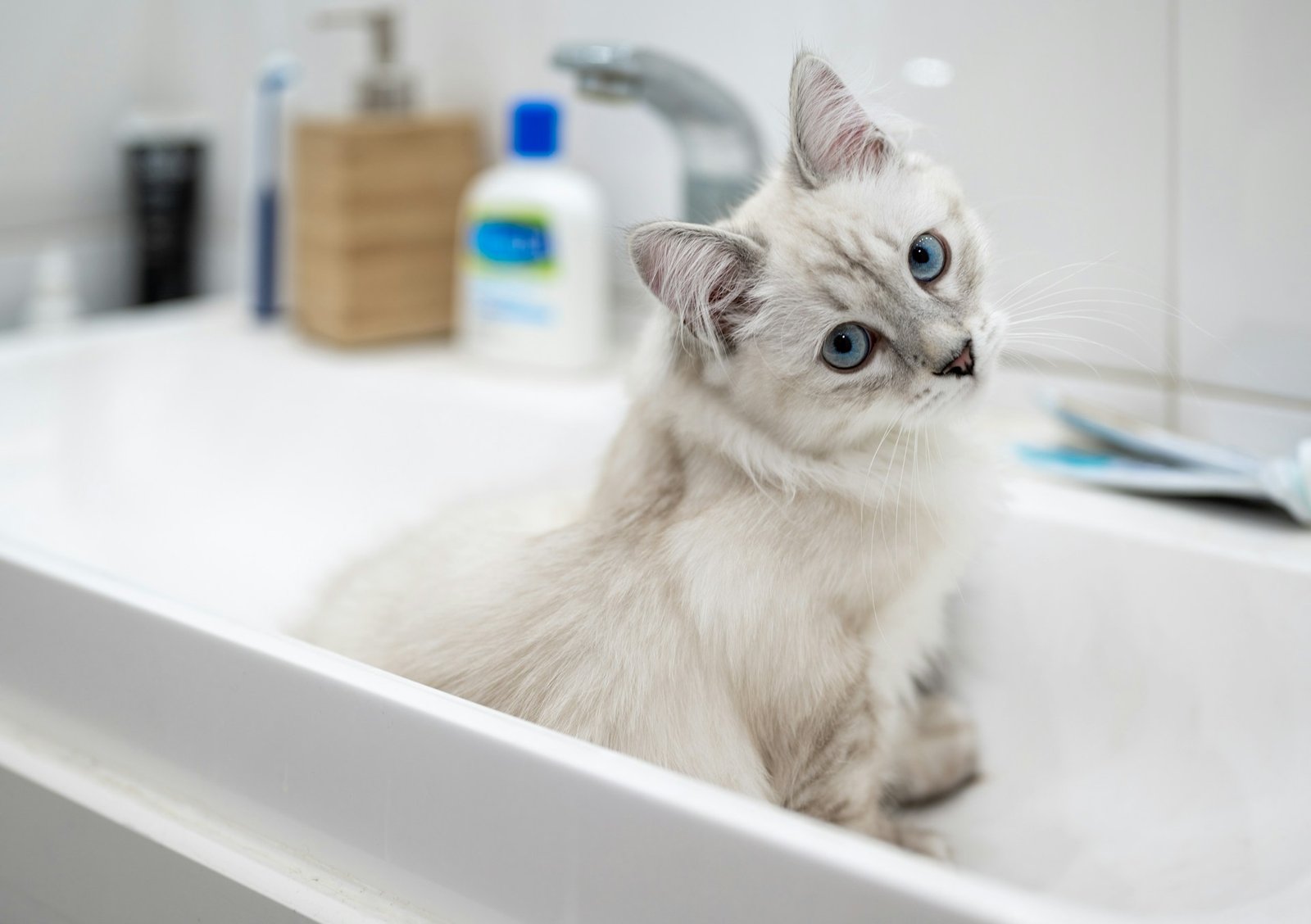

How Often Should You Bathe a Cat? The Complete Answer for Every Cat Owner
You are staring at your cat — who is covered in something they should not be covered in — and wondering: do I actually need to bathe them? And if so, how often should you bathe a cat under normal circumstances? Is once a month too much? Is once a year enough? And what about kittens?
How often should you bathe a cat is one of those questions that seems simple on the surface but has a genuinely nuanced answer — because it depends on your cat’s coat type, lifestyle, age, and health. Get it right and your cat stays clean, comfortable, and healthy. Get it wrong — bathe too often — and you risk stripping the natural oils from their coat and skin. This guide gives you the complete, honest answer for every type of cat, every life stage, and every situation.
Do Cats Actually Need Baths?
Before answering how often, it helps to understand whether bathing is even necessary for most cats — and the honest answer might surprise you.
Cats are self-cleaning animals. A healthy adult cat spends up to 50% of their waking hours grooming themselves — and they do it extraordinarily well. Their tongue is covered in tiny, hollow, hook-shaped spines called papillae that function like a built-in comb, detangling fur, removing loose hair, distributing natural oils, and eliminating surface-level dirt.
For the vast majority of healthy indoor cats, this self-grooming system is sufficient. They do not need regular baths the way dogs do. In fact, over-bathing a cat can do more harm than good — stripping the natural oils that keep their coat healthy and their skin moisturised, causing dryness, flaking, and irritation.
That said, there are specific situations where bathing is absolutely necessary — and understanding those situations is the key to getting the answer right for your individual cat.
How Often Should You Bathe a Cat? — By Cat Type
Short-Haired Indoor Cats — Every 4 to 6 Weeks (or Less)
For the average healthy, short-haired indoor cat — the most common cat in North American homes — professional groomers and vets generally recommend bathing no more than once every 4 to 6 weeks if bathing is needed at all.
Many short-haired indoor cats genuinely never need a bath throughout their entire lives if they are healthy, grooming normally, and not getting into anything messy. Their self-grooming is efficient enough to maintain coat cleanliness without any human intervention.
If you choose to incorporate bathing into your routine — perhaps to reduce allergens or simply as part of your cat care practice — once every 4 to 6 weeks is the safe maximum. More frequent than this risks skin and coat issues.
Long-Haired Cats — Every 4 to 6 Weeks
Long-haired cats — Persians, Maine Coons, Ragdolls, Siberians — benefit more from regular bathing than their short-haired counterparts. Their long coats are more prone to matting, tangling, collecting debris, and developing an oily build-up at the roots over time.
For long-haired cats, bathing every 4 to 6 weeks alongside regular brushing (ideally daily) helps maintain coat health and prevents the matting that becomes painful and difficult to address once established. As we covered in our guide to how long indoor cats live — coat health is a direct indicator of overall health, and proactive grooming keeps both in good shape.
Persian Cats — Every 2 to 4 Weeks
Persian cats are a special case. Their extraordinarily dense, long coats produce more natural oils than most breeds — which gives their coat its characteristic lustre but also means it becomes oily and dirty faster than other coat types.
Most Persian cat owners — and professional groomers who specialise in Persians — recommend bathing every 2 to 4 weeks to keep the coat clean, prevent matting, and manage the skin fold areas around their flat faces. This is one of the highest-maintenance coat care schedules of any domestic cat breed.
Maine Coon Cats — Every 4 to 6 Weeks
Maine Coons have dense, semi-water-resistant coats that are somewhat more forgiving than Persian coats in terms of oil build-up. However, their size and the sheer volume of their coat means regular bathing — every 4 to 6 weeks — keeps things manageable and prevents the matting that their dense undercoat is prone to.
Ragdoll Cats — Every 4 to 6 Weeks
Ragdolls have silky, semi-long coats that are less prone to matting than Persians or Maine Coons — but still benefit from regular bathing every 4 to 6 weeks alongside brushing several times per week. Their coat tends to attract and hold onto debris and loose hair more than shorter coats.
Bengal Cats — Every 6 to 8 Weeks
Bengals have short, dense, pelt-like coats that are very low maintenance. They are also one of the few cat breeds that many owners report actually tolerating — and sometimes enjoying — water. Every 6 to 8 weeks is typically sufficient for most Bengal cats.
Sphynx Cats — Every 1 to 2 Weeks
Sphynx cats — and other hairless breeds — are the exception that proves the rule. Without fur to absorb the natural oils their skin produces, those oils accumulate directly on their skin surface. Sphynx cats need bathing every 1 to 2 weeks to prevent a greasy, dirty build-up on their skin that can cause odour and skin irritation.
This is the highest bathing frequency of any domestic cat breed — and it is also why Sphynx owners report that their cats are generally more water-tolerant than furry breeds, having been bathed regularly from kittenhood.
How Often Should You Bathe a Cat — Quick Reference
| Cat Type | Recommended Bath Frequency |
|---|---|
| Short-haired indoor cat | Every 4–6 weeks, or only when needed |
| Long-haired cat (general) | Every 4–6 weeks |
| Persian cat | Every 2–4 weeks |
| Maine Coon | Every 4–6 weeks |
| Ragdoll | Every 4–6 weeks |
| Bengal cat | Every 6–8 weeks |
| Sphynx (hairless) | Every 1–2 weeks |
| Outdoor cat | Every 4–6 weeks or as needed |
How Often Should You Bathe a Kitten?
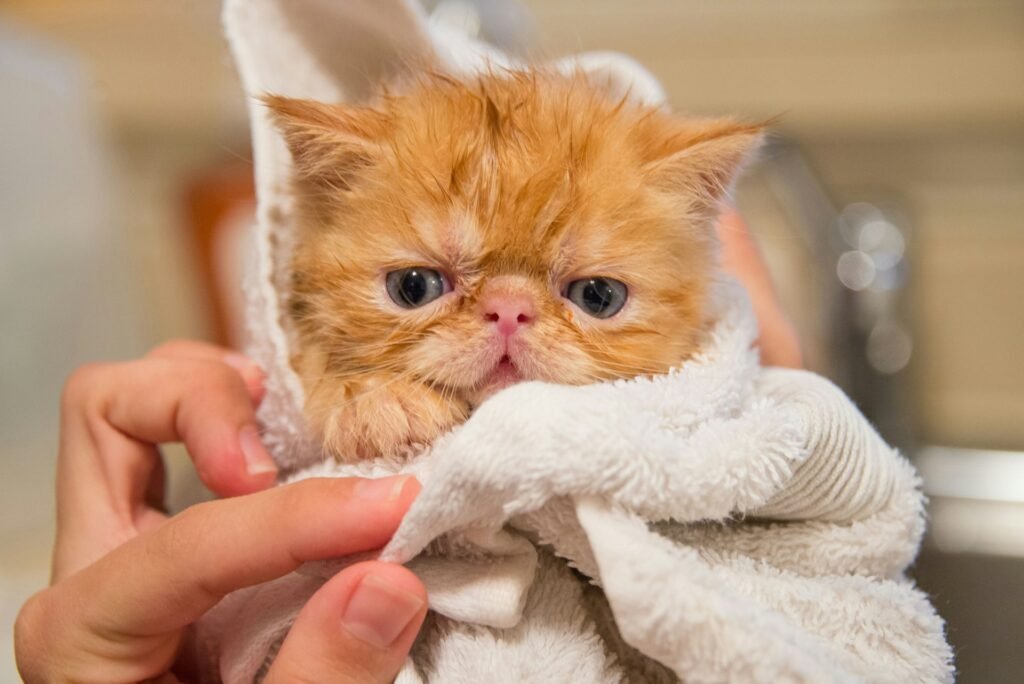
How often to bathe a kitten is a separate question from adult cats — and the answer requires more caution.
Very young kittens — under 8 weeks old — should not be bathed with water at all unless it is an emergency. Young kittens cannot regulate their own body temperature efficiently, and a bath can cause dangerous chilling even in a warm environment. If a very young kitten is soiled, spot clean with a warm, damp cloth only.
Kittens 8 weeks and older can be given a proper bath when needed — but the key considerations are:
- Keep baths infrequent — once every 4 to 6 weeks maximum
- Use warm (not hot) water and work quickly to minimise stress and chilling
- Use a gentle kitten-formulated shampoo — adult cat shampoos may be too strong for delicate kitten skin
- Dry thoroughly and immediately — keep the kitten warm until completely dry
Introducing bathing early in kittenhood has one significant long-term benefit: kittens that are bathed gently and positively from a young age tend to become adults that tolerate or even accept bathing — making the process far easier for their entire lives.
When Does a Cat Need a Bath Regardless of Schedule?
Beyond the routine schedule, certain situations call for a bath immediately — regardless of when the last one was.
Bathe your cat when:
- They have gotten into something toxic, oily, or chemical — never let a cat self-groom a toxic substance off their coat, as they will ingest it
- They have rolled in something strongly odorous — skunk spray, engine oil, paint
- They have visible flea infestation — flea baths (using an appropriate flea shampoo) are used as part of a broader flea treatment strategy
- They are unable to groom themselves — due to obesity, arthritis, injury, or illness — and their coat has become soiled or matted
- They have a skin condition requiring medicated baths — as directed by your vet
- They have severe dandruff or skin irritation that grooming alone cannot address
If your cat has gotten into something toxic, bathe them immediately and call the ASPCA Animal Poison Control Center at (888) 426-4435 if there is any concern about toxin ingestion.
How Often Should You Bathe a Cat With Fleas?
Flea baths are a useful part of flea management — but they are not a standalone solution, and overusing flea shampoo carries real risks.
Most flea shampoos are safe to use once every 7 to 14 days during an active infestation — but check the label of your specific product, as formulations vary. Using flea shampoo more frequently than recommended can irritate and dry out your cat’s skin significantly.
More importantly: flea shampoo kills fleas on the body at the moment of bathing — but has no lasting residual effect. Within hours, new fleas from the environment can re-infest your cat. An effective flea treatment strategy must address the environment (home, bedding, furniture) as well as the cat.
Speak to your vet about appropriate flea prevention products — monthly topical treatments or oral medications that provide continuous protection are significantly more effective than relying on flea baths alone.
How Often Should You Bathe an Indoor Cat vs an Outdoor Cat?
Indoor cats, who are not exposed to the dirt, parasites, and environmental debris that outdoor cats encounter, generally need bathing less often. A healthy indoor cat on a regular grooming routine may only need a bath a handful of times per year — or possibly never, depending on their coat type and self-grooming habits.
Outdoor and indoor-outdoor cats have more frequent exposure to dirt, mud, plant sap, insects, and other cats — all of which can soil the coat and introduce parasites. For outdoor cats, bathing every 4 to 6 weeks is a reasonable baseline — adjusted up or down based on what they are actually getting into.
How to Make Bath Time Less Stressful — Practical Tips
How often you bathe your cat matters — but so does how you do it. A stressful bath experience can make future bathing increasingly difficult and damage your cat’s trust. A calm, well-prepared bath takes the same amount of time and is a completely different experience for both of you.
Prepare Everything Before You Bring Your Cat In
Have everything ready before the cat enters the bathroom: warm water prepared, shampoo within reach, towels laid out, and a non-slip mat in the sink or tub. Fumbling for supplies while holding a wet, unhappy cat is a recipe for scratches and chaos.
Use the Right Shampoo
Always use a shampoo specifically formulated for cats. Human shampoos — including baby shampoo — have a different pH to cat skin and can cause irritation and dryness. Dog shampoos are not appropriate for cats either. A gentle, cat-specific shampoo is the only appropriate choice for routine bathing.
For cats with skin conditions, your vet may recommend a specific medicated shampoo — always follow their guidance on frequency and application.
Keep Water Warm, Not Hot
Cats are sensitive to temperature. Water that feels comfortably warm to your hand is correct. Water that feels even slightly hot to you will feel significantly too hot to your cat. Test the temperature on your wrist before beginning.
Work Quickly and Stay Calm
Cats pick up on their owner’s energy. If you are tense and anxious about the process, your cat will be too. Move with calm confidence, speak in a low, reassuring voice, and work efficiently to minimise the time your cat is in the water.
Dry Thoroughly
This step is non-negotiable. A cat left damp after a bath can become chilled — and damp fur also creates conditions for skin irritation. Use an absorbent towel to remove as much water as possible immediately. Some cats will tolerate a low-heat hair dryer held at a distance — most will not. If your cat refuses the dryer, towel dry as thoroughly as possible and keep them in a warm room until fully dry.
Reward Generously Afterward
A high-value treat immediately after the bath — the moment your cat is out of the water and being towelled — creates a positive association with the experience. Over time and with consistency, many cats go from bath-resistant to merely mildly inconvenienced.
Signs You Are Bathing Your Cat Too Often
Over-bathing is a real concern — particularly for owners who assume more is better. Signs that you are bathing your cat too frequently include:
- Dry, flaky skin or increased dandruff after baths
- Dull, dry, or brittle coat that lacks its normal shine
- Excessive scratching after bathing
- Skin redness or irritation
- Your cat is grooming excessively after baths as if trying to restore something
If you notice any of these signs, reduce the frequency of bathing and consider whether your shampoo choice is appropriate. A conversation with your vet is worthwhile if the skin issues persist.
FAQ — How Often Should You Bathe a Cat?
Q: How often should you bathe a cat that goes outside? A: Outdoor cats benefit from bathing every 4 to 6 weeks as a baseline — adjusted based on what they are actually getting into. If your outdoor cat comes home visibly dirty, flea-ridden, or smelling strongly of something, that situation calls for a bath regardless of the schedule.
Q: How often should you bathe a long-haired cat? A: Every 4 to 6 weeks, alongside regular brushing several times per week. Long-haired cats are more prone to matting and oily build-up than short-haired cats, making regular bathing more beneficial — not optional.
Q: How often can you bathe a kitten? A: Kittens 8 weeks and older can be bathed every 4 to 6 weeks when necessary. Kittens under 8 weeks should not be immersed in water — spot clean with a warm damp cloth only.
Q: How often should you bathe a Persian cat? A: Every 2 to 4 weeks. Persian cats produce more natural oils than most breeds and their dense coats require more frequent washing to stay clean and mat-free.
Q: How often should you bathe a Sphynx cat? A: Every 1 to 2 weeks. Hairless cats accumulate skin oils directly on the skin surface without fur to absorb them, making frequent bathing essential for hygiene and skin health.
Q: Is it okay to never bathe your cat? A: For many short-haired indoor cats that groom well and stay clean — yes, this is perfectly fine. If your cat is healthy, their coat is clean and shiny, and they are grooming normally, regular bathing is not necessary. Reserve baths for situations where self-grooming is insufficient.
Conclusion
How often should you bathe a cat? For most healthy short-haired indoor cats — once every 4 to 6 weeks at most, and often far less frequently than that. For long-haired breeds, every 4 to 6 weeks is more beneficial. For Persians, every 2 to 4 weeks. For Sphynx cats, every 1 to 2 weeks. And for kittens under 8 weeks — not at all.
The golden rule is this: bathe your cat when they need it, not on an arbitrary schedule. A healthy cat with a clean coat and good self-grooming habits does not need frequent baths. A cat that is soiled, has a heavy coat prone to matting, or has a specific health condition does. Match your approach to your individual cat — and use every bath as an opportunity to reinforce that the experience is calm, positive, and safe.
Your cat takes care of their own grooming remarkably well. Your job is to support that system — not replace it.
Also read: How to tell if your cat is sick | Why is my cat shedding so much? | How to trim cat nails without getting scratched | Why does my cat lick me? | How long do indoor cats live?