

Ear infections are one of the most common reasons dogs visit the vet — and most are preventable with a simple routine you can manage at home. Learning how to clean dog ears at home properly protects your dog from painful infections, reduces vet bills, and is something most dogs, with the right approach, can learn to tolerate calmly.
This guide covers the correct technique, how often to clean, what products to use, and the warning signs that mean it’s time for a vet visit rather than a home cleaning session.
Why Ear Cleaning Matters
A dog’s ear canal is L-shaped, which means moisture, wax, and debris can become trapped more easily than in the relatively straight human ear canal. This trapped moisture creates an ideal environment for bacterial and yeast overgrowth — the two most common causes of canine ear infections.
Floppy-eared breeds are at particularly high risk because their ear flap reduces airflow to the canal. Breeds like Cocker Spaniels, Basset Hounds, and Beagles need more frequent attention than erect-eared breeds like German Shepherds or Huskies.
What You’ll Need
- A vet-approved ear cleaning solution (never use water alone, alcohol, or hydrogen peroxide)
- Cotton balls or soft gauze
- Treats for positive reinforcement
- A towel, in case your dog shakes their head mid-clean
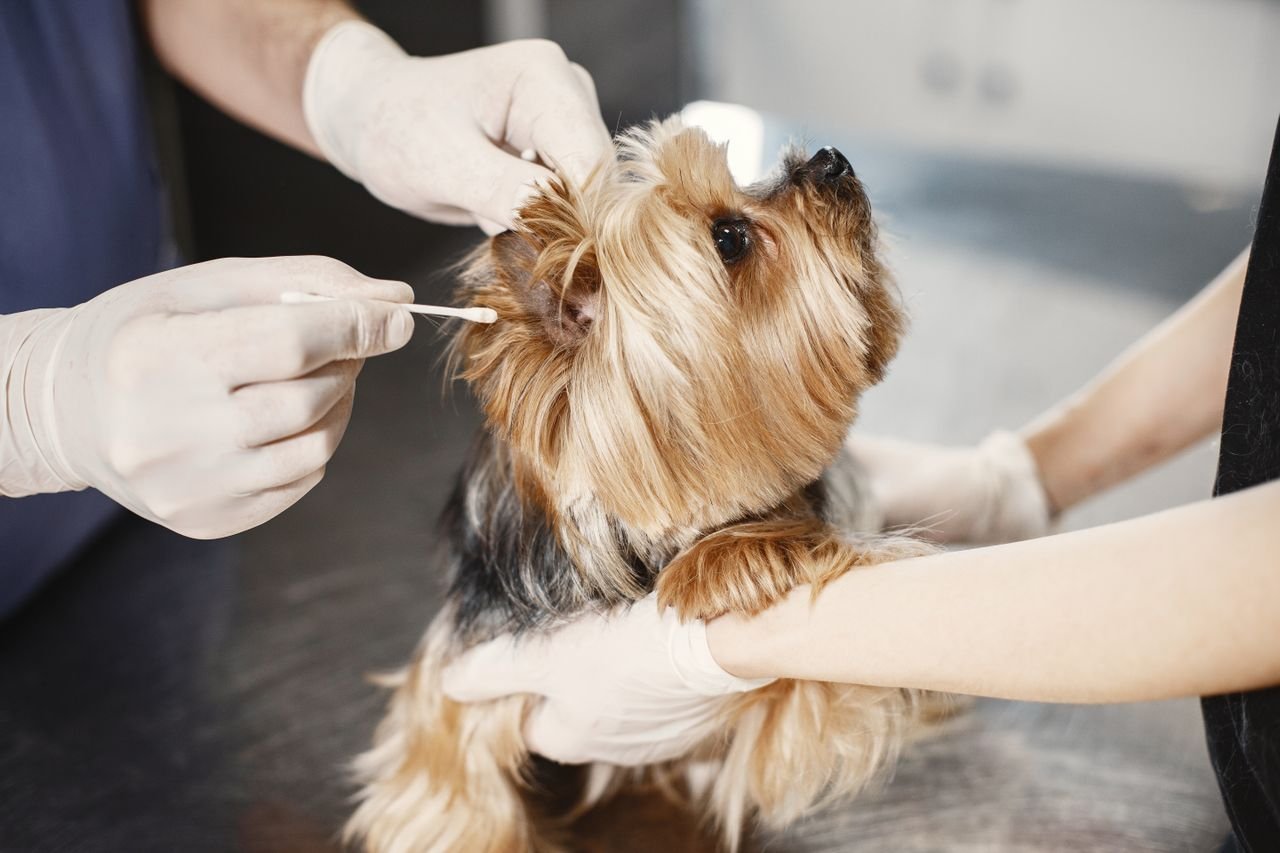
What NOT to use: Cotton swabs (Q-tips) should never go inside the ear canal — they can push debris deeper or damage the eardrum. Alcohol and hydrogen peroxide can sting and irritate sensitive ear tissue. Always use a product specifically formulated for dog ears.
Step-by-Step Ear Cleaning Method
Step 1 — Check the Ear First
Before cleaning, look at the ear. Healthy ears are light pink inside, free of strong odour, and have minimal visible wax. If you notice redness, swelling, dark discharge, a strong odour, or your dog seems painful when you touch the ear, stop and consult your vet rather than proceeding with home cleaning — this could indicate an active infection that needs treatment, not just cleaning.
Step 2 — Apply the Solution
Hold the ear flap up and gently squeeze the recommended amount of ear cleaning solution into the ear canal, following the product’s instructions for quantity. Don’t insert the bottle tip directly into the canal — let the solution flow in from just above the opening.
Step 3 — Massage the Base of the Ear
Gently massage the base of the ear (the area below the ear canal opening, at jaw level) for 20–30 seconds. You should hear a soft squelching sound — this means the solution is working through the canal and breaking down wax and debris. Most dogs find this part genuinely pleasant once they’re used to it.
Step 4 — Let Your Dog Shake
Step back and let your dog shake their head. This is a natural and important part of the process — it helps bring loosened debris up and out of the canal where you can then wipe it away.
Step 5 — Wipe Away Debris
Using a cotton ball or soft gauze, gently wipe the visible folds of the outer ear and the part of the canal you can see without inserting anything deeper than your finger can comfortably reach. Never push cotton balls or any object down into the canal itself.
Step 6 — Reward
Finish with a treat and praise regardless of how the session went. Building a positive association is more valuable long-term than getting a perfect clean on any single occasion.
How Often Should You Clean Your Dog’s Ears?
This depends on ear shape, coat type, and individual dog. As a general guide:
| Ear Type | Cleaning Frequency |
|---|---|
| Erect ears (Huskies, German Shepherds) | Every 2–4 weeks |
| Floppy ears (Cocker Spaniels, Beagles) | Weekly |
| Dogs who swim regularly | After every swim |
| Dogs with known allergies | As directed by vet, often weekly |
| Dogs with hairy ear canals (Poodles, Schnauzers) | Every 2–3 weeks plus hair plucking as needed |
Over-cleaning can be just as problematic as under-cleaning — it can irritate the delicate ear canal lining and disrupt the ear’s natural balance. Clean based on need and visible buildup rather than a rigid daily schedule.
Special Considerations by Breed
Floppy-eared breeds (Cocker Spaniels, Basset Hounds, Beagles): Reduced airflow means more frequent monitoring and cleaning. These breeds are the most prone to chronic ear infections.
Hairy-eared breeds (Poodles, Schnauzers, Doodles): Hair growing inside the ear canal can trap wax and moisture. Some owners pluck this hair (a technique best learned from a professional groomer first), while others manage with more frequent cleaning instead.
Dogs who swim (Labradors, Golden Retrievers, water-loving breeds): Water trapped in the ear after swimming is a major infection risk. Clean and dry ears thoroughly after every swimming session.
Allergic dogs: Ear infections are extremely common in dogs with food or environmental allergies, since allergic inflammation affects the ear canal lining. If your dog has recurring ear issues alongside skin itching, see our best dog food for allergies guide to address the underlying cause.
Signs of an Ear Infection — When to See a Vet
Stop home cleaning and book a vet visit if you notice:
- Strong, unpleasant odour from the ear
- Dark brown, yellow, or bloody discharge
- Redness or swelling inside the ear
- Your dog flinching, crying, or pulling away when the ear is touched
- Excessive head shaking or tilting
- Scratching at the ear persistently
- Visible debris resembling coffee grounds (a sign of ear mites, especially in puppies)
Ear infections require veterinary diagnosis to determine whether the cause is bacterial, yeast, mite-related, or allergy-driven, as treatment differs significantly between causes. Using a home cleaning solution on an already-infected ear can worsen irritation rather than help.
Making Ear Cleaning Stress-Free
Start in puppyhood. Puppies who experience gentle, positive ear handling from a young age generally tolerate ear cleaning far better as adults.
Keep sessions short. A quick, calm session is far more valuable than a longer one where your dog becomes increasingly stressed.
Use a consistent routine. Doing this at the same time, in the same calm location, helps your dog anticipate and settle into the process.
Pair with something positive. Many owners successfully build a “treat after ears” routine that makes the whole process something the dog tolerates well or even seeks out.
Recognise when you need help. If your dog is genuinely fearful or resistant despite a gradual, positive approach, a professional groomer experienced with anxious dogs can often achieve a calmer result than continued struggle at home.
How to Clean Dog Ears at Home — FAQ
Can I use water to clean my dog’s ears? Water alone isn’t effective at breaking down wax and debris, and can actually trap moisture in the canal, increasing infection risk. Always use a vet-formulated ear cleaning solution designed to evaporate and dry the canal after use.
Is it normal for my dog to shake their head during ear cleaning? Yes — this is a natural and expected part of the process. It helps move loosened debris toward the outer ear where you can wipe it away.
How do I clean my dog’s ears if they hate it? Build tolerance gradually with short, positive sessions and high-value treats. If fear persists despite consistent gentle handling, a professional groomer or your vet can help, and in some cases a mild sedative may be used for dogs with extreme anxiety around ear handling.
Can ear cleaning cause an infection? Improper technique — using the wrong products, inserting objects too deep, or cleaning an already-infected ear — can worsen ear health. Always use a vet-approved solution and stop if you notice signs of infection rather than active inflammation.
Why does my dog’s ear smell bad even after cleaning? A persistent odour despite regular cleaning often indicates an underlying infection requiring veterinary treatment rather than ongoing home cleaning. Book a vet visit if odour persists.
Conclusion
How to clean dog ears at home comes down to the right products, gentle technique, and consistency matched to your dog’s specific ear type. Floppy-eared and hairy-eared breeds need more frequent attention than erect-eared breeds, and dogs who swim regularly need ears dried thoroughly after every session.
Done correctly and built into a positive routine from puppyhood, ear cleaning becomes a quick, manageable part of regular care rather than a battle. And when something doesn’t look or smell right, don’t hesitate to involve your vet — ear infections are uncomfortable for your dog and far easier to treat early than once they become established.
Also read: How to Groom a Dog at Home — Step by Step | Best Dog Grooming Tools for Home Use | Best Dog Food for Allergies | How Often Should You Groom Your Dog