


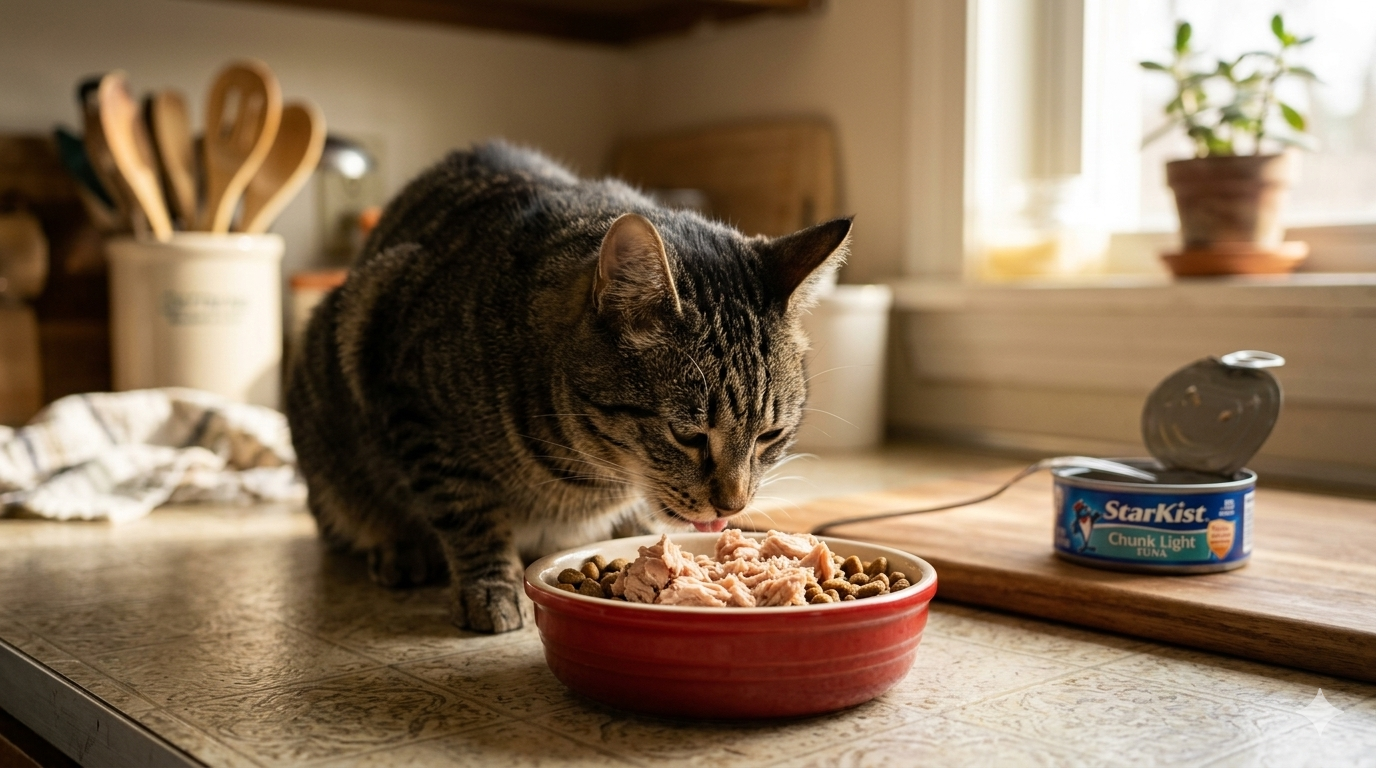

Your cat loses their mind the moment you open a can of tuna. They are weaving between your legs, meowing loudly, absolutely convinced this is the best moment of their life. So you wonder — can cats eat tuna, or is the obsession worse for them than it seems?
The honest answer is complicated. Tuna is not toxic to cats — but it is also not as safe as most people assume. Feeding tuna the wrong way, in the wrong amount, or too often can cause real health problems over time.
This guide covers everything — canned vs fresh, tuna in water vs oil, how much is safe, why cats are obsessed with it, and the health risks every cat owner needs to understand before making tuna a regular part of their cat’s diet.
Is Tuna Safe for Cats?
In small amounts, as an occasional treat — yes. Tuna is not toxic to cats and will not poison them. A small piece of plain tuna once or twice a week is unlikely to cause any harm to a healthy adult cat.
The problems arise with frequency and quantity. Cats that eat tuna regularly — especially as a primary food source — are at risk of serious nutritional deficiencies, mercury poisoning, and a painful condition called steatitis. These are not rare edge cases. They are documented, well-established risks that any vet will confirm.
So the short answer is: yes, cats can eat tuna. The longer answer is: not too much, not too often, and not all types are equal.
Why Are Cats So Obsessed With Tuna?
If tuna has risks, why are cats so famously drawn to it? The answer comes down to smell and fat content.
Cats have a highly developed sense of smell — far more sensitive than humans. Tuna has an extremely pungent, fat-rich aroma that is almost irresistible to cats. The high protein and fat content also makes it immediately rewarding and satisfying to eat.
The problem is that this obsession can become an addiction. Cats that are fed tuna regularly often begin refusing their regular cat food — which is nutritionally complete — in favour of tuna, which is not. This is called tuna addiction, and it is a recognised behavioural issue in cats that can be genuinely difficult to reverse.
A cat refusing their regular food in favour of tuna is not showing good taste — they are showing a learned preference that can damage their long-term health.
For more on cats refusing food, read our guide on why is my cat not eating.
Is Tuna Good for Cats? — The Nutritional Reality
Tuna does have genuine nutritional value. It is high in protein, omega-3 fatty acids, and several B vitamins. These are all things cats need.
But here is the problem: tuna alone is not nutritionally complete for cats. It is deficient in several nutrients cats require, including:
- Vitamin E — tuna is very low in vitamin E, and a tuna-heavy diet leads to deficiency over time
- Taurine — cats cannot produce taurine naturally and must get it from food. Tuna contains some taurine but not enough to meet a cat’s full daily requirement
- Calcium and phosphorus balance — tuna has an imbalanced calcium-to-phosphorus ratio that can affect bone health over time
- Thiamine (Vitamin B1) — raw tuna contains an enzyme called thiaminase that destroys thiamine. Cooked and canned tuna has less of this concern, but it is still a consideration
A cat eating tuna as their primary food source will become nutritionally deficient over time — even though they may appear fine for weeks or months.
The Real Risks of Too Much Tuna for Cats
Mercury Poisoning
Tuna is a large, predatory fish that accumulates mercury in its flesh through bioaccumulation. The larger the tuna and the higher it sits in the food chain, the more mercury it contains.
Cats are small animals. The amount of mercury that causes health problems in a cat is much lower than in a human. Regular tuna feeding — even from a can — builds mercury levels in a cat’s body over time, which can lead to mercury poisoning.
Symptoms of mercury poisoning in cats include loss of coordination, difficulty walking, tremors, and neurological changes. These symptoms can appear weeks or months after the mercury has accumulated — by which point significant damage may already have occurred.
Albacore (white) tuna contains significantly more mercury than chunk light (skipjack) tuna. If you are going to offer canned tuna, chunk light in water is the lower-mercury option.
Steatitis — Yellow Fat Disease
This is one of the most serious risks of a tuna-heavy diet and one that many cat owners have never heard of.
Steatitis is a painful inflammation of body fat caused by a vitamin E deficiency. It occurs in cats fed a diet excessively high in unsaturated fatty acids — which tuna is — without adequate vitamin E to balance it.
Symptoms include severe pain when touched, reluctance to move, loss of appetite, fever, and lumpy fat deposits under the skin. It is a serious, painful condition that requires veterinary treatment including pain management and dietary correction.
Tuna Addiction
Cats can become addicted to tuna and refuse their regular food entirely. This creates a difficult situation — the cat is not eating their nutritionally complete diet, and reintroducing regular food can take weeks of patient effort.
Urinary Tract Problems
Tuna is high in minerals including magnesium and phosphorus. In cats prone to urinary crystals or struvite stones, a high-mineral diet can contribute to blockages — which in male cats is a veterinary emergency.
Canned Tuna for Cats — Which Type Is Safest?
Not all canned tuna is equal for cats. Here is how the main types compare:
| Type | Safety for Cats | Notes |
|---|---|---|
| Canned tuna in spring water | Best option | No added oils, lower calorie, easiest to digest |
| Canned tuna in brine | Avoid | Very high sodium — dangerous for cats |
| Canned tuna in sunflower oil | Use with caution | High fat, adds unnecessary calories |
| Canned tuna in olive oil | Use with caution | Better than sunflower but still extra fat |
| Canned tuna in vegetable oil | Avoid | No nutritional benefit for cats |
Always choose tuna in spring water with no added salt. Drain fully before serving. Brine-packed tuna contains far too much sodium for a cat’s kidneys to handle safely.
Chunk Light vs Albacore
Chunk light tuna (skipjack) contains significantly less mercury than albacore (white tuna). If you are offering canned tuna as an occasional treat, chunk light in spring water is always the safer choice.
Human Tuna vs Cat-Specific Tuna Food
Commercial cat foods containing tuna are formulated to be nutritionally complete — they include the vitamins, minerals, and taurine that plain tuna lacks. If your cat loves tuna flavour, tuna-flavoured cat food is a far safer way to satisfy that preference than human canned tuna.
Tuna-flavoured complete wet cat food
How Much Tuna Can Cats Eat?
Tuna should be treated as an occasional treat, not a meal. Here is a safe guideline:
| Cat Type | Safe Amount | Safe Frequency |
|---|---|---|
| Adult healthy cat | 1 tablespoon (15–20g) | Once or twice a week maximum |
| Kitten | Avoid or minimal | Not recommended regularly |
| Senior cat | Very small amount | Once a week maximum |
| Cat with kidney disease | Avoid | Too high in phosphorus |
| Cat with urinary issues | Avoid | Worsens mineral imbalance |
| Diabetic cat | Very small amount | Consult vet first |
| Pregnant cat | Avoid | Mercury risk to kittens |
Tuna should never make up more than 10% of your cat’s total weekly food intake. Their primary diet should always be a nutritionally complete commercial cat food.
For more on the wet vs dry food debate, read our guide on wet food vs dry food for cats.
Can Kittens Eat Tuna?
Kittens should not be offered tuna regularly. Their nutritional needs are very specific during growth — they need precise amounts of taurine, calcium, protein, and vitamins that tuna does not provide.
The mercury risk is also proportionally higher for small, young animals whose bodies are still developing.
A very small taste of plain tuna in water — a lick or a small flake — will not harm a healthy kitten. But it should never become a habit, and kittens should never develop a preference for tuna over their complete kitten food.
Can Cats Eat Raw Tuna?
No — raw tuna is not recommended for cats for two important reasons.
First, raw tuna carries a higher risk of bacteria including Salmonella and Listeria, which can cause serious digestive illness in cats.
Second, raw tuna contains thiaminase at higher levels than cooked tuna. This enzyme destroys thiamine (Vitamin B1), which is essential for neurological health. Thiamine deficiency causes loss of balance, seizures, and in severe cases can be fatal.
Cooked or canned tuna is always the safer option for an occasional treat.
Tuna and Specific Cat Health Conditions
Cats with Kidney Disease
Tuna is high in phosphorus, which damaged kidneys struggle to filter. For cats with kidney disease or chronic renal failure, tuna should be avoided entirely. Even small amounts can accelerate kidney damage.
If your cat has kidney disease, read our guide on is it normal for cats to drink a lot of water — increased thirst is one of the earliest signs of kidney issues in cats.
Cats with Pancreatitis
The high unsaturated fat content in tuna can trigger pancreatitis in sensitive cats. Avoid tuna entirely during a flare and consult your vet before reintroducing it.
Cats with Urinary Problems
The high mineral content in tuna — particularly magnesium and phosphorus — can worsen urinary crystal formation. Cats with a history of urinary blockages or struvite crystals should not eat tuna.
Diabetic Cats
Plain tuna in water is low in carbohydrates, which makes it relatively suitable compared to carbohydrate-rich treats. However, the nutritional imbalances still apply. Always consult your vet before offering tuna to a diabetic cat.
How to Offer Tuna Safely to Your Cat
Choose the right type: Canned chunk light tuna in spring water, no added salt. Drain fully before serving.
Keep portions small: One tablespoon for an adult cat is a generous treat. There is no reason to serve more.
Serve plain: Never add oil, seasoning, lemon, garlic, onion, or any other ingredients.
Not as a meal replacement: Tuna should be a treat alongside their regular meal — never a substitute for it.
Watch for addiction warning signs: If your cat starts refusing regular food after having tuna, stop immediately and wait at least two weeks before offering again.
Use tuna water as a food topper: The water drained from a can of tuna in spring water (never brine) can be drizzled in a tiny amount over dry food as a flavour enhancer — giving the taste your cat loves with far less risk.
Premium tuna-based complete wet cat food, Best cat food for picky eaters
Safer Alternatives to Tuna for Cats
If your cat loves fish flavour but you want to avoid the mercury and addiction risks, these are safer regular alternatives:
Cooked salmon — lower in mercury than tuna, high in omega-3, and most cats love it. Plain cooked salmon with no seasoning is safe as an occasional treat.
Sardines in spring water — excellent omega-3 source with much lower mercury than tuna. One small sardine once a week is a popular and safe treat option.
Cooked white fish — cod, haddock, and pollock are all safe when cooked plain with no seasoning. Low in mercury and easy to digest.
Tuna or salmon-flavoured complete cat food — the best way to give your cat the fish taste they love, every day, with all the nutrients they need. Formulated to be nutritionally complete without the risks of plain tuna.
Frequently Asked Questions
Can cats eat canned tuna in water? Yes — canned chunk light tuna in spring water with no added salt is the safest form of tuna for cats. Drain fully before serving and limit to one tablespoon once or twice a week maximum.
Can cats eat tuna every day? No — daily tuna feeding leads to nutritional deficiency, mercury accumulation, and increases the risk of tuna addiction and steatitis. Once or twice a week is the maximum safe frequency for a healthy adult cat.
Is canned tuna good for cats with kidney disease? No — tuna is high in phosphorus which is harmful for cats with kidney disease. Cats with renal issues should avoid tuna entirely unless a vet specifically advises otherwise.
Why do cats love tuna so much? Cats are attracted to tuna’s powerful smell and high fat and protein content. The strong aroma triggers their predatory food instincts, making it almost irresistible — which is also why regular feeding creates addiction so quickly.
Can kittens eat tuna? Kittens should not be offered tuna regularly. Their nutritional needs are very specific during growth and tuna does not meet those needs. A very small taste will not harm them but it should not become a habit.
Can cats eat tuna in oil? Tuna in oil is not recommended. The added oil significantly increases fat content, adds unnecessary calories, and provides no nutritional benefit. Always choose tuna in spring water if offering canned tuna.
Conclusion
Can cats eat tuna? Yes — but with real limits that matter. A tablespoon of plain canned chunk light tuna in spring water once or twice a week is a safe occasional treat for a healthy adult cat. More than that, and you are building mercury levels, risking nutritional deficiency, and potentially creating a tuna addiction that is genuinely hard to break.
The safest way to give your cat the fish flavour they crave is through nutritionally complete tuna or salmon-flavoured cat food — not human canned tuna. Keep tuna as a rare treat, not a meal, and your cat gets the best of both worlds.
For more cat nutrition advice, read our guides on wet food vs dry food for cats, best cat food for indoor cats, and is it normal for cats to drink a lot of water.
Always consult your vet before making changes to your cat’s diet, especially if your cat has an existing health condition such as kidney disease, diabetes, or urinary problems.
Also read: Wet Food vs Dry Food for Cats | Best Cat Food for Indoor Cats | Why Is My Cat Not Eating? | Is It Normal for Cats to Drink a Lot of Water? | How to Tell If Your Cat Is Sick