


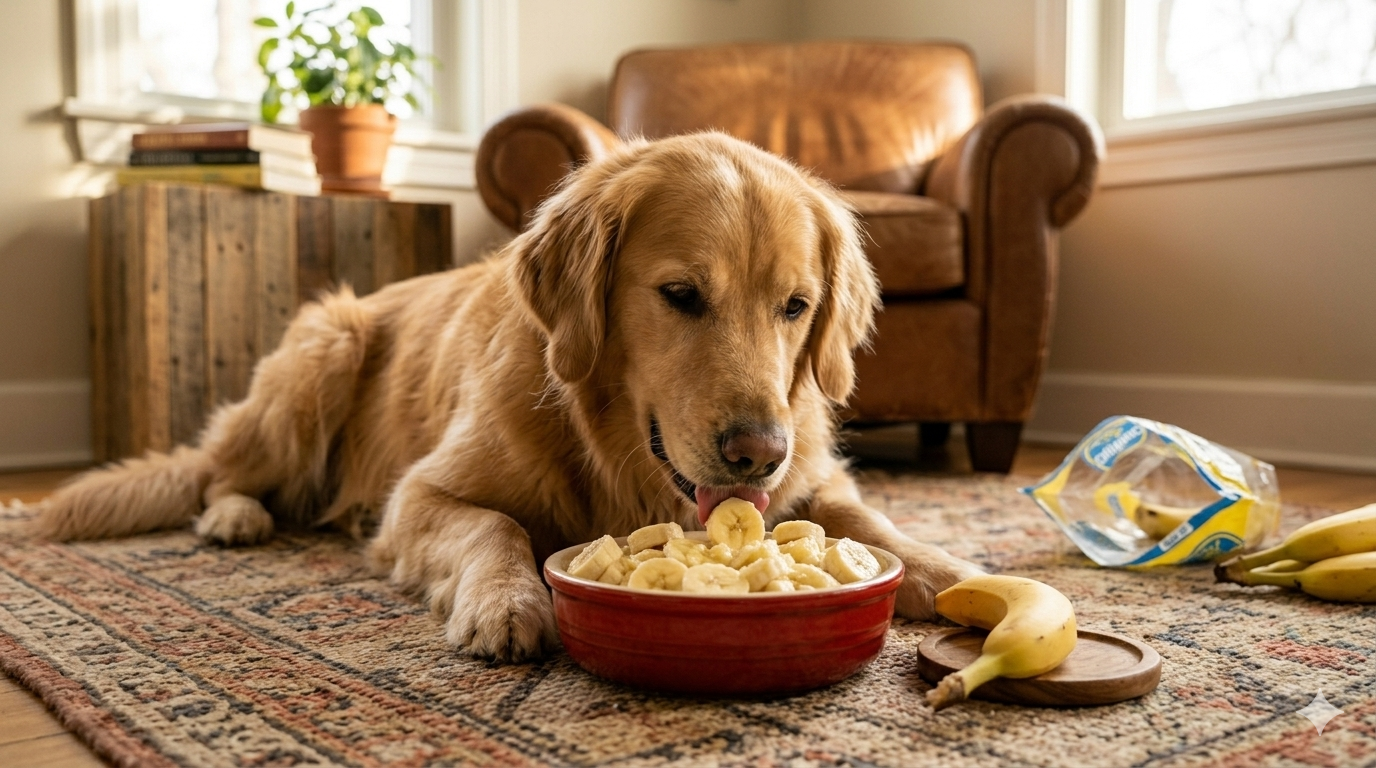

You peel a banana and your dog is immediately beside you, nose up, tail going. It is one of those moments where you wonder — can dogs eat bananas, or is this one of those fruits that looks safe but is not?
Good news: bananas are completely safe for dogs and genuinely good for them in the right amounts. They are one of the most popular fruit treats among dog owners across the US and Canada — and for good reason.
But there are a few things worth knowing before you hand over a whole banana — including how much is too much, whether the peel is safe, and whether bananas actually help with diarrhea the way so many people claim.
Are Bananas Safe for Dogs?
Yes — bananas are safe for dogs and non-toxic. There are no harmful compounds, no dangerous seeds, and no parts of the banana flesh that cause harm. Veterinary nutritionists across the USA and Canada list bananas as a dog-friendly fruit.
The only real considerations are portion size — bananas are high in natural sugar — and the peel, which should never be given to dogs.
Get those two things right and bananas are one of the easiest, healthiest fruit treats you can offer.
Are Bananas Good for Dogs? — The Real Benefits
Bananas are not just safe — they offer genuine health benefits that make them worth including as an occasional treat.
Rich in Potassium
Potassium is one of the most important minerals for dogs. It supports healthy heart function, muscle contractions, nerve signalling, and fluid balance throughout the body. Active dogs and working breeds benefit particularly from potassium-rich foods after exercise.
A medium banana contains around 422mg of potassium — a meaningful contribution to a dog’s daily needs in a single small serving.
Good Source of Vitamins B6 and C
Vitamin B6 plays a key role in protein metabolism, red blood cell function, and nervous system health. Vitamin C is an antioxidant that supports immune function and reduces inflammation. Both are present in useful amounts in bananas.
High in Fibre — Good for Digestion
The dietary fibre in bananas supports healthy gut motility and helps regulate bowel movements. This is why bananas are often recommended for dogs with mild diarrhea or an upset stomach — the soluble fibre helps firm up loose stools.
However, too much banana can have the opposite effect and cause loose stools or constipation, depending on the dog. More on this below.
Low in Cholesterol and Sodium
Bananas contain virtually no sodium and no cholesterol, making them a heart-friendly treat option — especially compared to many commercial dog treats that are loaded with salt and preservatives.
Magnesium for Bone Health
Bananas are a decent source of magnesium, which supports healthy bone development and helps the body absorb vitamins and minerals more effectively. For growing puppies and large breeds, magnesium is an important nutrient.
For more on managing your dog’s overall nutrition, read our guide on best food for dogs with sensitive stomachs.
Can Dogs Eat Banana Peels?
No — banana peels are not safe for dogs and should never be offered.
The peel itself is not toxic, but it is extremely tough and fibrous — far more than the flesh. Dogs cannot digest banana peel properly, and eating it commonly causes:
- Intestinal blockage — the fibrous peel can obstruct the digestive tract, particularly in small dogs and puppies. This is a veterinary emergency.
- Vomiting — the tough material irritates the stomach lining
- Constipation or straining — even if a blockage does not form, peel material can cause significant digestive discomfort
The outside of banana peels also carries pesticide residue from the growing process, even after washing.
My Dog Ate a Banana Peel — What Should I Do?
If your dog ate a small piece of banana peel, monitor closely for the next 24–48 hours. Watch for vomiting, loss of appetite, straining to pass stools, lethargy, or signs of abdominal pain such as hunching or whimpering.
If your dog ate a whole banana peel, or if they are a small breed or puppy, contact your vet immediately. Do not wait for symptoms — an intestinal blockage can become life-threatening within hours.
How Much Banana Can a Dog Eat?
Bananas are higher in natural sugar than many other dog-safe fruits. Treats — including healthy ones — should make up no more than 10% of your dog’s daily calorie intake. Here is a simple guide:
| Dog Size | Weight | Recommended Daily Amount |
|---|---|---|
| Extra small (Chihuahua, Yorkie) | Under 10 lbs | 2–3 small slices |
| Small (Shih Tzu, Pug, Dachshund) | 10–25 lbs | 3–4 slices (about a quarter banana) |
| Medium (Beagle, Cocker Spaniel) | 25–50 lbs | Half a banana maximum |
| Large (Labrador, German Shepherd) | 50–90 lbs | Half to one banana maximum |
| Extra large (Great Dane, Rottweiler) | Over 90 lbs | One banana maximum |
These are daily maximums — not a daily recommendation. Two or three times a week is a healthier frequency than every day for most dogs.
Are Bananas Good for Dogs With Diarrhea?
This is one of the most searched questions about bananas and dogs — and the answer is yes, with conditions.
Bananas contain pectin, a soluble fibre that absorbs water in the digestive tract and helps firm up loose stools. This is the same reason the BRAT diet (Bananas, Rice, Applesauce, Toast) is recommended for humans with diarrhea.
A small amount of mashed ripe banana can help settle a dog’s stomach and firm up mild diarrhea. The key word is small — too much banana adds sugar and more fibre than a sensitive stomach can handle, which can make diarrhea worse.
What to give: A few slices or a tablespoon of mashed ripe banana mixed into your dog’s regular food. Not a whole banana.
When not to use banana: If diarrhea is severe, contains blood, has lasted more than 24 hours, or is accompanied by vomiting and lethargy, contact your vet — this is beyond what banana can help with.
For more on signs of illness in dogs, read our guide on why does my dog lick his paws — excessive licking is sometimes a sign of nausea or digestive discomfort.
Can Puppies Eat Bananas?
Yes — puppies can eat bananas safely in small amounts. The soft texture makes them easy to chew and most puppies love the sweet taste immediately.
Because puppies are smaller and their digestive systems are still developing, keep portions very small — 2 to 3 small slices maximum per day. Introduce bananas gradually alongside their regular complete puppy food and watch for any digestive reaction.
Frozen banana slices are a brilliant teething treat for puppies — the cold soothes sore gums while providing a small nutritional boost. Slice a ripe banana, freeze on a baking tray, and store in a zip-lock bag.
Do not offer banana peel to puppies under any circumstances — the blockage risk is significantly higher in young, small dogs.
Fresh, Frozen, Dried, or Mashed — Which Is Best?
Fresh Banana
The best everyday option. Peel, slice into appropriate portions for your dog’s size, and serve directly. Most dogs eat it straight from your hand. Fresh banana retains all its nutritional value and is the easiest to portion control.
Frozen Banana
An excellent summer treat and popular teething remedy for puppies. Slice or mash into small portions and freeze. Frozen banana pieces can also be stuffed into a Kong for a longer-lasting enrichment treat.
Mashed Banana
Useful for dogs with diarrhea or upset stomach, and easy to mix into regular food as a topper. Also good for older dogs that struggle with harder textures. Mash with a fork and serve a small amount — a tablespoon or two for most dogs.
Dried Banana Chips
Use with caution. Commercial dried banana chips are often fried in oil and coated with added sugar — neither of which is good for dogs. Plain, unsweetened dehydrated banana without added oil is a safer option, but the concentrated sugar content is still higher than fresh banana. Offer very sparingly and check the label for additives.
Banana Peel
Never. As covered above, banana peel is not safe for dogs regardless of preparation.
Kong Classic dog toy for frozen banana stuffing
Can Dogs Be Allergic to Bananas?
True banana allergies in dogs are rare but possible. As with any new food, introduce banana gradually — start with one or two small slices and watch for any reaction over the following 24 hours.
Signs of a food allergy or intolerance include:
- Itchy skin, paws, or ears
- Hives or skin redness
- Vomiting or diarrhea
- Swollen face or lips
- Excessive gas
If your dog shows any of these signs after eating banana, stop feeding it and consult your vet. Digestive upset from eating too much banana at once is far more common than a true allergy.
Bananas for Dogs With Specific Health Conditions
Diabetic Dogs
Bananas are relatively high in natural sugar and have a moderate glycaemic index. For diabetic dogs, this means banana can cause a blood sugar spike — even in small amounts. Always consult your vet before offering banana to a diabetic dog. It is not automatically safe for them.
Dogs With Kidney Disease
Bananas are high in potassium, which can be problematic for dogs with kidney disease whose kidneys struggle to regulate potassium levels. Avoid bananas in dogs with known kidney issues unless your vet specifically approves them.
If your dog is drinking more water than usual — one of the early signs of kidney issues — read our guide on why does my dog lick his paws and book a vet check.
Dogs With Pancreatitis
Bananas are very low in fat, which makes them generally safe for dogs with pancreatitis or a history of it. Keep portions small and introduce gradually. The natural sugar is the only real consideration for these dogs.
Dogs With Upset Stomach or Diarrhea
Small amounts of mashed ripe banana can genuinely help settle a dog’s stomach and firm up mild loose stools. See the diarrhea section above for specific guidance.
Overweight Dogs
Bananas are not the lowest-calorie fruit option — a medium banana contains around 105 calories. For overweight dogs, keep banana portions very small and infrequent. Blueberries and watermelon are better low-calorie treat alternatives.
For more on low-calorie treat options, read our guides on can dogs eat blueberries and can dogs eat watermelon.
Bananas for Specific Dog Breeds
French Bulldogs and Pugs
These small, brachycephalic breeds are prone to weight gain. A few slices of banana are fine as an occasional treat — keep to 2–3 small slices and no more than twice a week.
Labrador Retrievers
Labs are notoriously food-motivated and prone to obesity. Banana can be used as a training treat in very small pieces — just factor the calories into their daily total.
German Shepherds
German Shepherds often have sensitive stomachs. Introduce banana slowly — start with one slice and wait 24 hours before increasing the amount to check for any digestive reaction.
Huskies
Huskies are active dogs with high energy needs. Banana is a useful natural energy boost before exercise — a few slices alongside their regular meal before a long walk or run.
Shih Tzus and Yorkies
These tiny breeds need very small portions — 2 to 3 small slices is plenty. Their small digestive systems are more sensitive to the sugar in banana than larger breeds.
How to Serve Bananas to Your Dog — 5 Ideas
Plain slices — peel, slice into bite-sized rounds appropriate for your dog’s size, and serve directly. The simplest and most popular method.
Frozen banana slices — freeze sliced banana for a cold summer treat. Most dogs are enthusiastic about these on hot days.
Mashed into food — mash a small amount of ripe banana and stir into your dog’s regular meal as a topper. Particularly useful for picky eaters or dogs with upset stomachs.
Kong stuffing — mash banana with a small amount of plain peanut butter (xylitol-free) and freeze inside a Kong toy. A long-lasting enrichment treat that keeps dogs busy for 20–30 minutes.
Training treats — cut banana into very small pieces and use as a high-value training reward. Works particularly well for dogs that are less motivated by commercial treats.
Xylitol-free peanut butter for dogs
Fruits Dogs Should Never Eat
While bananas are safe, some fruits are seriously dangerous for dogs. Never feed your dog:
- Grapes and raisins — even a small amount can cause acute kidney failure. One of the most dangerous foods for dogs.
- Cherries — the pits, leaves, and stems contain cyanide compounds.
- Avocado — contains persin, which is toxic to dogs and causes vomiting, diarrhea, and heart problems.
- Citrus in large amounts — lemon and lime juice and peel are toxic to dogs in significant quantities.
Frequently Asked Questions
Can dogs eat bananas every day? Bananas are safe for daily feeding in the recommended portion sizes for your dog’s weight — but every other day or a few times a week is a healthier routine due to the natural sugar content. Too much banana daily can contribute to weight gain over time.
How much banana can a dog eat per day? It depends on size. Extra small dogs should have 2–3 slices. Small dogs a quarter banana. Medium dogs up to half a banana. Large dogs half to a full banana. Extra large dogs one banana maximum. Always keep treats to 10% of daily calories.
Are bananas good for dogs with diarrhea? Yes — a small amount of mashed ripe banana can help firm up mild loose stools thanks to its pectin content. Keep the amount small and contact your vet if diarrhea persists beyond 24 hours or is severe.
Can dogs eat banana peels? No — banana peels are not safe for dogs. They are too tough and fibrous to digest properly and can cause intestinal blockages, especially in small dogs and puppies. Always remove the peel completely.
Can puppies eat bananas? Yes — puppies can eat bananas safely in small amounts. Limit to 2–3 small slices per day and introduce gradually. Frozen banana slices are a popular and soothing teething treat for puppies.
Are dried banana chips safe for dogs? Plain unsweetened dehydrated banana is safe in very small amounts. Most commercial banana chips are fried and contain added sugar — always check the label and avoid any with additives, sweeteners, or oil.
Conclusion
Can dogs eat bananas? Absolutely — and they are one of the most nutritious fruit treats you can offer. Rich in potassium, vitamins B6 and C, fibre, and magnesium, bananas are a genuinely healthy addition to your dog’s treat rotation.
Keep portions appropriate for your dog’s size, skip the peel entirely, use dried banana chips only if they are plain and unsweetened, and go easy with diabetic dogs or dogs with kidney disease. Do all that and bananas are a simple, affordable, and dog-approved treat your dog will love.
For more dog nutrition and treat advice, read our guides on can dogs eat blueberries, can dogs eat watermelon, and best dog training treats.
Always consult your vet before making significant changes to your dog’s diet, especially if your dog has an existing health condition such as diabetes or kidney disease.
Also read: Can Dogs Eat Blueberries? | Can Dogs Eat Watermelon? | Best Dog Training Treats | Best Food for Dogs with Sensitive Stomachs | Can Cats Eat Tuna?