


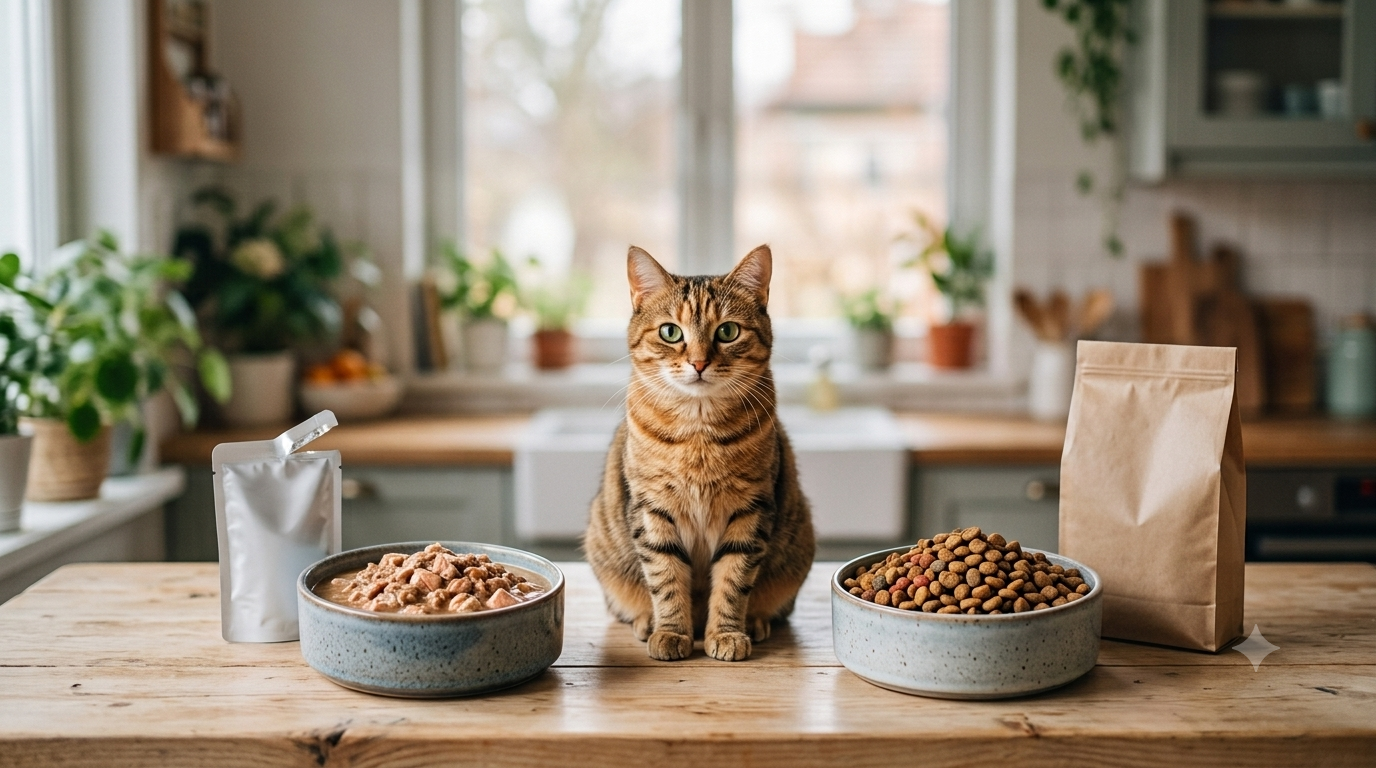

You are standing in the pet food aisle, staring at two walls of options, wondering the same thing every cat owner wonders: is wet or dry food better for cats?
The honest answer is that both have real benefits — and the best choice depends on your cat’s age, health, weight, and how they drink water. But there is a clear winner for most cats, and this guide breaks down exactly why, with no fluff and no brand bias.
Whether you have a kitten, an adult cat, a senior, or an overweight cat, here is everything you need to know about wet food vs dry food for cats.
The Biggest Difference Between Wet and Dry Cat Food
The single most important difference is moisture content.
Wet cat food is typically 70–80% water. Dry cat food (kibble) is around 8–10% water. That gap matters enormously because cats are not naturally big drinkers — they evolved as desert animals designed to get most of their hydration from prey.
A cat eating only dry food and drinking from a bowl is almost always mildly dehydrated without even showing obvious symptoms. Over time, this puts stress on the kidneys and urinary tract.
This is why most vets lean toward wet food — or at least a combination of both.
Is Wet Food Better Than Dry Food for Cats?
For most cats, yes — wet food has more advantages. Here is a clear breakdown.
Hydration
Wet food provides significant moisture with every meal. Cats on a wet food diet are much better hydrated than cats on dry food alone. This directly reduces the risk of urinary tract infections, kidney disease, and bladder stones — three of the most common and costly health problems in cats.
If your cat has been drinking more water than usual lately, it could be a sign of an underlying issue. Read our guide on is it normal for cats to drink a lot of water for more information.
Protein Content
Good quality wet food typically has a higher percentage of animal protein and fewer carbohydrates than dry food. Cats are obligate carnivores — they need meat-based protein to thrive. Their bodies are not designed to process large amounts of carbohydrates, which dry kibble often relies on as a binding agent.
Weight Management
Wet food is lower in calories per gram because of its high water content. Cats feel fuller eating wet food, which makes overeating less likely. For overweight cats, switching to wet food is often one of the most effective changes a vet recommends.
If your cat is overweight and on dry food, the combination of high carbohydrates and easy calorie access makes it very easy to gain weight.
Palatability
Most cats find wet food more appealing — the smell, texture, and moisture content are closer to what they would eat in the wild. Picky eaters or cats recovering from illness are usually much more willing to eat wet food.
Dental Health — The One Area Dry Food Wins
This is where kibble has a genuine advantage. The crunching action of dry food provides some mechanical cleaning of teeth. Wet food leaves more residue on teeth and can contribute to plaque buildup over time.
However, the dental benefit of dry food is often overstated. Most cats do not chew kibble thoroughly enough for it to clean their back teeth, and no vet recommends relying on dry food alone for dental health. Regular tooth brushing or dental treats are far more effective.
Is Dry Food Better for Cats in Any Situation?
Dry food is not without its advantages. Here is when kibble makes sense.
Convenience and Cost
Dry food is significantly cheaper per serving than wet food. It does not spoil once the bowl is filled, making it practical for owners who free-feed or are away from home for longer stretches.
For multi-cat households on a tight budget, a high-quality dry food is far better than a low-quality wet food.
Dental Support
As mentioned above, the mechanical action of chewing kibble does provide some degree of dental cleaning. For cats that flat-out refuse tooth brushing, a dental-formula dry food can help slow plaque buildup.
Calorie Density for Underweight Cats
Dry food is calorie-dense. For cats that are underweight, recovering from illness, or very active, kibble can help them meet their calorie needs more easily.
Storage and Freshness
A bag of dry food stays fresh for weeks after opening with proper storage. Wet food needs to be refrigerated after opening and used within 24–48 hours. For busy households, this practicality matters.
Wet Food vs Dry Food for Cats — Full Comparison Table
| Factor | Wet Food | Dry Food |
|---|---|---|
| Moisture content | 70–80% | 8–10% |
| Protein content | Generally higher | Often lower, more carbs |
| Calorie density | Lower | Higher |
| Hydration support | Excellent | Poor |
| Kidney and urinary health | Strong benefit | Less supportive |
| Weight management | Better | Harder to control |
| Dental health | Neutral | Slight benefit |
| Cost per serving | Higher | Lower |
| Convenience | Less (spoils quickly) | High (free-feeding possible) |
| Palatability | Higher | Lower for picky cats |
| Best for | Most adult cats, seniors, overweight | Kittens needing calories, budget feeding |
Wet Food vs Dry Food for Kittens — What Is Better?
Kittens have different needs than adult cats. They need more calories, more protein, and more fat to support rapid growth.
Both wet and dry kitten food can work well — the most important thing is that the food is labelled for kittens or “all life stages,” as these are formulated with higher protein and fat levels.
Wet food for kittens helps establish good hydration habits early, which supports kidney health long-term. It is also easier for young kittens transitioning from mother’s milk to eat.
Dry food for kittens is calorie-dense and convenient, especially for kittens that need to eat frequently throughout the day.
The ideal approach for kittens is to offer wet food as the primary meal and leave a small amount of quality dry food available for grazing. This gives them the hydration benefit of wet food and the calorie top-up of dry.
After 12 months, transition to adult formulas gradually over 7–10 days.
Is Wet or Dry Food Better for Overweight Cats?
Wet food wins clearly for overweight cats.
The high water content means your cat eats a larger volume of food for fewer calories — which keeps them feeling full without overloading on energy. Dry food, even when portion-controlled, is harder to manage because kibble is calorie-dense and cats can consume a large number of calories in very few bites.
Switching an overweight cat from dry to wet food — without changing anything else — often results in gradual, healthy weight loss over several months.
If you are switching an overweight cat, do it slowly. Mix increasing amounts of wet food with their current dry food over 10–14 days to avoid digestive upset.
For more detail on managing your cat’s diet, our guide on best cat food for indoor cats covers indoor cat nutrition in depth.
Is Wet or Dry Food Better for Senior Cats?
Wet food is strongly recommended for senior cats for two main reasons.
First, kidney function naturally declines with age. Wet food’s high moisture content supports kidney health and reduces the workload on aging kidneys. Many vets move senior cats to a wet-only diet specifically to protect kidney function.
Second, older cats often lose interest in food as their sense of smell weakens. Wet food has a much stronger aroma and is far more appealing to cats whose appetite has dropped.
Senior cats also tend to have dental issues that make chewing dry kibble painful. Wet food is much easier to eat comfortably.
If your senior cat has been drinking significantly more water, losing weight, or seems lethargic, it is worth a vet check. Read our guide on how to tell if your cat is sick for a full list of warning signs.
The Best of Both Worlds — Feeding Wet and Dry Food Together
For many cat owners, the ideal solution is combining both.
A common approach is to feed wet food at mealtimes — morning and evening — and leave a small amount of dry food available for grazing between meals. This gives your cat the hydration and protein benefits of wet food alongside the dental and convenience benefits of dry.
When combining, adjust portions carefully. Total daily calories from both sources combined should match your cat’s recommended daily intake. Overfeeding by offering full portions of both is one of the fastest routes to weight gain.
Your vet or the feeding guide on the food packaging can help you calculate the right split for your cat’s weight and activity level.
What to Look for on the Label — Wet and Dry
Whether you choose wet, dry, or both, the label tells you everything. Here is what to check:
Ingredients list: The first ingredient should always be a named animal protein — chicken, salmon, turkey, beef. Not “meat by-products” or “animal digest” as the primary ingredient.
AAFCO statement: Look for “complete and balanced” on the label with an AAFCO nutritional adequacy statement. This confirms the food meets minimum nutritional standards for your cat’s life stage.
Life stage: Kitten food for kittens under 12 months. Senior food or “all life stages” for older cats. Adult food for healthy adults aged 1–10.
Moisture percentage: On wet food, 70%+ is ideal. On dry food, anything under 12% is standard.
Carbohydrate content: Not always listed directly, but you can calculate it roughly: 100% minus protein% minus fat% minus moisture% minus ash%. Aim for below 10% carbs for wet food and below 30% for dry.
Frequently Asked Questions
Is wet or dry food better for cats overall? Wet food is better for most cats because of its high moisture content, which supports kidney health, urinary tract health, and healthy weight. Dry food works as a supplement or budget option but should not be the only food for most cats.
Is wet food or dry food better for kittens? Both can work well for kittens. Wet food is easier to eat and establishes good hydration habits. Dry kitten food provides the calorie density young cats need. Offering both is a common and effective approach.
Is canned cat food better than dry food? In most cases, yes — canned wet food provides better hydration, higher protein, and fewer carbohydrates than dry food. Quality matters though — a premium dry food beats a low-quality wet food.
Can I feed my cat both wet and dry food? Yes, and this is a popular approach. Feed wet food at set mealtimes and offer a small amount of dry food for grazing. Adjust total portions so your cat is not overeating from both sources combined.
Is dry food better for cats’ teeth? Dry food provides some mechanical dental cleaning through chewing, but the benefit is limited. Regular tooth brushing or dental treats are far more effective for dental health than relying on kibble alone.
What is better for cats — wet or dry food for weight loss? Wet food is significantly better for weight loss. Its high water content means fewer calories per gram, and cats feel fuller after eating it, making overeating much less likely.
Conclusion
When it comes to wet food vs dry food for cats, wet food is the better choice for most cats — especially for hydration, kidney health, urinary health, and weight management. Dry food has its place for dental support, convenience, and budget feeding, but should not be a cat’s only source of nutrition if wet food is an option.
The best approach for most households is to make wet food the main meal and use dry food as a supplement. And whatever you choose, always look for a named animal protein as the first ingredient and an AAFCO complete and balanced statement on the label.
For more cat nutrition advice, read our guides on best cat food for indoor cats, why is my cat not eating, and is it normal for cats to drink a lot of water.
Always consult your vet before making significant changes to your cat’s diet, especially if your cat has an existing health condition.
Also Read:
- Best Cat Food for Indoor Cats
- Is It Normal for Cats to Drink a Lot of Water?
- How to Tell If Your Cat Is Sick
- Best Cat Litter for Odour Control
- Why Is My Cat Not Eating?