


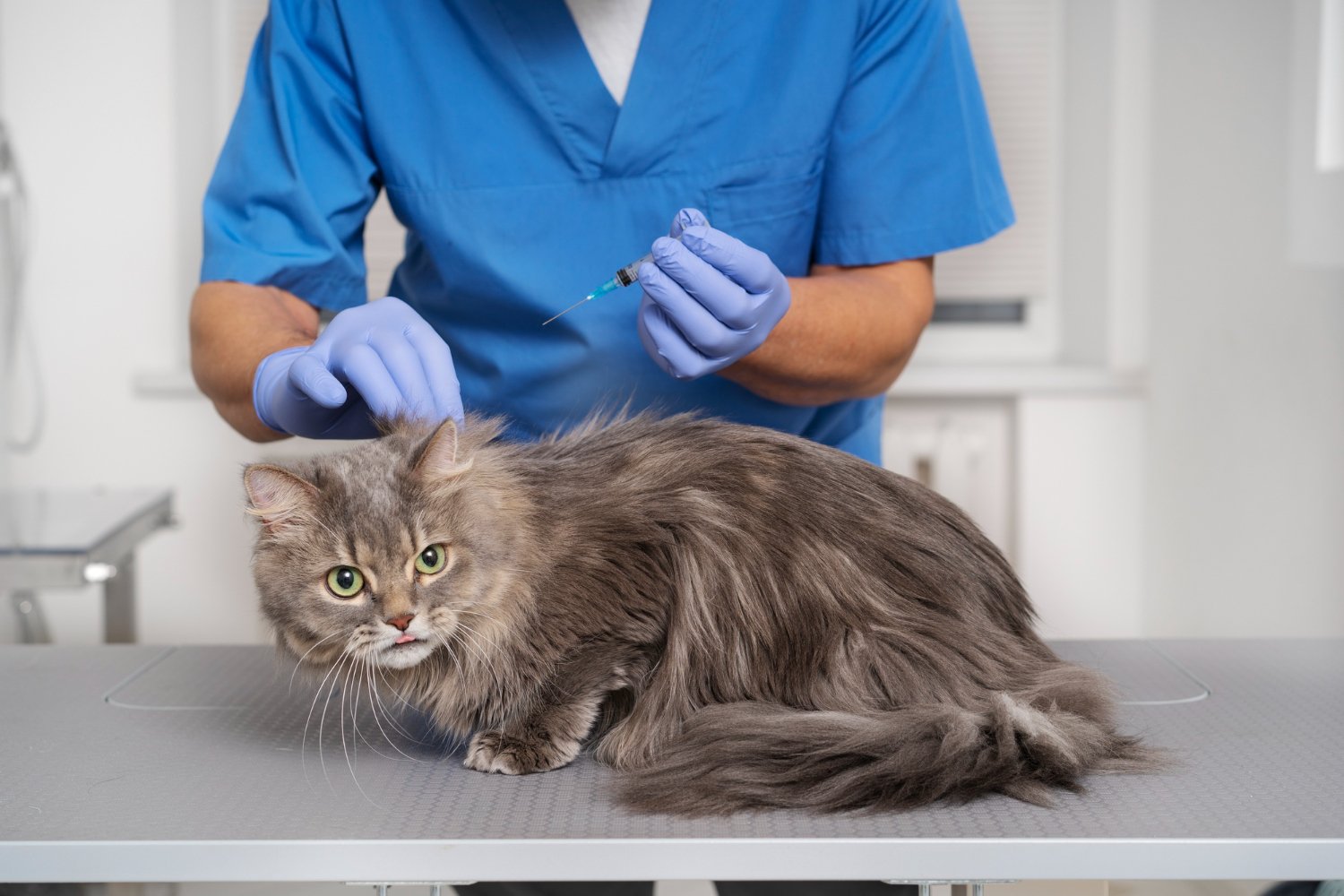

Every year your vet recommends vaccines for your cat — but do cats really need every vaccine every year? The answer is more nuanced than a simple yes or no. Annual cat vaccines are not all the same — some are genuinely needed yearly, others are given every three years, and some are only recommended based on your cat’s specific lifestyle and risk level.
This guide cuts through the confusion so you understand exactly what your cat needs and why.
Core vs Non-Core Vaccines — What’s the Difference?
Veterinary vaccines for cats fall into two categories:
Core vaccines — recommended for every cat regardless of lifestyle, because the diseases they protect against are severe, widespread, or transmissible to humans. These are non-negotiable for cat health.
Non-core vaccines — recommended only for cats with specific lifestyle risks. Whether your cat needs these depends on whether they go outside, live with other cats, visit catteries, or live in areas with specific disease prevalence.
Core Cat Vaccines
FVRCP — The Essential Cat Vaccine
The FVRCP combination vaccine protects against three diseases in a single injection:
FVR (Feline Viral Rhinotracheitis) — caused by feline herpesvirus type 1. The leading cause of cat flu — upper respiratory infection with sneezing, nasal discharge, and eye problems. Once infected, cats carry the virus for life and can have flare-ups during stress. See our why is my cat sneezing guide for symptoms of active infection.
C (Calicivirus) — another major cause of cat flu, also causing mouth ulcers and occasionally more severe systemic disease. Multiple strains exist, so vaccination reduces severity rather than guaranteeing complete protection.
P (Panleukopenia) — also called feline distemper. A severe, often fatal disease that attacks the immune system and intestinal tract. Particularly devastating in kittens and unvaccinated adults. The vaccine is highly effective.
How often is FVRCP given?
| Life Stage | Frequency |
|---|---|
| Kittens | Series of 3 doses, 3–4 weeks apart, starting at 6–8 weeks |
| 1 year after final kitten dose | Booster |
| Adult cats (ongoing) | Every 3 years for most cats |
The shift from annual to every-3-years for adult FVRCP is based on evidence that immunity from modern vaccines lasts significantly longer than one year. Many vets now follow the American Association of Feline Practitioners (AAFP) guidelines recommending 3-yearly boosters for adult indoor cats.
However, some circumstances may warrant annual FVRCP:
- Cats in multi-cat households with high disease exposure risk
- Cats who regularly visit catteries or shows
- Immunocompromised cats — discuss with your vet
Rabies Vaccine
Legally required in all 50 US states. For the complete rabies vaccine schedule, timing, and what to expect, see our dedicated cat rabies vaccine guide.
How often: Every 1 or 3 years depending on the vaccine product used and local regulations.
Non-Core Vaccines — Does Your Cat Need Them?
Feline Leukaemia Virus (FeLV)
What it protects against: FeLV is a retrovirus that suppresses the immune system and causes cancer. It is transmitted through saliva, mutual grooming, shared food and water bowls, and from mother to kitten. There is no cure.
Who needs it:
- Any cat with outdoor access — strongly recommended
- Cats in households with FeLV-positive cats
- Kittens — many vets now recommend FeLV as a core vaccine for all kittens, since lifestyle can change
Who probably does not need it:
- Confirmed indoor-only cats with no exposure to other cats of unknown status
Schedule: Two initial doses 3–4 weeks apart, then annually or every 2 years depending on risk level and vaccine product.
Bordetella (Kennel Cough)
What it protects against: Bordetella bronchiseptica causes upper respiratory infection — similar to kennel cough in dogs. Less common in cats than dogs.
Who needs it:
- Cats in catteries, shelters, or high-density multi-cat environments
- Cats who regularly attend shows
Who probably does not need it:
- Indoor-only cats or cats in single-cat or stable multi-cat households
Schedule: Annual, given as nasal drops rather than injection.
Chlamydophila felis
What it protects against: Bacterial infection causing severe conjunctivitis and mild respiratory symptoms.
Who needs it:
- Cats in multi-cat households where chlamydophilosis has been diagnosed
- Breeding catteries with a history of the disease
Who probably does not need it:
- Most single-cat households
Feline Immunodeficiency Virus (FIV)
A vaccine for FIV has been available but is no longer widely used due to concerns about interference with FIV testing — vaccinated cats test positive on standard FIV tests, making it impossible to distinguish vaccinated from truly infected cats. Most vets do not recommend the FIV vaccine for this reason. Prevention through neutering (which reduces fighting and bite wounds) and keeping cats indoors is the preferred approach.
Does Your Cat Need Annual Vaccines? — By Lifestyle
| Cat Type | Core Vaccines | Non-Core to Consider |
|---|---|---|
| Indoor only, single cat | FVRCP every 3 yrs, Rabies per law | FeLV optional |
| Indoor only, multi-cat | FVRCP every 3 yrs, Rabies per law | FeLV if any cat has outdoor history |
| Indoor-outdoor | FVRCP every 3 yrs, Rabies per law | FeLV strongly recommended |
| Outdoor / feral access | FVRCP every 3 yrs, Rabies per law | FeLV annually |
| Cattery / show cat | FVRCP annually, Rabies per law | FeLV, Bordetella |
Titre Testing — An Alternative to Automatic Revaccination?
Titre testing measures the level of antibodies in your cat’s blood to determine whether they still have adequate immunity from previous vaccines. A positive titre for FVRCP indicates current immunity — some owners use this to avoid revaccination of cats with demonstrated ongoing immunity.
Important limitations:
- Titre testing does not replace the rabies vaccine — a positive titre is not legally accepted as a substitute for vaccination in most US states
- Titre tests cost more than the vaccines themselves in most settings
- Not all vets offer titre testing
- A negative titre does not necessarily mean the cat is unprotected — cell-mediated immunity is not measured by standard blood titres
Titre testing is a reasonable option for cats who have had previous severe vaccine reactions and whose owners want to avoid unnecessary revaccination. Discuss with your vet whether it is appropriate for your specific cat.
What Happens if You Miss a Booster?
Missing a booster by a short period — a few weeks or months — is generally not a significant problem for most adult cats with a good vaccination history. Their immune memory provides some ongoing protection.
Missing a booster by a year or more may require restarting the vaccination series depending on the vaccine and the interval. Contact your vet — they will assess what is needed based on your cat’s vaccination history.
Never avoid vaccination because of a missed appointment — the risk of skipping far outweighs the inconvenience of restarting a series.
Annual Wellness Visits — More Than Just Vaccines
Even when your cat does not need a specific vaccine that year, annual vet visits remain important. Your vet uses the appointment to:
- Perform a full physical examination
- Check dental health — dental disease affects the majority of cats over 3 years old
- Monitor weight and body condition
- Assess for early signs of kidney disease, hyperthyroidism, and other common feline conditions
- Update parasite prevention recommendations
The vaccine may be the reason for the visit, but the physical examination is often where the most important health information is gathered. See our how long do cats live guide for the health monitoring that most influences feline lifespan.
Annual Cat Vaccines — FAQ
Do indoor cats need annual vaccines? Indoor cats need the rabies vaccine per law (every 1–3 years depending on vaccine and state) and FVRCP every 3 years. They do not necessarily need annual vaccines, but annual wellness visits are still strongly recommended.
Are vaccines safe for older cats? Yes — senior cats can and should be vaccinated. Older cats may have reduced immune function, making vaccination more rather than less important. A pre-vaccination health check is sensible for senior cats to ensure they are well enough for vaccination.
Can my cat be vaccinated if they are unwell? No — vaccination should be postponed if your cat is currently sick. Vaccines require a functioning immune system to generate protection. If your cat is showing any signs of illness, see our my cat is sick guide and reschedule vaccination once they have recovered.
Why does my vet recommend annual vaccines when guidelines say every 3 years? Some vets still follow annual schedules for FVRCP due to local disease prevalence, practice policy, or because the specific vaccine used has a 1-year license. Ask your vet specifically whether they are using a 1-year or 3-year licensed vaccine — this is a reasonable question to ask.
Is it safe to give multiple vaccines at the same appointment? Generally yes — combination vaccines like FVRCP are given as one injection. Rabies and FVRCP are commonly given at the same visit. Your vet may choose to spread vaccines across two appointments for cats with a history of reactions.
Also read: When Do Kittens Get Their First Vaccine? | Cat Rabies Vaccine — Everything You Need to Know | Why Is My Cat Sneezing? | My Cat Is Sick — Signs and When to See a Vet