


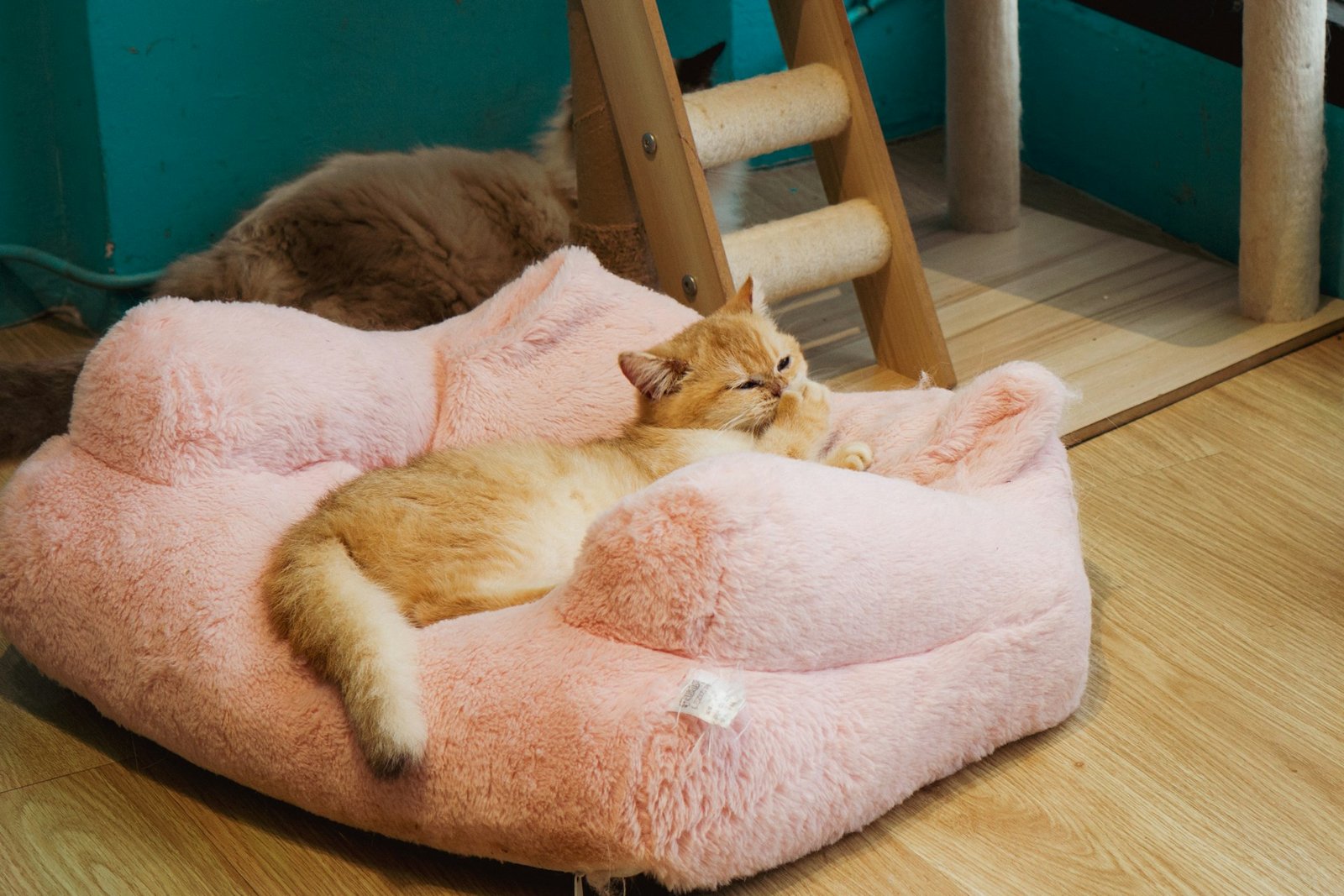

Cats sleep between 12 and 16 hours a day — making their sleeping environment one of the most important comfort decisions you make for them. The irony is that cats are notoriously selective about where they sleep, and an expensive bed placed in the wrong spot is no more likely to be used than a cardboard box in the right one.
The best cat bed is not the most expensive or the most elaborate — it is the one that matches your cat’s sleeping preferences, their need for warmth and security, and sits in a location they would naturally choose themselves.
This guide covers the main bed types, which cats suit each one, and the practical considerations that determine whether your cat will actually sleep in it.
Why Cat Sleeping Preferences Are So Specific
Cats choose sleeping spots based on a combination of factors that are instinctive rather than arbitrary:
Warmth — cats have a thermoneutral zone (the temperature range where they are comfortable without generating extra heat) of around 86–97°F (30–36°C). Room temperature for humans is typically well below this, which is why cats gravitate toward sunny patches, radiators, and warm bodies.
Security — in the wild, a sleeping cat is a vulnerable cat. Instinct drives cats toward spots that are elevated (predators typically approach from below), enclosed (limits approach angles), or against a solid surface (no unexpected approach from behind).
Familiarity — cats prefer sleeping surfaces that carry their own scent. A new bed smells of the factory; a blanket you have used smells like you. This is why placing a worn piece of your clothing in a new bed dramatically increases adoption rate.
Quiet — cats sleep lightly and wake easily. They prefer sleeping locations away from household traffic, sudden noises, and disruption.
Types of Cat Beds
1. Donut / Nest Bed
A circular or oval bed with padded, raised walls all the way around — designed for cats who curl tightly during sleep. The enclosed shape creates a nest-like feeling of security that many cats find irresistible.
Best for: Cats who curl up tight, anxious cats who prefer an enclosed feeling, small breeds and kittens, cold climates where warmth retention matters.
What to look for: Soft, plush interior that retains warmth, a base firm enough to not collapse under the cat’s weight, and walls high enough to genuinely enclose — not just a low rim. Machine washable is essential.
2. Bolster / Sofa Bed
A flat cushioned base with raised sides on some or all edges. Less enclosed than a donut bed but gives cats a raised edge to rest their head or press against — a favourite sleeping position for many cats.
Best for: Cats who stretch out partially but still want a raised surface nearby, medium-sized cats, cats who like resting their chin on a raised edge.
3. Cave / Hooded Bed
A fully enclosed bed with an opening at one end — the cat enters through the opening and is completely surrounded. For cats who want maximum enclosure and security during sleep, a cave bed is the most instinctively appealing design.
Best for: Anxious cats, timid cats, cats who hide under beds or in boxes, cats in multi-pet households who need a private retreat.
What to look for: An opening large enough for your cat to enter and turn around comfortably, adequate internal height so they are not pressed against the ceiling, and a removable inner pad for washing.
4. Heated Cat Bed
A bed with either an electric heating element or a self-warming reflective inner layer. Cats are drawn to warmth instinctively — a heated bed often converts the most stubborn bed-avoiders.
Electric heated beds maintain a consistent temperature and are most effective in cold climates or for elderly arthritic cats who particularly benefit from warmth. Look for thermostatically controlled, low-wattage options with chew-resistant cords.
Self-warming beds use a reflective inner layer to redirect the cat’s own body heat back toward them — no electricity, no cords, and safe for unsupervised use. Less warm than electric versions but practical for everyday use.
Best for: Senior cats with arthritis — warmth significantly eases joint pain and stiffness. See our how to care for a senior dog guide for the age-related comfort principles that apply equally to senior cats. Also ideal for kittens, thin-coated breeds, and any cat in a cold home.
5. Window Perch / Cat Hammock
A shelf or hammock that attaches to a window — allowing the cat to lie in the sun and watch the world outside simultaneously. For indoor cats, window access is one of the most significant environmental enrichments available. See our best interactive cat toys guide for other indoor enrichment ideas that complement a window perch.
Best for: Indoor cats, cats who spend time watching birds and outdoor activity, sun-lovers.
What to look for: Secure attachment that holds the cat’s full weight without flexing, a sleeping surface large enough for the cat to fully stretch, and easy removal for washing.
6. Elevated / Raised Bed
A sleeping surface suspended on a frame — allowing air to circulate beneath. Cooler than ground-level beds — useful in warm climates or for cats who overheat easily.
Best for: Warm climates, summer use, cats who consistently seek out elevated sleeping surfaces.
Cat Bed Comparison
| Type | Warmth | Security | Best For | Price Range |
|---|---|---|---|---|
| Donut / Nest | ⭐⭐⭐⭐⭐ | ⭐⭐⭐⭐ | Curlers, anxious cats | $20–$60 |
| Bolster / Sofa | ⭐⭐⭐ | ⭐⭐⭐ | Stretchers, head-resters | $25–$70 |
| Cave / Hooded | ⭐⭐⭐⭐⭐ | ⭐⭐⭐⭐⭐ | Timid cats, multi-pet homes | $20–$60 |
| Heated | ⭐⭐⭐⭐⭐ | ⭐⭐⭐ | Senior cats, cold climates | $30–$80 |
| Window Perch | ⭐⭐⭐⭐ | ⭐⭐ | Sun-lovers, indoor cats | $20–$50 |
| Elevated | ⭐ | ⭐⭐ | Warm climates, hot cats | $25–$60 |
Why Your Cat Is Not Using Their New Bed
This is the most common complaint from cat owners after buying a new bed. The reasons are almost always practical and fixable:
Wrong location — the most common reason. A bed placed where you think it should go, rather than where your cat already sleeps, will be ignored. Move it to the spot your cat currently favours — windowsill, corner of the sofa, top of the wardrobe — and acceptance rate rises dramatically.
Smells wrong — new beds smell of packaging, factory, and unfamiliar materials. Place a piece of your worn clothing or a blanket your cat already uses inside the bed. Your scent makes it immediately more familiar.
Wrong type — a cat who sprawls out will not use a small donut bed. A cat who wants to hide will not settle in an open bolster bed. Match the bed type to your cat’s observed sleeping behaviour.
Too exposed — a bed in the middle of a room is too exposed for most cats. Place it against a wall, in a corner, or in an elevated position.
Competition from better options — if your sofa, bed, or a warm patch of floor offers something the cat bed does not, the cat will choose those. Adding a self-warming layer or placing the bed in a sunnier spot levels the competition.
Key Features to Look For
Machine washable — non-negotiable for hygiene. Beds that cannot be washed accumulate dander, bacteria, and odour rapidly.
Non-slip base — prevents the bed sliding when the cat jumps in or turns around.
Size — the bed should be large enough for your cat to fully stretch out if they choose, even if they usually curl up. Measure your cat’s length from nose to tail base and add at least 4–6 inches.
Durability of fill — cheap beds flatten within weeks and provide no insulation or cushioning. Quality beds maintain their loft for months to years.
Best Cat Beds — FAQ
How do I get my cat to sleep in their bed instead of mine? Place the cat bed on or directly beside your bed initially — your scent and proximity make it significantly more appealing. Once your cat uses it reliably, you can gradually move it to your preferred location.
Do cats need beds or do they prefer hard surfaces? Cats sleep on hard surfaces when they want to cool down or when no warmer option is available. Given a choice between a quality warm bed and a hard floor, most cats choose the bed. The exceptions are cats who overheat easily — they may genuinely prefer cooler surfaces in warm weather.
How often should I wash my cat’s bed? Every 1–2 weeks for hygiene — cat dander accumulates quickly and can trigger allergies. Most cat beds with removable covers can be machine washed on a gentle cycle and air or tumble dried.
My cat prefers cardboard boxes to any bed I buy — what should I do? Embrace it. A cardboard box with a soft blanket inside provides the enclosed, scented, low-cost sleeping environment many cats genuinely prefer. Place the box where the cat already sleeps, line it with a worn piece of your clothing, and accept that cats are the final arbiters of what constitutes a good bed.
Also read: Best Cat Scratching Posts | Best Interactive Cat Toys | How to Care for a Cat in Winter | How Long Do Cats Live