


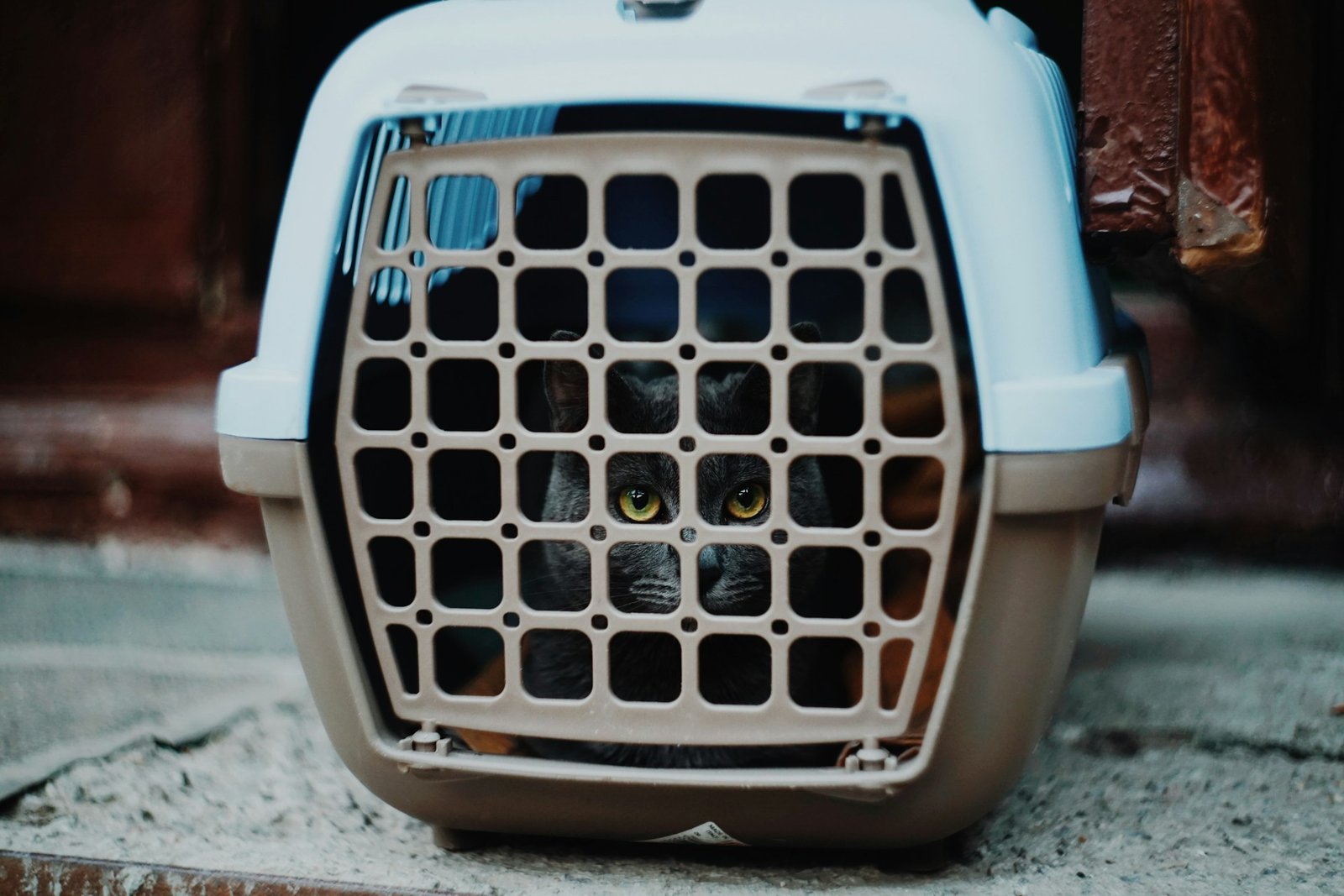

A cat carrier is one of the most important pieces of equipment you own as a cat owner — and one of the most commonly bought wrong. The best cat carrier is not the cheapest option or the prettiest one. It is the one your cat will actually enter calmly, that keeps them safe during transport, and that makes the vet’s job easier when you arrive.
This guide covers the main carrier types, what makes each one work, and how to make your cat genuinely comfortable with carrier travel rather than it being a twice-yearly battle.
Why the Right Carrier Matters
A cat in a carrier it hates is a cat that is stressed before the vet visit even begins. Elevated cortisol from transport stress affects heart rate, blood pressure, and behaviour at the clinic — making examination harder and results less reliable. A cat comfortable in its carrier arrives calmer, is easier to examine, and recovers from the visit faster.
Beyond vet visits, the right carrier is essential for emergencies — a house fire, a flood, a sudden evacuation. A carrier your cat refuses to enter in a crisis is a genuine safety problem. The time to train carrier acceptance is now, not during an emergency.
Types of Cat Carriers
1. Hard-Sided Plastic Carrier — The Reliable Standard
The classic two-piece hard plastic carrier with a front-opening door and ventilation panels on the sides. Robust, easy to clean, and the design most vets are familiar with working around.
The key feature for vet visits: Many hard-sided carriers have a removable top half — secured by clips around the middle. This allows the vet to examine your cat while they remain sitting in the bottom half of the carrier — significantly less stressful than dragging a frightened cat out through a front door. If you are buying a hard-sided carrier specifically for vet visits, look for this top-opening or top-removable design.
Best for: Vet visits, short car journeys, cats who need containment security, emergency preparedness.
What to look for: Sturdy latches that do not accidentally open, adequate ventilation on multiple sides, a removable top, and a size that allows your cat to stand and turn around comfortably.
2. Soft-Sided Carrier — Comfort and Portability
A soft fabric carrier with a rigid internal frame — lighter than hard carriers, more comfortable for extended travel, and often more appealing to cats who find the rigid plastic walls of hard carriers intimidating.
Best for: Longer journeys, airline cabin travel (most airlines accept specific soft-sided dimensions under the seat), cats who travel frequently and need a comfortable carrier environment.
Limitation: Soft carriers cannot be split in two for easy vet examination. They are also less resistant to a truly determined cat — a very stressed cat can potentially claw through a fabric panel. Not ideal for cats with significant carrier anxiety.
What to look for: A rigid internal frame that maintains the carrier’s shape, ventilation panels on multiple sides, multiple opening points (top and front), and dimensions that fit under an airline seat if travel is a consideration.
3. Top-Loading Carrier — Best for Anxious Cats
A carrier specifically designed for top entry — the cat is lowered in from above rather than having to walk or be pushed through a front door. This is significantly less stressful for anxious cats who resist front-entry carriers.
Top-loading carriers are also easier for owners to manage — lower the cat gently from above rather than attempting to reverse a reluctant cat through a small front opening.
Best for: Cats with significant carrier anxiety, elderly or arthritic cats who cannot easily step over a front threshold, single-owner households where managing a reluctant cat through a front door is difficult.
4. Backpack Carrier
A structured backpack with a transparent or mesh bubble window — worn on the owner’s back or chest. Increasingly popular in urban environments for cats who are taken out regularly.
Best for: Cats who travel frequently in urban environments, owners who use public transport, short journeys where a hand-carried carrier is impractical.
Limitation: Not suitable for all cats — some find the movement of backpack travel more unsettling than a stable hand-carried carrier. The enclosed space and proximity to the owner’s back can cause overheating in warm weather. Not ideal for very large cats.
What to look for: Adequate ventilation, a window that provides visual interest for the cat, padded shoulder straps for owner comfort, and a safety leash attachment inside to prevent escape if the zip is accidentally opened.
5. Wheeled / Trolley Carrier
A soft or hybrid carrier with extendable wheels and handle — rolled like a small suitcase. Useful for owners who cannot comfortably carry a heavy cat in a traditional carrier.
Best for: Large or heavy cats, owners with back or shoulder problems, longer distances through airports or stations.
Carrier Comparison
| Type | Vet Suitability | Travel Comfort | Anxiety Suitability | Price Range |
|---|---|---|---|---|
| Hard-sided (top-remove) | ⭐⭐⭐⭐⭐ | ⭐⭐⭐ | ⭐⭐⭐ | $25–$60 |
| Soft-sided | ⭐⭐⭐ | ⭐⭐⭐⭐⭐ | ⭐⭐⭐ | $30–$80 |
| Top-loading | ⭐⭐⭐⭐⭐ | ⭐⭐⭐⭐ | ⭐⭐⭐⭐⭐ | $50–$150 |
| Backpack | ⭐⭐ | ⭐⭐⭐ | ⭐⭐ | $40–$100 |
| Wheeled | ⭐⭐⭐ | ⭐⭐⭐⭐ | ⭐⭐⭐ | $60–$150 |
Getting the Size Right
A carrier should be large enough for your cat to stand up, turn around, and lie down comfortably — but not so large that they slide around during travel. A cat in a correctly sized carrier braces against the walls during movement, which actually reduces travel anxiety. A carrier that is too large removes this stabilising effect.
Measuring: Measure your cat’s length (nose to tail base) and height (floor to top of shoulders when standing). Add approximately 4 inches to each measurement for the minimum carrier interior dimensions.
How to Make Your Cat Actually Accept the Carrier
This is the part most owners skip — and then wonder why the twice-yearly carrier battle is so stressful.
Leave the carrier out permanently. A carrier that only appears for vet visits becomes associated exclusively with stress. Left out as permanent furniture, it becomes neutral — often chosen as a sleeping spot. This single change transforms carrier acceptance for most cats within 2–4 weeks.
Make it comfortable. Line with a familiar blanket or piece of your clothing. Place treats inside regularly without closing the door. Feed meals near or inside the carrier.
Use Feliway spray. Spray the interior of the carrier with Feliway Classic 15–20 minutes before travel (allow the alcohol carrier to evaporate first). This significantly reduces travel anxiety for many cats. See our how to get an aggressive cat to the vet guide for the full approach to reducing vet visit stress.
Cover the carrier during travel. A light blanket over the carrier reduces visual stimulation and creates a more den-like environment during the journey.
Ask your vet about pre-visit medication. For cats who remain significantly anxious despite training — gabapentin given 1–2 hours before travel is safe, effective, and transformative for many cats. Most vets are happy to prescribe it. See our full guide on how to get an aggressive cat to the vet for details.
Best Cat Carriers — FAQ
What size carrier do I need for my cat? Measure your cat’s nose-to-tail length and standing height, then add 4 inches to each. The carrier interior should comfortably accommodate these dimensions. When in doubt, size up — but avoid carriers more than 50% larger than needed as the cat will slide around during travel.
Can two cats share one carrier? Only for very short journeys between bonded cats. For vet visits, separate carriers are strongly recommended — cats are stressed at the vet and even bonded cats can react unpredictably to each other in that state.
Is a soft or hard carrier better? For vet visits — hard-sided with removable top is best. For longer travel or frequent journeys — soft-sided for comfort. For anxious cats — top-loading regardless of material.
My cat absolutely refuses to go in the carrier — what do I do? See our how to get an aggressive cat to the vet guide for the full step-by-step approach. The towel wrap technique, top-loading carriers, and pre-visit gabapentin together resolve even the most carrier-resistant cats.
Should I put food in the carrier before a vet visit? Only treats for positive association training well in advance of the visit. On the day of the visit, many vets prefer cats not to have eaten for 2–4 hours before — particularly if sedation or procedures are possible. Check with your vet when booking.
Also read: How to Get an Aggressive Cat to the Vet | Best Cat Beds — What Cats Actually Sleep In | My Cat Is Sick — Signs and When to See a Vet | Cat Rabies Vaccine — Everything You Need to Know