


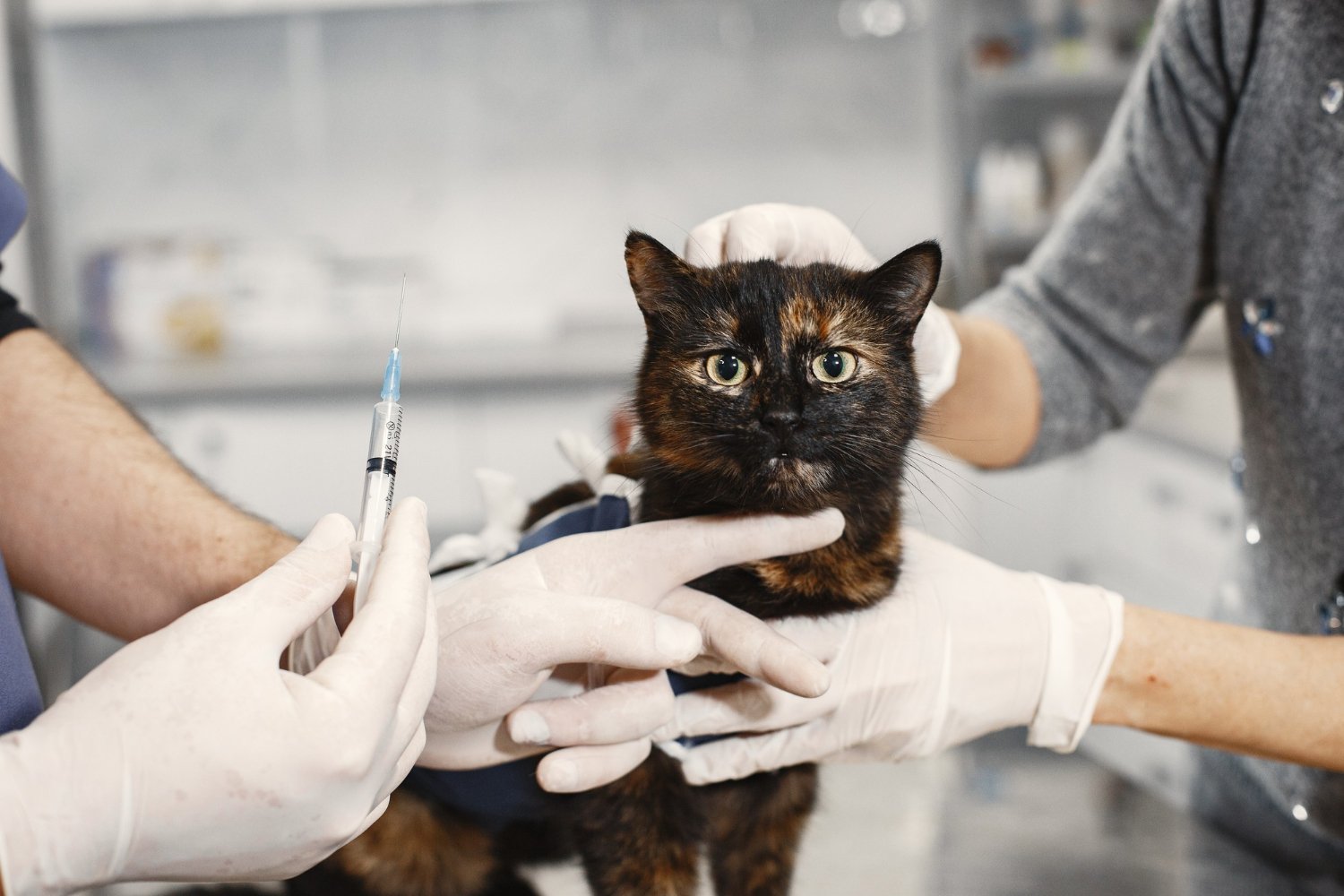

The cat rabies vaccine is one of the most important vaccines your cat will ever receive — and in most US states, it is legally required regardless of whether your cat lives entirely indoors. Rabies is almost always fatal once symptoms appear, making prevention the only meaningful protection.
This guide covers when cats need the rabies vaccine, how often boosters are required, what to expect on the day, and why even indoor cats need it.
What Is Rabies and Why Does It Matter for Cats?
Rabies is a viral disease that affects the central nervous system of all mammals — including cats, dogs, and humans. It is transmitted through the saliva of an infected animal, most commonly via a bite wound.
Once symptoms appear, rabies is almost universally fatal. There is no effective treatment for an animal — or human — showing clinical signs. This is why vaccination before exposure is the only real protection.
In the USA, wildlife is the primary rabies reservoir — bats, raccoons, skunks, and foxes are the most commonly affected species. Domestic cats are actually one of the most frequently reported rabid domestic animals in the USA, partly because cat vaccination rates are lower than dog vaccination rates, and partly because outdoor cats regularly encounter wildlife.
According to the Centers for Disease Control and Prevention (CDC), cats account for more rabies cases among domestic animals than dogs in the United States — making vaccination genuinely important rather than merely a legal formality.
Is the Rabies Vaccine Required for Cats?
Yes — in all 50 US states, rabies vaccination is legally required for cats. The specific requirements (age at first vaccination, booster intervals) vary by state and sometimes by county, but the legal obligation is universal.
Consequences of not vaccinating:
- Fines and penalties
- If your unvaccinated cat bites a person, extended quarantine or euthanasia for rabies testing may be required
- If your cat is exposed to a rabid animal, an unvaccinated cat faces a very difficult situation — often extended quarantine or euthanasia, as post-exposure treatment protocols for unvaccinated animals are limited
Indoor-only cats are not exempt. Bats — which can carry rabies — enter homes through gaps, open windows, and chimneys far more commonly than most people realise. An indoor cat encountering a bat is a real scenario that happens regularly, and vaccination protects against it.
Cat Rabies Vaccine Schedule
First Vaccination
Kittens receive their first rabies vaccine at 12–16 weeks of age — at the same appointment as their final FVRCP booster. The exact minimum age varies by state (some allow 12 weeks; others require 16 weeks) and by specific vaccine product.
For the full kitten vaccination timeline including FVRCP, see our kitten vaccine schedule guide.
One-Year Booster
Regardless of age at first vaccination, a booster is required one year later. This is mandatory even if the kitten received their first vaccine close to 16 weeks.
Subsequent Boosters
After the one-year booster, adult cats receive boosters every 1 or 3 years depending on:
- The specific vaccine product used — some are licensed for 1 year, others for 3 years
- Your state or county regulations
- Your vet’s recommendation
Most vets use a 3-year licensed rabies vaccine for adult cats after the initial series, making triennial boosters standard for most healthy adult cats.
| Age / Stage | Vaccine |
|---|---|
| 12–16 weeks | First rabies vaccine |
| 12 months later | Mandatory booster |
| Every 1–3 years | Per vaccine type and local law |
Types of Rabies Vaccine for Cats
Two main types are used in veterinary practice:
Killed (inactivated) vaccines — the traditional type. Very safe and effective. Available in 1-year and 3-year licensed versions.
Recombinant vaccines — newer technology using a modified canarypox virus to deliver rabies antigens. Cannot cause rabies as there is no live rabies virus involved. Associated with a lower rate of injection site reactions. The PureVax recombinant vaccine is widely used in cats specifically because cats have a higher rate of vaccine-associated sarcoma (a rare but serious tumour at injection sites) than dogs — the recombinant vaccine may reduce this risk.
Discuss with your vet which vaccine type is most appropriate for your cat — particularly if your cat has had any previous injection site reactions.
Vaccine-Associated Sarcoma — What Cat Owners Should Know
Cats have a rare but real risk of developing a vaccine-associated feline sarcoma (VAFS) — a malignant tumour at the injection site. The incidence is estimated at 1–10 cases per 10,000 vaccinations — rare, but worth knowing about.
Modern practice minimises this risk by:
- Vaccinating in specific body locations (lower limbs or tail rather than the scruff) to allow surgical removal if a tumour develops
- Using recombinant vaccines where possible
- Avoiding unnecessary vaccination combinations
What to monitor: After any vaccination, check the injection site periodically. A lump that is larger than 2cm, persists longer than 3 months, or is growing should be assessed by your vet promptly.
The risk of vaccine-associated sarcoma is real but small — and is significantly outweighed by the protection vaccination provides against rabies. Do not skip vaccination because of this concern — discuss the right vaccine type and injection site protocol with your vet.
What to Expect on Vaccination Day
Before the Appointment
No special preparation needed. Your cat can eat and drink normally. If your cat is anxious at the vet — see our how to get an aggressive cat to the vet guide for preparation tips that make clinic visits calmer.
During the Appointment
The rabies vaccine is given as a single injection — in the lower right hind leg in most modern protocols. The injection takes seconds. A brief physical examination beforehand confirms your cat is healthy enough for vaccination.
After the Appointment — Normal Reactions
Mild reactions in the 24–48 hours after vaccination are normal:
- Slight soreness or swelling at the injection site
- Mild lethargy
- Reduced appetite
- Occasionally mild fever — see our my cat has a fever guide for what to monitor
These resolve without treatment within 1–2 days.
When to Contact Your Vet After Vaccination
Contact your vet promptly if your cat shows:
- Facial swelling, hives, or itching — signs of allergic reaction, usually within 30–60 minutes of injection
- Vomiting or collapse
- Difficulty breathing
- Swelling at the injection site that persists or grows beyond 3 weeks
Severe allergic reactions are rare. Many vets recommend waiting 15–20 minutes after the injection before leaving the clinic, particularly for cats with previous vaccine reactions.
How Much Does the Cat Rabies Vaccine Cost?
| Setting | Typical Cost |
|---|---|
| Private vet clinic | $15–$35 per dose |
| Low-cost vaccine clinic | $5–$15 per dose |
| Shelter or humane society | Free–$10 |
| Combined with wellness exam | $50–$100 total visit |
Many pet supply stores host periodic low-cost vaccine clinics where the rabies vaccine is available at reduced cost. These are legitimate, licensed veterinary services.
Search for low-cost spay/neuter and vaccine clinics in your area through your local humane society — many offer heavily subsidised vaccination days several times per year.
Keeping Vaccination Records
Your vet provides a rabies certificate after each vaccination — keep this safe. You will need it for:
- Cat licensing (required in many US counties)
- Boarding, grooming, and cattery stays
- Any bite incident involving your cat
- Interstate or international travel with your cat
If your cat bites someone and cannot produce a current rabies certificate, the consequences are significantly more serious than for a vaccinated cat. Keeping records current protects your cat as much as the vaccination itself does.
Cat Rabies Vaccine — FAQ
My indoor cat has never been outside — do they still need the rabies vaccine? Yes — legally in most US states, and practically for safety. Bats enter homes more commonly than most people realise and are a significant rabies vector. Accidental escapes happen. Rabies vaccination protects against low-probability but high-consequence scenarios that do occur.
Can my cat have a reaction to the rabies vaccine? Mild reactions — soreness, lethargy, reduced appetite — are normal and resolve within 48 hours. Severe reactions are rare. The specific concern for cats is vaccine-associated sarcoma — a rare tumour at injection sites. Discuss injection site location and vaccine type with your vet to minimise this risk.
What happens if my cat is overdue for their rabies booster? Contact your vet as soon as possible. An overdue cat is considered unvaccinated from a legal standpoint. Your vet will advise whether a restart of the series is needed or a single booster restores coverage — this depends on how overdue the vaccine is and your state’s regulations.
Is the 1-year and 3-year rabies vaccine the same? The vaccines are often similar, but the 3-year vaccine is specifically tested and licensed for 3-year duration of immunity. Your vet will use whichever is appropriate for your state’s regulations and your cat’s health history.
My cat was bitten by a wild animal — what do I do? Contact your vet immediately. If your cat is currently vaccinated, a booster and observation period is typically recommended. If your cat is unvaccinated, the situation is significantly more complicated — extended quarantine or, in some jurisdictions, euthanasia for testing may be required. This is one of the strongest practical reasons to keep vaccination current.
Also read: When Do Kittens Get Their First Vaccine? | My Cat Has a Fever | How to Get an Aggressive Cat to the Vet | My Cat Is Sick — Signs and When to See a Vet