


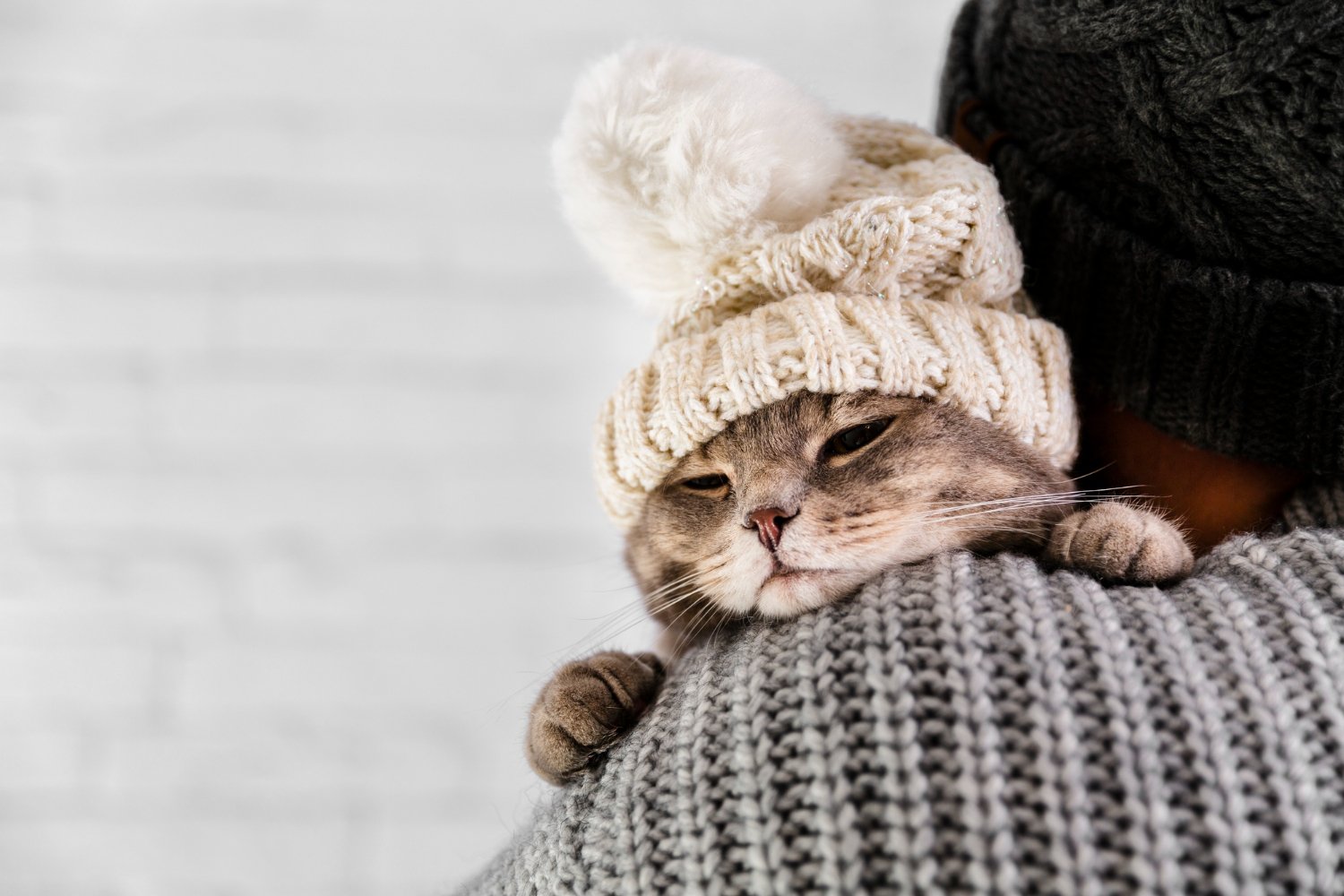

Winter brings real risks for cats — not just the cold, but the hidden dangers that come with it: antifreeze on driveways, frozen water bowls, cars with warm engines, and the slow creep of hypothermia in cats who cannot find shelter. Caring for a cat in winter requires some straightforward adjustments that make a significant difference to their comfort and safety.
Do Cats Feel the Cold?
Yes — despite their fur coats, cats feel cold and are vulnerable to hypothermia in low temperatures. A cat’s normal body temperature is 100.5°F–102.5°F (38°C–39.2°C). When ambient temperature drops significantly, maintaining that internal temperature requires energy — and cats who are elderly, thin, unwell, or wet are at particular risk.
The common assumption that cats handle cold better than dogs is not entirely accurate. Cats are adaptable but not cold-proof. See our hypothermia in cats guide for the signs and emergency response if your cat gets too cold.
Indoor Cats in Winter
Indoor cats are largely protected from the worst winter dangers, but cold weather still affects them in ways worth managing.
Warmth and Bedding
- Provide warm, draught-free bedding away from doors, windows, and cold floors
- Raised beds keep cats off cold floor surfaces — air circulates beneath but the sleeping surface stays warmer
- Heated cat beds or a self-warming pad are particularly valuable for elderly or arthritic cats
- If your cat has a favourite window perch, check that the window seal is not creating a cold draught at that spot
Heating and Indoor Temperature
- Maintain indoor temperature above 70°F (21°C) during cold weather
- Be aware of where heating vents and radiators are — cats gravitate toward heat sources and can overheat locally even when the room is cold. Check your cat is not spending excessive time pressed against a very hot surface
- Never use space heaters without supervision around cats — knocked-over heaters are a fire risk
Dry Indoor Air
Central heating dries indoor air significantly, which can affect your cat’s skin and respiratory comfort. A humidifier in the room your cat uses most reduces this effect and is particularly helpful for cats prone to respiratory issues — see our why is my cat sneezing guide for how dry air contributes to upper respiratory symptoms.
Winter Exercise
Cats naturally reduce activity in cold weather. Combined with winter comfort eating, this can contribute to weight gain. Keep your indoor cat active with interactive play sessions — our best interactive cat toys guide covers the best options for keeping an indoor cat engaged through winter.
Outdoor and Indoor-Outdoor Cats in Winter
Cats with outdoor access face significantly more winter risks than indoor cats. The decisions you make about outdoor access during cold weather genuinely matter.
Temperature Thresholds for Outdoor Access
- Below 45°F (7°C) — limit outdoor time, particularly for kittens, elderly cats, and thin cats
- Below 32°F (0°C) — freezing temperatures. Outdoor access should be brief and supervised
- Ice, snow, and wet conditions — significantly increase risk even at temperatures cats can normally tolerate, as wet fur loses insulating properties
Provide Outdoor Shelter
If your cat insists on going outside or spends time in a garden, ensure shelter is available:
- A weatherproof, insulated box with a small entry hole — elevated slightly off the ground
- Line with straw (not blankets — blankets hold moisture) for insulation
- Position the entrance away from prevailing wind
- Check the shelter regularly and ensure it remains dry
Check Cars Before Starting
Outdoor cats — and neighbourhood strays — shelter in car wheel arches and under bonnets for warmth. Before starting your car in winter, knock on the bonnet firmly to wake any sleeping cat inside. This is one of the most important winter safety habits for any cat owner in a cold climate.
Keep Cats In at Night
Night temperatures are coldest and the risk of hypothermia, traffic accidents, and predator encounters all increase after dark. Establishing a routine of keeping your cat in overnight is one of the most effective safety measures you can take year-round, but is particularly important in winter.
Winter Hazards to Watch For
Antifreeze (Ethylene Glycol)
The most serious winter hazard for cats. Antifreeze has a sweet taste that cats find attractive, and even a tiny amount — a few licks — causes fatal kidney failure. It is found in car radiator fluid, screen wash, and some de-icing products.
- Store antifreeze products completely out of reach
- Clean up any spills on driveways immediately
- Consider switching to pet-safe antifreeze products (propylene glycol based)
- If you suspect your cat has ingested antifreeze — even a tiny amount — this is a veterinary emergency. Go immediately, do not wait for symptoms. Early treatment can save lives; delayed treatment cannot
Road Salt and Ice Melt Products
Salt and chemical ice melt products used on roads and pavements irritate paw pads and are toxic if licked during grooming. Wipe your cat’s paws after outdoor exposure with a warm damp cloth, particularly if they have walked on treated surfaces.
Frozen Water Sources
Outdoor water bowls freeze in sub-zero temperatures, leaving cats without drinking water. Check and refresh outdoor water bowls morning and evening in freezing weather, or use an insulated or heated bowl.
Carbon Monoxide
Cats who seek warmth near running vehicles or faulty heating systems are at risk of carbon monoxide exposure. Ensure all gas appliances are serviced, and never run a vehicle in an enclosed garage.
Winter Nutrition and Health
Calorie Requirements
Cats who spend time outdoors in cold weather burn more calories maintaining body temperature. Outdoor and indoor-outdoor cats may need slightly more food in winter — discuss with your vet whether an increase is appropriate for your cat’s specific situation.
Hydration
Cats drink less readily in cold weather, and dehydration is a year-round concern. Fresh water at room temperature (not ice cold) is more appealing in winter. A water fountain encourages drinking. See our wet food vs dry food for cats guide for how wet food contributes to hydration.
Winter Health Checks
Winter is a good time for a routine vet check — particularly for senior cats whose arthritis worsens in cold weather. Cold, damp conditions exacerbate joint pain and stiffness. If your older cat seems stiffer or more reluctant to move in winter, mention it to your vet. Our how to tell if your cat is in pain guide covers the subtle signs of arthritis pain in cats.
Flea and Parasite Prevention
Many owners reduce flea treatment in winter assuming the cold kills parasites. Indoors, central heating maintains temperatures perfectly suitable for flea eggs and larvae to develop year-round. Continue monthly flea treatment through winter.
Caring for Stray and Feral Cats in Winter
If you have community cats or strays in your area, winter is the most critical time to provide support:
- Provide a simple insulated shelter — a plastic storage box with a small entry hole and straw bedding costs almost nothing and saves lives
- Place a food and water station with daily fresh supplies
- Contact your local animal rescue or TNR (Trap-Neuter-Return) programme for support
How to Care for a Cat in Winter — FAQ
How cold is too cold for a cat to be outside? Below 45°F (7°C) is uncomfortable for most cats, particularly those who are thin, elderly, or unwell. Below 32°F (0°C) is genuinely dangerous for any cat without adequate shelter. Wet or windy conditions at any temperature increase risk significantly.
My cat wants to go out in winter — should I stop them? You cannot always stop a determined cat, but you can limit exposure. Keep outdoor sessions brief in very cold weather, ensure they can come back in easily at any time, and keep them in overnight without exception.
My cat is sleeping near the radiator constantly — is this okay? Normal behaviour — cats seek warmth. The concern is if they are pressed directly against a very hot surface, which can cause localised burns or overheating. Ensure the spot is warm but not burning hot, and provide an alternative warm bed nearby so they have a choice.
Should I increase my cat’s food in winter? For outdoor cats — possibly slightly. For indoor-only cats in a heated home — not usually, as their calorie expenditure does not increase significantly. Obesity is a year-round risk even in winter. See our best cat food for weight loss guide if your cat tends to gain weight in the colder months.
Can cats get colds in winter? Cats can develop upper respiratory infections — commonly called cat flu — year-round, but indoor crowding and stress in winter can trigger flare-ups in cats who carry the herpesvirus. See our why is my cat sneezing guide for symptoms and when to see a vet.
Also read: Hypothermia in Cats — Signs and Treatment | How to Care for a Cat in Summer Heat | How to Tell If Your Cat Is in Pain | Best Interactive Cat Toys