


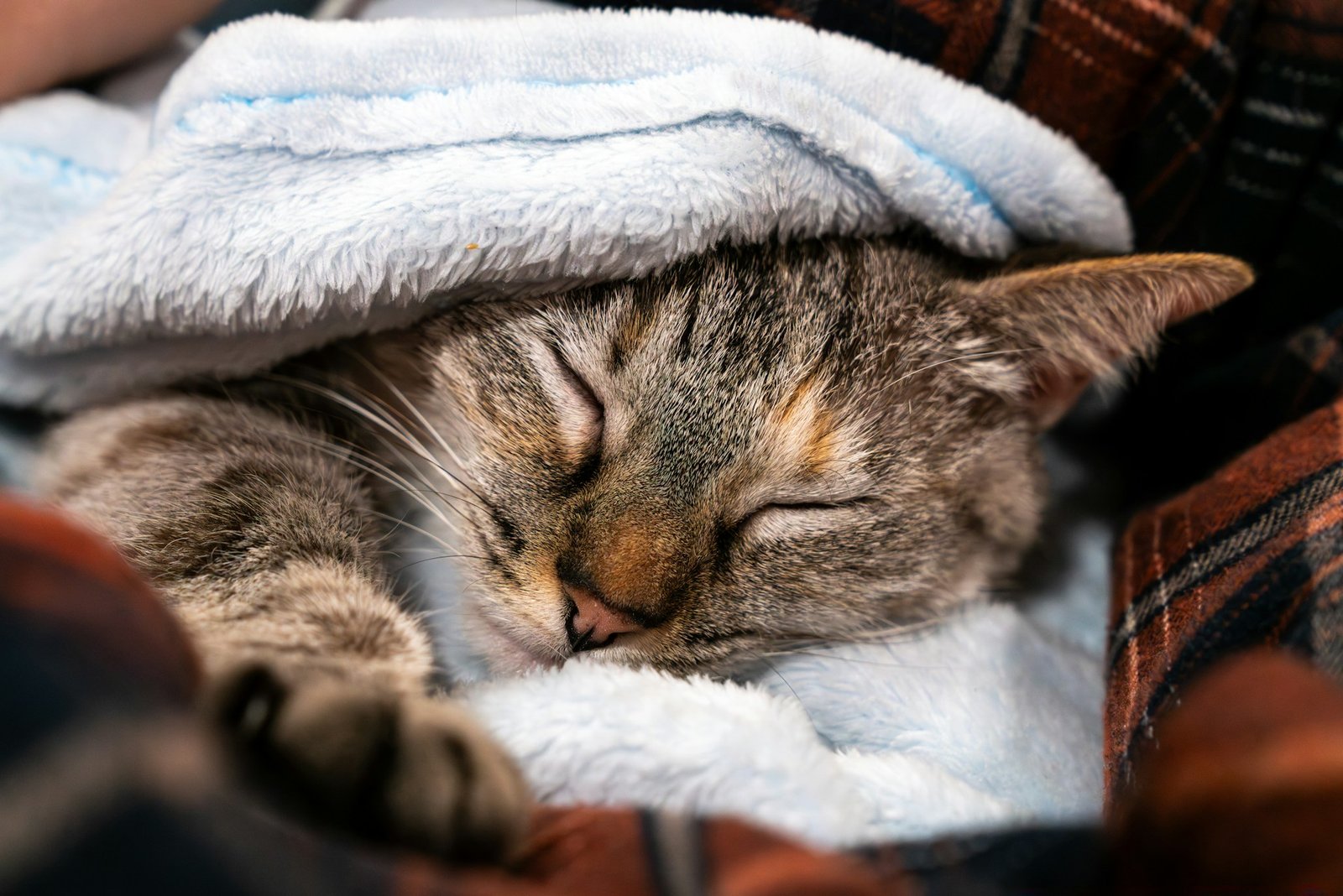

Hypothermia in cats occurs when a cat’s body temperature drops dangerously low — below the point where the body can generate enough heat to function normally. It is a genuine medical emergency that can be fatal without prompt action.
Cats are better at conserving heat than many animals, but they are not immune to cold — particularly kittens, elderly cats, wet cats, and cats who are unwell or injured. Knowing the signs and what to do in the first few minutes can save your cat’s life.
What Is a Normal Cat Body Temperature?
A healthy cat’s body temperature sits between 100.5°F and 102.5°F (38°C–39.2°C).
Hypothermia is classified by severity:
| Severity | Temperature | Signs |
|---|---|---|
| Mild | 90–99°F (32–37°C) | Shivering, cold to touch, lethargy |
| Moderate | 82–90°F (28–32°C) | Muscle stiffness, slow breathing, pale gums |
| Severe | Below 82°F (28°C) | No shivering, unconscious, very slow or absent pulse |
As body temperature drops, the cat’s body shuts down progressively — first reducing circulation to the extremities, then slowing the heart and breathing, and finally losing consciousness. Severe hypothermia is rapidly fatal without veterinary emergency care.
Which Cats Are Most at Risk?
Any cat can develop hypothermia in cold enough conditions, but these cats are at highest risk:
- Kittens — small body mass, immature thermoregulation
- Senior cats — reduced ability to regulate body temperature
- Wet cats — water conducts heat away from the body far faster than air
- Thin or malnourished cats — reduced body fat means less insulation
- Cats who are already unwell — illness impairs the body’s ability to maintain temperature
- Cats under anaesthetic or recovering from surgery — body temperature drops during and after procedures
- Outdoor cats in winter — particularly those trapped outside, in snow, or unable to find shelter
Signs of Hypothermia in Cats
Mild Hypothermia
- Shivering or trembling
- Cold skin and fur, particularly at the ears, paws, and tail
- Lethargy and weakness
- Reluctance to move
- Hunched posture with fur fluffed up
Moderate Hypothermia
- Shivering stops — this is a warning sign, not improvement. The body has run out of energy to shiver
- Muscle stiffness and difficulty moving
- Slow, shallow breathing
- Pale or bluish gums
- Dilated pupils
- Slowed heart rate
Severe Hypothermia
- Unconscious or unresponsive
- No shivering
- Very slow or absent breathing
- Very slow or absent pulse
- Fixed, dilated pupils
Any cat showing moderate or severe signs needs emergency veterinary care immediately.
What to Do If Your Cat Has Hypothermia
Step 1 — Move to Warmth Immediately
Bring your cat indoors or to the warmest available space immediately. Every minute in the cold makes the situation worse.
Step 2 — Dry the Cat if Wet
If your cat is wet, dry them gently but thoroughly with towels. Wet fur dramatically accelerates heat loss — drying is one of the most important first steps.
Step 3 — Warm Gradually — Not Too Fast
Rapid rewarming is dangerous — it can cause a sudden drop in blood pressure and cardiac arrhythmias. Warm your cat gradually:
- Wrap in warm (not hot) towels or blankets
- Place a warm water bottle wrapped in a towel against the cat’s body — never directly against the skin
- If available, use an electric blanket on its lowest setting with a towel between the blanket and the cat
- Place the wrapped cat on a warm surface
Do not use:
- A hairdryer on hot setting — causes burns and dangerously rapid rewarming
- Direct heat sources like radiators or very hot water bottles
- Immersion in hot water
Step 4 — Call the Vet Immediately
Even for mild hypothermia, call your vet. For moderate or severe hypothermia, go to an emergency vet without delay — do not wait to see if home warming is sufficient. Hypothermia can cause internal organ damage, cardiac arrhythmias, and blood clotting problems that are not visible externally.
Step 5 — Monitor While Transporting
Keep your cat wrapped and warm during transport. Monitor breathing — if breathing stops, your vet can advise on CPR over the phone while you travel.
What NOT to Do
- Do not rub the cat vigorously — rough handling of a hypothermic cat can trigger cardiac arrhythmias
- Do not give food or water to an unconscious or semi-conscious cat — aspiration risk
- Do not apply direct heat — warm gradually always
- Do not assume the cat will warm up on their own — moderate and severe hypothermia require veterinary intervention for fluid therapy, monitored rewarming, and treatment of complications
What Happens at the Vet
For moderate to severe hypothermia, your vet will:
- Measure core temperature with a rectal thermometer
- Administer warmed IV fluids to raise core temperature from the inside out
- Monitor heart rhythm for arrhythmias
- Provide oxygen if breathing is compromised
- Treat any underlying condition that contributed to the hypothermia
- Monitor for complications including kidney damage and blood clotting disorders
Recovery depends on how long the cat was hypothermic and how severe the temperature drop was. Mild hypothermia caught early carries an excellent prognosis. Severe hypothermia with prolonged exposure carries a more guarded prognosis.
Preventing Hypothermia in Cats
For Outdoor Cats
- Provide a weatherproof, insulated outdoor shelter if your cat stays outside — a dry, draught-free space with bedding off the cold ground
- Bring cats indoors overnight and in severe weather
- Check your cat has not become trapped in a cold outbuilding or shed
- Consider keeping outdoor cats inside during winter cold snaps
For Indoor Cats
- Maintain indoor temperatures above 70°F (21°C) during cold weather
- Provide warm bedding away from draughts and cold floors
- Check on elderly and unwell cats frequently during cold weather — they are less able to seek warmth independently
After Surgery or Illness
- Keep recovering cats in a warm, draught-free space
- Provide a heat mat on a low setting under bedding
- Monitor temperature regularly if your cat has been anaesthetised
Hypothermia in Cats — FAQ
My cat came in from the cold and feels cold — does this mean they are hypothermic? Not necessarily. Cats who have been outside in cold weather will feel cold to the touch — check for shivering, lethargy, or abnormal behaviour alongside the cold feeling. A cat who comes in, warms up quickly, and returns to normal behaviour is unlikely to be hypothermic. A cat who remains lethargic, stops shivering, or seems unwell needs veterinary assessment.
Can a cat recover fully from hypothermia? Mild to moderate hypothermia caught and treated promptly carries an excellent recovery prognosis. Severe or prolonged hypothermia can cause organ damage that affects long-term outcomes. Early treatment is the single biggest factor in recovery.
My cat was outside all night in winter — what should I do? Bring them inside immediately, dry them if wet, wrap in warm blankets, and call your vet. Even if they seem okay, a check is worthwhile after a prolonged cold exposure — particularly for elderly cats, kittens, or cats who seem at all lethargic.
How cold does it have to be for a cat to get hypothermia? Healthy adult cats can tolerate temperatures down to around 45°F (7°C) for limited periods if they are dry and have shelter. Wet cats, kittens, elderly cats, and unwell cats develop hypothermia at much higher temperatures. Wind chill and moisture dramatically reduce safe exposure temperatures.
Can indoor cats get hypothermia? Yes — in unheated homes during winter cold snaps, or after surgery when the body’s temperature regulation is compromised. Elderly cats are particularly vulnerable indoors if heating is inadequate.
Also read: How to Care for a Cat in Winter | My Cat Is Sick — Signs and When to See a Vet | My Cat Has a Fever | How to Tell If Your Cat Is in Pain