


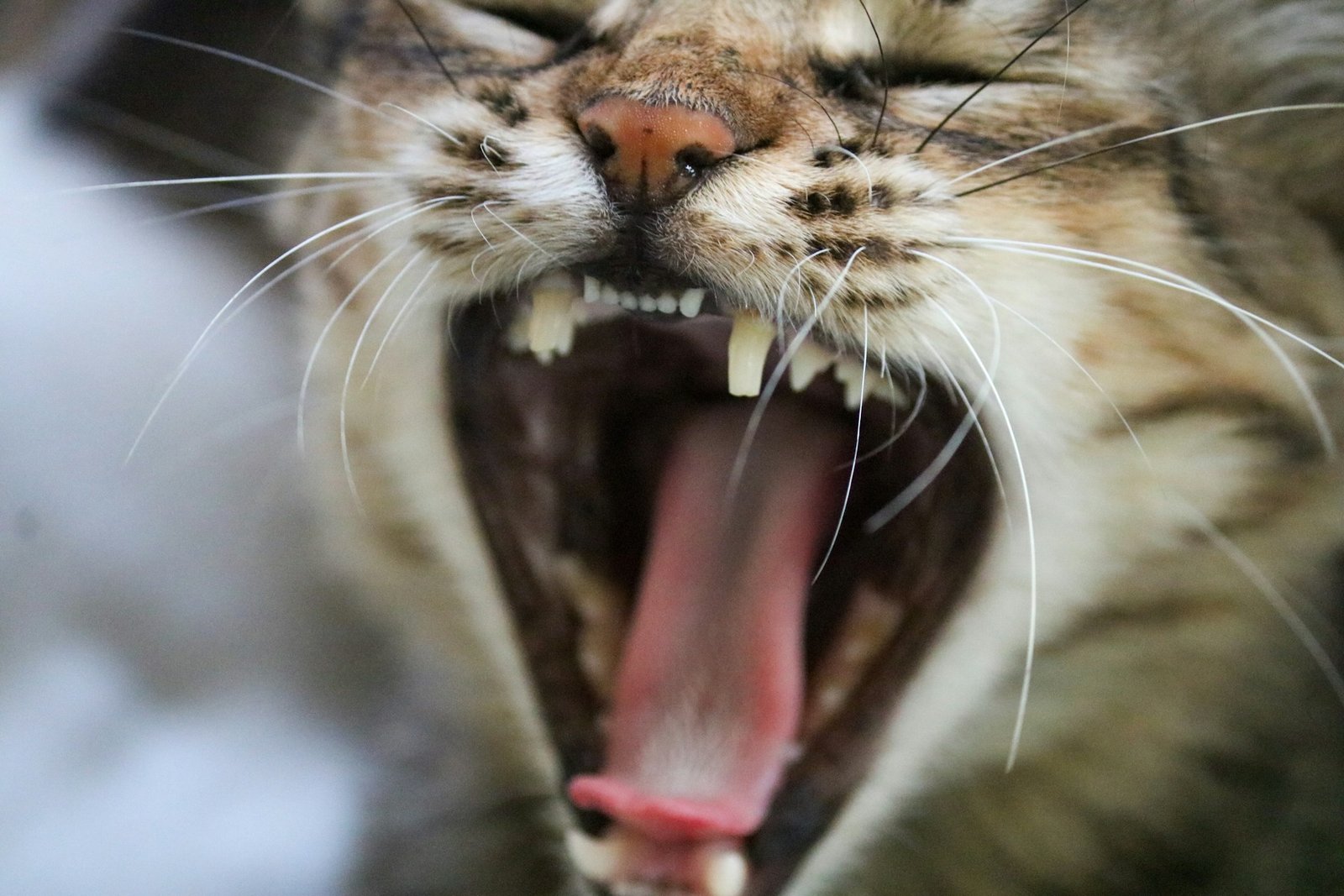

A broken tooth in a cat is more common than most owners realise — and more painful than most owners appreciate. Cats are stoic animals who hide discomfort instinctively, which means a broken tooth can go unnoticed for weeks or months while causing real, ongoing pain.
This guide covers how to spot a broken tooth, what causes them, why they need treatment, and what to expect at the vet.
How Common Are Broken Teeth in Cats?
Dental fractures are one of the most frequently seen dental conditions in cats. The upper canine teeth (the long, pointed “fang” teeth) and the upper fourth premolars (the largest cheek teeth) are the most commonly fractured.
Cats with outdoor access — who fight, chew on bones, or fall from heights — are at higher risk, but indoor cats fracture teeth too, particularly from chewing hard objects or sudden impacts.
Signs Your Cat May Have a Broken Tooth
Cats rarely cry out in pain even with a severely fractured tooth. Instead, look for:
- Reluctance to eat or chewing on one side only — favouring one side of the mouth is a reliable sign of oral pain
- Dropping food — picking up food then dropping it suggests pain when biting down
- Pawing at the mouth or face
- Visible damage — a chipped, cracked, or shortened tooth visible when you look in your cat’s mouth
- Blood-tinged saliva — particularly after eating
- Bad breath — more pronounced than usual, suggesting infection
- Swelling on the face — particularly below the eye on the same side as the damaged upper tooth. A swelling below the eye almost always indicates an abscess from an infected upper fourth premolar
- Reduced grooming — a cat with mouth pain often grooms less
- Behaviour changes — irritability, hiding, or reluctance to be touched around the face
Types of Tooth Fractures in Cats
Uncomplicated crown fracture — the outer enamel and/or dentine is chipped or fractured but the pulp (the living inner core of the tooth) is not exposed. Less immediately painful but still needs assessment as exposed dentine causes sensitivity.
Complicated crown fracture — the pulp is exposed. This is a dental emergency — the exposed pulp is extremely painful and will become infected without treatment. A pink or red dot visible in the centre of a broken tooth indicates pulp exposure.
Crown-root fracture — extends below the gum line. Requires extraction.
Root fracture — below the gum line, only visible on dental X-ray.
What Causes Broken Teeth in Cats?
- Trauma — falls, road accidents, fights with other cats or dogs
- Chewing hard objects — bones, hard toys, cage bars
- Tooth resorption — a very common feline dental condition where the tooth structure is progressively destroyed from within, making the tooth fragile and prone to fracturing. Tooth resorption affects a significant proportion of adult cats and is often only detected on dental X-ray
- Pre-existing dental disease — weakened teeth fracture more easily
Why a Broken Tooth Always Needs Veterinary Attention
This is the most important point in this guide. A broken tooth is not something to monitor and see if it resolves — it will not resolve, and delay makes outcomes worse.
If the pulp is exposed: The tooth’s nerve and blood supply is directly exposed to bacteria from the mouth. Without treatment, this leads to pulp death, root infection, and eventually a painful abscess — potentially tracking into the jaw or below the eye. This can take weeks to develop but is inevitable without treatment.
If the pulp is not exposed: The tooth still has exposed dentine — a porous layer that causes pain and sensitivity and provides a route for bacteria to reach the pulp over time.
Cats hide pain so effectively that an owner may have no idea their cat is suffering. By the time a cat shows obvious signs of pain from a dental problem, the condition has often been present for a significant time. See our how to tell if your cat is in pain guide for the subtle signs that indicate a cat is uncomfortable.
What to Do at Home
There is very little effective home management for a broken tooth — the tooth needs professional assessment.
Do:
- Book a vet appointment as soon as possible — same day or next day if the tooth is visibly fractured or your cat is not eating
- Offer soft food (wet food, or dry food soaked in water) to reduce the pain of chewing while you wait for the appointment
- Keep the mouth area clean and monitor for facial swelling — swelling below the eye is an urgent sign
Do not:
- Give human pain medication — paracetamol and ibuprofen are toxic to cats. Even aspirin is dangerous without veterinary guidance
- Attempt to examine the tooth roughly — cats with oral pain bite
- Delay — a dental abscess developing from an untreated fracture is significantly more painful and more expensive to treat than the original fracture
What to Expect at the Vet
Your vet will examine the mouth and will likely recommend:
Dental X-rays — essential for assessing the extent of the fracture, whether the pulp is affected, and whether there is root or jaw involvement. Most dental pathology in cats is not visible to the naked eye.
Treatment options depending on the fracture type:
Extraction — the most common treatment for complicated fractures in cats. Removes the source of pain and infection permanently. Cats adapt extremely well to tooth loss — even the loss of a canine tooth has minimal impact on quality of life. Recovery is typically rapid.
Vital pulp therapy — in very fresh fractures (within hours), the exposed pulp can sometimes be capped and the tooth preserved. This requires specialist dental equipment and expertise and a very recent injury — it is rarely applicable in practice.
Root canal treatment — an option for preserving the tooth in some cases, performed by a veterinary dental specialist. Less commonly chosen due to cost and the excellent outcomes of extraction.
All dental procedures in cats require general anaesthetic — there is no safe way to perform meaningful dental treatment in a conscious cat.
Cost: Dental extractions typically cost $300–$800 depending on the complexity of the extraction and your location. Referral to a veterinary dental specialist costs more. Pet insurance with dental coverage is worth considering — see our best pet insurance guide for options that include dental.
Preventing Broken Teeth in Cats
- Do not give cats real bones — cooked bones splinter dangerously; even raw bones are a fracture risk for teeth
- Choose appropriate toys — avoid very hard toys that the tooth cannot flex against
- Regular dental checks — your vet examines teeth at routine appointments and dental X-rays under anaesthetic catch tooth resorption and weakened teeth before they fracture
- Dental care at home — brushing your cat’s teeth reduces overall dental disease and the risk of conditions that weaken teeth. See our how to clean dog teeth without brushing guide for approaches that apply to cats too
My Cat Has a Broken Tooth — FAQ
My cat seems fine despite a broken tooth — do I still need the vet? Yes. Cats hide pain exceptionally well — “seeming fine” does not mean the tooth is not painful. An exposed pulp or infected root causes real suffering even when the cat shows minimal outward signs. Dental pain in cats is consistently underestimated by owners.
Can a cat live with a broken tooth? Technically yes, but not comfortably. An untreated complicated fracture will develop into an abscess and cause chronic pain. The question is not whether the cat can survive with it but whether they should have to.
Will my cat eat after a tooth extraction? Yes — most cats resume eating within 24–48 hours of extraction, often eating better than before because the source of chronic pain has been removed. Soft food is recommended for the first week post-extraction.
My cat has a wobbly tooth — is this the same as a broken tooth? A wobbly tooth in a cat is usually tooth resorption — the internal destruction of the tooth structure. It is not the same as a fracture but is equally painful and equally requires veterinary treatment (extraction).
Also read: How to Tell If Your Cat Is in Pain | My Cat Is Sick — Signs and When to See a Vet | My Cat Is Injured — First Aid Guide | Best Pet Insurance for Dogs and Cats