

You know your dog needs their teeth cleaned. You have tried the toothbrush. Your dog disagreed — strongly. Now you are wondering if there is a way to maintain their dental health that does not end with both of you frustrated and your arm covered in toothpaste.
Good news: there are several genuinely effective methods for how to clean dog teeth without brushing — from dental water additives and dental chews to finger brushes and tooth gels. None of them are quite as effective as proper brushing, but used consistently they make a real difference — especially when your dog simply will not tolerate a toothbrush.
This guide covers every option, how effective each one actually is, what the vets say, and how to combine multiple approaches for the best possible dental health without a toothbrush war.
Why Dog Dental Health Matters — The Stakes Are Higher Than You Think
Dental disease is the most common health condition in dogs — affecting an estimated 80% of dogs over 3 years old. What starts as plaque buildup becomes tartar (calculus), which leads to gingivitis, periodontal disease, and eventually tooth loss and bone destruction.
But the impact does not stop at the mouth. Bacteria from periodontal disease enter the bloodstream and have been linked to heart disease, kidney disease, and liver disease in dogs. Poor dental health genuinely shortens life expectancy.
The good news: regular home dental care — even without brushing — significantly slows plaque and tartar accumulation, reduces the frequency of costly professional dental cleanings under anaesthesia, and keeps your dog’s breath from clearing the room.
For more on signs of dental pain to watch for, read our guide on how to tell if your cat is in pain — many of the same oral pain signals apply to dogs.
How Dog Teeth Get Dirty — Understanding the Process
Dental disease in dogs follows a predictable progression:
Stage 1 — Plaque: Within hours of eating, bacteria combine with saliva and food particles to form a soft, sticky film called plaque on the tooth surface. At this stage it is invisible and easy to disrupt.
Stage 2 — Tartar (Calculus): Within 24–72 hours, plaque hardens into tartar — a mineralised deposit that cannot be removed by home care and requires professional scaling. This is why daily dental care is the goal — disrupting plaque before it mineralises.
Stage 3 — Gingivitis: Tartar above and below the gumline causes inflammation and bleeding of the gums — the first sign of periodontal disease. At this stage, professional cleaning can reverse the damage.
Stage 4 — Periodontal Disease: Advanced infection destroys the ligaments and bone supporting the teeth. Irreversible. Requires tooth extraction and sometimes bone surgery.
This progression is why consistency matters more than perfection. Daily disruption of plaque — even imperfect disruption — dramatically slows the progression toward periodontal disease.
How to Clean Dog Teeth Without Brushing — 8 Effective Methods
Method 1 — Dental Water Additives
Dental water additives are liquids added to your dog’s drinking water daily. They contain enzymes and antiseptic compounds — typically chlorhexidine, cetylpyridinium chloride, or zinc compounds — that reduce bacterial growth in the mouth and help prevent plaque formation.
How they work: The additive mixes with saliva as the dog drinks, coating tooth surfaces and reducing oral bacteria throughout the day. They do not remove existing tartar but help prevent new plaque from forming and mineralising.
Effectiveness: Moderate. Studies show dental water additives reduce plaque and gingivitis scores in dogs when used consistently. They are most effective as part of a multi-method approach rather than as a sole dental care strategy.
How to use: Add the recommended amount to fresh water daily. Most dogs do not notice any taste difference. If your dog stops drinking their water, try a lower concentration or switch brands.
Best for: Dogs that tolerate no other dental care, as an easy daily maintenance tool alongside other methods.
Method 2 — Dental Chews (VOHC Approved)
Dental chews work through the mechanical action of chewing — the physical friction against tooth surfaces disrupts plaque while the chew is in progress. Quality dental chews also contain active ingredients like enzymes or zinc compounds that provide additional antibacterial benefit.
The VOHC seal matters enormously. The Veterinary Oral Health Council (VOHC) independently tests dental products and awards their seal only to those that demonstrate a statistically significant reduction in plaque or tartar in clinical trials. Look for the VOHC seal before buying any dental chew — it is the difference between a product with actual evidence and one that is purely marketing.
VOHC-approved dental chews for dogs:
- Greenies Original Dental Chews — the most widely recommended and most studied dental chew. Available in sizes from teenie to large. The texture is designed to flex and wrap around teeth as the dog chews, providing thorough contact.
- Virbac C.E.T. VeggieDent Chews — vet clinic standard, VOHC approved, good for dogs with chicken allergies as they are grain and meat-based
- OraVet Dental Hygiene Chews — unique formula that creates a barrier on teeth to prevent bacteria from attaching
Frequency: Once daily for maximum benefit. Dental chews given less than 3 times per week provide significantly reduced dental benefit.
Size matters: Always choose the correct size for your dog — chews designed for small dogs given to large dogs are consumed too quickly to provide mechanical cleaning benefit.
Best for: Most dogs — dental chews are the most practical and most accepted home dental care tool for dogs that refuse brushing.
Method 3 — Dental Gels and No-Brush Tooth Gels
Dental gels — also called no-brush gels or finger gels — are enzymatic gels applied directly to the tooth surfaces with a finger or finger brush. They work by delivering active enzymes (glucose oxidase, lactoperoxidase) directly onto tooth surfaces where they inhibit bacterial growth and break down plaque.
They are significantly more targeted than water additives and require less cooperation than a toothbrush — most dogs tolerate a finger better than a bristle brush.
Top-rated options:
TropiClean Fresh Breath No Brush Oral Care Gel — the most popular no-brush dental gel. Applied by lifting the lip and applying two drops to the gum line on each side. The dog’s natural tongue movement distributes it across tooth surfaces. Takes 5–10 seconds per application.
Zymox Oral Care Gel — enzymatic formula, no brushing required, can also be used for gum infections and minor oral irritation.
Vetradent Dog Dental Gel — veterinary-grade gel with zinc gluconate and glycine, designed for direct application without brushing.
How to use: Lift the lip gently. Apply 1–2 drops to the gum line at the back teeth on each side. Do not rinse. The dog’s saliva and tongue movement distribute the gel. Apply daily or as directed.
Best for: Dogs that accept finger contact on their gums but refuse a toothbrush. Much easier to apply than it sounds — most dogs accept this within a few days.
Method 4 — Dental Finger Brushes and Wipes
A finger brush slips over your fingertip and has soft silicone or rubber nubs that provide mechanical plaque disruption with the familiar feel of a finger in the mouth. Many dogs that adamantly refuse a traditional toothbrush will tolerate a finger brush.
Dental wipes are textured pads you wrap around your finger to wipe tooth surfaces — simpler than a brush but less thorough than even a finger brush.
How to introduce a finger brush:
- Start by simply letting your dog sniff and lick the finger brush with a small amount of enzymatic toothpaste or pet-safe gel on it
- Progress to gently touching the outside of the lips
- Then the gum line with the lip lifted
- Then the outer tooth surfaces in brief, gentle strokes
- Gradually extend the duration over 2–3 weeks
Even wiping the outer surfaces of the upper back teeth — where tartar accumulates fastest — provides meaningful benefit.
Best for: Dogs that accept finger contact but refuse a traditional toothbrush. A practical middle ground that provides real mechanical cleaning.
Method 5 — Raw Meaty Bones (With Important Caveats)
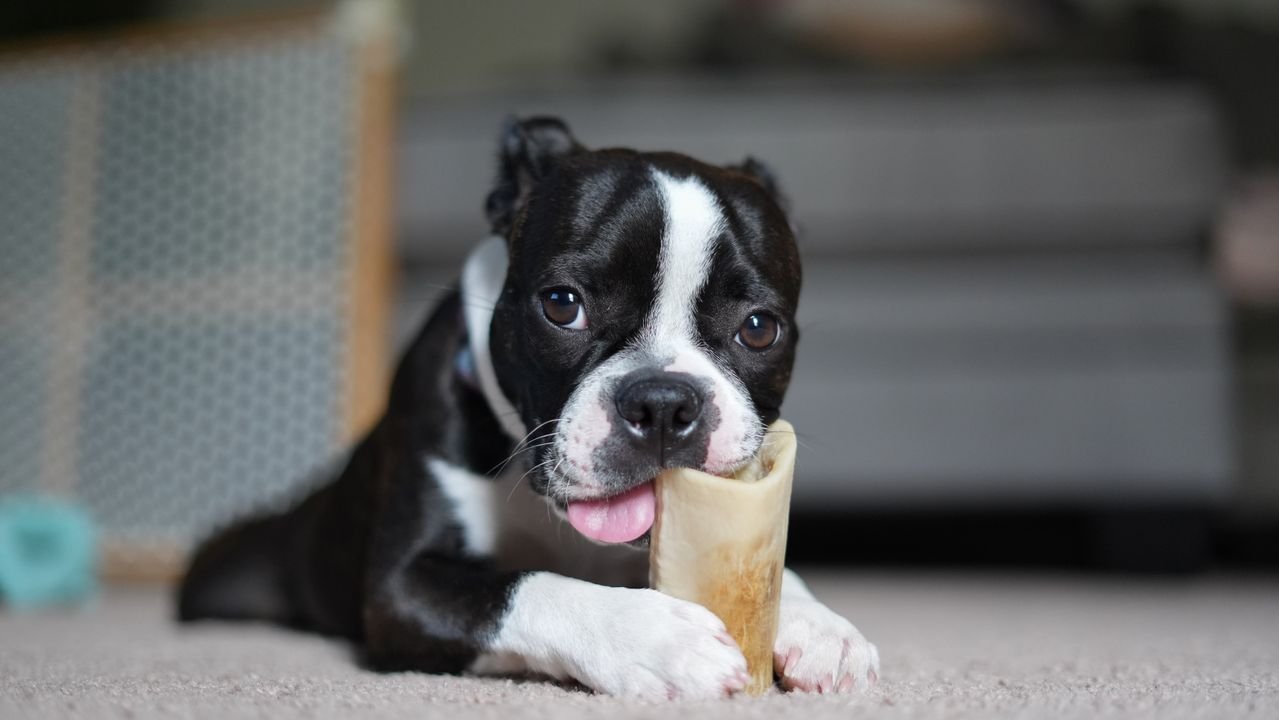
Raw meaty bones — specifically appropriate raw bones given under supervision — provide significant mechanical cleaning as the dog chews through meat, tendon, and cartilage around the bone. The fibrous tissue acts like a natural toothbrush.
This method comes with critical safety rules:
- Never cooked bones — cooked bones splinter and can cause serious internal injury or obstruction
- Always supervised — never leave a dog unattended with a bone
- Size-appropriate — the bone must be large enough that the dog cannot swallow it whole or break it into large swallowable pieces
- Not suitable for dogs with pancreatitis, dogs prone to resource guarding, or dogs on restricted diets
- Not suitable for aggressive chewers who crush and consume bone rapidly
Safe raw bone options include raw chicken necks (for smaller dogs), raw beef knuckle bones, and raw marrow bones given on a strictly timed basis.
Always discuss raw bone feeding with your vet before starting, particularly if your dog has any health conditions.
Method 6 — Dental Dog Treats with Active Ingredients
Beyond dedicated dental chews, some dog treats are formulated with dental benefit in mind — typically containing enzymes, essential oils, or specific textures that provide plaque reduction alongside a flavour reward.
Key difference from dental chews: Dental treats are given as a reward and vary in dental benefit. True dental chews (like Greenies) are specifically formulated and VOHC-tested for dental efficacy. A treat “with added dental benefit” may provide minimal real-world plaque reduction.
Look for: Enzymatic ingredients (glucose oxidase, lactoperoxidase), zinc compounds, essential oils (peppermint, rosemary), and the VOHC seal where available.
Method 7 — Dental Toys
Certain dog toys are designed to provide mechanical cleaning during play — textured rubber toys, rope toys, and specifically designed dental toys with ridges and nubs that contact tooth surfaces during chewing.
Effectiveness: Low to moderate as a standalone method, but useful as a supplementary tool alongside other approaches. The dental benefit comes only from the chewing time actively engaging the toy.
Best dental toys:
- KONG Classic — the familiar rubber ridges provide some surface contact during chewing
- Nylabone DuraChew — textured surface specifically designed to reduce plaque during chewing
- Benebone Dental Chew — wishbone-shaped chew with ridges that contact multiple tooth surfaces simultaneously
Method 8 — Enzymatic Toothpaste on a Chew Toy
A practical middle ground for dogs that refuse brushing but accept chewing: apply enzymatic dog toothpaste to a chew toy or rope toy and allow the dog to chew it. The dog’s chewing distributes the paste across tooth surfaces and the enzymatic action breaks down plaque.
How to do it: Apply a pea-sized amount of enzymatic dog toothpaste to a rubber chew toy, rope, or dental chew. Give it to the dog and allow them to chew for 5–10 minutes. Rinse the toy afterward.
This is not as effective as brushing but delivers enzymatic benefit and some mechanical action in a format most dogs willingly participate in.
The Honest Effectiveness Comparison
| Method | Plaque Removal | Tartar Prevention | Ease of Use | Daily Requirement |
|---|---|---|---|---|
| Brushing (benchmark) | ⭐⭐⭐⭐⭐ | ⭐⭐⭐⭐⭐ | Hard | Yes |
| Dental Water Additive | ⭐⭐ | ⭐⭐⭐ | Very easy | Yes |
| VOHC Dental Chews | ⭐⭐⭐ | ⭐⭐⭐⭐ | Easy | Daily ideally |
| No-Brush Gel | ⭐⭐⭐ | ⭐⭐⭐ | Moderate | Yes |
| Finger Brush | ⭐⭐⭐⭐ | ⭐⭐⭐⭐ | Moderate | Yes |
| Dental Wipes | ⭐⭐ | ⭐⭐ | Easy | Yes |
| Raw Meaty Bones | ⭐⭐⭐⭐ | ⭐⭐⭐ | Moderate | 1–2x per week |
| Dental Toys | ⭐⭐ | ⭐⭐ | Very easy | Daily play |
No single non-brushing method matches brushing. But a combination of two or three approaches — for example, a daily dental water additive, VOHC dental chews, and a no-brush gel three times a week — comes closer to adequate dental home care than any one method alone.
The Best Combined Approach for Dogs That Refuse Brushing
The most practical and effective no-brushing dental routine combines:
Daily: Dental water additive in fresh water. This takes zero effort from you or your dog.
Daily (ideally) or 3–4x per week: VOHC-approved dental chew. Most dogs consider this a treat rather than dental care — which makes compliance very high.
3–5x per week: No-brush gel applied with a finger. Takes 10 seconds. Most dogs accept this within a week of gradual introduction.
When possible: Finger brush on outer tooth surfaces. Even 30 seconds of finger brushing a few times a week provides meaningful mechanical plaque disruption.
This combination approach addresses dental health from multiple angles — antibacterial coverage from the water additive and gel, mechanical disruption from chews and finger brushing — and is achievable for most dogs without a toothbrush battle.
How to Introduce Dental Care to a Dog That Hates It
Most dogs that “hate” dental care have simply never been gradually introduced to it. Slow, positive introduction changes this for the majority of dogs.
Step 1 — Start with taste. Let your dog lick a small amount of enzymatic toothpaste or no-brush gel from your finger. Do this daily for 3–5 days until they actively seek it out.
Step 2 — Touch the lips. With paste or gel on your finger, gently touch the outside of your dog’s lips. Reward immediately. Repeat daily for 3–5 days.
Step 3 — Touch the teeth. Progress to briefly lifting the lip and touching the outer tooth surface with a finger. One or two seconds is enough to start. Reward generously.
Step 4 — Extend duration. Gradually increase how long you maintain contact and how many teeth you cover over 2–3 weeks.
Step 5 — Introduce a tool. Once your dog accepts your finger on their teeth comfortably, introduce a finger brush or dental wipe at the same step, making it positive with treats and praise.
Patience is essential. Going too fast produces resistance. Going slowly produces a dog that actively cooperates.
Professional Dental Cleanings — When They Are Still Necessary
No home dental care — brushing or non-brushing — removes tartar that has already mineralised onto tooth surfaces. Professional dental cleaning under general anaesthesia is required to remove existing tartar and treat any periodontal disease present.
For dogs with existing dental disease, a professional cleaning is the starting point — home care maintains the result after cleaning.
Frequency depends on the individual dog and how effective home care is. Dogs with excellent home dental care may only need professional cleaning every 2–3 years. Dogs with no home care often need annual cleaning.
Pet insurance that covers dental disease can significantly reduce the financial barrier to professional dental care. For a full guide, read our guide on best pet insurance for dogs in the USA.
Signs Your Dog Needs a Dental Check-Up
Watch for these signs between professional cleanings:
- Bad breath that worsens significantly
- Yellow or brown buildup on tooth surfaces — especially the back upper teeth
- Red, swollen, or bleeding gums
- Dropping food while eating or eating on one side
- Pawing at the mouth
- Reluctance to chew hard food or toys they previously enjoyed
- Facial swelling
Any of these signs warrants a vet dental examination. Dental pain is a real quality-of-life issue for dogs — read our guide on how to care for a senior dog for more on dental health in older dogs where these signs are particularly common.
Frequently Asked Questions
How do you clean a dog’s teeth without brushing? The most effective non-brushing methods are VOHC-approved dental chews used daily, no-brush enzymatic dental gel applied with a finger, dental water additives added to drinking water, and finger brushes for dogs that accept finger contact. Combining two or three approaches provides the best results.
Do dental water additives actually work? Yes — dental water additives have demonstrated ability to reduce plaque and gingivitis scores in dogs when used consistently. They are most effective as part of a broader dental care routine rather than as the sole method, as they provide antibacterial coverage but minimal mechanical plaque disruption.
Are Greenies good for dogs’ teeth? Yes — Greenies are one of the few dental chews that carry the VOHC seal, meaning they have been clinically proven to reduce plaque and tartar. Used daily, they provide meaningful dental benefit. Always choose the correct size for your dog and ensure they chew rather than swallow whole.
Can I use human toothpaste on my dog? No — never use human toothpaste on dogs. Human toothpaste contains xylitol and fluoride, both of which are toxic to dogs. Always use enzymatic toothpaste specifically formulated for dogs, which is safe to swallow and does not require rinsing.
How often should I clean my dog’s teeth without brushing? Daily is the goal for any dental care method. The bacteria that cause plaque begin reforming within 24 hours of being disrupted. At minimum, dental care methods should be applied 3–4 times per week to provide meaningful benefit — daily is significantly more effective.
When do dogs need professional dental cleaning? Most dogs need professional dental cleaning every 1–3 years depending on breed, diet, and effectiveness of home care. Small breeds, brachycephalic breeds, and dogs with no home dental care typically need more frequent professional cleaning. Your vet will advise at annual check-ups.
Conclusion
How to clean dog teeth without brushing is not about finding one perfect substitute for a toothbrush — it is about combining multiple accessible methods into a consistent routine that your dog will actually tolerate. A daily dental water additive, VOHC-approved dental chews, and a no-brush gel used regularly covers most of the bases without a daily toothbrush battle.
None of these methods fully replace professional dental cleaning when tartar is already present — but used consistently from an early age, they dramatically slow the accumulation of plaque and tartar, reduce the frequency of professional cleanings, and keep your dog’s mouth significantly healthier between vet visits.
For more dog health and care advice, read our guides on how to care for a senior dog, best dog training treats, and best pet insurance for dogs in the USA.
Always consult your vet about your dog’s dental health at annual check-ups. Signs of dental pain or significant tartar buildup require professional assessment — home care is not a substitute for veterinary dental treatment when disease is already present.
Also read: How to Care for a Senior Dog | Best Dog Training Treats | Best Pet Insurance for Dogs in the USA | Dog Supplements — Which Ones Actually Work? | How to Stop a Dog From Chewing