


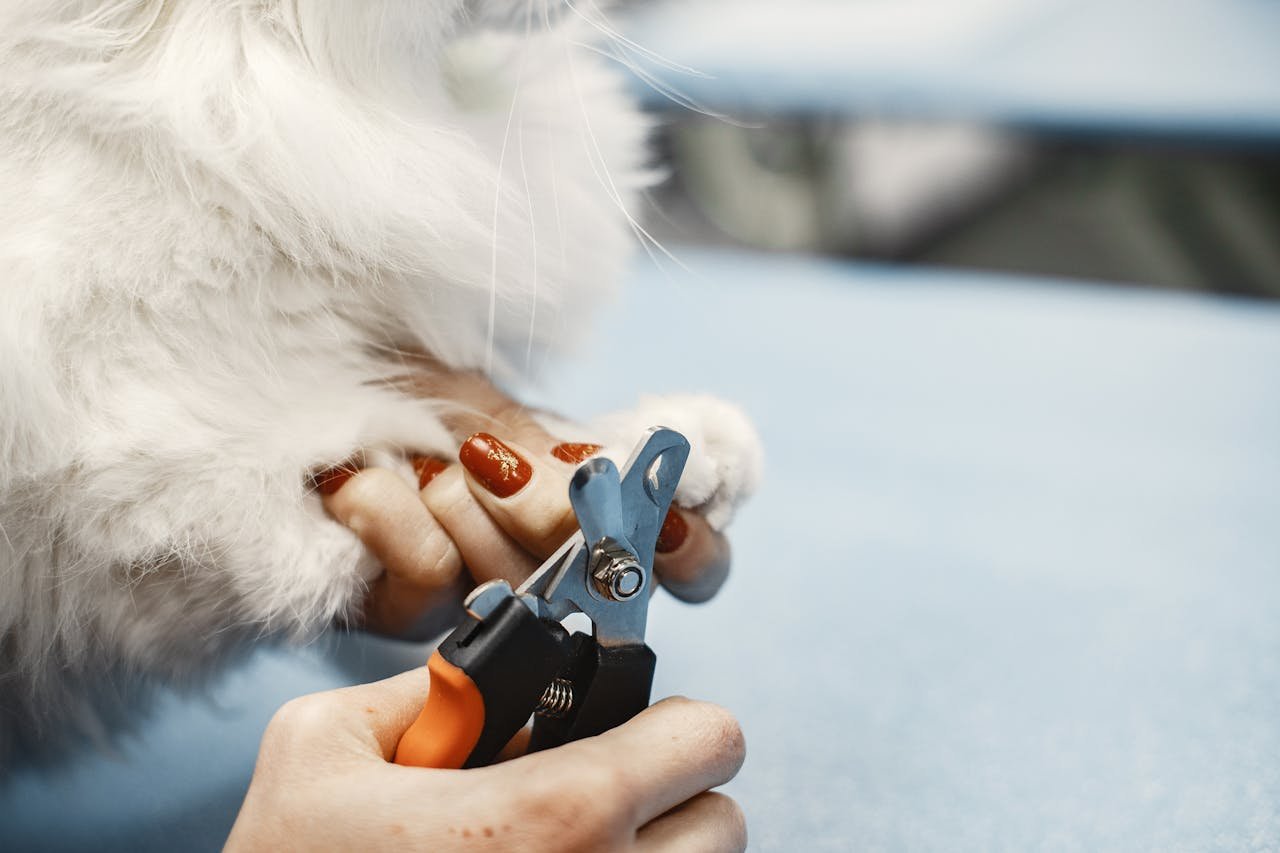

You have the clippers. You have the treats. You have good intentions. And then your cat sees what is coming and transforms into something that seems to have forty legs and a deeply personal grudge against the whole idea. Sound familiar?
How to trim cat nails without getting scratched is one of those skills that feels impossible the first time and completely manageable once you know what you are actually doing. The difference between a scratch-free nail trim and a chaotic battle is not restraint or luck — it is preparation, timing, technique, and understanding how your cat thinks. This guide covers all of it, step by step, so you and your cat both come out of the experience in one piece.
Why Trimming Your Cat’s Nails Matters
Before getting into technique, it helps to understand why regular nail trimming is worth the effort in the first place.
Untrimmed cat nails grow in a curve. Left long enough, they can curve back into the paw pad — a painful condition called nail overgrowth that requires veterinary treatment. Long nails also catch on carpets, fabric, and upholstery — causing your cat to get stuck, panic, and potentially injure themselves trying to pull free.
For indoor cats especially, regular scratching on appropriate surfaces helps maintain nail length — but rarely keeps them short enough on its own. As we covered in our guide to how long indoor cats live, proactive grooming and health maintenance are among the most meaningful things you can do for your cat’s long-term quality of life.
For senior cats and cats with reduced mobility, nail trimming becomes even more important — older cats scratch less, and their nails can overgrow quickly.
What You Need Before You Start
Set everything up before your cat enters the room. Searching for supplies mid-session with a wriggling cat is how scratches happen.
You will need:
- Cat-specific nail clippers — either guillotine style or scissor style
- Styptic powder or cornstarch — in case you accidentally cut the quick
- High-value treats your cat does not get at any other time
- A towel — for wrapping if needed
- Good lighting — you need to see clearly inside the nail
- A second person — optional but genuinely helpful for the first few attempts
On clippers: Use clippers designed specifically for cats. Human nail clippers can split and crush the nail rather than cutting cleanly, which is uncomfortable and can cause cracking. A sharp, cat-appropriate clipper makes the difference between a clean cut your cat barely notices and a squeeze that makes them pull away.
The Foundation — Getting Your Cat Comfortable Before You Clip
The biggest mistake most owners make is attempting to trim nails without any preparation — then wondering why it goes badly. Cats that accept nail trims calmly have almost always been conditioned to the experience gradually, not forced through it abruptly.
Phase 1 — Handle the Paws Daily
For at least a week before attempting any trimming, spend time each day simply handling your cat’s paws when they are relaxed. Hold each paw gently, press the pads to extend the nails briefly, then release and give a treat. No clippers. No tension. Just touch, extend, release, reward.
This phase alone transforms how cats respond to nail trims. A cat whose paws are handled regularly does not panic when you reach for their feet — it is familiar, not threatening.
Phase 2 — Introduce the Clippers Without Using Them
Let your cat sniff the clippers. Place them near the cat during a relaxed moment. Touch your cat with the clipper handle — not the blade — while giving treats. The goal is to make the clippers a completely neutral object before they are ever used.
Phase 3 — Clip One Nail and Stop
When you are ready for the first actual trim, clip one single nail — just one — give a treat, and end the session on that positive note. This sounds insufficient, but it is the most effective approach. One nail done positively is far more valuable than ten nails done badly.
Build up over days and weeks. Most cats that eventually tolerate full nail trims got there through this gradual, reward-based approach rather than through being held down and powered through.
How to Trim Cat Nails Without Getting Scratched — Step by Step
Step 1 — Choose the Right Moment
This is the single most important factor in a scratch-free nail trim. Choose a moment when your cat is naturally calm, relaxed, and ideally sleepy — after a meal, after a long nap, during a quiet afternoon. Never attempt nail trims during active play, when your cat is agitated, or when there is commotion in the household.
A sleepy, post-meal cat is a very different proposition from a cat that just spent twenty minutes chasing a wand toy.
Step 2 — Position Your Cat Correctly
Sit in a comfortable chair or on the floor with your cat on your lap or on a stable surface in front of you. The most effective position for most cats is with their back against your chest or stomach — facing away from you — so you can reach around and access their paws while keeping them gently contained.
For cats that are likely to struggle, wrapping them in a towel — the cat burrito — is your best tool. Fold the towel around your cat’s body leaving one paw accessible at a time, and re-wrap between paws. The gentle, even pressure of the towel wrap is calming for many cats — it reduces the stimulus of open exposure and limits the range of movement without requiring you to hold them firmly.
If you have a second person available, have them hold the cat gently against their body while you work on the nails. Two calm, experienced people can complete a full nail trim on most cats in under three minutes.
Step 3 — Extend the Nail
Hold the paw gently and press the pad between your thumb and forefinger to extend the nail fully. This is the same motion you have been practising during the preparation phase, so your cat already knows what it feels like.
Work in good light so you can see clearly into the nail. This is essential for the next step.
Step 4 — Identify the Quick
This is the most important technical skill in cat nail trimming — and the one that prevents almost all accidental injury.
The quick is the pink, living tissue inside the nail that contains blood vessels and nerve endings. Cutting the quick causes pain and bleeding. On light-coloured or white nails, the quick is clearly visible as a pink area within the transparent nail. On dark nails, it is harder to see — use a torch or good overhead light to backlight the nail and look for the darker, denser area within.
The rule: Only cut the clear, hooked tip of the nail — the translucent section beyond the pink quick. Leave at least 2mm of clear nail between your cut and the pink tissue.
When in doubt — cut less. A conservative cut that leaves the nail slightly longer is far better than nicking the quick. You can always trim again in a week.
Step 5 — Make a Single, Confident Cut
Position the clippers perpendicular to the nail — cutting straight across, not at an angle. Squeeze with one smooth, confident motion. Hesitant, slow squeezing crushes the nail before cutting it, which is uncomfortable and more likely to cause your cat to pull away.
One cut. Clean. Done.
Step 6 — Work Through the Nails Systematically
Move through each nail one at a time — extending, checking for the quick, cutting, releasing. Talk to your cat calmly throughout. Give a treat after every two to three nails, not just at the end.
Most cats have five nails on each front paw — including the dewclaw, which sits higher up the leg and does not touch the ground, meaning it never wears down and often grows the longest. Do not skip the dewclaws.
The back paws have four nails each. Many cats are more tolerant of back paw handling than front paw handling — if your cat is struggling with the front paws, try starting at the back to build positive momentum.
Step 7 — If You Cut the Quick
Accidents happen — even to experienced owners and professional groomers. If you cut the quick and the nail bleeds, stay calm. Apply styptic powder or cornstarch directly to the nail tip and hold it there with gentle pressure for thirty seconds. The bleeding will stop quickly in healthy cats.
Do not panic visibly — your cat reads your energy. Comfort your cat, give a treat, and end the session. Do not attempt to continue trimming that session. Resume in a few days once your cat has settled.
Step 8 — End Every Session Positively
Whether you trimmed one nail or all twenty — end the session with a treat, a calm word, and your cat walking away on their own terms rather than being released from restraint. The feeling your cat has at the end of the session is what they will associate with the next one.
How Often Should You Trim Cat Nails?
For most indoor cats, every 2 to 4 weeks is the appropriate trimming interval. Nails that are trimmed regularly stay shorter and take longer to reach an uncomfortable length — making each session quicker and easier.
Outdoor cats naturally wear their nails down more through climbing, scratching, and walking on rough surfaces, and may need less frequent trimming. However, the dewclaws — which do not contact the ground — always need monitoring regardless of how much outdoor activity your cat gets.
Senior cats need more frequent nail checks — their nails grow more slowly but are also trimmed less naturally due to reduced activity. Monthly checks are appropriate for older cats.
What to Do If Your Cat Absolutely Will Not Tolerate Nail Trims
Some cats — despite patient, gradual conditioning — remain genuinely distressed by nail trimming. If your cat is becoming significantly stressed, aggressive, or is not improving with the gradual approach over several weeks, these are your options:
Split sessions across multiple days. Trim one paw per day rather than all four in one session. This significantly reduces the duration of the experience and allows your cat to recover between sessions.
Ask your vet or groomer. A professional cat groomer or your veterinarian’s nursing team can trim your cat’s nails quickly and efficiently. Many cats that resist nail trims at home tolerate them better from a stranger using confident, practised technique — it is a context association, not personal.
Discuss sedation with your vet. For cats with severe anxiety around nail trims, your vet may offer mild sedation options that make the experience stress-free for the cat while allowing safe, complete nail care. This is a legitimate and kind option for genuinely distressed cats — not a last resort to be embarrassed about.
Soft nail caps. Adhesive soft nail caps — available at pet stores and online — fit over your cat’s nails and prevent scratching without requiring regular trimming. They need to be replaced every 4 to 6 weeks as the nail grows, but may be a reasonable compromise for cats that find trimming highly distressing. Ask your vet whether they are appropriate for your cat.
Tools That Make Nail Trimming Easier
Guillotine-style clippers: Have a circular hole through which the nail is inserted, with a blade that slides across to cut. Good for beginners — provide very precise control over exactly where the cut lands. Work best on smaller cats and kittens.
Scissor-style clippers: Work like small scissors with curved blades shaped to fit around a nail. Fast and efficient once you are comfortable with them. Preferred by many professional groomers for larger cats.
Nail grinder: An electric tool that files the nail down gradually rather than cutting. Eliminates the risk of cutting the quick entirely — but produces vibration and noise that many cats find more stressful than clippers. Worth trying if your cat handles the sound well; not effective for cats that are noise-sensitive.
For more on the grooming toolkit that keeps your cat’s coat and nails in good condition, our guide to the best brush for a long-haired cat covers the full range of home grooming tools.
Quick Reference — Nail Trimming at a Glance
| Situation | What to Do |
|---|---|
| First time trimming | Start with paw handling for a week before using clippers |
| Cat is squirming | Use the towel wrap — one paw at a time |
| Dark nails — can’t see quick | Use a torch to backlight the nail, cut conservatively |
| Accidentally cut the quick | Styptic powder, gentle pressure, end session calmly |
| Cat tolerates only a few nails | Stop there — resume tomorrow. Short positive sessions win |
| Cat refuses entirely | Split across days, try a groomer, or discuss with vet |
| Dewclaw growing very long | Trim more frequently — dewclaws overgrow fastest |
FAQ — How to Trim Cat Nails Without Getting Scratched
Q: How do I trim my cat’s nails if they won’t let me? A: Start before the clippers — spend a week handling the paws daily with treats, with no clippers involved. Then introduce the clippers as a neutral object before ever using them. Trim one nail per session initially and build up over weeks. Patience and positive reinforcement produce results where restraint fails.
Q: How do you cut a cat’s nails without getting scratched when they keep pulling their paw away? A: Work when your cat is genuinely sleepy and relaxed — timing is more effective than restraint. Use the towel wrap to limit movement. Work quickly with one confident cut per nail rather than slow, hesitant squeezes that give your cat more time to react. Have a second person hold your cat’s body while you focus on the paws.
Q: How do I find the quick in dark cat nails? A: Shine a small torch behind the nail and look for the denser, darker area within the nail structure. Cut well below that point — taking only the clear hook at the very tip. On dark nails, always cut conservatively. You can always trim more at the next session.
Q: How often should I trim my cat’s nails? A: Every 2 to 4 weeks for most indoor cats. Check more frequently for senior cats and always check the dewclaws specifically — they do not wear down through activity and can overgrow faster than the other nails.
Q: Is it okay to use human nail clippers on cats? A: Not recommended. Human clippers are designed for flat human nails and can squeeze and crush a cat’s curved nail before cutting cleanly through it. Cat-specific clippers are shaped for the curved nail structure and produce a clean, comfortable cut with much less pressure.
Q: What if my cat scratches me during nail trimming? A: Clean the scratch with soap and water immediately. Most cat scratches from a healthy, vaccinated cat are minor. If you experience swelling, redness, or fever following a cat scratch, consult a doctor — cat scratch disease, while uncommon, can occur. As we covered in our guide to how to tell if your cat is sick, keeping your cat healthy and up to date with vet visits also reduces the health risk of any accidental scratches.
Conclusion
How to trim cat nails without getting scratched comes down to three things: the right preparation, the right timing, and the right technique. A cat that has had their paws handled regularly, been introduced to clippers gradually, and been rewarded consistently at every step will eventually sit through a nail trim with minimal resistance — because the experience has never given them a reason to resist.
Start slowly. Use treats generously. Cut less than you think you need to. End every session on a positive note. And if it takes weeks to build up to a full trim — that is completely fine. The goal is a stress-free experience that both you and your cat can sustain for the next fifteen years, not a perfect result on the first day.
Your cat’s claws will get done. The question is just how calm everyone is by the end of it.
Also read: Best brush for a long-haired cat | Why is my cat shedding so much? | How to clean cat ears at home | How often should you bathe a cat? | How to tell if your cat is sick | How long do indoor cats live?