
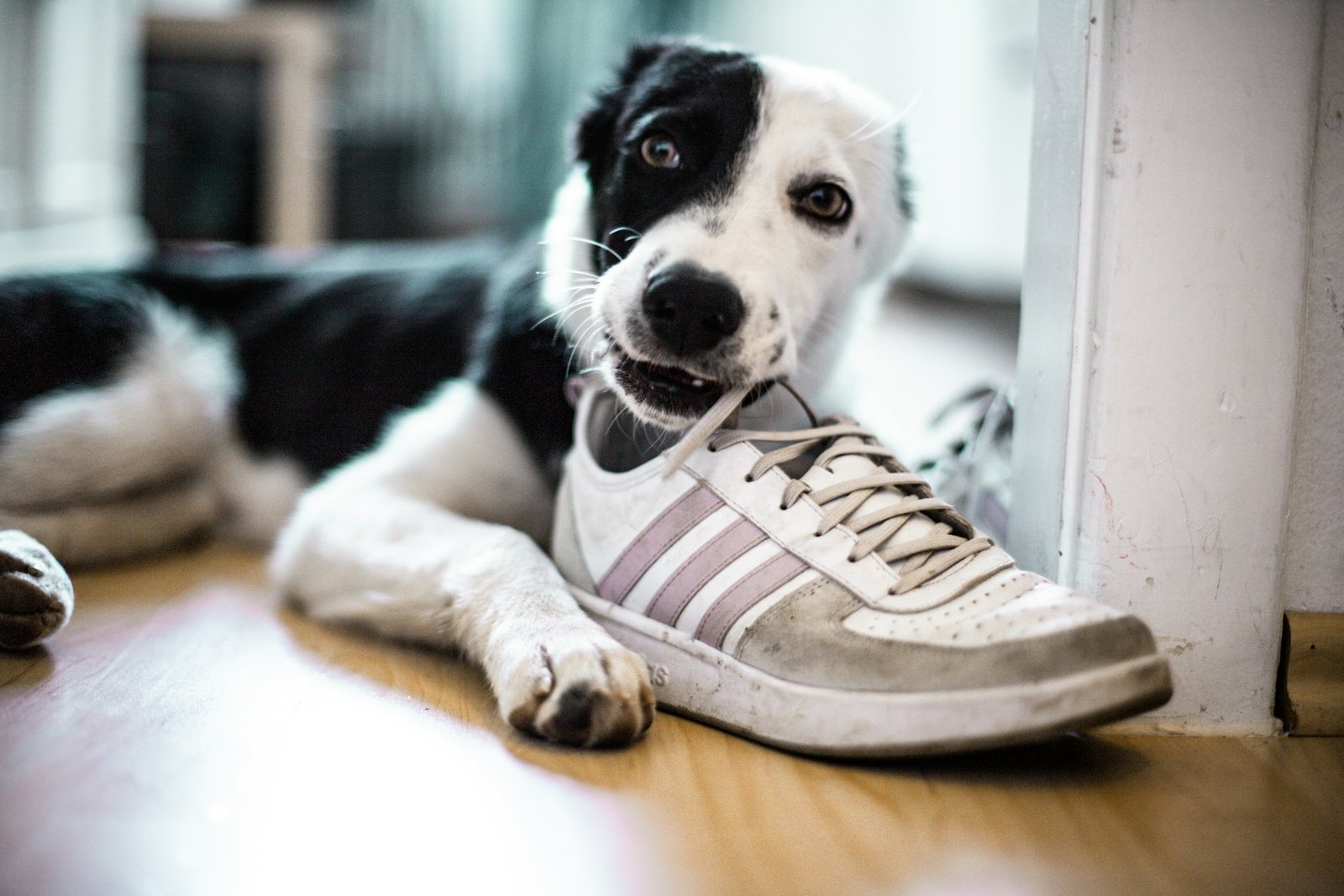

You come home to find your favourite shoes destroyed, a chair leg reduced to splinters, or a corner of the sofa completely shredded. Or you are following your puppy room to room trying to rescue every object before it ends up in their mouth.
Learning how to stop a dog from chewing everything is one of the most common and most urgent challenges dog owners face — and the good news is that it is entirely solvable with the right approach.
Chewing is completely natural dog behaviour. The goal is not to eliminate it — it is to redirect it onto appropriate outlets while protecting your home and teaching your dog what is and is not acceptable. This complete guide covers every cause, every solution, and the exact step-by-step approach that actually works.
Why Dogs Chew Everything — Understanding the Root Cause
Before addressing how to stop chewing, you need to understand why it is happening. The solution depends entirely on the cause — and getting this wrong is why most interventions fail.
Puppies — Teething and Exploration
Puppies chew because they are teething and because their mouths are their primary tool for exploring the world. Between 3 and 6 months, adult teeth are pushing through — causing discomfort that chewing relieves. Between 6 and 18 months, adolescent dogs continue to chew heavily as part of normal development.
This is not misbehaviour — it is biology. The solution is management and redirection, not punishment.
Boredom and Under-Stimulation
A dog with unspent physical and mental energy will chew. Destructive chewing is one of the most consistent signs that a dog’s enrichment needs are not being met. This is particularly common in working and sporting breeds — Labradors, Huskies, Border Collies, German Shepherds — that were developed for hours of daily activity.
If your dog’s chewing is concentrated in periods when they are left alone or after minimal exercise, under-stimulation is almost certainly the primary driver.
For enrichment solutions, read our guide on enrichment toys for dogs.
Anxiety — Particularly Separation Anxiety
Chewing has a self-soothing effect — it releases endorphins and reduces cortisol. Dogs with separation anxiety or generalised anxiety frequently chew as a coping mechanism. If the destructive chewing happens specifically when you are absent or about to leave, anxiety is likely involved.
Anxiety-driven chewing requires a different approach than boredom chewing — addressing the underlying anxiety is essential. Read our complete guide on dog anxiety for the full treatment approach.
Attention-Seeking
Some dogs learn that chewing specific items gets an immediate and dramatic response from their owner — even negative attention is attention. If your dog makes eye contact with you while chewing something forbidden, this may be attention-seeking behaviour.
Hunger
Dogs on calorie-restricted diets or underweight dogs sometimes chew non-food items. If your dog is chewing unusually varied objects including inedible items, discuss their diet with your vet.
Medical Causes
Certain medical conditions — nutritional deficiencies, gastrointestinal issues, compulsive disorders — can manifest as excessive chewing or eating non-food items (pica). If chewing is extreme, sudden in onset, or involves consuming non-food items, a veterinary check is warranted.
The Golden Rules of Stopping Destructive Chewing
These principles apply regardless of age, breed, or underlying cause:
Rule 1 — Management comes before training. You cannot train a dog not to chew things they have unsupervised access to. Management — removing the opportunity to chew forbidden items — is the first and most important step.
Rule 2 — Never punish after the fact. Finding a destroyed item 20 minutes after it happened and punishing your dog is completely ineffective and damaging to your relationship. Dogs cannot connect punishment to an event that happened in the past. You will only confuse and frighten them.
Rule 3 — Redirect, do not just stop. Chewing is a need. If you remove all chewing opportunities your dog will find their own. The goal is to redirect chewing onto appropriate items — not eliminate the behaviour entirely.
Rule 4 — Exercise and enrichment first. A tired, mentally satisfied dog chews significantly less than a bored, restless dog. Before any other intervention, assess and increase exercise and mental stimulation.
Rule 5 — Consistency is everything. Every member of the household must apply the same rules. One person allowing the dog on the sofa while another does not undermines all training.
Step-by-Step Guide — How to Stop a Dog From Chewing Everything
Step 1 — Management: Remove the Opportunity
Until your dog is trained, they cannot be given unsupervised access to items you do not want destroyed. This means:
Puppy-proofing your home:
- Remove all items at floor level that you do not want chewed — shoes, bags, clothing, TV remotes, books
- Use baby gates to restrict access to rooms you cannot supervise
- Secure electrical cords behind furniture or use cord protectors — chewed electrical cords are a serious safety hazard
- Keep doors closed to rooms with valuable or dangerous items
Using a crate: A properly introduced crate gives your dog a safe, contained space when you cannot supervise them. It is not punishment — it is management that protects your home and your dog. A crated dog cannot chew your furniture.
For full crate training guidance, read our guide on how to crate train a puppy.
Using baby gates and exercise pens: For dogs that do not tolerate crating, an exercise pen creates a dog-safe zone with appropriate toys and chews — limiting access to forbidden items while giving more space than a crate.
Step 2 — Provide Appropriate Chew Outlets
Your dog needs to chew. The solution is not to stop chewing — it is to provide so many appropriate chewing options that forbidden items become less appealing.
Types of appropriate chews:
Long-lasting chews — bully sticks, yak chews, beef tendons, deer antlers (softer ones for most dogs — avoid very hard antlers that can fracture teeth). These satisfy the deep chewing need for extended periods.
Rubber chew toys — Kong Extreme, West Paw Toppl, and similar heavy-duty rubber toys stuffed and frozen satisfy chewing while delivering a food reward. A frozen stuffed Kong is one of the most effective chewing management tools available.
Rope toys — appropriate for moderate chewers but monitor for shredding. Dogs that pull rope toys apart and eat the fibres should use more durable alternatives.
Nylabone chews — nylon chews designed to satisfy chewing instinct without being consumed. Match hardness to your dog’s chew strength.
The key: Rotate chews regularly. A chew that has been available for three days becomes boring. New or rotated chews maintain interest. Have at least 4–6 different types in rotation.
Step 3 — Increase Exercise and Mental Stimulation
For most dogs with destructive chewing problems, significantly increasing exercise and enrichment produces a dramatic reduction in chewing within days — without any formal training.
Physical exercise: Match exercise to your dog’s breed needs. A 20-minute walk is not adequate for a Labrador, Husky, or Border Collie. These breeds need 60–90 minutes of genuine aerobic activity daily. Two shorter sessions are often more effective than one long walk.
Mental stimulation — often more effective than physical exercise:
- Feed all meals through puzzle feeders rather than a bowl
- Practice training sessions — 10 minutes of obedience or trick training tires a dog as much as 30 minutes of walking
- Sniff walks where the dog leads and explores
- Hide-and-seek games with treats or toys
- Frozen stuffed Kongs given before departure and during periods alone
For a complete guide to enrichment, read our guide on enrichment toys for dogs.
Step 4 — Interrupt and Redirect (When You Catch Them)
When you catch your dog chewing something forbidden — in the act, not after — interrupt calmly and redirect to an appropriate chew.
How to do it correctly:
- Use a calm, neutral interrupter — “ah-ah” or “leave it” — not shouting or anger
- Remove or move away from the forbidden item
- Immediately offer an appropriate chew toy
- When your dog takes and chews the appropriate toy, praise warmly
The praise for taking the right item is as important as the redirection away from the wrong one. You are teaching your dog what you want them to do — not just what you do not want.
“Leave it” command: Teaching a solid leave it command gives you a verbal tool to interrupt chewing before it starts. Practice with low-value items first, then gradually proof with more tempting objects.
For training foundations, read our guide on how to teach a dog to sit — the same positive reinforcement principles apply to leave it and all impulse control training.
Step 5 — Use Deterrent Sprays on Fixed Items
For items you cannot remove — chair legs, skirting boards, cables fixed to walls — bitter deterrent sprays make the surface taste unpleasant and discourage chewing.
How to use them effectively:
- Apply to the item when your dog is not present
- Reapply every 2–3 days — the deterrent effect fades
- Always pair with an appropriate chew alternative nearby
- Test on a small hidden area first — some sprays can mark certain surfaces
Important: Deterrent sprays manage the immediate problem — they do not address the underlying drive to chew. Always use alongside the enrichment and training steps above.
Step 6 — Address Anxiety If Present
If chewing occurs specifically when you are absent, is concentrated around your departure cues, or is accompanied by other anxiety signs — barking, howling, house soiling — separation anxiety is likely the driver.
Anxiety-driven chewing will not resolve with management and chews alone. The anxiety itself must be addressed through:
- Behaviour modification — specifically the departure desensitisation protocol
- Appropriate enrichment and exercise
- Calming supplements or prescription medication for severe cases
- Possible veterinary behaviourist referral
For the complete separation anxiety approach, read our guide on dog anxiety.
How to Stop a Puppy From Chewing Everything
Puppy chewing requires a slightly different approach to adult dog chewing because the underlying cause — teething and developmental exploration — is temporary and normal.
Managing the Teething Phase (3–6 Months)
During active teething, puppies need to chew more than adult dogs. The goal is to provide appropriate teething relief while protecting your home.
Best teething solutions:
- Frozen wet cloth — soak a small rope toy or washcloth in water or low-sodium broth, freeze, and offer. The cold soothes teething gums
- Frozen banana slices or carrot sticks — edible teething relief
- Cold or frozen Kong — stuff with wet food or peanut butter and freeze
- Puppy-specific nylabone — softer than adult versions, designed for developing teeth
The Adolescent Chewing Phase (6–18 Months)
Many owners are caught off guard when their 8–12 month old dog — past the obvious teething stage — begins chewing as intensely as a puppy. This is the adolescent chewing phase, driven by hormonal changes and continued oral exploration.
This phase passes — most dogs significantly reduce chewing by 18 months to 2 years as they mature. Your job is to manage and redirect until that happens, while training appropriate behaviour.
Puppy-Specific Tips
Supervise constantly or confine. A puppy exploring unsupervised will always find something to chew. Until your puppy has demonstrated reliable behaviour, they are either supervised or confined to a puppy-safe space.
Rotate toys every session. Puppies are novelty-driven. A toy that was exciting this morning is boring this afternoon. Keep a basket of 8–10 toys and rotate 3–4 each day.
Short training sessions, multiple times daily. Ten minutes of positive reinforcement training three times per day builds impulse control and tires a puppy’s brain far more than a long play session.
Never play rough hand games. Games where your hands or clothing are the “toy” teach a puppy that human body parts and clothing are appropriate to mouth and chew. Always use a toy between your hands and the puppy’s mouth.
How to Stop a Dog From Chewing Furniture Specifically
Furniture chewing is particularly frustrating because the items cannot be moved. Here is a targeted approach:
Apply deterrent spray to all affected furniture surfaces and reapply every 2–3 days consistently.
Use physical barriers where possible — furniture covers, corner protectors, or temporary blocking with exercise pen panels during the training period.
Increase appropriate chew access near furniture. Place a high-value chew toy near the affected furniture item. Dogs often return to the same locations — giving them an appropriate option in the same spot addresses the location-specific habit.
Catch and redirect every single time. Consistency is essential. Every time the dog approaches furniture to chew and you redirect successfully, you are building the neural pathway for appropriate behaviour.
Consider the timing. If furniture chewing happens when you leave — crating or confining during absences eliminates the opportunity entirely until the behaviour is trained.
How to Stop a Dog Chewing When Left Alone
Chewing when alone is among the most common complaints and has two distinct causes requiring different solutions:
Boredom chewing when alone:
- Provide a frozen stuffed Kong immediately before you leave — this gives the dog an appropriate chewing task that occupies the first 20–30 minutes of your absence
- Leave a long-lasting chew that they only receive when alone — this creates positive anticipation for your departure
- Ensure adequate exercise before you leave
- Use puzzle feeders for their morning meal so they are mentally tired before you go
Anxiety chewing when alone: This requires the full separation anxiety protocol outlined in our dog anxiety guide. Management helps but the anxiety must be addressed for permanent resolution.
Anti-Chew Products That Actually Help
Bitter Apple and Deterrent Sprays
The most widely used and reasonably effective tool for discouraging chewing on fixed items. Most dogs find the bitter taste aversive.
Top-rated options:
- Grannick’s Bitter Apple — the original and most recognised brand
- Fooey! Ultra-Bitter Training Spray — many owners report this works on dogs that ignore Bitter Apple
- Rocco & Roxie No Chew Spray — highly rated, effective on furniture
Furniture and Cable Protectors
Physical barriers that prevent access to the surface entirely:
- Cable cord protectors — plastic spiral wraps or cable management boxes that make electrical cords impossible to chew
- Corner furniture protectors — silicone or plastic guards that cover vulnerable corner edges
- Furniture leg wraps — fabric or plastic wraps that protect chair and table legs during the training period
Deterrent Mats
Textured mats placed on sofa cushions or other surfaces create an unpleasant surface that discourages dogs from climbing up and chewing.
When Chewing Is a Serious Problem — Warning Signs
See your vet if:
- Your dog is eating non-food items — fabric, stones, plastic, soil (pica)
- Chewing is compulsive — they cannot be distracted or redirected
- The behaviour started suddenly in an adult dog with no history of chewing
- Your dog is injuring their mouth or consuming large amounts of non-food material
- Weight loss accompanies the chewing behaviour
Pica — eating non-food items — can indicate nutritional deficiencies, gastrointestinal disease, or compulsive disorder and requires veterinary investigation.
Breed-Specific Chewing Tendencies
Some breeds chew more intensely than others due to their working history and energy levels:
Labradors and Golden Retrievers — bred to carry and mouth objects. Persistent chewing through adolescence is typical for this breed. High-value chews and adequate exercise are essential.
Huskies — extremely high energy and prone to destructive behaviour when under-exercised. A Husky that does not receive adequate exercise and mental stimulation will destroy things systematically.
German Shepherds — working breed with high intelligence and energy. Boredom is the primary driver — puzzle feeding and training sessions are as important as physical exercise.
Beagles — strong scent drive and oral fixation. Tend to chew things they can smell food on — clean all food packaging scrupulously before discarding and keep bins secured.
Jack Russells and Terriers — high prey drive can manifest as intense shredding behaviour. Appropriate shredding enrichment — cardboard boxes stuffed with treats — redirects this productively.
Frequently Asked Questions
How do I stop my dog from chewing everything? The most effective approach combines management (removing or protecting items), providing abundant appropriate chew options, increasing exercise and mental stimulation, and consistently redirecting to appropriate chews when you catch them in the act. Address anxiety if chewing occurs specifically when you are absent.
How do I stop my puppy from chewing everything? Puppy chewing is normal and developmental — the goal is management and redirection rather than elimination. Supervise constantly or confine when you cannot, provide appropriate teething chews, rotate toys frequently, and use frozen toys to soothe teething gums. Most puppies reduce chewing significantly by 18 months.
Do anti-chew sprays actually work? Yes, for most dogs — bitter deterrent sprays are genuinely effective at discouraging chewing on fixed surfaces. They work best when reapplied consistently every 2–3 days and combined with appropriate chew alternatives nearby. Some dogs are less deterred by bitter taste — “Fooey!” spray works on dogs that ignore Bitter Apple.
Why is my dog chewing everything all of a sudden? Sudden onset destructive chewing in an adult dog with no previous history warrants investigation. Causes include anxiety (particularly if triggered by a life change), insufficient exercise or stimulation, boredom due to schedule changes, or rarely a medical cause. A vet check is appropriate if the behaviour is sudden, severe, or accompanied by other changes.
At what age do dogs stop chewing everything? Most dogs reduce destructive chewing significantly between 18 months and 2 years as they mature out of adolescence. Some breeds — particularly Labradors — may continue enthusiastic chewing until 2–3 years old. Adequate enrichment and appropriate chew provision throughout this period prevents the habit from becoming ingrained.
What can I spray to stop my dog from chewing furniture? Bitter Apple by Grannick’s is the most widely available and most recognised deterrent spray. Fooey! Ultra-Bitter Training Spray is often effective on dogs that ignore Bitter Apple. Apply when the dog is not watching, reapply every 2–3 days, and always pair with an appropriate chew alternative nearby.
Conclusion
How to stop a dog from chewing everything comes down to three things working together: management to remove the opportunity, appropriate outlets to redirect the chewing need, and addressing the underlying drive — whether boredom, anxiety, or developmental teething.
No single product or trick solves destructive chewing. But the combination of adequate exercise, mental enrichment, consistent management, appropriate chews, and patient redirection produces reliable results for the vast majority of dogs — usually within 2 to 4 weeks of consistent application.
Start today — increase your dog’s exercise and enrichment, rotate three new chew toys into their environment, and use a deterrent spray on any fixed items they have been targeting. The improvement will be visible within days.
For more dog training and behaviour advice, read our guides on how to crate train a puppy, dog anxiety, and enrichment toys for dogs.
Never punish a dog for chewing something after the fact — they cannot connect the punishment to the earlier behaviour and you will only damage trust. Always catch in the act and redirect calmly.
Also read: How to Crate Train a Puppy | Enrichment Toys for Dogs | Dog Anxiety — Signs, Causes and Treatments | How to Stop a Dog From Barking at Night | Best Dog Training Treats