


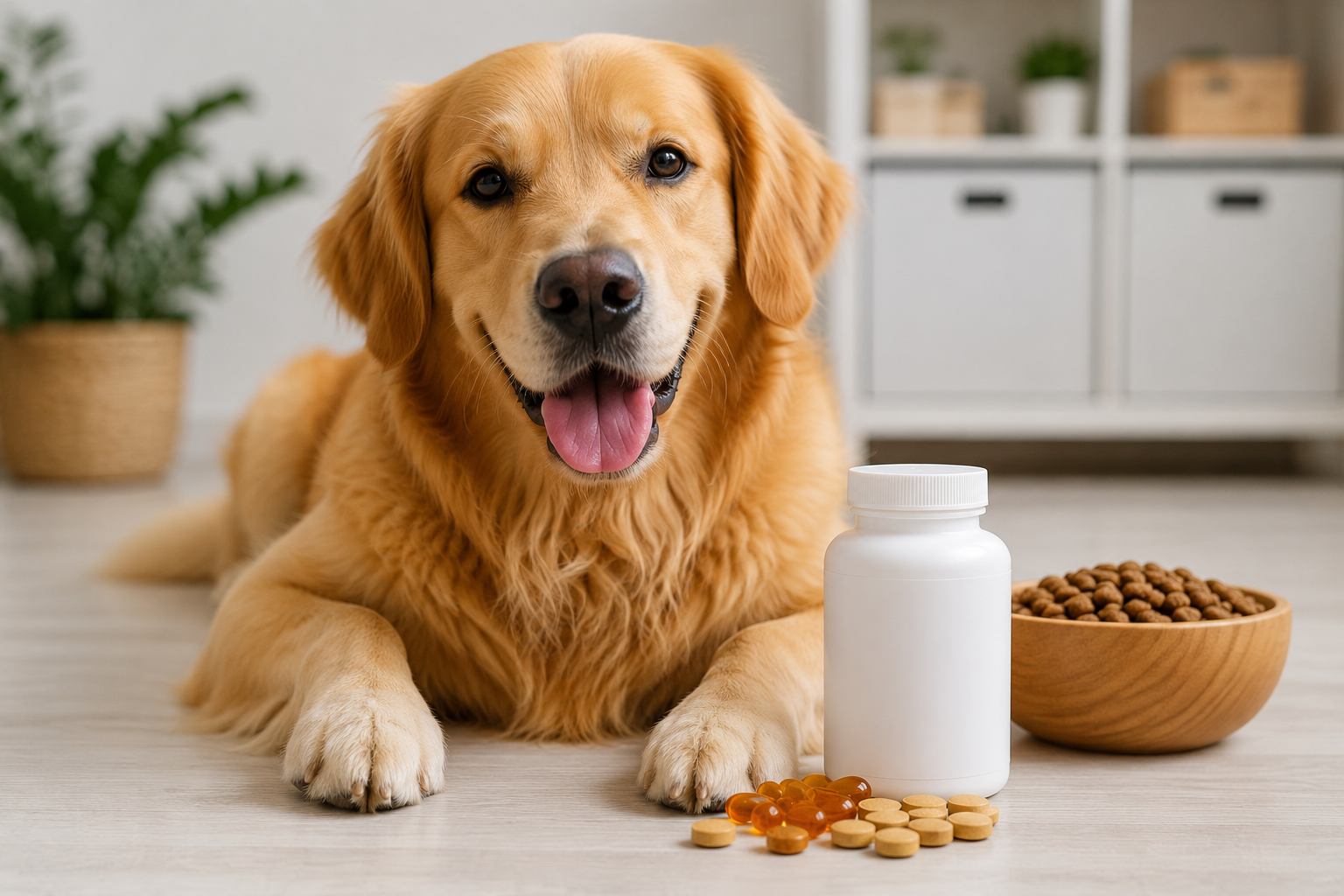

Walk into any pet store and the supplement aisle is overwhelming. Joint supplements, probiotics, omega-3s, multivitamins, calming chews, liver support, eye health, coat health — the claims are bold and the products are countless.
But which dog supplements are actually backed by evidence — and which ones are expensive marketing? That is exactly what this guide answers.
As a responsible dog owner, you want to support your dog’s health without wasting money on products that do not work or giving supplements that are unnecessary or even harmful. This complete guide breaks down every major supplement category, what the research shows, and which specific products veterinary professionals consistently recommend.
Always consult your vet before starting any new supplement, particularly if your dog is on medication or has an existing health condition.
Do Dogs Need Supplements?
The honest answer is: it depends entirely on your dog.
A healthy adult dog eating a complete and balanced commercial diet — one with an AAFCO nutritional adequacy statement — does not technically need additional supplements. These foods are formulated to meet all a dog’s nutritional requirements.
However, supplements become genuinely useful and sometimes essential in specific circumstances:
- Joint conditions — arthritis, hip dysplasia, recovering from orthopaedic surgery
- Digestive issues — chronic loose stools, antibiotic recovery, IBD
- Skin and coat problems — dry skin, excessive shedding, allergies
- Anxiety — situational or generalised anxiety that needs non-prescription support
- Senior dogs — whose nutritional needs and absorption efficiency change with age
- Dogs on homemade diets — which are almost always nutritionally incomplete without supplementation
- Specific breed vulnerabilities — large breeds prone to joint disease, breeds with known heart conditions
The key word is “specific.” Blanket supplementation without a reason is rarely necessary and occasionally harmful.
Joint Supplements for Dogs — The Most Researched Category
Joint supplements are the most widely studied category of dog supplements, and for good reason — arthritis affects an estimated 25% of all dogs and up to 90% of dogs over 12 years old.
Glucosamine and Chondroitin
Does it work? Moderate evidence supports benefit. Multiple studies show glucosamine and chondroitin can reduce pain scores and improve mobility in dogs with osteoarthritis, though results vary between individuals. They work by supporting cartilage health and reducing joint inflammation rather than rebuilding damaged cartilage.
What the research says: A landmark veterinary study published in the Journal of the American Veterinary Medical Association found significant improvements in pain and mobility in arthritic dogs given glucosamine/chondroitin versus placebo. Not every dog responds — but enough do that most vets recommend trialling it for 4–6 weeks.
Onset: 4–8 weeks of consistent dosing before judging effectiveness. If no improvement after 8 weeks, it likely will not work for that individual dog.
Top veterinary recommendations:
- Cosequin DS — the most clinically studied glucosamine supplement for dogs, available from most vets and pet pharmacies
- Dasuquin — contains glucosamine, chondroitin, and ASU (avocado/soybean unsaponifiables) — a more comprehensive formula with additional evidence
- Dasuquin Advanced — adds omega-3 fatty acids and boswellia for broader anti-inflammatory support
Green Lipped Mussel
Does it work? Increasingly good evidence. Green lipped mussel (Perna canaliculus) from New Zealand contains unique omega-3 fatty acids, glycosaminoglycans, and minerals that have shown anti-inflammatory effects in dogs comparable to or complementary to glucosamine/chondroitin.
Several peer-reviewed studies specifically in dogs show reduced pain and improved mobility. It is now one of the most veterinarian-recommended natural joint supplements available.
Top recommendation: 4Cyte Epiitalis Forte Gel — the most clinically studied green lipped mussel joint supplement for dogs, with multiple peer-reviewed studies showing significant pain reduction. Used and recommended by veterinary orthopaedic specialists.
Fish Oil / Omega-3 for Dog Joints
Omega-3 fatty acids — particularly EPA and DHA from marine sources — have well-documented anti-inflammatory properties that benefit arthritic joints significantly. They work differently from glucosamine/chondroitin, targeting inflammation rather than cartilage support, making them an excellent complement to traditional joint supplements.
For more on omega-3 supplements, see the dedicated omega-3 section below.
Omega-3 and Fish Oil for Dogs — Strong Evidence
Does it work? Yes — this is one of the most evidence-supported supplement categories for dogs. EPA and DHA (the active omega-3 fatty acids found in fish and marine oils) benefit dogs in multiple documented ways:
- Joint inflammation — reduces inflammatory markers in arthritic dogs
- Skin and coat health — reduces itching, improves coat quality, reduces shedding
- Kidney disease — studies show omega-3 supplementation slows progression of chronic kidney disease in dogs
- Heart health — beneficial for dogs with certain cardiac conditions
- Brain development — DHA is essential for puppy brain and eye development
- Cognitive function in senior dogs — supports brain health in aging dogs
What form to use: Marine-sourced omega-3 (fish oil, krill oil, salmon oil) provides EPA and DHA directly in their active form. Plant-based omega-3 (flaxseed oil) provides ALA, which dogs convert to EPA and DHA very inefficiently — making marine sources significantly more effective.
Dosage matters: Most commercial dog foods contain insufficient omega-3 to achieve therapeutic benefit. A therapeutic dose for anti-inflammatory effects is typically 20–55 mg/kg EPA and DHA combined daily.
Top recommendations:
- Zesty Paws Wild Alaskan Salmon Oil — liquid format, highly palatable, easy to dose over food
- Nordic Naturals Omega-3 Pet — pharmaceutical grade, highly purified, triglyceride form for best absorption
- Welactin Omega-3 — veterinary brand, commonly recommended by vets, liquid or capsule format
Storage note: Fish oil oxidises quickly once opened. Store in the refrigerator after opening and use within 90 days for maximum potency.
Probiotics for Dogs — Well Supported
Does it work? Yes, for specific applications — particularly acute diarrhoea, antibiotic recovery, and immune support.
Probiotics support the gut microbiome — the community of beneficial bacteria that regulate digestion, immunity, and even mood. When this community is disrupted by antibiotics, illness, stress, or dietary change, probiotics help restore balance.
For a complete deep-dive on dog probiotics including all top-rated products and specific use cases, read our dedicated guide on best probiotics for dogs.
Top vet recommendations:
- Purina FortiFlora — the most clinically studied and most vet-recommended probiotic for dogs. Especially effective for acute diarrhoea.
- Nutramax Proviable — multi-strain formula often recommended for dogs with ongoing digestive issues
- PetLab Co. Probiotic Chews — popular for dogs with skin and allergy issues as well as gut health
Calming Supplements for Dogs — Moderate Evidence
Does it work? For mild to moderate anxiety, several supplements show genuine benefit. These are not replacements for behaviour modification or prescription medication in severe cases, but they provide meaningful support for many dogs.
L-Theanine — an amino acid from green tea that promotes calm alertness without sedation. Found in several dog-specific products. Reasonable evidence for mild anxiety.
Melatonin — supports relaxation and sleep regulation. Useful for noise anxiety and age-related anxiety in senior dogs. Must be xylitol-free. Typical dose for dogs is 1–3mg depending on size.
Zylkene (alpha-casozepine) — derived from milk protein, this supplement has the best evidence base of the non-prescription calming options. Multiple studies show anxiety-reducing effects comparable to some prescription options for mild to moderate cases.
Purina Pro Plan Calming Care — contains a specific probiotic strain (Bifidobacterium longum BL999) that has been shown in clinical trials to reduce anxiety-related behaviours through the gut-brain axis. One of the few calming supplements with genuine peer-reviewed research.
Adaptil — synthetic dog appeasing pheromone. Available as a collar, diffuser, or spray. Good evidence for social anxiety, travel anxiety, and general stress.
For dogs with significant anxiety, supplements work best alongside behaviour modification. Read our complete guide on dog anxiety for the full treatment approach.
Liver Support Supplements — Useful in Specific Cases
Does it work? For dogs with liver disease or on long-term medications that affect liver function — yes.
Denamarin (SAMe and Silybin) — the most evidence-based liver supplement for dogs. Contains S-adenosylmethionine (SAMe) and silybin (from milk thistle), both of which have documented liver-protective and regenerative properties. Commonly prescribed by vets for dogs with liver disease, dogs on long-term NSAIDs, and dogs on seizure medication.
Milk Thistle (Silymarin) — the active compound in silybin. Available as a standalone supplement. Evidence supports anti-inflammatory and hepatoprotective effects. Useful for general liver support in dogs on long-term medication.
These supplements are particularly relevant for dogs on long-term gabapentin — read our guide on gabapentin for dogs for more on liver monitoring.
Skin and Coat Supplements for Dogs
Does it work? Yes — for dogs with skin issues related to omega-3 deficiency or dry skin, the right supplement makes a visible difference within 4–8 weeks.
Omega-3 fatty acids (covered above) are the single most effective skin supplement for most dogs. EPA and DHA reduce skin inflammation, decrease itching, and improve coat shine and texture significantly.
Biotin — a B vitamin that supports healthy skin and coat. Genuine deficiency is uncommon in dogs on complete diets, but dogs with certain skin conditions or on homemade diets may benefit.
Vitamin E — an antioxidant that supports skin health. Can be used topically for dry skin patches or orally for systemic support.
For dogs with allergy-driven skin issues, supplements support but do not replace veterinary diagnosis and treatment. Read our guide on why does my dog lick his paws — many licking issues are allergy or skin-related and benefit from omega-3 supplementation.
Multivitamins for Dogs — Often Unnecessary, Sometimes Useful
Does it work? For healthy dogs on complete commercial diets — usually not necessary. For dogs on homemade diets — essential.
Most commercial dog foods labelled “complete and balanced” with an AAFCO statement already provide all vitamins and minerals a dog needs. Adding a multivitamin on top can cause over-supplementation of fat-soluble vitamins (A, D, E, K) which are stored in the body and can reach toxic levels.
When multivitamins are genuinely useful:
- Homemade diet dogs — home-cooked and raw diets are almost always nutritionally incomplete without a complete supplement like Balance IT Canine
- Senior dogs with documented deficiencies from blood tests
- Dogs with malabsorption conditions — IBD, EPI, or chronic digestive disease
Supplements That Have Limited or No Evidence
Some popular supplements have very limited peer-reviewed evidence in dogs. This does not necessarily mean they do not work — it often means the research simply has not been done yet. But it does mean the health claims should be evaluated critically.
Turmeric/Curcumin — popular as an anti-inflammatory but bioavailability in dogs is poor without specific formulations (piperine-enhanced). The research in dogs specifically is limited. Some veterinary formulations may be effective but standard turmeric powder added to food probably is not.
Apple Cider Vinegar — widely recommended on social media for multiple health claims. No peer-reviewed evidence for any of these claims in dogs. Can be acidic and irritating in some dogs.
Coconut Oil — very high in saturated fat. No good evidence for the many health claims made for it. Can contribute to weight gain and pancreatitis in predisposed dogs.
Colloidal Silver — no evidence for veterinary use. Potentially harmful with long-term use. Not recommended by veterinary professionals.
Diatomaceous Earth — sometimes recommended as a parasite treatment. Not effective against internal parasites and potentially harmful to lungs if inhaled. Use proven veterinary parasite prevention instead.
Dog Supplement Safety — What Every Owner Should Know
More Is Not Better
Over-supplementation is a real risk. Fat-soluble vitamins (A, D, E, K) accumulate in the body. Calcium supplementation in large-breed puppies can cause skeletal deformities. Always dose according to your dog’s body weight and the product guidelines.
Supplement-Drug Interactions
Many supplements interact with medications:
- Fish oil can enhance the effects of blood thinners
- Vitamin E at high doses can interfere with blood clotting
- St John’s Wort (sometimes in calming blends) affects multiple drug metabolisms
- SAMe (in liver supplements) should be used carefully alongside certain psychiatric medications
Always tell your vet about every supplement your dog takes, particularly before surgery or starting new medications.
Quality and Third-Party Testing
The pet supplement industry has minimal regulation. Products are not required to prove they contain what they claim. Look for:
- NASC Quality Seal (National Animal Supplement Council) — indicates the company follows quality manufacturing guidelines
- Third-party testing — independent laboratory verification of contents
- Established brands with veterinary backing — Nutramax, Purina Veterinary, Nordic Naturals, Zesty Paws
- Clear dosing information by body weight
When to Start and Stop
Give any new supplement at least 4–8 weeks before judging effectiveness for chronic conditions. If no improvement is seen after 8 weeks, it is unlikely to work for your dog. Keep your vet informed about what supplements your dog is taking at every annual visit.
Dog Supplements by Life Stage
Puppy Supplements
Puppies eating a complete AAFCO-labelled puppy food generally do not need supplements. Exceptions:
- DHA supplementation for brain and eye development if not present in their food
- Probiotics during weaning or when transitioning to solid food
- Never supplement calcium to large-breed puppies — it disrupts bone growth
Adult Dog Supplements
Healthy adults on complete commercial food typically need no supplements. Omega-3 is the most universally beneficial optional addition — most commercial foods contain insufficient EPA and DHA for therapeutic anti-inflammatory effects.
Senior Dog Supplements
Senior dogs benefit most from targeted supplementation:
- Joint supplements (glucosamine/chondroitin or green lipped mussel) — arthritis is nearly universal in senior dogs
- Omega-3 — for joints, kidneys, brain, and coat
- Probiotics — gut microbiome diversity decreases with age
- Cognitive support — omega-3, antioxidants, and specific supplements like Senilife for dogs showing cognitive decline
For more on supporting senior dogs comprehensively, read our guide on how to care for a senior dog.
Dog Supplements Summary — Quick Reference
| Supplement | Evidence Level | Best For | Vet Recommended? |
|---|---|---|---|
| Glucosamine / Chondroitin | Moderate | Arthritis, joint pain | ✅ Yes |
| Omega-3 / Fish Oil | Strong | Joints, skin, kidneys, brain | ✅ Yes |
| Green Lipped Mussel | Good | Arthritis, joint pain | ✅ Increasingly |
| Probiotics | Strong (specific uses) | Diarrhoea, gut health, immunity | ✅ Yes |
| Zylkene / L-Theanine | Moderate | Mild to moderate anxiety | ✅ Yes |
| Purina Calming Care | Good | Anxiety, stress | ✅ Yes |
| Denamarin (SAMe + Silybin) | Strong | Liver disease, liver support | ✅ Yes (prescription use) |
| Melatonin | Moderate | Noise anxiety, sleep | ✅ Often |
| Multivitamin (complete diet) | Unnecessary | Rarely needed | ⚠️ Only if indicated |
| Turmeric / Curcumin | Limited | Anti-inflammatory (unproven) | ⚠️ Limited support |
| Coconut Oil | Very limited | None proven | ❌ Not recommended |
Frequently Asked Questions
What dog supplements actually work? The supplements with the strongest evidence for dogs are omega-3 fatty acids (fish oil), probiotics (particularly Purina FortiFlora for diarrhoea), glucosamine and chondroitin for arthritis, green lipped mussel for joint pain, and Denamarin for liver support. These are consistently recommended by veterinary professionals.
Do dogs need supplements if they eat good food? Healthy dogs on a complete, AAFCO-labelled commercial diet generally do not need supplements. Omega-3 is the one addition most vets consider beneficial for almost all dogs regardless of diet quality, as most commercial foods contain insufficient EPA and DHA for therapeutic effect.
What joint supplement do vets recommend most for dogs? Cosequin DS and Dasuquin (both by Nutramax) are the most clinically studied and most frequently recommended joint supplements by vets in the USA and Canada. 4Cyte Epiitalis Forte Gel is increasingly recommended by veterinary orthopaedic specialists, particularly in Australia.
Is fish oil safe for dogs daily? Yes — marine-sourced omega-3 (fish oil, salmon oil, krill oil) is safe for daily use in dogs at appropriate doses. Store opened bottles in the refrigerator to prevent oxidation and use within 90 days.
Can supplements replace veterinary treatment for arthritis? No — supplements support joint health but do not replace veterinary pain management for dogs with clinical arthritis. Most arthritic dogs need a combination approach including supplements, prescription pain medication if needed, weight management, appropriate exercise, and environmental modifications.
Are human supplements safe for dogs? Some human supplements are safe for dogs at appropriate doses — plain fish oil, probiotics (without xylitol), and glucosamine are examples. However, many human supplements contain xylitol, artificial sweeteners, or additives toxic to dogs. Always check every ingredient and consult your vet before giving a human supplement to your dog.
Conclusion
Dog supplements that actually work are not the ones with the most impressive marketing — they are the ones with peer-reviewed research, veterinary endorsement, and clear clinical applications. Omega-3 fatty acids, probiotics, glucosamine and chondroitin, green lipped mussel, and liver support supplements all have genuine evidence behind them.
The rule is simple: match the supplement to a specific, documented need. Do not supplement blindly. Work with your vet to identify your dog’s actual health gaps — and then choose products with real evidence to address them.
For more dog health advice, read our guides on best probiotics for dogs, gabapentin for dogs, and how to care for a senior dog.
Always consult your veterinarian before starting any supplement, particularly if your dog is on medication, has an existing health condition, or is pregnant or nursing. This article is for general informational purposes only and does not constitute veterinary medical advice.
Also read: Best Probiotics for Dogs | How to Care for a Senior Dog | Dog Anxiety — Signs, Causes and Treatments | Gabapentin for Dogs | Why Does My Dog Lick His Paws?