


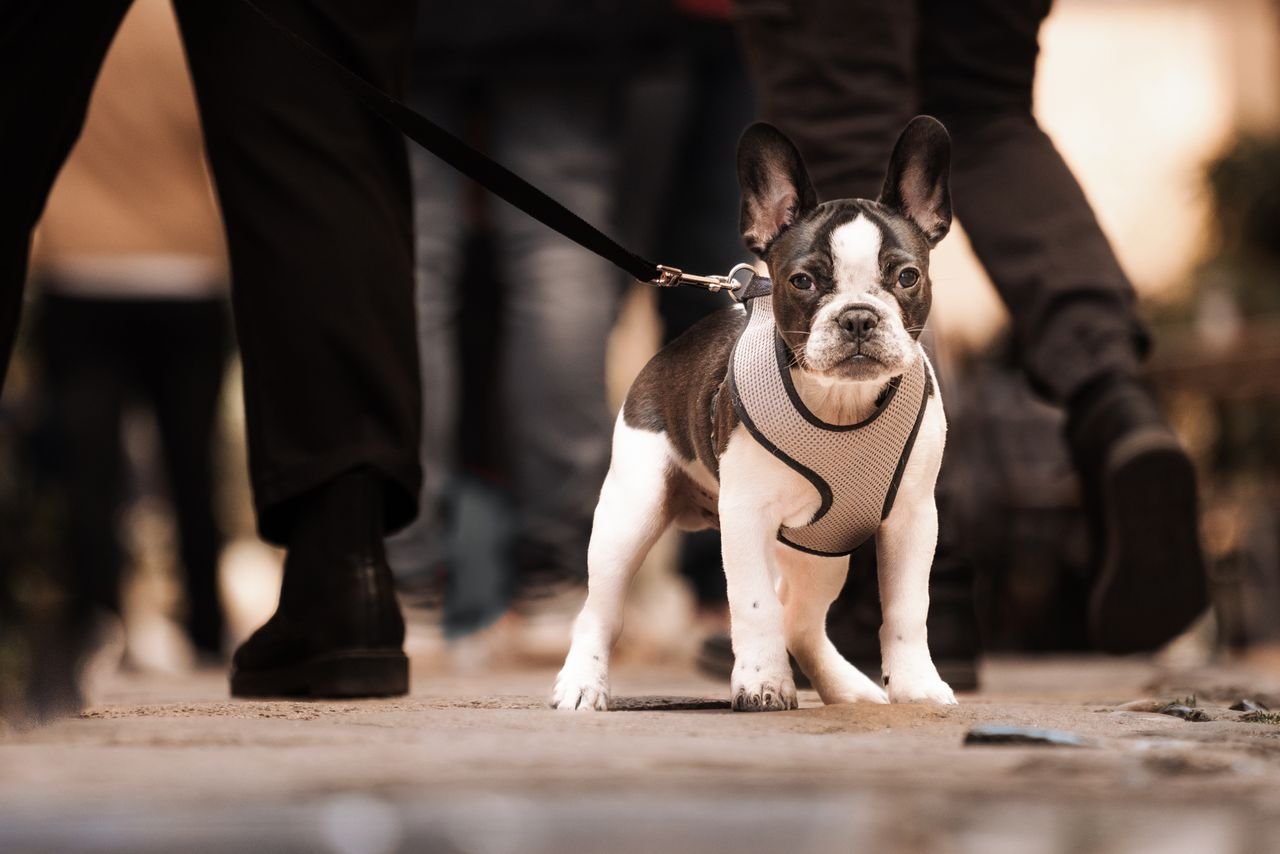

A dog that pulls on the leash is one of the most common frustrations in dog ownership — and the right harness makes an enormous difference. Unlike a collar, which concentrates pulling force on the throat, a harness for pulling dogs distributes pressure across the chest and shoulders — protecting the neck and giving you significantly more control with less effort.
But not all harnesses are equal. Some are designed to reduce pulling; others simply make pulling more comfortable for the dog without addressing the behaviour. This guide covers the best harness options for pulling dogs, what makes each one work, and how to choose the right one for your dog’s size and pulling intensity.
Why a Harness Beats a Collar for Pulling Dogs
When a dog pulls on a flat collar, the force is applied directly to the trachea (windpipe) and cervical spine. Sustained pulling pressure on the collar is linked to:
- Tracheal damage — particularly in small breeds with delicate airways
- Neck muscle strain
- Eye pressure increases — relevant for breeds prone to eye conditions
- Disc and spine issues in the neck over time
A harness eliminates these risks by moving the contact point from the throat to the chest and back. For flat-faced breeds (French Bulldogs, Pugs, Bulldogs) who already have compromised airways, a harness is essentially non-negotiable rather than optional. See our pitbull mixed with french bulldog guide for why brachycephalic breeds specifically need harnesses over collars.
Types of Harnesses for Pulling Dogs
1. Front-Clip Harness — Best for Reducing Pulling
The most effective harness type for managing and reducing pulling behaviour. The leash clips to a ring on the chest rather than the back. When the dog pulls forward, the chest clip redirects them back toward the handler rather than allowing forward momentum to continue.
This redirection mechanism — the dog turns toward you when they pull — is the key training benefit. Over time, a front-clip harness paired with consistent leash training significantly reduces pulling behaviour.
Best for: Dogs who pull moderately to heavily, dogs in active leash training, medium and large breeds.
Limitation: Dogs who pull very hard can generate significant torque on the chest clip — check fit regularly and ensure the clip ring sits centrally on the chest.
2. Back-Clip Harness — Comfort but No Pull Reduction
The leash clips to a ring on the back between the shoulder blades. This is the most comfortable harness type for the dog — there is no redirection mechanism, no pressure on the throat, and the dog moves naturally.
The significant drawback: a back-clip harness gives a pulling dog maximum mechanical advantage. The attachment point allows them to lean into the leash and pull with their full body weight — like a sled dog. This is why sled dog harnesses are always back-clip designs.
Best for: Well-trained dogs who do not pull, small breeds, dogs with sensitive chests, running or canicross (where pulling is acceptable and even desirable).
Not suitable for: Dogs who pull significantly — it makes the problem harder to manage, not easier.
3. Dual-Clip Harness — The Most Versatile Option
A dual-clip harness has both a front chest clip and a back clip — giving owners the flexibility to use whichever attachment suits the situation. Use the front clip for walks where pulling is an issue; use the back clip for running, hiking, or when the dog is behaving well.
Many experienced dog trainers recommend dual-clip harnesses as the most practical all-round option — the flexibility means you are not locked into one attachment point regardless of the context.
4. No-Pull Harness with Tightening Mechanism
Some harnesses feature a mechanism that applies gentle pressure to the front legs or chest when the dog pulls — creating mild discomfort that discourages forward momentum. These work similarly to a martingale collar — the pressure releases immediately when the dog stops pulling.
These are more controlling than a standard front-clip harness and can be effective for very strong pullers. However, fit and adjustment are critical — incorrect fitting can cause chafing or restrict normal shoulder movement.
Best for: Strong, determined pullers who are not responding adequately to a standard front-clip harness.
5. Head Halter — Not a Harness, But Worth Mentioning
A head halter (Halti, Gentle Leader) is not technically a harness but achieves similar anti-pull results through a different mechanism — controlling the head rather than the body. When the dog pulls, the head turns toward the handler. See our best dog collar and leash guide for a full description.
Head halters are the most effective anti-pull option for very large, very strong dogs — where harnesses alone may not provide sufficient control.
Harness Comparison for Pulling Dogs
| Harness Type | Pull Reduction | Comfort | Best For |
|---|---|---|---|
| Front-clip | ⭐⭐⭐⭐⭐ | ⭐⭐⭐ | Most pulling dogs |
| Back-clip | ❌ | ⭐⭐⭐⭐⭐ | Well-trained dogs, running |
| Dual-clip | ⭐⭐⭐⭐ | ⭐⭐⭐⭐ | All-round versatility |
| No-pull tightening | ⭐⭐⭐⭐⭐ | ⭐⭐ | Strong determined pullers |
| Head halter | ⭐⭐⭐⭐⭐ | ⭐⭐ | Very large, very strong dogs |
Key Features to Look For
Correct Fit — The Most Important Factor
A harness that fits incorrectly is either ineffective (too loose) or harmful (too tight). The most common fitting mistakes:
- Too tight across the chest — restricts shoulder movement and causes chafing
- Too loose — allows the dog to back out (escape) or the front clip to shift off-centre
- Wrong size — harnesses are sized by chest girth, not weight. Always measure before buying
How to measure: Measure around the widest part of your dog’s chest, just behind the front legs. Most harnesses use this measurement as the primary sizing reference. Add 1–2 inches for a comfortable working fit.
Padding
Padded chest and belly panels prevent chafing — particularly important for dogs who wear the harness for extended periods. Look for padding that is breathable rather than solid foam that traps heat.
Reflective Elements
Reflective stitching or panels improve visibility in low-light conditions — an important safety feature for dogs walked early mornings or evenings near roads.
Durability of Hardware
The clips and rings are the highest-stress points of any harness. Look for metal hardware (aluminium or stainless steel) rather than plastic clips on the load-bearing front attachment ring — particularly for large, strong dogs. Plastic clips are fine for the back ring which carries less load.
Easy On and Off
Some harnesses require threading legs through openings — fine for patient dogs, frustrating for wriggly ones. Step-in harnesses or overhead designs with quick-release buckles are easier to manage for dogs who dislike being fussed over.
The Harness Does Not Train the Dog
An important point: a harness is a management tool, not a training tool. A front-clip harness reduces pulling during the walk — but it does not teach the dog not to pull. The moment you put a regular collar on the same dog, they pull again.
For lasting leash behaviour improvement, combine the harness with consistent training — rewarding the dog for walking at your side, stopping when they pull (removing the reward of forward movement), and teaching a loose-leash walking cue. Our how to stop a dog from pulling on the leash guide covers the training method that works alongside the right equipment.
Best Dog Harness for Pulling — FAQ
Can a puppy wear a harness? Yes — and for brachycephalic breeds and small breeds, a harness is preferable to a collar from the start. Choose a lightweight, adjustable harness and refit regularly as the puppy grows. See our how to potty train a puppy guide for other early habits to establish from puppyhood.
Will a harness make my dog pull more? A back-clip harness can encourage pulling by removing discomfort from the throat — yes. A front-clip harness actively discourages pulling through redirection. Choose the front-clip or dual-clip design for any dog who pulls.
My dog slips out of their harness — why? Usually a fitting issue — too loose, or the wrong harness design for the dog’s body shape. Some dogs (particularly deep-chested breeds) are difficult to fit in standard harnesses. Re-measure and try a different design. A martingale-style harness with a tightening mechanism reduces escape risk.
Is a harness or collar better for identification tags? Keep a collar for ID tags — collars are more reliably worn at all times and tags are easier to attach to collar D-rings than harness attachment points. Use both: collar for ID, harness for walking.
How often should I wash my dog’s harness? Every 2–4 weeks for dogs walked regularly in muddy or wet conditions, or when visibly dirty. Most harnesses can be hand-washed or put in a mesh laundry bag in the washing machine on a gentle cycle. Air dry to preserve hardware and elastic.
Also read: Best Dog Collar and Leash Sets | How to Stop a Dog From Pulling on the Leash | Dog Anxiety — Signs, Causes and Treatments | How to Calm a Hyper Dog