
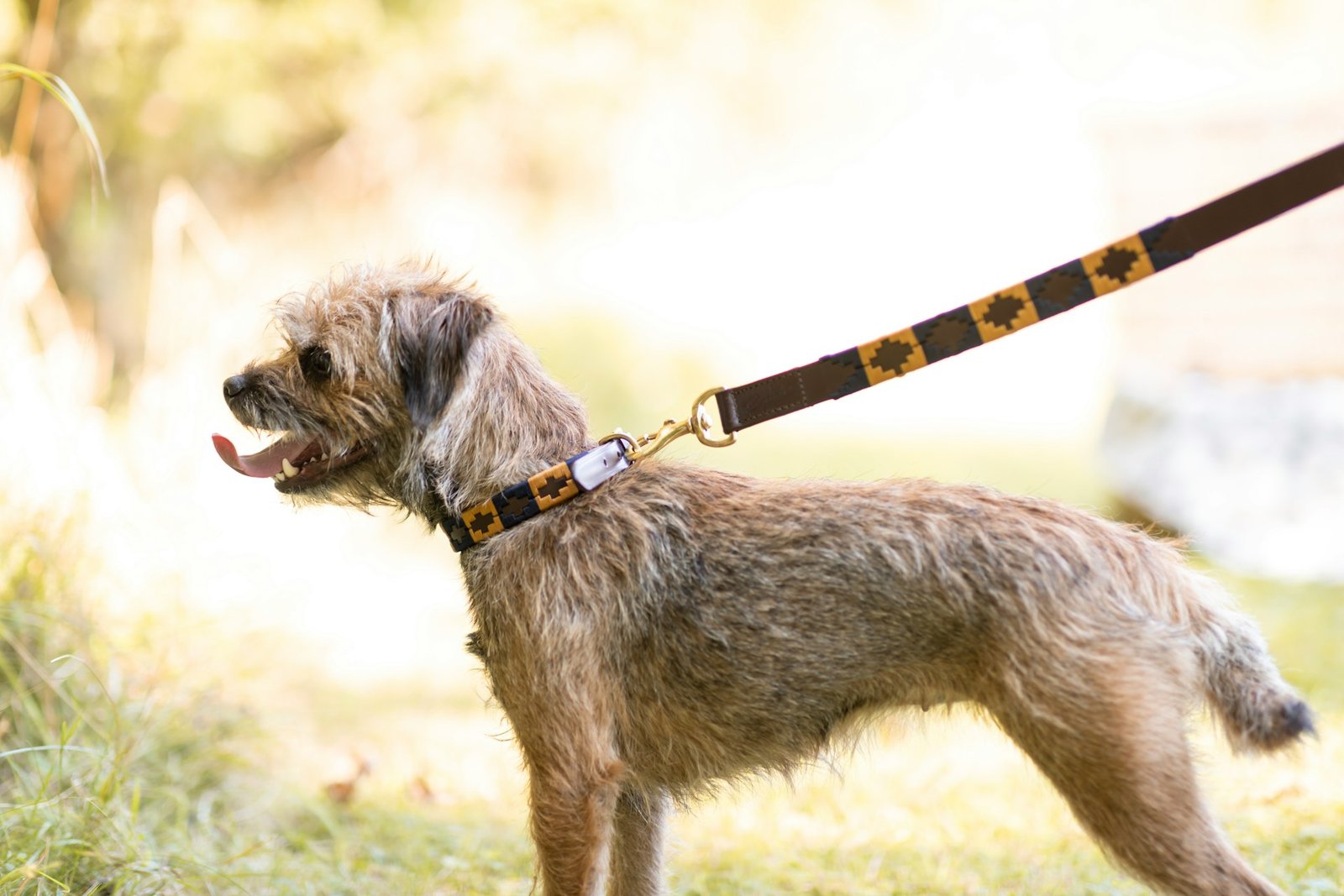

A collar and leash are the two most fundamental pieces of dog equipment you will own — used every single day, relied upon for safety, and responsible for keeping your dog under control in traffic, around other dogs, and in any public space. Getting these right matters far more than most new dog owners realise.
The best dog collar and leash combination depends on your dog’s size, strength, training level, and how you use them. This guide covers the main collar and leash types, which dogs suit each one, and what to look for when buying.
Collars — Types and Which Dogs They Suit
1. Flat Buckle Collar — The Standard
The flat buckle collar is the everyday standard — a simple band of nylon, leather, or fabric with a buckle or quick-release clasp. It holds ID tags, looks smart, and works perfectly for dogs with good leash manners who do not pull excessively.
Best for: Well-trained dogs with moderate leash behaviour, everyday wear and ID tag attachment.
Not suitable for: Dogs who pull heavily — a flat collar concentrates all pulling force on the throat, causing discomfort and potential tracheal damage over time.
What to look for: Width appropriate for your dog’s size (wider collars distribute pressure better for larger dogs), a secure buckle that does not accidentally release, and a comfortable fit — two fingers should fit snugly between the collar and your dog’s neck.
2. Martingale Collar
A martingale collar has a main loop that fits around the neck and a smaller control loop that tightens when the leash is pulled — but only to a preset limit, preventing full choke. It tightens enough to prevent slipping out but not enough to choke.
Best for: Breeds with narrow heads and wider necks (Greyhounds, Whippets, Salukis, Collies) who can back out of standard collars. Also excellent for dogs in training who are learning leash manners.
Not suitable for: Off-leash wear — the tightening mechanism should not be worn without a leash attached.
3. Slip Lead / Slip Collar
A slip lead combines collar and leash in one — a loop of rope or leather that tightens when the dog pulls and loosens when they stop. Used extensively in veterinary settings and dog training.
Best for: Temporary use in training, vet visits, and controlled environments with experienced handlers.
Not suitable for: Everyday unsupervised use — without correct handling technique, slip leads can cause tracheal injury. Not for use by inexperienced owners on pulling dogs.
4. Head Collar (Halti or Gentle Leader)
A head collar fits around the muzzle with a strap behind the ears — when the dog pulls, the head is gently turned back toward the handler, redirecting forward momentum without pain or force. It is not a muzzle — dogs can open their mouths fully to eat, drink, and pant.
Best for: Strong pullers who are difficult to manage on standard collars or harnesses, large breeds being walked by smaller owners, reactive dogs.
What to look for: Correct fit is critical — too loose and it slips off, too tight and it causes discomfort. Most brands include a fitting guide. An introduction period of several days helps the dog accept the novel sensation.
Harnesses — When a Collar Is Not Enough
For dogs who pull, have respiratory sensitivities (flat-faced breeds), or have neck or tracheal issues, a harness distributes leash pressure across the chest and shoulders rather than the throat. Our dedicated best dog harness for pulling guide covers harness options in full detail.
Leashes — Types and Uses
1. Standard Flat Leash — 4–6 Feet
The everyday standard. A flat nylon, leather, or biothane leash of 4–6 feet in length is the most versatile and most recommended option for general walking.
4 feet — better for busy areas, training, and dogs who need to stay close in traffic. 6 feet — better for relaxed walks giving the dog more room to sniff and explore.
Best for: All dogs in all everyday walking situations.
What to look for: A comfortable handle (padded handles reduce hand fatigue on longer walks), a sturdy clip that does not accidentally release, and width appropriate to your dog’s size.
2. Retractable Leash — With Significant Caution
Retractable leashes extend to 16–26 feet on a spring mechanism, giving the dog a wide range to explore. They are enormously popular but come with serious safety concerns:
- Injury risk — the thin cord can cause rope burns or lacerations to hands and legs
- No control in emergencies — the mechanism cannot stop a dog quickly enough when another dog or vehicle appears
- Reinforces pulling — dogs learn that pulling extends their range, making leash manners worse over time
- Cord failure — thin cord leashes can snap under sudden load from a large dog
If you use a retractable leash, use it only in safe open spaces with no traffic, never near roads, and lock the length when passing other people and dogs.
Best for: Open, low-risk environments with well-trained small dogs only.
3. Long Line — 15–30 Feet
A long nylon or biothane line used for recall training, allowing the dog freedom to range while remaining under physical control. The key difference from a retractable leash is that it has no mechanism — the handler controls the length manually, and it does not retract.
Best for: Recall training, exercising dogs in partially enclosed spaces, beach and field walks.
4. Traffic Lead / Short Leash
A very short leash (12–18 inches) or a leash with a secondary short handle near the clip — used for close control in busy environments. The short length keeps the dog right at your side without the leash dragging on the ground.
Best for: Busy streets, crowded areas, vet visits, reactive dogs needing close management.
Collar and Leash Materials — What Lasts
Nylon — the most common and most affordable. Durable, washable, and available in every colour. Lower quality nylon frays at cut edges; better quality nylon is finished to prevent this.
Leather — premium feel, extremely durable, becomes more supple with age. Requires occasional conditioning to prevent cracking. More expensive than nylon but often outlasts it.
Biothane — a waterproof, easy-clean synthetic material that is increasingly popular for dogs who swim or get muddy. Does not absorb odours, wipes clean easily, and is very durable.
Rope — popular for leashes due to comfortable hand feel. Durability varies significantly by construction quality.
Safety Features Worth Paying For
Reflective stitching or panels — significantly improves visibility in low-light conditions — early mornings, evenings, and overcast days. A simple but important safety feature for any dog walked near roads.
Padded handles — reduce hand fatigue on longer walks and improve grip control with strong dogs.
Traffic loop — a secondary handle positioned close to the clip on some leashes — allows for immediate close control without shortening the main leash.
Breakaway collar clips — some collars feature a clip that releases under sustained force — useful for cats and in situations where a collar could become caught. For dogs, a standard secure buckle is generally preferable.
Collar and Leash FAQ
How tight should a dog collar be? The two-finger rule — you should be able to slide two fingers comfortably under the collar, but it should not be loose enough to slip over the head. Check fit regularly — puppies need collar adjustments as they grow.
At what age can a puppy start wearing a collar? From the day they come home — typically 8 weeks. Start with a lightweight, soft collar and short positive associations. See our how to potty train a puppy guide for other early puppy habits worth establishing from day one.
Should my dog wear a collar all the time? ID tag wearing is strongly recommended whenever your dog is outside or could escape. Many owners remove collars at night and during supervised indoor time — this is reasonable. Never remove the collar when outside. Microchipping alongside a collar tag provides the best identification coverage.
What is the best leash for a dog that pulls? A standard flat leash paired with a front-clip harness or head collar is the most effective combination for pulling dogs. See our how to stop a dog from pulling guide for the training approach alongside the right equipment.
Also read: Best Dog Harness for Pulling | How to Stop a Dog From Pulling on the Leash | Best Dog Chew Toys for Heavy Chewers | Dog Anxiety — Signs, Causes and Treatments