
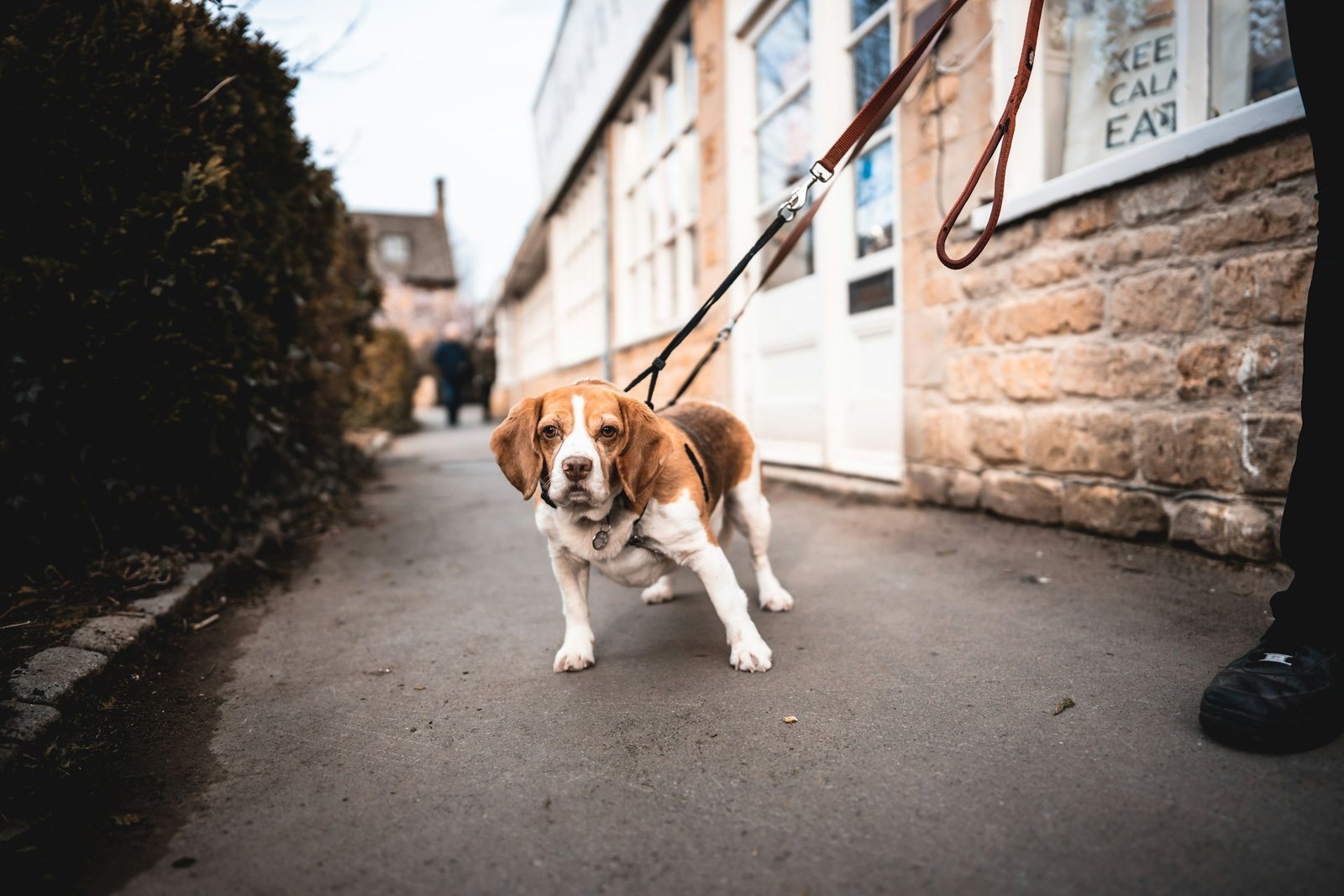

Every walk starts with good intentions. You clip the leash, step outside, and within ten seconds your dog is three feet ahead of you, pulling with the kind of determination usually reserved for sled dogs. Your shoulder aches. The walk is not enjoyable. And your dog — who is supposed to be getting exercise and enrichment — is in a constant state of frustrated arousal that makes the whole experience worse for both of you.
How to stop a dog from pulling on the leash is one of the most commonly searched dog training topics — and one where owners get the most conflicting advice. This guide cuts through all of it and gives you the 8 methods that actually work, why each one works, which tools help and which ones do not, and a realistic timeline for what to expect. Whether you have a puppy just starting leash training or an adult dog with years of pulling habit, this guide covers your situation.
This dog harness is perfect for those long walks! It’s comfy and helps with control.
Why Dogs Pull on the Leash — Understanding the Problem First
Before applying any solution, understanding why dogs pull makes the training significantly more effective.
Dogs pull on the leash because pulling has always worked. The moment a puppy lunges forward and the owner follows — even reluctantly — the puppy learns a fundamental lesson: pulling moves me forward. This lesson is reinforced on every single walk where the dog pulls and the owner keeps walking. Over hundreds of walks, it becomes a deeply ingrained habit.
Dogs also pull because they are genuinely excited. The outdoor environment is intensely stimulating — smells, sounds, sights, other dogs, moving things. A dog that has been inside all day is flooded with stimulation the moment they step outside, and their natural response is to move toward it as fast as possible.
The good news is that pulling is a learned behaviour, which means it can be unlearned. The process requires consistency — but the methods below work when applied correctly and persistently.
What Does Not Work — And Why
Before covering what works, it is worth understanding what does not — because most owners have already tried these.
Pulling back on the leash: When you pull back against a pulling dog, you create what trainers call opposition reflex — the dog instinctively pulls harder against pressure. Pulling back does not stop pulling. It makes it worse.
Choke chains and prong collars: These tools cause pain and discomfort to interrupt pulling. They may suppress the behaviour temporarily, but they do not teach the dog what to do instead — and they carry real risks of injury to the throat and neck, particularly in dogs that pull hard. They also create a negative association with the walk itself.
Retractable leashes: These actively teach dogs to pull. The mechanism rewards any forward pulling by releasing more lead — the exact opposite of what you want.
Yelling or correcting vocally: Dogs do not speak English. Shouting “heel” at a dog that does not know the word does nothing productive. It adds stress to the walk without providing any useful information.
8 Proven Methods to Stop Leash Pulling
Method 1 — Stop and Wait (The Most Fundamental Technique)
This is the foundation of every leash-training approach — and the one that must be in place before any other method will work.
The principle is simple: the moment the leash becomes taut, you stop walking. Completely. You stand still and wait. You do not move forward until your dog releases the tension on the leash — either by stopping, sitting, or turning back toward you. The moment the leash goes slack, you mark it (with a “yes” or a clicker) and move forward again.
What this teaches: Walking creates tension on the leash = walking stops. Slack leash = walking continues. Within enough repetitions, the dog learns that pulling is literally the least efficient way to move forward.
The challenge: Your walk will be very slow at first. Very slow. Some owners barely make it to the end of their driveway in the first few sessions. This is normal and expected — and it is temporary. Consistency is everything. One walk where you give up and let the dog pull undoes significant progress.
Recommend a training clicker.
Method 2 — Change Direction
When your dog pulls forward, change direction and walk the other way. Do not warn them — just turn and walk. Your dog will reach the end of the leash, feel the gentle stop, and have to catch up with you.
When they catch up, praise and treat. Then continue walking. When they pull again — change direction again. Repeat.
What this teaches: Staying near you is more rewarding than pulling ahead. You become more interesting than whatever they were pulling toward.
This method is particularly effective for puppies and dogs that pull moderately. For very strong pullers, combine it with Method 1.
Method 3 — Reward the Position You Want
Most owners only interact with their dog when something goes wrong — they react to pulling. Top trainers do the opposite: they reward heavily when the dog is in the correct position, before any pulling happens.
How to apply it: Keep high-value treats in your hand or a treat pouch. Every time your dog is walking at your side with a loose leash — mark it (“yes!”) and give a treat. Do this frequently, especially in the early stages of training. You are building a strong positive association with the position of walking beside you.
Recommend a dog treat training pouch.
The treat delivery position matters. Deliver the treat at your hip — this keeps your dog’s attention and body orientated at your side rather than in front of you.
Method 4 — The 1-2-3 Pattern Walk
This structured technique works exceptionally well for dogs that have already developed a strong pulling habit.
How it works:
- Walk forward. The moment your dog pulls, stop (Method 1).
- Wait for slack in the leash.
- The moment you get slack, say “let’s go” and walk forward again.
- After 3 steps of loose leash walking, reward with a treat.
- Repeat — gradually increasing the number of steps required between rewards.
This builds in a clear rhythm your dog can learn to predict: walk calmly, get rewarded, walk more. The pattern gives structure to what is otherwise a confusing and inconsistent training experience.
Method 5 — Use the Right Equipment
The right equipment does not replace training — but it manages the pulling while you train, makes the walk safer, and can significantly reduce the physical effort required.
Front-clip harness: A harness with a leash attachment on the chest rather than the back. When a dog pulls in a front-clip harness, the physics of the attachment turn them sideways — interrupting the forward momentum and naturally redirecting their attention back toward you. Front-clip harnesses are one of the most effective management tools for moderate to strong pullers.
Head halter (Gentle Leader / Halti): A head halter fits over the dog’s muzzle and clips behind the ears. Where the head goes, the body follows — so steering with a head halter is significantly easier than with a collar or back-clip harness. Requires a careful introduction period, as many dogs initially resist the sensation. Never jerk on a head halter.
Standard flat collar: Fine for dogs that do not pull significantly. Not recommended as the primary restraint for strong pullers — puts pressure directly on the throat.
Back-clip harness: Comfortable for the dog, but provides no mechanical assistance in managing pulling — and for some dogs, the pressure across the chest actually triggers a pulling reflex. Not recommended for leash training.
Recommend a front-clip no-pull harness.
Method 6 — Exercise Before Leash Training
A dog that has been inside for hours has pent-up energy and arousal that makes controlled leash walking almost impossible. The most effective thing you can do before a leash training session is give your dog an outlet for that energy first.
A game of fetch in the garden, 10 minutes of tug, or a free run in a safe enclosed area before your training walk dramatically reduces the arousal level your dog brings to the leash. A slightly tired dog is a significantly more manageable leash-walking student.
This is especially relevant for high-energy breeds — Labradors, Huskies, Border Collies, German Shepherds — whose exercise needs make controlled leash walking very difficult when they are under-exercised. As we covered in our guide to why dogs lick their paws, under-stimulation drives problem behaviours across every area of dog ownership — and leash pulling is no exception.
Method 7 — Teach the “Heel” Command Separately
Most owners try to train heel on walks — in the exact environment where pulling is most rewarding and distractions are highest. This is setting the dog up to fail.
The correct approach: Teach heel in a low-distraction environment first — your living room, your garden, a quiet car park. Once the dog understands the behaviour in easy conditions, gradually increase the distraction level.
How to teach heel:
- Hold a treat at your left hip. Lure your dog to the heel position — their shoulder at your leg.
- Say “heel” and take a few steps. Reward the dog for staying in position.
- Gradually extend the duration and distance before rewarding.
- Add a release word (“free” or “okay”) so the dog knows when they are not required to heel.
A properly trained heel is not required for every second of a walk — most dogs are allowed to sniff and explore on a loose leash. Heel is a command for specific situations: crossing roads, passing other dogs, high-distraction moments.
Method 8 — Consistency Across Every Person and Every Walk
This is the method most owners overlook — and the one that makes or breaks all the others.
If you train with Method 1 (stop when pulling) but your partner lets the dog pull on their walks, the training fails. Dogs are extraordinarily good at learning context-specific rules — and “pulling is fine with this person but not that one” is a rule they will learn quickly.
Every person who walks the dog must apply the same rules consistently. Every walk must follow the same approach. One day of inconsistency does not erase progress — but a week of inconsistent walks sets training back significantly.
This is the honest reason that even the best training methods produce slow results for some owners — not because the methods do not work, but because they are applied inconsistently across walkers, walks, and days.
How Long Does It Take to Stop Leash Pulling?
This is the question every owner wants a specific answer to — and the honest answer depends on three factors: how established the habit is, how consistent the training is, and what breed and individual temperament you are working with.
Realistic timelines:
| Starting point | Consistent training | Realistic improvement |
|---|---|---|
| Young puppy with no pulling habit yet | 2–4 weeks | Reliable loose leash walking |
| Adolescent dog with mild pulling | 4–8 weeks | Significant improvement |
| Adult dog with moderate pulling | 8–16 weeks | Strong improvement, ongoing maintenance |
| Adult dog with severe, ingrained pulling | 4–6 months | Manageable with tools, ongoing training |
No method produces results in a single session. The “stop leash pulling in 5 minutes” claims you see online refer to techniques that show a dog what you want in a session — not techniques that produce reliable behaviour change in that time. Reliable loose leash walking takes weeks of consistent practice.
Leash Pulling by Breed — What to Expect
Some breeds pull more than others — not from stubbornness but from genetics. Working and sporting breeds were selectively bred for forward drive and endurance — traits that manifest as pulling on a leash.
Higher pulling tendency: Huskies, Malamutes, Samoyeds (bred to pull sleds), Labradors and Golden Retrievers (bred for forward drive), Beagles (scent-driven and easily distracted), Boxers, and most terrier breeds.
Lower pulling tendency: Brachycephalic breeds (French Bulldogs, Bulldogs — physically limited), many toy breeds, and herding breeds that have strong off-switch with good training.
For high-pull-tendency breeds, a combination of Methods 1, 3, and appropriate equipment (front-clip harness) is the most practical long-term approach alongside consistent training.
FAQ — How to Stop a Dog From Pulling on the Leash
Q: How do I stop my dog pulling on the leash immediately? A: No method stops pulling immediately and permanently in one session. For immediate management — particularly with a strong dog — a front-clip harness reduces the physical force dramatically and makes walking manageable while you train. For training results, Method 1 (stop when pulling) applied consistently across every walk produces results within 2 to 4 weeks for most dogs.
Q: Why does my dog only pull toward other dogs? A: Pulling toward other dogs is a specific form of reactive behaviour — usually excitement or arousal rather than aggression. Management strategies include increasing distance from other dogs, changing direction before your dog notices them, and heavily rewarding attention toward you when other dogs are visible. For dogs that pull and lunge reactively, a veterinary behaviourist consultation is the most effective next step.
Q: Should I use a choke chain or prong collar to stop pulling? A: These tools use pain and discomfort to suppress pulling rather than teaching an alternative behaviour. They carry real risks of physical injury and can create negative associations with walking. The methods in this guide achieve better long-term results without the risks. A front-clip harness provides effective management without aversive tools.
Q: My puppy pulls already — how do I stop it before it becomes a habit? A: The best time to address pulling is the first walk. Apply Method 1 (stop when pulling) from day one, reward the position you want heavily, and use a front-clip harness from the start. Preventing the pulling habit from forming is dramatically easier than correcting an established one.
Q: How do I stop a large, strong dog from pulling? A: For large breeds with significant pulling strength, the right equipment is essential alongside training. A front-clip harness or head halter (introduced carefully) reduces the physical challenge significantly. Apply Methods 1 and 2 consistently, exercise your dog before training walks, and consider working with a professional trainer for an in-person assessment.
Q: Can an older dog learn to stop pulling? A: Yes — older dogs can absolutely learn loose leash walking. The process takes longer because established habits are harder to change than new ones. The same methods apply, with patience and consistency being even more important for dogs with long-established pulling habits.
Conclusion
How to stop a dog from pulling on the leash comes down to one core principle: pulling must stop working as a strategy for moving forward. Every time a pulling dog reaches the end of the leash and the owner keeps walking, the lesson is reinforced. Every time the walk stops until the leash is slack, the correct lesson is taught.
The 8 methods in this guide — stopping when pulling, changing direction, rewarding the correct position, the 1-2-3 pattern walk, the right equipment, pre-walk exercise, teaching heel separately, and consistent application across every walk — are not tricks. They are a training system. Applied together and consistently, they produce a dog that walks calmly on a loose leash in 4 to 12 weeks depending on the starting point.
A good walk is one of the greatest things you can give your dog. It is worth the investment of time and consistency to make it enjoyable for both of you.
Also read: How to crate train a puppy | How to stop a dog from barking at night | How long can a dog be left alone? | Why does my dog lick his paws? | Why does my dog eat grass? | How often should I bathe my dog?