

Cats are famously fastidious self-groomers — which is why a cat that smells bad is always worth investigating. Unlike dogs, who can develop a normal “dog smell” from skin oils and activity, a healthy cat should be largely odourless. When your cat develops an unpleasant smell, something specific is causing it.
This guide covers the most common causes of bad smell in cats, what each one means, and what to do about it.
Is the Smell Coming From the Cat or the Environment?
Before investigating your cat, check the obvious environmental sources:
- Litter box — an overdue clean, a box in a warm room, or a cat with digestive issues produces significant odour that can seem to come from the cat themselves
- Favourite resting spots — beds, blankets, and sofas absorb cat odour over time
- Urine marking — sprayed surfaces smell intensely, particularly from intact males. See our why does my male cat spray guide for the cause and solution
If the smell follows your cat from room to room and is detectable when you handle them directly, the source is on or in the cat.
Common Causes of Bad Smell in Cats
1. Dental Disease
The most common cause of bad breath in cats — and one of the most commonly missed. Dental disease affects the majority of cats over three years old. Bacteria accumulate on teeth, forming plaque that hardens into tartar, leading to gingivitis, periodontal disease, and tooth decay.
The resulting smell ranges from mildly unpleasant to truly foul — a strong, rotten smell from the mouth that owners sometimes describe as fishy, ammonia-like, or simply deeply unpleasant.
Other dental disease signs:
- Dropping food or chewing on one side
- Pawing at the mouth
- Reluctance to eat hard food
- Red, swollen, or bleeding gums
- Visible tartar (brown/yellow deposits on teeth)
Dental disease requires veterinary treatment — a professional scale and polish under anaesthetic, and extraction of severely affected teeth. See our my cat has a broken tooth guide for related dental concerns.
At home: Brushing your cat’s teeth 2–3 times weekly with cat-specific toothpaste is the most effective prevention. Dental treats and water additives help between brushing sessions.
2. Skin Infection or Wound
A cat with a skin infection, abscess, or healing wound can develop a distinctive, unpleasant smell — often described as sweet-rotten or putrid. This is the smell of bacterial activity in infected tissue.
Common sources:
- Bite wound abscess — a common consequence of cat fights. The wound surface often closes over while infection develops underneath, making it easy to miss. By the time the abscess is noticeable, it may have already burst — releasing pus with a strong smell. See our why does my cat fight with neighbour cats guide for the fighting behaviour that leads to these wounds
- Skin fold infections — in flat-faced breeds (Persians, Exotic Shorthairs) with pronounced facial folds, moisture and bacteria accumulate in the skin folds causing dermatitis
- Hot spots or moist dermatitis — anywhere on the body where moisture is trapped
Any suspected wound or skin infection needs veterinary assessment and antibiotic treatment. See our my cat is injured guide for identifying bite wounds.
3. Ear Infection
A yeasty, musty, or strongly unpleasant smell from your cat’s ears indicates infection. Cat ear infections are typically caused by yeast (Malassezia) or bacteria — both produce distinctive odours.
Other signs of ear infection:
- Head shaking
- Scratching at the ear
- Dark brown or black discharge in the ear canal
- Redness or swelling around the ear opening
- Tilting the head to one side
Ear infections require veterinary diagnosis and treatment — the specific medication depends on whether bacteria, yeast, or mites are the cause. Do not attempt home treatment without diagnosis.
4. Anal Gland Problems
Two small scent glands sit on either side of a cat’s anus. In most cats, these express naturally during bowel movements. When they become impacted or infected, they produce a powerful, fishy odour that can transfer to wherever your cat sits.
Signs of anal gland issues:
- Scooting or dragging the rear end
- Excessive licking of the rear end
- Swelling or redness near the anus
- Strong fishy smell particularly when your cat sits on your lap or furniture
Anal gland problems are less common in cats than dogs but do occur. Impacted glands need manual expression by a vet or groomer; infected glands require antibiotics and sometimes surgical drainage.
5. Kidney Disease
A cat with advanced kidney disease may develop a distinctive ammonia-like or urine smell on the breath and from the body. This is uraemic breath — caused by waste products (urea) that healthy kidneys would normally filter out accumulating in the blood and being exhaled through the breath.
This is a significant health warning sign, particularly in middle-aged to older cats.
Other kidney disease signs:
- Increased thirst and urination
- Weight loss
- Reduced appetite
- Lethargy
- Vomiting
Any cat with an ammonia smell from the mouth or body — particularly an older cat — needs urgent veterinary investigation. See our my cat is sick guide for other signs of serious illness.
6. Digestive Issues and Flatulence
Occasional flatulence is normal in cats. Persistent, strong-smelling gas suggests a digestive issue:
- Sudden diet change — disrupts gut bacteria balance
- Food intolerance or allergy
- Parasites — intestinal worms cause gas and digestive upset
- Inflammatory bowel disease
If your cat has persistent digestive issues alongside flatulence, a vet assessment and potentially a diet change is worthwhile. See our how to change your cat’s food guide for the correct transition method if a diet change is recommended.
7. Poor Grooming — Underlying Cause
Cats who stop grooming adequately develop coat and skin odour from accumulated skin oils, dirt, and shed skin cells. A cat who is grooming less than usual is almost always unwell — pain, arthritis, obesity preventing them from reaching areas of the body, or dental pain making self-grooming uncomfortable.
If your cat’s coat looks dull, unkempt, or greasy and they smell unpleasant:
- This is a health signal, not a hygiene failure
- A vet check to identify the underlying cause is the priority
- Do not assume the cat simply needs a bath
8. Diabetes
Sweet-smelling or fruity breath in a cat can indicate diabetic ketoacidosis — a serious complication of uncontrolled diabetes. This is a veterinary emergency if accompanied by lethargy, vomiting, or collapse.
Any unusual sweet smell from your cat’s breath warrants a vet call, particularly if accompanied by increased drinking, increased urination, or weight loss.
When Is a Bad Smell an Emergency?
See the vet same day if the smell is accompanied by:
- Lethargy or collapse
- Not eating for more than 24 hours
- Vomiting
- Swelling anywhere on the body
- Difficulty breathing
- Ammonia or sweet (fruity) smell from breath alongside other symptoms
Book within 48 hours if:
- Persistent bad breath with no obvious cause
- Ear odour with discharge or head shaking
- Fishy smell from the rear end alongside scooting
- Coat smells unpleasant and grooming has declined
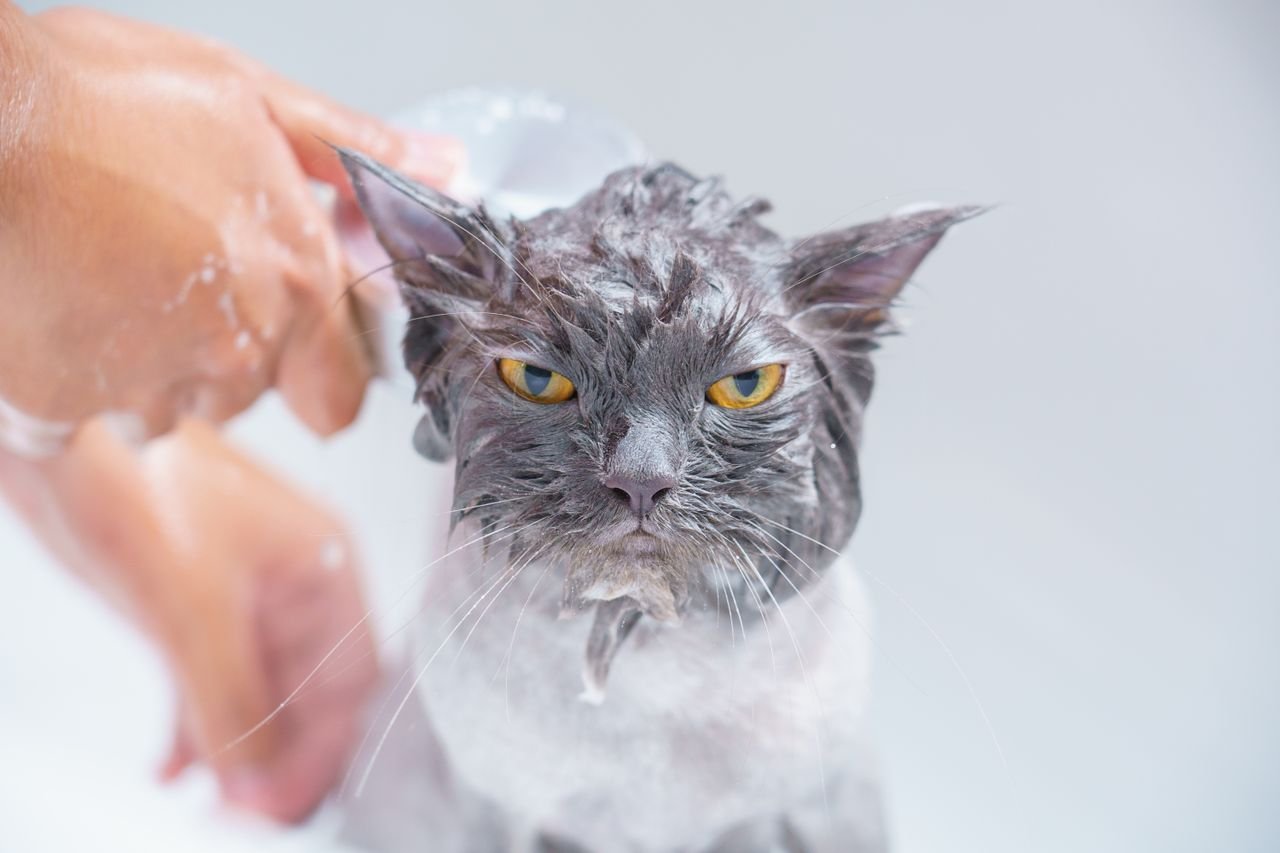
Can I Bathe My Cat to Remove the Smell?
For most causes — no, bathing alone does not fix it. A bath treats the symptom (surface smell) but not the underlying cause. An abscess, ear infection, dental disease, or kidney problem will continue to smell regardless of how many baths you give.
However, bathing is appropriate for:
- Cats who have rolled in something smelly outdoors
- Long-haired cats with faecal matter trapped in coat around the rear
- Skin fold cleaning in flat-faced breeds
For bathing technique and products, most of the principles in our how to groom a dog at home guide apply equally to cats — use a cat-specific shampoo, lukewarm water, and ensure complete drying.
Why Does My Cat Smell Bad — FAQ
My cat’s breath smells like fish — is this normal? A mild fishy smell after eating fish-based food is normal. A persistent strong fishy smell not related to diet — particularly from the mouth or rear end — is not normal and indicates dental disease or anal gland issues.
My cat smells like urine — why? Possible causes: urine spraying on their own coat, inability to groom (obesity, arthritis, pain), a urinary tract problem causing urine to leak, or kidney disease producing an ammonia-like smell. All warrant veterinary investigation.
My old cat has started smelling bad — what does this mean? New or worsening smell in a senior cat is a health warning sign — kidney disease, dental disease, and reduced grooming ability due to arthritis are the most common causes. A vet check is warranted.
My cat has a sweet smell — should I be worried? A fruity or sweet smell from the breath can indicate diabetic ketoacidosis. Contact your vet, particularly if accompanied by lethargy, increased drinking, or vomiting.
How do I get rid of cat smell in my home? Enzymatic cleaners break down urine odour compounds that regular cleaners cannot. Regular litter box cleaning (daily scooping, full change weekly), washing pet bedding weekly, and HEPA air purifiers all reduce general cat odour in the home.
Also read: Why Does My Male Cat Spray on Walls? | My Cat Is Sick — Signs and When to See a Vet | My Cat Has a Broken Tooth | Why Does My Cat Fight With Neighbour Cats?