


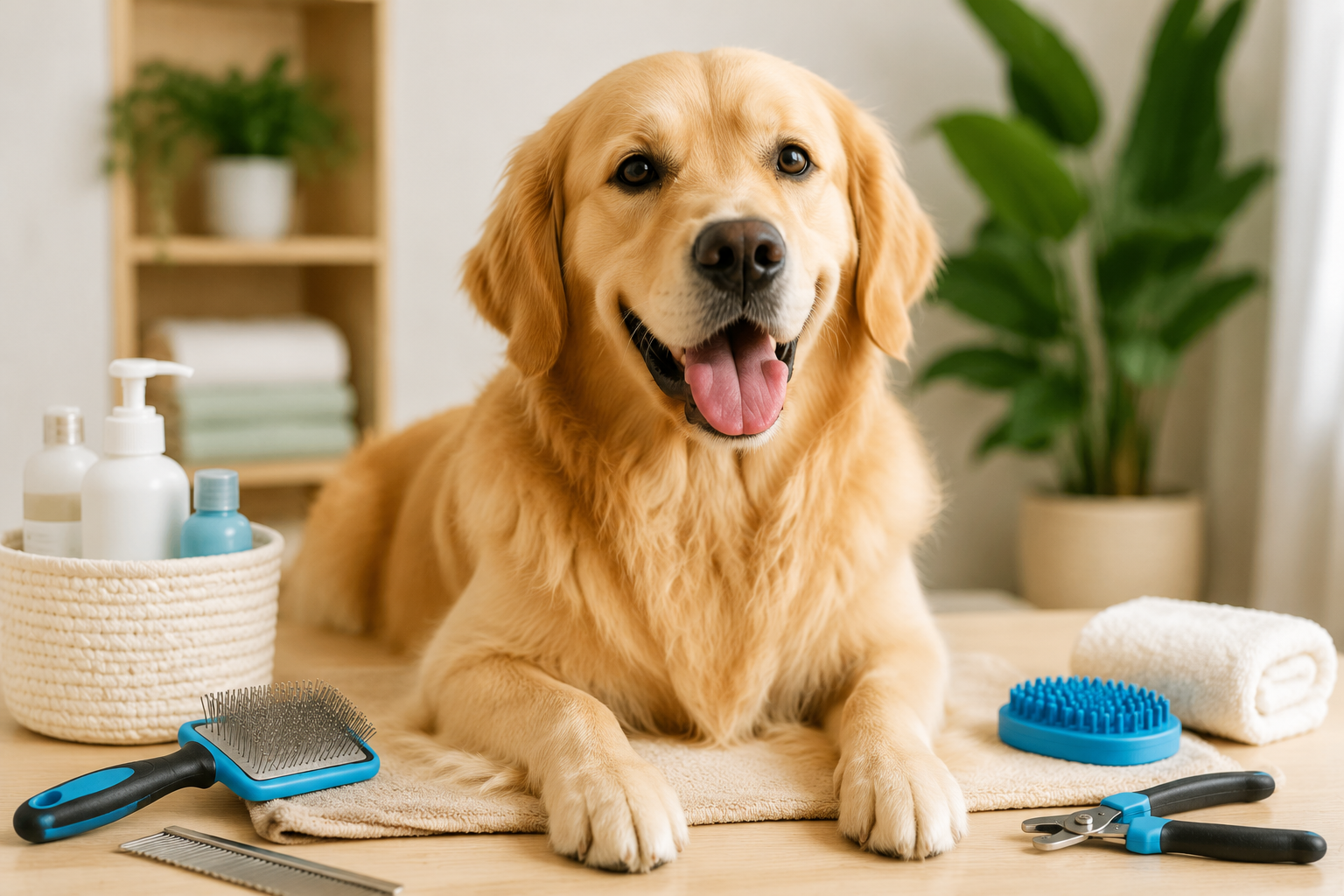

Professional grooming is wonderful, but it isn’t always practical — or necessary — for every dog, every time. Learning how to groom a dog at home saves money, builds trust between you and your dog, and lets you catch skin and coat issues early, long before they become a problem.
This guide walks through the complete at-home grooming process — brushing, bathing, nail trimming, ear cleaning, and finishing touches — so you can build a confident, low-stress routine your dog actually tolerates well.
What You’ll Need Before You Start
Gather everything before you begin. Starting a grooming session and then hunting for supplies halfway through makes the whole process more stressful for both of you.
- A brush suited to your dog’s coat type (slicker brush, bristle brush, or undercoat rake)
- Dog-specific shampoo (never human shampoo — the pH is wrong for dog skin)
- Towels (microfibre dries faster than regular cotton towels)
- Nail clippers or a nail grinder
- Styptic powder, in case of a nail quick nick
- Cotton balls and a vet-approved ear cleaning solution
- Treats for positive reinforcement throughout
Step 1 — Brush Before You Bathe
Always brush your dog thoroughly before bathing — never after. Wet, tangled fur mats far more easily than dry fur, and a bath can turn a manageable knot into a serious mat that needs to be cut out.
Work in sections, brushing in the direction of hair growth. For double-coated breeds, use an undercoat rake to remove loose fur from underneath the top coat — this is where most shedding originates. For long-haired breeds, a slicker brush followed by a metal comb removes tangles without pulling on the skin.
Step 2 — Bathing
Water temperature: Lukewarm, never hot. Test it on your wrist the same way you would for a baby.
Wetting: Soak your dog’s coat thoroughly all the way to the skin before applying shampoo. A handheld shower attachment makes this far easier than a bucket.
Shampoo: Use a dog-specific shampoo appropriate for their skin and coat type. Massage in gently, working from the neck back toward the tail, avoiding the eyes and inside the ears.
Rinsing: This is the step most people rush — and shouldn’t. Shampoo residue left in the coat causes itching and skin irritation. Rinse until the water runs completely clear.
Drying: Towel dry first to remove excess water, then either air dry in a warm space or use a pet-safe dryer on a low, cool setting. Never use a human hairdryer on a hot setting — a dog’s skin is more sensitive to heat than human skin.
Step 3 — Nail Trimming
Overgrown nails cause real pain and posture problems over time, so this step matters even though many owners avoid it.
Hold the paw firmly but gently, and trim only the tip of the nail — a small amount at a time. If your dog has light-coloured nails, you can usually see the pink “quick” (blood vessel) through the nail and simply avoid it. For dark nails, trim in small increments and stop as soon as you see a grey-white dot appear in the centre of the cut surface — this is your signal you’re approaching the quick.
If you do nick the quick, apply styptic powder directly to the nail and hold for a few seconds. It looks dramatic but is rarely serious.
For dogs who find nail trims stressful, read our full guide on how to introduce a dog to nail trimming gradually — the desensitisation method works for dogs as well as cats.
Step 4 — Ear Cleaning
Check your dog’s ears during every grooming session, even if you don’t clean them every time. Healthy ears should be light pink inside, odour-free, and free of excessive wax or discharge.
To clean: apply a vet-approved ear cleaning solution to a cotton ball (never insert cotton swabs into the ear canal), gently wipe the visible folds of the ear, and let your dog shake their head afterward to dislodge any loosened debris.
Floppy-eared breeds (Cocker Spaniels, Basset Hounds) need more frequent ear checks than erect-eared breeds, as reduced airflow increases infection risk.
Step 5 — Finishing Touches
Once your dog is dry, give them a final brush-through to remove any remaining loose fur and check the coat is fully dry and tangle-free. This is also a good time to check teeth, check for any lumps, bumps, or skin irritation you might have missed, and reward your dog generously for tolerating the whole process.
How to Make Grooming Stress-Free
Start young. Puppies who are introduced to brushing, nail handling, and bathing early generally tolerate grooming far better as adults.
Keep early sessions short. Five minutes of positive handling beats thirty minutes of struggle. Build duration gradually.
Use high-value treats. Reserve a special treat specifically for grooming sessions so your dog associates the process with something genuinely good. Our best dog training treats guide covers ideal options.
Watch your dog’s stress signals. Lip licking, yawning, whale eye (showing the whites of the eyes), or trying to pull away are all signs your dog needs a break. Stop, let them settle, and resume later rather than pushing through.
Know when to call a professional. Severe matting, a dog who is genuinely fearful or aggressive during handling, or breed-specific cuts that require clipper skill are all situations where a professional groomer is the safer and kinder choice.
How Often Should You Groom at Home?
This depends heavily on breed and coat type — our full grooming frequency guide breaks this down by coat category. As a general rule:
| Task | Frequency |
|---|---|
| Brushing (short coat) | Weekly |
| Brushing (long/double coat) | 3–4 times weekly |
| Bathing | Every 4–8 weeks |
| Nail trimming | Every 3–4 weeks |
| Ear checks | Weekly, clean as needed |
Grooming At-Home vs Professional — A Quick Comparison
| Factor | At-Home | Professional |
|---|---|---|
| Cost | Lower ongoing cost | Higher per session |
| Convenience | Fits your schedule | Requires appointment |
| Skill needed | Basic, builds with practice | Trained, breed-specific |
| Best for | Routine maintenance | Matting, anxious dogs, breed cuts |
For dogs needing a full professional service, our trusted grooming partner PawCareBuddy offers complete packages including bath, haircut, nail care, and de-shedding.
How to Groom a Dog at Home — FAQ
How often should I bathe my dog at home? Most dogs do well with a bath every 4–8 weeks. Over-bathing strips natural oils and causes dry, irritated skin. Dogs with skin conditions or allergies may need more frequent, medicated baths — discuss the right frequency with your vet.
What if my dog hates being groomed? Start with very short sessions, use high-value treats, and build tolerance gradually rather than forcing a full grooming session at once. If fear or aggression persists despite gradual desensitisation, a professional groomer experienced with anxious dogs is often more successful than continued at-home attempts.
Can I use human shampoo on my dog? No. Human skin and dog skin have different pH levels, and human shampoo can cause dryness and irritation. Always use a shampoo formulated specifically for dogs.
How do I know if my dog needs a professional groomer instead of home grooming? If matting is severe, if your dog needs a specific breed cut requiring clipper skill, or if your dog is too anxious or resistant for safe home handling, a professional groomer is the better choice.
Conclusion
How to groom a dog at home comes down to the right tools, a calm routine, and patience built up over time. Brushing before bathing, gentle and gradual nail care, regular ear checks, and positive reinforcement throughout will get most dogs comfortable with the process — and save you significant money on professional visits for routine maintenance.
For matting, anxious dogs, or breed-specific styling that requires more skill, our trusted grooming partner PawCareBuddy is there to help with professional bath, haircut, nail, and de-shedding services.
Also read: How Often Should You Groom Your Dog | Best Dog Grooming Tools for Home Use | How to Clean Dog Ears at Home | Best Dog Training Treats