


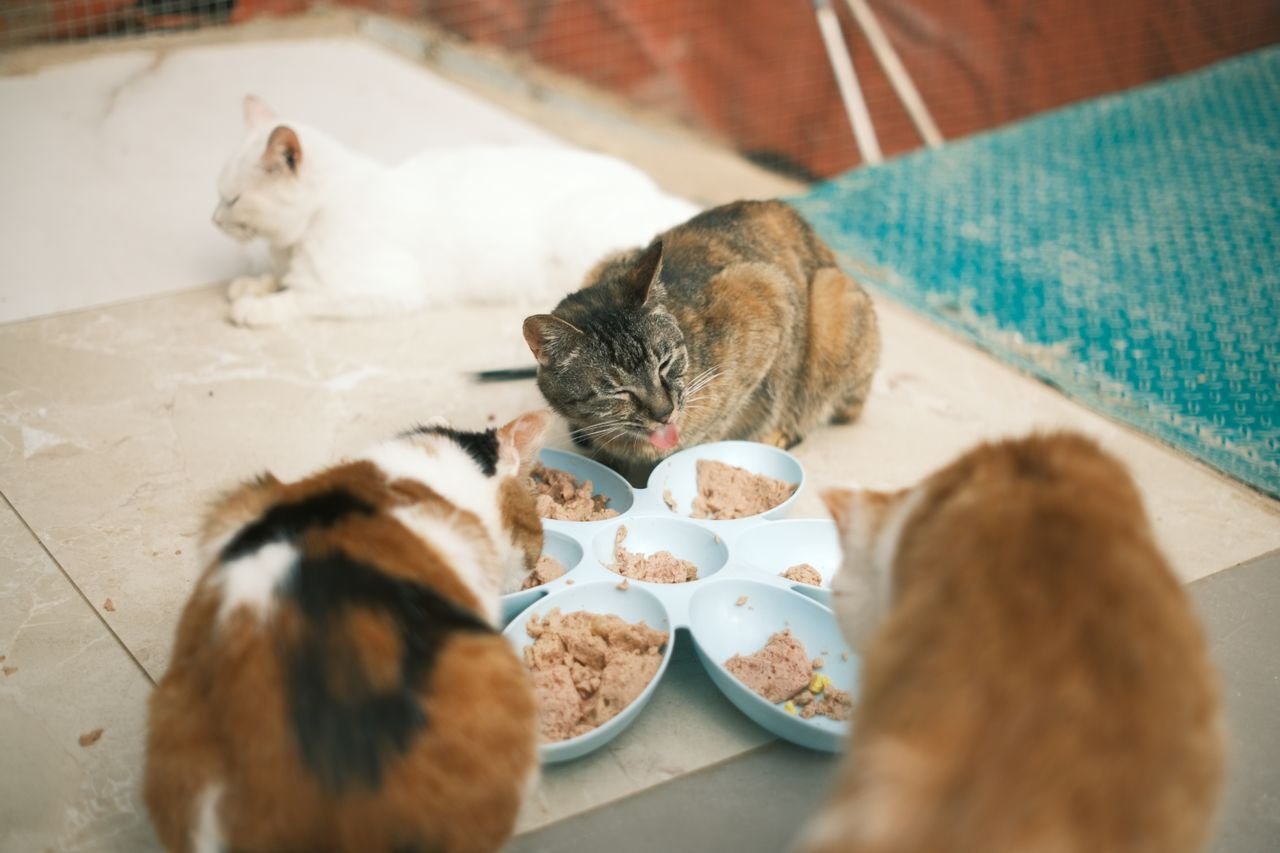

Switching your cat to a new food seems simple — swap one bowl for another. But cats have sensitive digestive systems and a strong preference for familiarity, and an abrupt food change is one of the most reliable ways to cause vomiting, diarrhoea, and food refusal. Changing your cat’s food correctly takes a little patience and a specific approach — but done right, the transition is smooth and stress-free for both of you.
Why Cats React Badly to Sudden Food Changes
Two things happen when you switch food abruptly:
Digestive upset: Your cat’s gut contains a specific balance of bacteria suited to digesting their current food. A sudden change disrupts this balance — the bacteria that digest the new food are underrepresented while those suited to the old food are still dominant. The result is fermentation, gas, loose stools, and sometimes vomiting.
Behavioural food refusal: Cats are neophobic about food — they are instinctively cautious about new tastes and smells. This evolved as a survival mechanism (novel foods might be dangerous), but it means that even a beneficial food change can be rejected simply because it is unfamiliar. Gradual introduction bypasses this refusal response by making the new food feel increasingly familiar before it becomes the only option.
When Should You Change Your Cat’s Food?
Common reasons for a food change include:
- Life stage transition — kitten food to adult, adult to senior
- Health condition — prescription diet for kidney disease, urinary issues, diabetes, or weight management
- Improving diet quality — upgrading from a low-quality to a higher-quality food
- Addressing allergies — switching to a novel or hydrolysed protein elimination diet. See our best cat food for weight loss guide for what to look for when changing for health reasons
- Availability — current food discontinued or unavailable
- Vet recommendation — any medically directed food change
The Standard 7–10 Day Transition Method
For most healthy adult cats, a gradual transition over 7–10 days works well. The principle is simple — introduce the new food in increasing proportions while decreasing the old food over time.
| Day | Old Food | New Food |
|---|---|---|
| Days 1–2 | 75% | 25% |
| Days 3–4 | 50% | 50% |
| Days 5–6 | 25% | 75% |
| Days 7–10 | 0% | 100% |
Mix the foods thoroughly — do not serve them separately in the same bowl, as a cat will simply eat around the new food.
Extended Transition — For Sensitive or Fussy Cats
Some cats — particularly those who have eaten the same food for a long time, older cats with established preferences, or cats with sensitive stomachs — need a slower transition of 2–4 weeks.
| Week | Old Food | New Food |
|---|---|---|
| Week 1 | 90% | 10% |
| Week 2 | 75% | 25% |
| Week 3 | 50% | 50% |
| Week 4 | 25% then 0% | 75% then 100% |
The slower pace allows both the gut bacteria and the cat’s taste preferences to adjust gradually without triggering either digestive upset or food refusal.
Switching From Dry to Wet Food (or Vice Versa)
Switching between dry and wet food is a more significant change than switching between two dry foods or two wet foods, because the texture, smell, moisture content, and eating experience are completely different.
Dry to Wet
Many owners switch from dry to wet food for health reasons — wet food provides significantly more moisture (important for urinary and kidney health), higher protein, and fewer carbohydrates. See our wet food vs dry food for cats guide for a full comparison of the two formats.
Tips for this transition:
- Warm the wet food slightly — heating releases aroma and makes it more appealing to a cat used to the smell of dry kibble
- Start by offering wet food as a small topper or side portion alongside the existing dry food before beginning the formal transition
- Be patient — some cats take several weeks to accept wet food if they have eaten exclusively dry food for years
- Try different wet food textures — pâté, chunks in gravy, chunks in jelly — some cats strongly prefer one texture
Wet to Dry
This transition is generally easier since dry food is less palatable than wet for most cats, making refusal less common. However:
- Ensure fresh water is always available — cats on dry food need significantly more water than those on wet
- If your cat drinks very little, adding water to dry kibble or using a water fountain encourages hydration
Switching to a Prescription or Therapeutic Diet
Prescription diets — for kidney disease, urinary crystals, diabetes, hyperthyroidism, or food allergies — are medically necessary and cannot be mixed with other foods during an elimination trial. However, the transition still needs to be gradual for digestive comfort.
For elimination diet trials (food allergy diagnosis): The transition must be complete before the trial begins counting — you cannot mix the novel protein food with other foods during the trial period, as any contamination invalidates the results. Complete the transition first, then start the formal 8–12 week trial.
For kidney or urinary prescription diets: Follow your vet’s specific guidance — some prescription diets require a stricter and more carefully managed transition than the standard method above.
What to Do If Your Cat Refuses the New Food
Food refusal during a transition is common and can usually be resolved with patience and a few strategies:
Warm the new food: A few seconds in the microwave (check it is not too hot before serving) releases aroma that makes food significantly more appealing.
Add a flavour enhancer: A small amount of low-sodium chicken broth, a teaspoon of tuna water (from tuna canned in water, not oil), or a sprinkle of dried bonito flakes on top of the new food encourages initial interest.
Slow down the transition: If your cat is refusing at the 25/75 stage, step back to 50/50 for another few days before progressing.
Try a different flavour or texture: If your cat refuses chicken-based new food but was eating salmon-based old food, try a salmon or fish variety of the new brand first.
Do not leave uneaten wet food down for more than 30 minutes — wet food left out loses its appeal quickly and can harbour bacteria. Remove and offer fresh at the next scheduled meal.
Important: Never allow a cat to go more than 24–48 hours without eating. Cats who stop eating entirely can develop hepatic lipidosis (fatty liver disease) — a serious, potentially fatal condition that develops relatively quickly in cats who fast. If your cat refuses all food for more than 24 hours, contact your vet rather than continuing to wait. See our my cat is sick guide for signs of illness to watch for alongside food refusal.
Signs the Transition Is Going Too Fast
Watch for these signs that your cat’s digestive system is struggling with the pace of change:
- Loose stools or diarrhoea — step back one stage in the transition and hold for 3–4 days before progressing
- Vomiting — step back one stage and slow the overall pace
- Excessive gas or bloating — slow the transition
- Blood in stool — contact your vet rather than continuing the transition
Mild digestive changes — slightly softer stools for a day or two — are normal during any food transition. Significant or persistent changes warrant slowing down or veterinary input.
Changing Food Frequency — Is Every 2 Months Necessary?
You may have heard advice to rotate cat food regularly — every 1–2 months — to prevent food allergies and ensure nutritional variety. This is not universally recommended by veterinarians.
Arguments for rotation:
- Reduces the risk of developing an intolerance to a single protein
- Ensures the cat accepts different foods easily (useful if a specific food is ever unavailable)
- May provide broader nutritional variety
Arguments against routine rotation:
- Constant food changes can cause ongoing digestive instability in sensitive cats
- A high-quality complete food provides all necessary nutrition without rotation
- Cats who eat only one food are not necessarily at higher risk of nutritional deficiency
The practical middle ground: Rotating between 2–3 foods from the same brand within the same product line (same protein base, different flavours) provides variety with minimal digestive disruption and no formal transition needed between them.
How to Change Your Cat’s Food — FAQ
How long should I take to switch my cat’s food? 7–10 days for most healthy adult cats. 2–4 weeks for sensitive cats, elderly cats, or cats who have eaten the same food for a long time. There is no benefit to rushing — a slower transition is always safer.
My cat refuses the new food completely — what do I do? Try warming the food, adding a flavour enhancer, or stepping back to a lower proportion of new food before progressing again. If complete refusal persists for more than 24 hours, contact your vet — cats cannot safely fast for extended periods.
Can I switch foods cold turkey if the new food is healthier? Technically yes — the new food will not harm your cat. But the digestive upset from an abrupt switch can be significant, and a cat who vomits or has diarrhoea after an abrupt switch may associate the new food with feeling unwell, making subsequent transition attempts harder. The gradual method costs 7–10 days and prevents these problems entirely.
My kitten needs to switch from kitten to adult food — when and how? Most cats transition to adult food at around 12 months of age (large breeds at 18–24 months). Use the standard 7–10 day transition method. There is no urgency to switch at exactly 12 months — a few weeks either side is fine.
Is it normal for my cat to have loose stools during a food change? Mild softening of stools for 1–2 days is common and usually resolves without intervention. Persistent diarrhoea or significant loose stools are a signal to slow the transition pace.
Also read: Wet Food vs Dry Food for Cats | Best Cat Food for Weight Loss | My Cat Is Sick — Signs and When to See a Vet | How Long Do Cats Live