


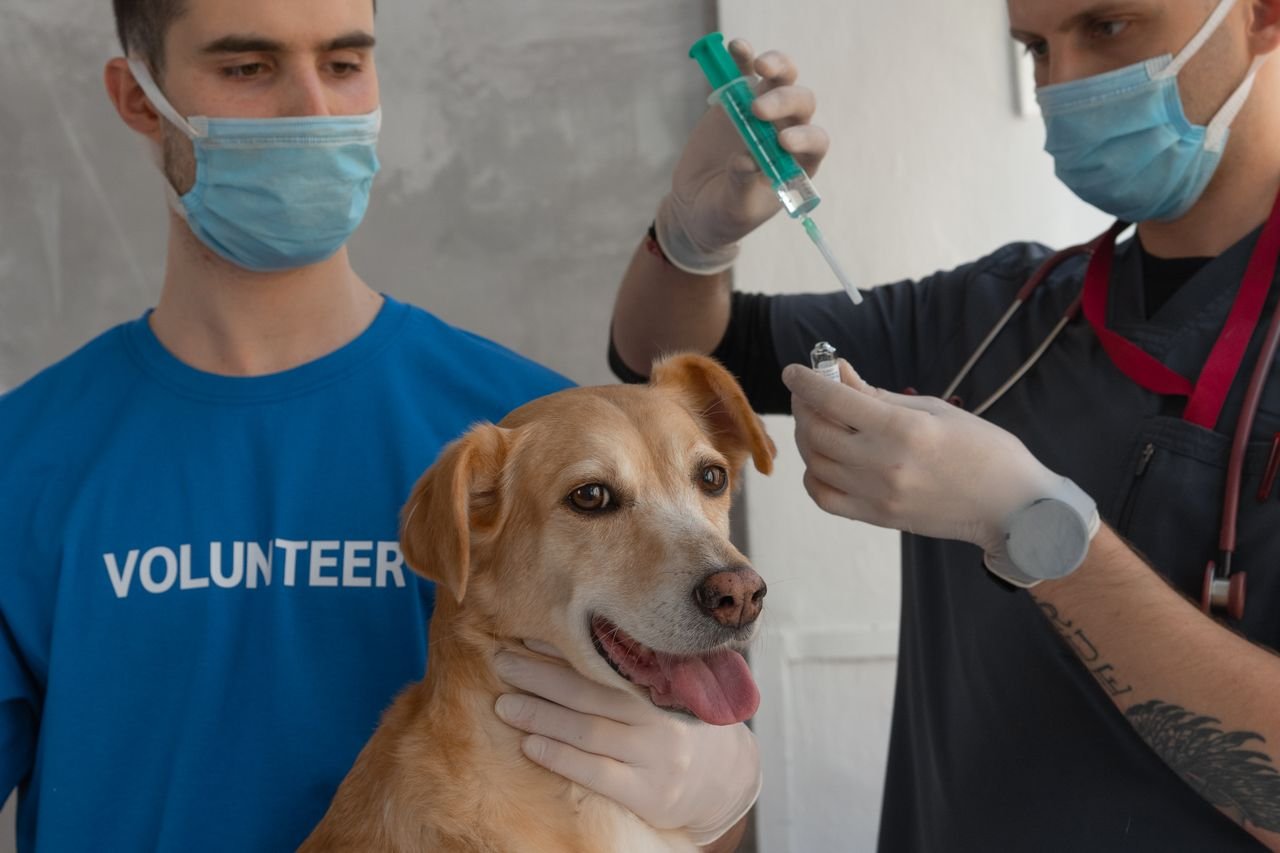

The dog rabies vaccine is not optional in most of the United States — it is legally required. But beyond the legal obligation, it is one of the most important vaccines your dog will ever receive, protecting both your dog and your family from one of the most dangerous viral diseases in existence.
This guide covers when your dog needs their rabies vaccine, how often boosters are required, what it costs, and what to expect on the day.
Is the Rabies Vaccine Legally Required for Dogs?
Yes — in all 50 US states, rabies vaccination is legally required for dogs. The specific schedule and booster requirements vary slightly by state and county, but the obligation to vaccinate is universal.
Failure to vaccinate carries real consequences:
- Fines and penalties
- If your unvaccinated dog bites someone, they may be required to undergo extended quarantine or euthanasia for rabies testing
- Your homeowner’s insurance may not cover bite incidents involving an unvaccinated dog
Even indoor-only dogs are required to be vaccinated in most jurisdictions — accidental escapes, bat exposure indoors, and emergency scenarios make vaccination relevant regardless of lifestyle.
Dog Rabies Vaccine Schedule
First Vaccination
Puppies receive their first rabies vaccine at 12–16 weeks of age — typically at the same appointment as their final FVRCP booster. Some states allow vaccination as early as 12 weeks; others require waiting until 16 weeks. Your vet will follow the regulations for your specific state.
First Booster
One year after the initial vaccine, regardless of the puppy’s age at first vaccination. This booster is required even if your dog received their first vaccine close to 16 weeks.
Subsequent Boosters
After the one-year booster, subsequent boosters are given every 1 or 3 years depending on:
- The specific rabies vaccine product used (1-year vs 3-year licensed vaccines)
- Your state or county regulations
- Your vet’s recommendation based on your dog’s health
Most vets use 3-year rabies vaccines for adult dogs after the initial series, making boosters every 3 years the standard for most healthy adult dogs.
| Age / Stage | Vaccine |
|---|---|
| 12–16 weeks | First rabies vaccine |
| 12 months later | Mandatory booster |
| Every 1–3 years after | Booster per vaccine type and local law |
How Much Does the Dog Rabies Vaccine Cost?
The rabies vaccine is one of the least expensive vaccines available:
| Setting | Typical Cost |
|---|---|
| Private vet clinic | $15–$35 per dose |
| Low-cost vaccine clinic | $5–$15 per dose |
| Shelter or humane society clinic | Free–$10 |
| Combined with wellness exam | $50–$100 total visit |
Many pet supply stores (PetSmart, Petco) host periodic low-cost vaccine clinics where the rabies vaccine is available for $10–$20 without a full vet visit. These are legitimate, licensed veterinary services and the vaccines are identical to those given in a private clinic.
What Other Vaccines Does My Dog Need?
The rabies vaccine is one of several core vaccines recommended for all dogs. The full core vaccine schedule includes:
DHPP (Distemper, Hepatitis, Parvovirus, Parainfluenza) — given as a puppy series starting at 6–8 weeks, with boosters at 1 year and every 3 years thereafter.
Rabies — as described above.
Non-core vaccines recommended based on lifestyle and risk:
- Bordetella (kennel cough) — recommended for dogs who visit groomers, boarding facilities, dog parks, or training classes
- Leptospirosis — recommended for dogs with outdoor or wildlife exposure
- Lyme disease — recommended in tick-endemic areas. See our tick treatment for dogs guide for tick prevention alongside vaccination
- Canine influenza — recommended for dogs in high-contact environments
What to Expect on Vaccination Day
Before the Appointment
No special preparation is needed for a rabies vaccine. Your dog can eat and drink normally beforehand. If your dog is anxious at the vet, see our dog anxiety guide for preparation tips that make clinic visits calmer.
During the Appointment
The rabies vaccine is given as a single subcutaneous (under the skin) or intramuscular injection, typically in the hind leg or scruff of the neck depending on the vet’s preference. It takes seconds. Most dogs barely react.
After the Appointment
Mild reactions in the 24–48 hours after vaccination are normal and expected:
- Slight soreness or swelling at the injection site
- Mild lethargy
- Reduced appetite
These resolve without treatment within 1–2 days.
Contact your vet if your dog shows:
- Facial swelling or hives — signs of allergic reaction, usually within 30–60 minutes of injection
- Vomiting or collapse
- Difficulty breathing
- Swelling at the injection site that persists or grows beyond 48 hours
Severe allergic reactions to the rabies vaccine are rare but do occur. Many vets recommend waiting 15–20 minutes after vaccination before leaving the clinic, particularly for small breeds and dogs with a history of vaccine reactions.
Keeping Vaccination Records
Your vet provides a rabies certificate after each vaccination — keep this document safely. You will need it for:
- Dog licensing (required in most US counties)
- Boarding, grooming, and doggy daycare — most facilities require proof of current rabies vaccination
- Travel — some destinations require proof of vaccination
- Any bite incident investigation — an unvaccinated dog involved in a bite faces far more serious consequences than a vaccinated one
If you lose your certificate, your vet can provide a copy — they keep vaccination records on file.
Rabies Vaccine Titer Testing
Some owners ask about titer testing — a blood test that measures the level of rabies antibodies — as an alternative to automatic revaccination. While titer tests can confirm adequate immunity, they are not accepted as a legal substitute for vaccination in most US states. Check your local regulations before relying on titers instead of revaccination.
Dog Rabies Vaccine — FAQ
My dog is overdue for their rabies booster — what happens now? Contact your vet as soon as possible. An overdue dog is considered unvaccinated in most states from a legal standpoint. Your vet will advise whether a restart of the series is needed or whether a single booster restores coverage — this depends on how overdue the vaccine is and your state’s regulations.
Can my dog have a reaction to the rabies vaccine? Mild reactions — soreness, lethargy, reduced appetite — are normal and resolve within 48 hours. Severe reactions (facial swelling, vomiting, collapse) are rare but require immediate veterinary attention. If your dog has had a previous vaccine reaction, tell your vet before the appointment so they can monitor your dog more closely.
Do indoor dogs really need the rabies vaccine? Yes — legally in most states, regardless of indoor/outdoor status. Practically, bats (the most common rabies vector in the USA) can enter homes through gaps and open windows, and accidental escapes happen. Vaccination protects against these low-probability but high-consequence scenarios.
Is the 1-year and 3-year rabies vaccine the same? The vaccines themselves are often very similar, but the 3-year vaccine is licensed and tested for 3-year duration of immunity. Using a 1-year vaccine does not mean your dog needs annual vaccination if a 3-year product is available and legal in your state — discuss with your vet which product they use.
Can I get my dog’s rabies vaccine at a pet store clinic? Yes — many pet supply stores host licensed veterinary clinics offering rabies vaccines at reduced cost. These are legitimate services performed by licensed vets or veterinary technicians under supervision. The vaccines are the same products used in private clinics.
Also read: Does a Dog Bite Cause Rabies? | Dog Saliva — Is It Safe? | Tick Treatment for Dogs | Dog Anxiety — Signs, Causes and Treatments