


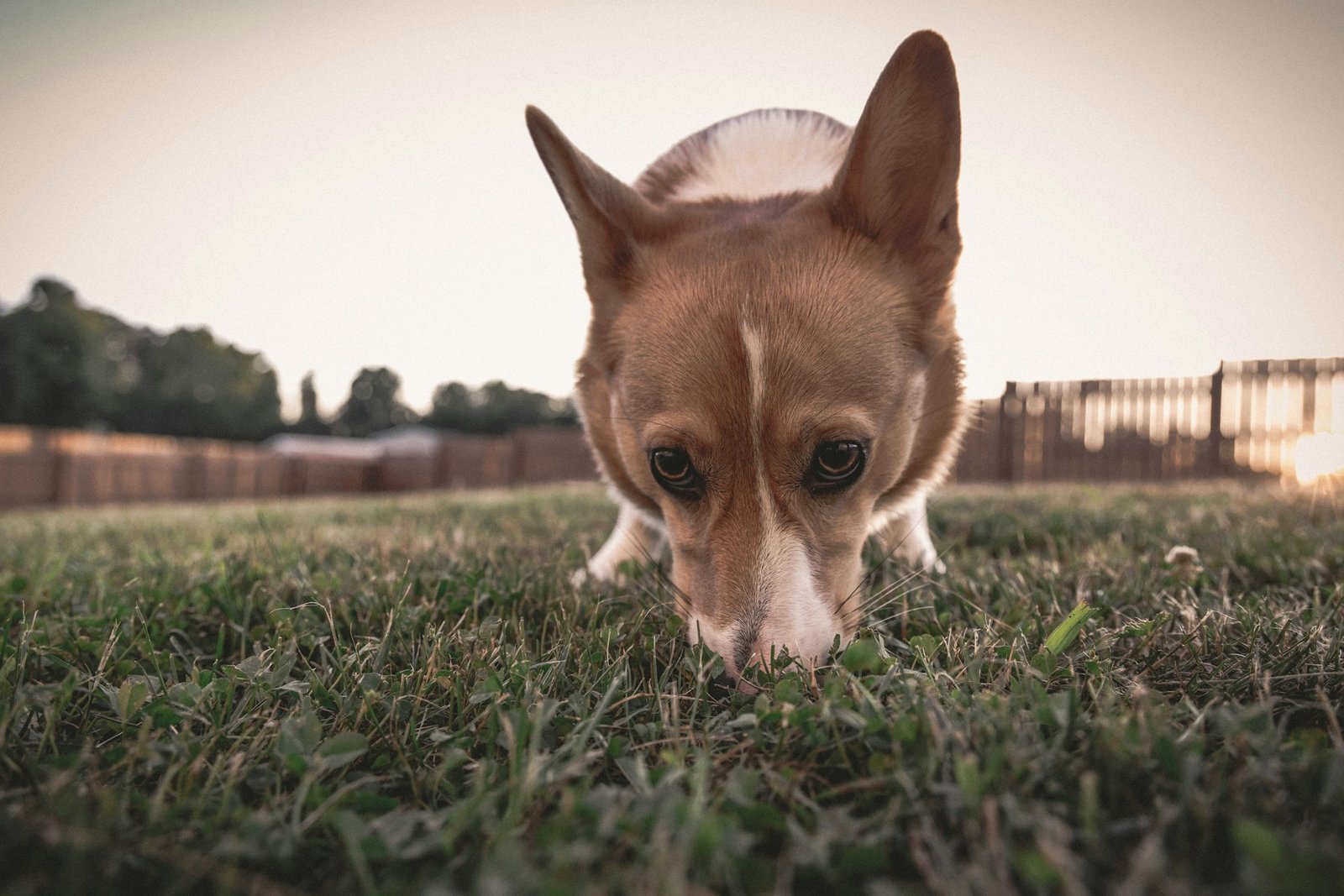

You let your dog out into the yard and within thirty seconds they are grazing like a small, enthusiastic cow. Or you are on a walk and your dog lunges toward every patch of grass they can reach, pulling at it methodically like they have somewhere to be. You have wondered about it for years. You may have even Googled it at 11pm.
Why does my dog eat grass? It is one of the most universal dog behaviours — and one of the most misunderstood. The short answer is that grass eating in dogs is almost always normal. The longer answer is that there are several distinct reasons dogs do it, and understanding which one applies to your dog tells you whether you need to do anything about it at all. This guide covers every real reason behind the habit, when it signals something worth paying attention to, and exactly what to do.
Is It Normal for Dogs to Eat Grass?
Yes — almost always. Grass eating is so common in dogs that veterinary researchers consider it a normal canine behaviour rather than a problem behaviour or a sign of illness. Studies have found that the majority of dogs eat grass at some point, and most do so regularly without any negative consequences.
The behaviour has been observed in wild canids — wolves, foxes, and wild dogs — who consume plant material as part of a varied diet. Your domestic dog inherits this tendency regardless of how far removed they are from their wild ancestors.
What is not always normal is the context, the frequency, and what happens after. A dog that occasionally grazes on a walk is almost certainly fine. A dog that is frantically, obsessively eating grass every day and vomiting consistently afterward is showing you something that deserves closer attention. The distinction matters — and this guide will help you make it.
8 Real Reasons Why Dogs Eat Grass
Reason 1 — They Simply Like It
This is the most straightforward and most frequently overlooked explanation: many dogs eat grass because they enjoy it. They like the taste. They like the texture. They like the act of pulling it up and chewing it.
Dogs experience their world primarily through their mouths — and grass, particularly fresh spring grass or newly cut grass, has a distinct smell and taste that many dogs genuinely find appealing. There does not have to be a medical reason or a nutritional deficit behind every grass-eating session.
If your dog eats grass calmly, chews it leisurely, and shows no signs of stomach upset afterward — this is almost certainly the explanation. They are grazing because they enjoy grazing, just as some dogs enjoy chewing sticks or rolling in specific patches of ground for reasons that make perfect sense to them.
Reason 2 — Nutritional Needs — Fibre and Micronutrients
Dogs are omnivores, not obligate carnivores like cats. In the wild, canids supplement their primarily meat-based diet with plant material — grass, berries, roots, and the stomach contents of their prey — to obtain fibre, vitamins, and micronutrients that meat alone does not provide.
A dog eating grass regularly may be instinctively supplementing their diet with plant fibre. Grass contains roughage that aids digestion and supports healthy gut motility — and a dog whose diet is low in fibre may seek it out through grazing.
This is one reason why switching to a higher-fibre food or adding a small amount of cooked vegetables to your dog’s diet sometimes reduces grass eating. As we covered in our guide to the best cat food for indoor cats, dietary fibre plays a meaningful role in digestive health across species — and the same principle applies to dogs. If your dog is a frequent, consistent grass grazer, reviewing the fibre content of their food is a worthwhile first step.
Reason 3 — Stomach Upset — Self-Medicating
This is the explanation most dog owners reach for first — and while it is not the whole story, it is a genuine part of it.
Some dogs eat grass when they have an upset stomach. The grass may trigger vomiting, which provides relief from nausea or gastrointestinal discomfort. This is a self-medicating behaviour — your dog is using an available environmental resource to address how they feel.
The research on this is more nuanced than the popular explanation suggests. Studies have found that most dogs who eat grass do not vomit afterward — suggesting that stomach upset is not the primary driver for the majority of grass-eating incidents. However, a subset of dogs do appear to eat grass specifically when nauseous — often frantically and urgently — and then vomit shortly afterward.
The distinction to watch for: A dog that grazes casually and contentedly is probably not nauseous. A dog that suddenly seeks grass urgently, eats it in large quantities very quickly, and then vomits — particularly if this is unusual behaviour for them — may genuinely be using it to address nausea.
Reason 4 — Boredom and Under-Stimulation
An under-stimulated dog looks for things to do. Eating grass — particularly on walks or in the yard during extended unsupervised time — can be a response to boredom rather than any nutritional or physical need.
Dogs need both physical exercise and mental stimulation. A dog that gets sufficient exercise but lacks mental engagement will often find their own entertainment — and for many dogs, grazing qualifies. It is occupying, sensory, and involves the kind of foraging behaviour that dogs find naturally satisfying.
If your dog eats grass primarily during long, boring periods in the yard or on low-activity walks, boredom and under-stimulation are strong candidates. Adding enrichment activities — puzzle feeders, interactive toys, training sessions, or more varied walks — often reduces this type of grass eating meaningfully.
Reason 5 — Attention-Seeking Behaviour
Dogs are highly attuned to their owner’s reactions. If eating grass has previously resulted in a strong response from you — rushing over, saying their name, trying to redirect them — your dog may have learned that grass eating is an effective way to get your attention.
This is especially common in dogs that eat grass specifically when their owner is present and watching, rather than when they are alone in the yard. The behaviour becomes reinforced over repeated interactions: dog eats grass, owner reacts, dog learns that grass eating produces engagement.
The solution is counterintuitive: if you suspect attention-seeking is behind the grass eating, reducing your reaction — calmly redirecting rather than making a production of it — removes the reinforcement over time.
Reason 6 — Instinct and Ancestral Behaviour
As mentioned earlier, wild canids eat plant material as a normal part of their diet. Wolves and wild dogs consume grass, berries, and other vegetation — both directly and indirectly through the stomach contents of prey animals.
Your domestic dog carries these ancestral instincts regardless of how many generations removed they are from their wild relatives. Grass eating is part of the behavioural repertoire that evolution produced — and for many dogs, it manifests as occasional or regular grazing that has no specific trigger beyond the instinct itself.
This is particularly common in the spring, when fresh grass growth is abundant and the smell and taste of new growth may be especially appealing. Many dog owners report that their dogs eat significantly more grass in spring than at other times of year — seasonal instinct rather than a consistent problem.
Reason 7 — Intestinal Parasites
This reason is less often discussed — but worth knowing. Some research suggests that dogs with intestinal parasites eat more grass as a self-medicating behaviour. The rough fibrous content of grass may help dislodge or expel parasites from the digestive tract — a behaviour observed in other animals that self-medicate with plant material.
If your dog has suddenly started eating grass more frequently than usual, is also showing other signs — weight loss, changes in stool, visible worms in the stool, a pot-bellied appearance, increased appetite despite weight loss — a vet check for parasites is a sensible step.
As we covered in our guide to how to tell if your cat is sick, sudden behavioural changes are always worth investigating — and the same is true for dogs. A sudden increase in grass eating alongside any other symptom is a reason to contact your vet.
Reason 8 — They Are Eating Around Something Else
This is a practical explanation that often gets missed. Sometimes dogs are not specifically targeting grass — they are targeting insects, worms, seeds, fallen fruit, or other organic material at ground level, and consuming grass incidentally in the process.
A dog that seems particularly interested in specific patches of grass, searches actively rather than grazing broadly, or shows excited rather than leisurely behaviour while eating may be hunting something in or under the grass rather than eating the grass itself. Beetles, earthworms, and certain insects are genuinely appealing to many dogs.
Why Does My Dog Eat Grass and Then Vomit?
The grass-then-vomit sequence is the version of this behaviour that worries owners most — and for good reason. Understanding it properly helps you distinguish between normal and concerning.
When it is probably normal:
- Your dog eats a moderate amount of grass, goes about their day normally, and vomits once or twice. Afterward they are bright, alert, interested in food, and behaving normally.
- This happens occasionally — not every day or multiple times per week.
- Your dog seems calm and deliberate while eating the grass, not frantic or urgent.
When to contact your vet:
- Your dog is frantically eating large amounts of grass and vomiting repeatedly in a short period
- Vomiting is happening alongside other symptoms — lethargy, loss of appetite, abdominal swelling, obvious pain
- The grass-and-vomit pattern is happening every day or multiple times per week — this suggests an underlying gastrointestinal issue that needs investigation
- Your dog is vomiting but not actually managing to bring anything up — this can indicate bloat (GDV), which is a life-threatening emergency in large breeds especially
If your dog keeps eating grass and vomiting persistently — as we covered in our guide to why cats stop eating, persistent digestive symptoms are never something to watch and wait through indefinitely.
Is Grass Safe for Dogs to Eat?
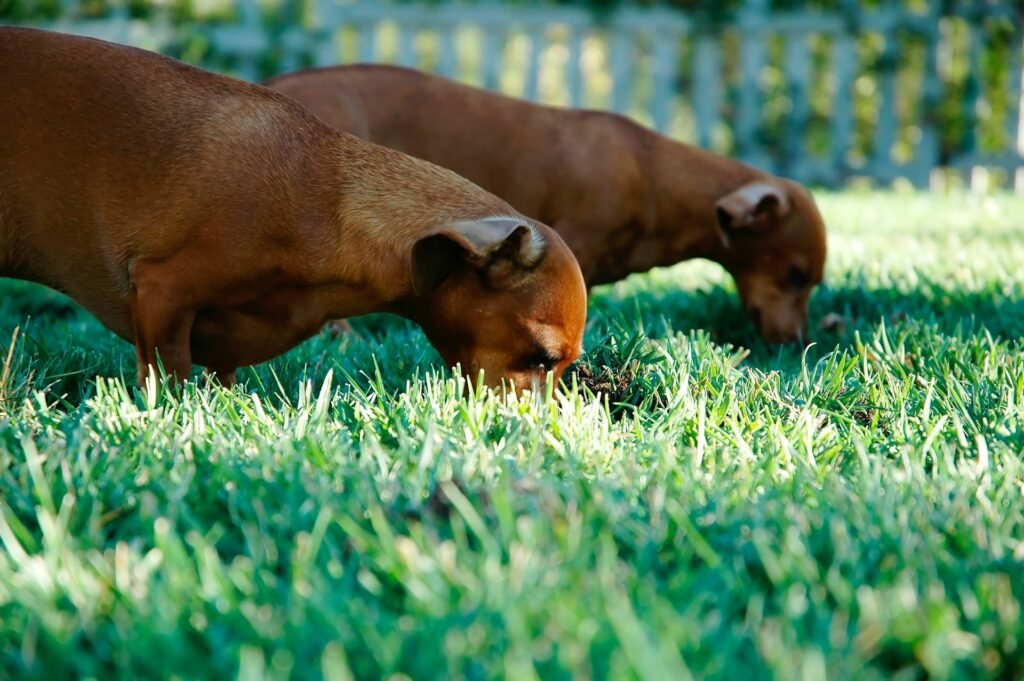
In most circumstances — yes. Plain grass, free of chemicals, is not toxic to dogs. The grass eating itself is rarely the problem.
What can be a problem:
- Pesticides, herbicides, and fertilisers applied to lawns. These chemicals can cause toxicity — nausea, vomiting, diarrhea, and in severe cases more serious reactions. If your dog eats grass treated with lawn chemicals, contact your vet or the ASPCA Animal Poison Control Center at (888) 426-4435.
- Toxic plants in the vicinity. Dogs eating grass in unfamiliar areas may consume parts of toxic plants alongside the grass — including foxglove, lily of the valley, oleander, and others. Know what is growing in the areas where your dog grazes.
- Excessive consumption of very long or coarse grass can occasionally cause intestinal obstruction in dogs that eat large amounts without chewing properly.
For dogs that graze in your own yard — and you know what has and has not been applied to it — the grass eating itself is virtually always safe.
Should You Stop Your Dog From Eating Grass?
For most dogs in most situations — no. Occasional, calm grass grazing is normal behaviour that does not require intervention. Trying to completely prevent a normal, harmless behaviour often creates more frustration (for you) and confusion (for your dog) than simply allowing it.
Consider discouraging grass eating if:
- Your yard or the area where they graze has been treated with chemicals
- Your dog is eating grass so excessively that it is replacing normal food intake
- The grass eating is always followed by vomiting and is happening very frequently
- Your dog is eating grass in areas where toxic plants may be present
How to reduce grass eating if needed:
- Increase dietary fibre — switch to a higher-fibre food or add cooked vegetables like green beans, pumpkin, or carrots to meals
- Increase mental stimulation — puzzle feeders, training sessions, and varied walks address boredom-driven grass eating
- Ensure adequate exercise — a physically tired dog grazes less out of boredom
- Redirect calmly on walks — a consistent “leave it” cue redirects the behaviour without creating the attention-based reinforcement that makes it worse
- Keep your lawn chemical-free or walk on known-safe grass if your dog is a heavy grazer
When to See a Vet About Your Dog Eating Grass
Most grass eating needs no veterinary attention. But contact your vet if:
- Grass eating is new, sudden, and significantly more intense than your dog’s previous behaviour
- Vomiting accompanies grass eating more than occasionally and is frequent or severe
- Your dog is losing weight, showing changes in appetite or energy, or has any other concurrent symptoms
- You suspect your dog has eaten grass treated with chemicals or alongside toxic plants
- Your dog appears to be in pain or distress while eating grass or after eating it
As we discussed in our guide to how often dogs should be bathed, regular observation of your dog’s normal habits is the foundation of catching anything unusual early. You know your dog’s baseline — if grass eating feels significantly different from what is normal for them, that instinct is worth following up on.
Quick Reference — Why Is My Dog Eating Grass?
| Behaviour | Most Likely Reason | What to Do |
|---|---|---|
| Calm, leisurely grazing | Enjoyment or taste preference | Nothing — it’s normal |
| Grazing after meals | Fibre seeking or habit | Check diet fibre content |
| Frantic, urgent grass eating then vomiting | Nausea or stomach upset | Monitor — vet if frequent |
| Grass eating mainly when bored | Under-stimulation | Add enrichment and exercise |
| Suddenly eating much more grass | Possible GI issue or parasites | Vet check recommended |
| Grass eating on walks only | Instinct, taste, or interest in ground-level scents | Normal — redirect if needed |
| Eating grass then vomiting daily | Underlying GI condition | Vet visit warranted |
FAQ — Why Does My Dog Eat Grass?
Q: Why does my dog eat grass and then throw up? A: Some dogs eat grass when nauseous and vomit to relieve their discomfort — the grass stimulates the gag reflex. If this happens occasionally and your dog is otherwise well, it is usually not concerning. If vomiting after grass eating happens frequently, a vet check is warranted to investigate an underlying gastrointestinal cause.
Q: Why does my dog eat grass every day? A: Daily grass eating is common in many dogs and is usually a combination of enjoyment, fibre-seeking, and instinct. If your dog grazes daily without vomiting and is otherwise healthy — eating well, normal energy, normal stools — daily grass eating is almost certainly normal for them. Consider increasing dietary fibre if you want to reduce it.
Q: Why does my puppy eat grass? A: Puppies explore the world with their mouths, and grass is among the most interesting textures they encounter. Puppy grass eating is nearly always exploratory behaviour rather than a symptom of anything. The main concern for puppies is chemical exposure — ensure the grass they access has not been treated.
Q: Why does my dog eat grass in the morning? A: Dogs eating grass in the morning — particularly on an empty stomach — may be experiencing mild nausea from overnight stomach acid accumulation. Feeding a small meal before your morning walk sometimes resolves this. It can also simply be that the morning grass smells particularly fresh and appealing.
Q: Why is my dog suddenly eating grass all the time? A: A sudden, significant increase in grass eating — particularly if accompanied by other symptoms — is worth investigating with your vet. Possible causes include gastrointestinal issues, intestinal parasites, dietary deficiency, or nausea from an underlying condition. If your dog is otherwise well and the increase is moderate, dietary fibre or boredom are more likely explanations.
Q: Is it safe to let my dog eat grass? A: Plain grass in a chemical-free environment is safe for most dogs. The main risks are chemical treatments, nearby toxic plants, and excessive consumption of coarse grass. Know what has been applied to your lawn and be aware of potentially toxic plants in areas where your dog grazes.
Conclusion
Why does my dog eat grass? Almost always — because it is normal, instinctive, and often genuinely enjoyable for them. Grass eating is one of the most universal dog behaviours and one of the least concerning in the absence of other symptoms.
The version that warrants attention is frantic, obsessive grass eating that consistently ends in vomiting, particularly if it is new or intensifying behaviour. That pattern suggests an underlying issue worth investigating — and your vet is the right first call.
For the vast majority of dogs and the vast majority of grass-eating sessions — your dog is just being a dog. Let them graze. Watch for the signs that distinguish normal from concerning. And resist the urge to panic about something that generations of dogs before yours have done without incident.
Also read: How often should I bathe my dog? | How to tell if your cat is sick | Why is my cat not eating? | Is it normal for cats to drink a lot of water? | Best cat food for indoor cats | How long do indoor cats live?