
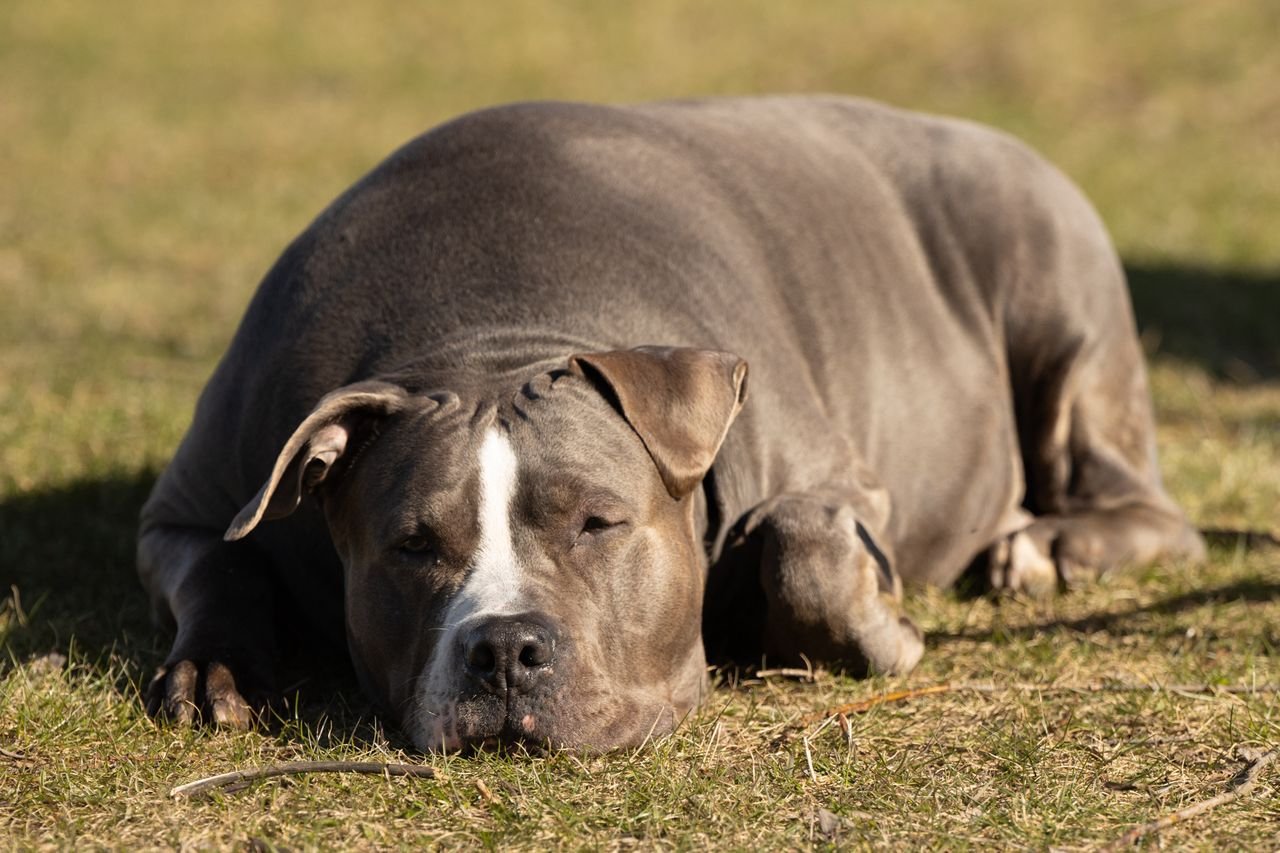

Noticing that your dog has gained weight is worth taking seriously — not for cosmetic reasons, but because obesity in dogs is one of the most significant preventable health problems in veterinary medicine. Overweight dogs develop arthritis earlier, have higher cancer rates, are more prone to diabetes, and live measurably shorter lives than dogs at a healthy weight.
The good news is that weight gain in dogs is almost always reversible with the right approach.
How to Tell If Your Dog Is Overweight
You do not need a scale to get a rough picture. Use the body condition score (BCS) — a simple hands-on assessment:
Ribs: Run your hands along your dog’s ribcage. You should be able to feel individual ribs easily without pressing hard, but not see them prominently. If you cannot feel the ribs without significant pressure, your dog is likely overweight.
Waist: Looking down at your dog from above, there should be a visible waist — a narrowing behind the ribs. An overweight dog looks like a sausage from above with no visible waist.
Abdomen: Viewed from the side, the belly should tuck up slightly from the ribcage toward the hindquarters. A sagging, pendulous abdomen suggests excess weight.
Your vet can give a formal BCS score (1–9 scale) at any wellness visit — scores of 6 or above indicate overweight, 7–9 indicate obesity.
Common Causes of Weight Gain in Dogs
Overfeeding
The most common cause, and the most straightforward to fix. Many owners:
- Overfill the bowl by eye rather than measuring portions
- Give too many treats without accounting for those calories in the daily total
- Feed table scraps regularly
- Have multiple family members feeding the dog without coordination
A single extra biscuit-style treat per day can add significant calories over weeks and months — particularly in small breeds where caloric needs are low.
Insufficient Exercise
Weight gain is always a calorie equation — calories in versus calories out. A dog whose exercise has decreased (due to owner lifestyle change, injury, or age) without a corresponding reduction in food intake will gain weight.
Neutering
Neutering reduces sex hormone levels, which lowers metabolic rate by approximately 20–30% in some dogs. Without adjusting food intake after neutering, weight gain is almost inevitable. Switching to a neutered dog formula food after the procedure helps manage this.
Age
Senior dogs naturally become less active, lose muscle mass, and have lower caloric requirements. Continuing to feed the same amount as when they were young and active leads to gradual weight gain. See our how to care for a senior dog guide for diet and exercise adjustments for older dogs.
Hypothyroidism
An underactive thyroid gland reduces metabolism, causing weight gain even when food intake has not changed. Other signs include lethargy, coat changes, cold intolerance, and a generally slowed-down dog. Diagnosed with a blood test and managed with daily thyroid medication.
Cushing’s Disease
Overproduction of cortisol causes a characteristic pot-bellied appearance alongside weight redistribution — fat deposits on the abdomen while the limbs remain relatively thin. Other signs include increased drinking and urination, hair loss, and excessive panting. If your dog is also drinking a lot more than usual, see our my dog is drinking too much water guide for more on what this pattern means.
Medications
Corticosteroids (prednisone) are a common medication-related cause of weight gain — they increase appetite, promote fat storage, and cause fluid retention. Phenobarbital (used for epilepsy) also increases appetite.
Breed Predisposition
Some breeds are significantly more prone to obesity than others:
- Labrador Retrievers — a genetic mutation affecting the POMC gene is found in a significant proportion of Labs and causes insatiable appetite
- Cocker Spaniels, Basset Hounds, Dachshunds, Pugs, Beagles, Rottweilers, and Golden Retrievers are also commonly affected
Health Risks of Obesity in Dogs
The consequences of carrying excess weight are serious and well-documented:
- Joint disease — excess weight accelerates arthritis and dramatically increases cruciate ligament rupture risk. See our my dog is limping guide for joint-related signs
- Diabetes mellitus — obesity is a major risk factor
- Breathing difficulties — particularly in flat-faced breeds
- Heart disease — the heart works harder to supply a larger body
- Reduced lifespan — studies suggest overweight dogs live 1.5–2 years less than dogs at healthy weight
- Reduced quality of life — overweight dogs play less, tire more easily, and are less comfortable in daily activity
- Higher anaesthetic risk — weight significantly increases surgical risk
According to the Association for Pet Obesity Prevention, over 50% of dogs in the USA are overweight or obese — making this one of the most widespread health problems in companion animals.
What to Do About Dog Weight Gain
Step 1 — Confirm With Your Vet
Before starting a weight loss programme, a vet visit is worthwhile to:
- Confirm the degree of overweight and set a target weight
- Rule out medical causes (hypothyroidism, Cushing’s)
- Get a specific calorie target for weight loss
- Discuss whether a prescription weight loss diet is appropriate
Step 2 — Measure Food Precisely
Stop guessing portion sizes. Use a kitchen scale or measuring cup and feed exactly the amount recommended for your dog’s target weight — not their current weight. Most feeding guides on packaging are based on current weight and are often generous.
Step 3 — Account for Treats
Treats should make up no more than 10% of daily calorie intake. Swap high-calorie treats for:
- Small pieces of raw carrot, cucumber, or apple
- A portion of your dog’s daily kibble allowance used as treats
- Commercial low-calorie training treats
Step 4 — Increase Exercise Gradually
Do not dramatically increase exercise overnight — particularly in an overweight or older dog whose joints are already under strain. Build up gradually over 2–4 weeks.
- Add 5–10 minutes to existing walks every few days
- Swimming is excellent for overweight dogs — low impact, high calorie burn
- Gentle fetch sessions on soft ground
- Avoid high-impact activities (jumping, sharp turns) until weight has reduced
For a complete plan, see our how to help a dog lose weight guide which covers safe, gradual weight loss protocols in full detail.
Step 5 — Consider a Weight Management Diet
Prescription weight loss diets (Hill’s Metabolic, Royal Canin Satiety) are formulated to keep dogs feeling full on fewer calories. They are significantly more effective than simply reducing portions of regular food, as regular food reduced heavily can leave dogs nutritionally deficient and hungry.
Step 6 — Monitor Monthly
Weigh your dog monthly — most vet practices will let you use their scales without an appointment. Aim for 1–2% of body weight lost per week as a safe, sustainable rate. Too rapid weight loss is not healthy.
How Long Does It Take a Dog to Lose Weight?
A safe weight loss rate is approximately 1–2% of body weight per week. For a 60-pound dog needing to lose 10 pounds, expect 5–10 weeks of consistent effort.
Weight loss in dogs is genuinely slow — which is why consistency matters more than dramatic short-term restriction. Stick to the plan, measure every week, and adjust calories with your vet if progress stalls.
Dog Weight Gain — FAQ
My dog always seems hungry — is this a sign of a problem? Constant hunger alongside weight gain can indicate Cushing’s disease, diabetes, or hypothyroidism. It can also simply reflect overfeeding of low-satiety food, or a breed predisposition (particularly in Labradors). Mention it to your vet if it is a new or worsening behaviour.
Can I put my dog on a human diet or calorie restriction? No — dogs have specific nutritional requirements and human dietary approaches do not translate. Extreme calorie restriction without veterinary guidance risks nutritional deficiency. Always work with your vet on a dog-specific weight loss plan.
My dog gained weight after being neutered — is this normal? Yes — a metabolic rate reduction after neutering is well documented. Switching to a neutered dog formula food and reducing portions by 20–25% after the procedure prevents most post-neutering weight gain.
My dog is not eating more but is gaining weight — why? Unexplained weight gain without increased food intake strongly suggests a medical cause — hypothyroidism and Cushing’s disease are the most common. A vet visit with blood and urine testing will identify the cause.
What is a healthy weight loss target for my dog? Your vet will calculate a target weight based on your dog’s breed, build, and body condition. As a rough guide, aim for a body condition score of 4–5 out of 9 — ribs easily felt but not visible, clear waist visible from above.
Also read: How to Help a Dog Lose Weight | How to Care for a Senior Dog | My Dog Is Limping | My Dog Is Drinking Too Much Water