

Dog ear infections are one of the most common conditions vets treat — and one of the most uncomfortable for the dog. The good news is that most ear infections respond well to treatment when caught early. The challenge is recognising the signs before the infection becomes severe or chronic.
Signs of a Dog Ear Infection
Dogs cannot tell you their ear hurts, but their behaviour makes it fairly obvious. Watch for:
- Head shaking — repeatedly and persistently, not just the occasional shake after water
- Scratching at the ear — with a back paw, or rubbing the ear against furniture or carpet
- Tilting the head to one side
- Odour from the ear — a yeasty, sweet, or foul smell is a reliable indicator of infection
- Discharge — brown, yellow, or black discharge visible in the ear canal
- Redness or swelling of the ear flap or canal opening
- Pain when the ear is touched — flinching, pulling away, or crying when you handle the ear area
- Crusting or scabbing around the ear
In severe or chronic cases:
- Loss of balance or coordination
- Walking in circles
- Hearing loss
- Eye flickering (nystagmus) — indicates the infection has reached the middle or inner ear
Types of Dog Ear Infection
Otitis Externa
Infection of the outer ear canal — the most common type. Responds well to topical treatment when caught early.
Otitis Media
Infection of the middle ear, usually an extension of untreated otitis externa. More serious, may require oral antibiotics and sometimes surgical intervention.
Otitis Interna
Infection of the inner ear. The least common and most serious type — causes balance problems, head tilt, and loss of coordination alongside pain. Requires aggressive treatment.
Common Causes of Ear Infections in Dogs
Bacteria and Yeast
Most ear infections are caused by bacterial overgrowth (commonly Staphylococcus or Pseudomonas) or yeast overgrowth (most commonly Malassezia). Many infections involve both simultaneously.
Allergies
One of the most important underlying causes — and the most frequently missed. Dogs with food or environmental allergies often develop recurrent ear infections as a manifestation of their allergy. If your dog gets ear infections repeatedly, allergy investigation is essential. See our best dog food for allergies guide and our dog skin problems and itching guide for more on allergy management.
Moisture
Water trapped in the ear canal after swimming or bathing creates the warm, moist environment that bacteria and yeast thrive in. Dogs who swim regularly are at significantly higher risk.
Ear Mites
Tiny parasites that live in the ear canal — more common in puppies and dogs with outdoor exposure. Cause intense itching and dark, coffee ground-like debris in the ear. Highly contagious between dogs and cats.
Foreign Bodies
Grass seeds are a particularly common culprit — they enter the ear canal and cause sudden intense pain and head shaking. Require removal by a vet.
Hormone Disorders
Hypothyroidism and Cushing’s disease both increase susceptibility to recurrent ear infections — another reason to investigate underlying causes in dogs with repeated infections.
Breeds Most Prone to Ear Infections
Some breeds are structurally predisposed:
Floppy-eared breeds (Cocker Spaniels, Basset Hounds, Beagles, Labrador Retrievers) — reduced airflow to the ear canal creates a warm, moist environment ideal for bacterial and yeast growth.
Hairy-eared breeds (Poodles, Schnauzers, Bichon Frise) — hair growing inside the ear canal traps wax and debris.
Narrow ear canals (Shar Peis, Chow Chows) — reduced drainage increases infection risk.
Dogs that swim regularly — any breed with regular water exposure has elevated risk.
When to See the Vet
See the vet within 24 hours if:
- Discharge is present — particularly dark brown or black
- Strong odour from the ear
- Your dog is in obvious pain or distress
- Head shaking is persistent and severe
- You can see significant redness or swelling
Go to the vet same day if:
- Your dog has lost balance or is walking in circles
- The ear canal appears completely blocked with discharge
- Your dog has a fever alongside ear symptoms — see our my dog is vomiting guide for signs of systemic illness alongside ear infection
Do not attempt to clean an infected ear at home before a vet visit — you risk pushing debris deeper into the canal and making diagnosis harder.
How Vets Diagnose and Treat Ear Infections
Diagnosis
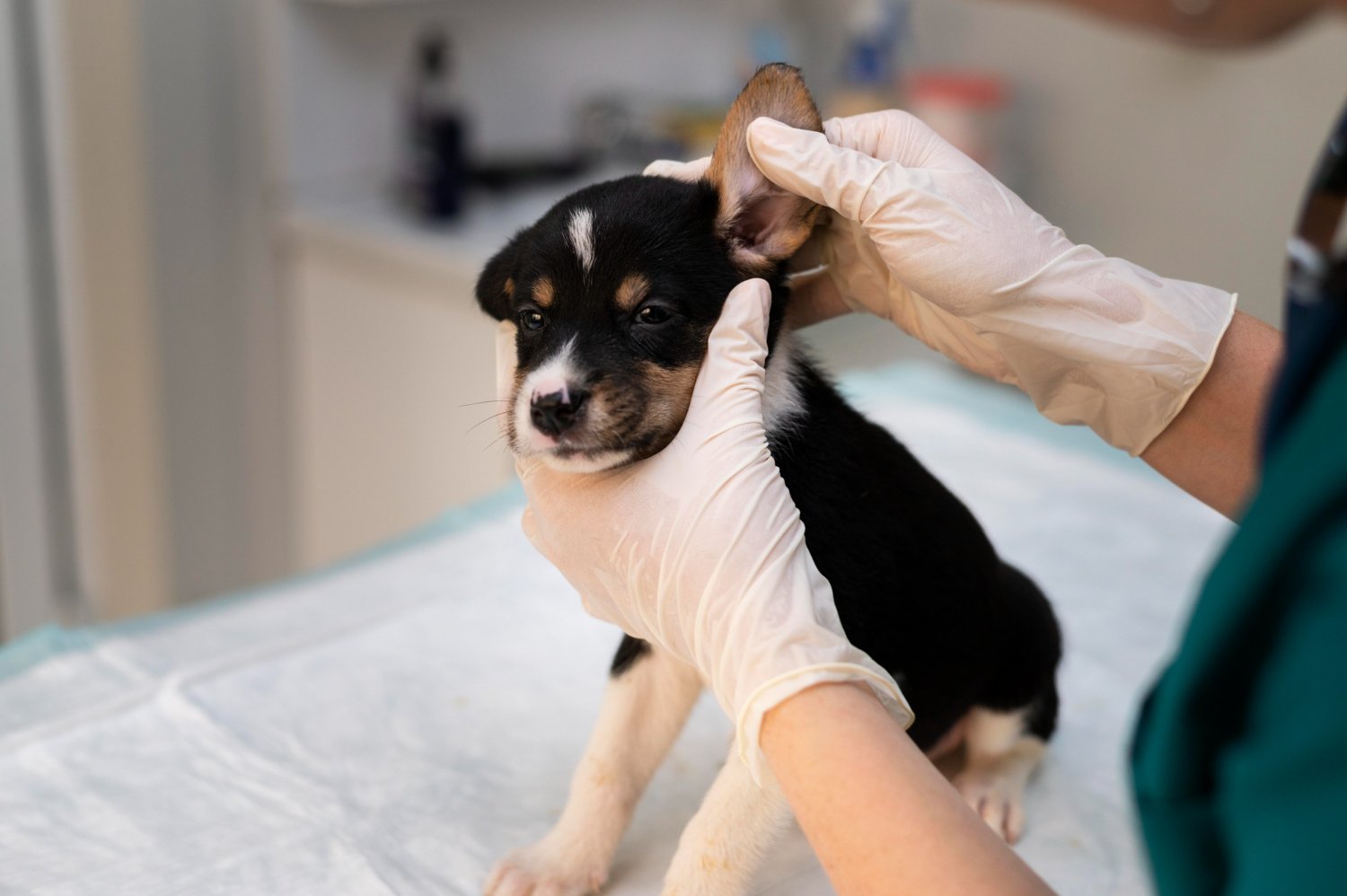
Your vet will examine the ear with an otoscope and typically take a swab for cytology — examining the discharge under a microscope to identify whether bacteria, yeast, or mites are present. This determines which treatment is appropriate.
Treatment
Topical ear drops — the most common treatment for otitis externa. May contain antibiotics, antifungals, anti-inflammatories, or a combination. Applied once or twice daily for 7–14 days.
Ear cleaning — your vet will clean the ear thoroughly before treatment and show you how to maintain this at home. See our how to clean dog ears at home guide for the correct technique.
Oral antibiotics or antifungals — for moderate to severe infections or when the middle ear is involved.
Medicated ear flush — in severe cases with significant buildup, a deep flush under sedation may be needed.
Surgery (TECA) — for dogs with end-stage chronic ear disease that has not responded to any other treatment. Total ear canal ablation removes the diseased canal entirely. This is a last resort.
Preventing Dog Ear Infections
- Clean ears regularly with a vet-approved solution — frequency depends on breed and individual risk
- Dry ears thoroughly after swimming or bathing — use a dry cotton ball to absorb moisture from the canal opening
- Manage allergies — if your dog has recurrent infections, addressing the underlying allergy significantly reduces frequency
- Pluck hair from hairy ear canals (with guidance from your groomer or vet) to improve airflow
- Routine vet checks — ears are examined at every wellness visit, catching early changes before they become full infections
Dog Ear Infection — FAQ
Can a dog ear infection go away on its own? Rarely — and trying to wait it out typically results in a more severe, harder-to-treat infection. Ear infections caused by bacteria and yeast require appropriate medication to resolve. Delaying treatment also risks the infection spreading to the middle and inner ear.
How long does a dog ear infection take to clear up? Most uncomplicated outer ear infections resolve within 1–2 weeks of appropriate treatment. Chronic or middle ear infections take longer — sometimes 4–6 weeks or more. Follow-up visits confirm that the infection has fully cleared before stopping treatment.
My dog keeps getting ear infections — why? Recurrent ear infections almost always have an underlying cause — most commonly allergies, a structural issue with the ear canal, or an endocrine disorder. Treating each infection without investigating the underlying cause is a temporary fix. Ask your vet about allergy testing and a full workup if infections keep returning.
Can I use olive oil or home remedies in my dog’s ear? No — home remedies including olive oil, vinegar, and hydrogen peroxide are not appropriate for treating ear infections and can worsen irritation or make diagnosis more difficult. Use only vet-approved products.
Can my dog’s ear infection spread to me or other pets? Bacterial and yeast ear infections are not contagious to humans. Ear mites are contagious between dogs and cats in the same household — if one pet has mites, all pets need treatment simultaneously.
Also read: How to Clean Dog Ears at Home | Best Dog Food for Allergies | Dog Skin Problems and Itching | How to Care for a Senior Dog