


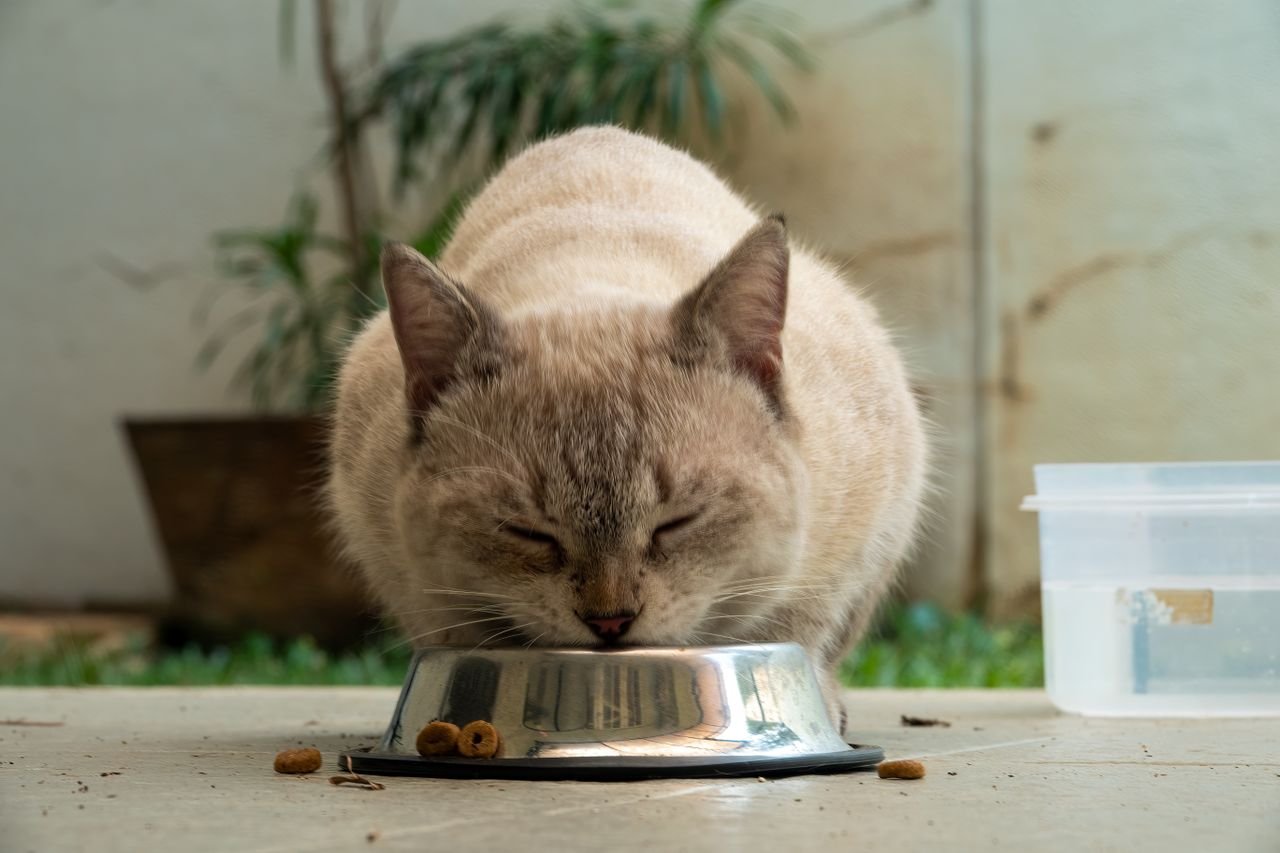

Your vet said the words you were not quite expecting: your cat is overweight. Or you have noticed the belly hanging lower than it used to, the reluctance to jump, the breathing a little heavier after minimal activity. Either way, you know something needs to change.
Finding the best cat food for weight loss is the most important step — but it is not as simple as just feeding less of their current food. The wrong approach to cat weight loss can trigger a serious and potentially fatal condition called hepatic lipidosis. The right approach, with the right food, produces steady, safe, healthy weight reduction.
This guide covers the vet-recommended approach to feline weight loss, what to look for in a weight loss cat food, and the top-rated options across wet and dry categories.
Why Overweight Cats Need a Specific Weight Loss Diet
A common mistake is simply reducing the portion of a cat’s regular food to help them lose weight. This can work in the short term, but regular cat food is not calorie-formulated for weight loss — reducing portions often means the cat is not getting adequate protein, vitamins, and minerals at a calorie level that produces weight loss.
Weight loss cat foods are specifically formulated to:
- Deliver fewer calories per gram than standard cat food
- Maintain high protein content to preserve muscle mass during weight loss
- Provide complete nutrition at a reduced calorie intake
- Include higher fibre to help the cat feel full
The muscle mass point is particularly important. Cats losing weight on a low-protein diet lose muscle alongside fat — which is damaging to long-term health and makes keeping weight off harder. A high-protein, calorie-controlled diet preserves lean muscle while burning fat.
The Danger of Rapid Weight Loss in Cats — Hepatic Lipidosis
Before anything else, understand this: cats must lose weight slowly. Unlike dogs and humans, cats that lose weight too quickly — particularly obese cats that stop eating or are fed dramatically less — are at serious risk of hepatic lipidosis, also called fatty liver disease.
When a cat’s body breaks down fat reserves too rapidly, fat accumulates in the liver, causing liver dysfunction that can be fatal without veterinary treatment.
Safe weight loss rate for cats: No more than 1–2% of body weight per week. For a 6kg cat, that is a maximum of 60–120g per week.
Never put a cat on a crash diet. Never abruptly switch to a dramatically smaller portion without veterinary guidance. A gradual, managed reduction under vet supervision is always the right approach for a significantly overweight cat.
Always consult your vet before starting a weight loss programme, especially if your cat is significantly overweight or has any health conditions.
What to Look for in a Weight Loss Cat Food
High Protein, Lower Carbohydrate
Cats are obligate carnivores — they thrive on animal protein and have limited ability to use carbohydrates for energy. A weight loss cat food should have named animal protein (chicken, turkey, salmon, beef) as the first ingredient, with protein contributing at least 40–50% of calories on a dry matter basis.
Low-carbohydrate formulas are particularly effective for feline weight loss — reducing carbohydrates reduces the insulin spikes that promote fat storage, and helps cats feel more satisfied.
Calorie Density
Check the kcal per cup (for dry food) or kcal per can (for wet food). Weight loss foods typically deliver 280–320 kcal per cup for dry food, compared to 350–450 kcal per cup for standard formulas. Every food in this guide has calorie information included.
Higher Moisture Content
Wet food’s high moisture content (70–80%) means the cat consumes more volume for fewer calories — which helps them feel full. This is one reason wet food is consistently recommended by vets for overweight cats.
For a full comparison, read our guide on wet food vs dry food for cats.
Increased Fibre
Dietary fibre — from sources like cellulose, psyllium, and beet pulp — adds bulk to food without adding calories. This helps overweight cats feel more satiated after eating and reduces begging behaviour.
AAFCO Complete and Balanced Statement
Any food used for weight loss must still be nutritionally complete. Look for an AAFCO nutritional adequacy statement confirming the food meets all nutritional requirements for adult cats. Weight loss foods that cut corners on nutrition can create deficiencies even while the cat is losing weight.
L-Carnitine
Some weight loss formulas include L-carnitine — an amino acid that helps the body convert fat into energy more efficiently. Several studies show benefit for feline weight loss, and it is a positive addition to look for in weight loss formulas.
Best Cat Food for Weight Loss — Wet Food
Wet food is the preferred format for most vets when managing feline weight loss because of its high moisture content, high protein density, and lower calorie content per gram. It also mimics a cat’s natural prey diet more closely than dry food.
1. Hill’s Prescription Diet c/d Multicare + Metabolic — Best Overall Prescription Weight Loss Cat Food
Hill’s Metabolic formula is the most clinically studied prescription weight loss diet for cats, with research showing that over 88% of cats lose weight on this formula in a clinical setting. It combines calorie restriction with a metabolic activator that promotes fat burning.
Key features:
- Clinically proven weight loss formula
- High protein to preserve muscle mass
- L-carnitine for fat metabolism
- Available in dry and wet formats
- Also supports urinary health (combined formula)
- Requires veterinary prescription
Calories: Approximately 74 kcal per 3oz can (wet) Best for: Significantly overweight cats, cats that have struggled to lose weight on over-the-counter diets
2. Royal Canin Veterinary Diet Satiety Support — Best for Cats That Beg Constantly
Royal Canin Satiety Support is formulated with very high fibre content specifically to manage hunger — making it the best choice for cats that are extremely food-motivated and beg persistently between meals.
Key features:
- Very high dietary fibre — maximum satiety
- Controlled calorie content
- High protein to maintain muscle
- Requires veterinary prescription
- Available in wet and dry
Calories: Approximately 72 kcal per 3oz can (wet) Best for: Cats with persistent hunger, cats that beg excessively between meals, multi-cat homes where the overweight cat needs maximum satiety
3. Purina Pro Plan Veterinary Diets OM Overweight Management — Best Vet Prescription Wet Food
Purina’s OM formula is one of the most prescribed weight management foods in veterinary clinics across the USA and Canada. Very high in protein and very low in fat, it is particularly effective for cats that need significant weight loss.
Key features:
- Very high protein, very low fat
- L-carnitine for fat metabolism support
- Controlled calorie content
- Available in wet and dry
- Requires veterinary prescription
Calories: Approximately 71 kcal per 3oz can (wet) Best for: Cats needing significant weight loss under vet supervision, cats with elevated blood glucose or diabetes risk
4. Wellness CORE Simply Shreds — Best Over-the-Counter Wet Food for Weight Loss
For cats whose weight loss can be managed without a prescription diet, Wellness CORE Simply Shreds is an excellent high-protein, grain-free wet food option. The shredded format in broth provides high moisture, high protein, and lower calories than pâté-style foods.
Key features:
- 95% animal protein — chicken, turkey, or salmon
- No fillers, grains, or artificial ingredients
- High moisture content
- Available without prescription
- Very palatable — most cats love it
Calories: Approximately 60–70 kcal per 2.8oz pouch Best for: Mildly to moderately overweight cats, cats transitioning to a higher-protein diet, owners who prefer grain-free formulas
5. Tiki Cat Born Carnivore High Protein — Best Wet Food for Weight Loss Without Prescription
Tiki Cat’s Born Carnivore range is formulated to be extremely high in animal protein and very low in carbohydrates — making it naturally suitable for weight management even without a dedicated “weight loss” label.
Key features:
- 95% animal-based protein
- Virtually zero carbohydrates
- High moisture content
- No prescription required
- Available in multiple protein sources
Calories: Approximately 60–75 kcal per 2.8oz pouch Best for: Cats doing well on wet food but needing calorie reduction, owners who want a high-quality protein-focused approach to weight loss
Best Cat Food for Weight Loss — Dry Food
While wet food is preferred for most overweight cats, dry food can still play a role in weight management — particularly in households where wet food feeding is impractical. The key is choosing a calorie-controlled, high-protein formula.
6. Hill’s Science Diet Perfect Weight — Best Over-the-Counter Dry Cat Food for Weight Loss
Hill’s Perfect Weight is the most widely recommended non-prescription weight management dry cat food. It uses a proprietary blend of ingredients including L-carnitine to promote fat metabolism while maintaining protein for muscle preservation.
Key features:
- Clinically proven to help cats lose weight (without prescription)
- L-carnitine for fat metabolism
- High protein to preserve lean muscle
- Available without prescription at most pet stores and online
- Chicken as first ingredient
Calories: Approximately 299 kcal per cup Best for: Mildly to moderately overweight indoor cats, owners who prefer dry food feeding
7. Royal Canin Indoor 27 — Best Dry Food for Moderately Overweight Indoor Cats
Royal Canin Indoor 27 is specifically formulated for indoor cats with lower activity levels. It provides reduced calorie content compared to standard formulas while addressing hairballs — a common secondary concern in indoor cats.
Key features:
- Moderate calorie restriction appropriate for indoor lifestyle
- Hairball reduction formula
- L-carnitine
- Available without prescription
Calories: Approximately 347 kcal per cup Best for: Moderately overweight indoor cats, cats that also have hairball issues
8. Purina Pro Plan Weight Management — Best Budget Dry Cat Food for Weight Loss
For owners seeking an effective weight management dry food at a more accessible price point, Purina Pro Plan Weight Management delivers solid nutrition with calorie control at a lower cost than prescription diets.
Key features:
- Real chicken as first ingredient
- High protein, controlled fat
- L-carnitine
- No prescription required
- Trusted brand with veterinary backing
Calories: Approximately 319 kcal per cup Best for: Budget-conscious owners, cats with mild to moderate weight issues, multi-cat homes where one cat needs weight management
Best Cat Food for Weight Loss — Comparison Table
| Food | Format | Prescription? | Calories | Best For | Price Range |
|---|---|---|---|---|---|
| Hill’s Prescription Metabolic | Wet + Dry | ✅ Yes | 74 kcal/3oz | Significant weight loss, clinical results | $$$$ |
| Royal Canin Satiety Support | Wet + Dry | ✅ Yes | 72 kcal/3oz | Persistent hunger, food-motivated cats | $$$$ |
| Purina Pro Plan OM | Wet + Dry | ✅ Yes | 71 kcal/3oz | Significant weight loss, diabetes risk | $$$$ |
| Wellness CORE Simply Shreds | Wet | ❌ No | 60–70 kcal | Mild-moderate weight loss, grain-free | $$ |
| Tiki Cat Born Carnivore | Wet | ❌ No | 60–75 kcal | High-protein approach, no prescription | $$ |
| Hill’s Science Diet Perfect Weight | Dry | ❌ No | 299 kcal/cup | Mild-moderate, non-prescription dry | $$ |
| Royal Canin Indoor 27 | Dry | ❌ No | 347 kcal/cup | Moderate overweight, indoor cats | $$ |
| Purina Pro Plan Weight Management | Dry | ❌ No | 319 kcal/cup | Budget-friendly weight management | $ |
How to Help Your Cat Lose Weight — Beyond Food Choice
The right food is the foundation — but these additional strategies significantly accelerate safe weight loss.
Calculate the Right Daily Calorie Intake
Work with your vet to calculate your cat’s target daily calorie intake. The starting point is typically the maintenance calorie level for your cat’s target weight — not their current weight. A vet nutritionist calculation is the most accurate approach for significantly overweight cats.
Feed Measured Portions
Free-feeding dry food — leaving a full bowl available all day — is one of the primary drivers of feline obesity. Switching to measured meal portions (two meals per day) gives you precise control over daily calorie intake and removes the opportunity for constant grazing.
Use a Food Scale
Volume measurements (cups) are imprecise — even small overestimates in cup measurements add up significantly over weeks and months. Weighing your cat’s food in grams using a kitchen scale is the most accurate portioning method.
Slow Feed Bowls and Puzzle Feeders
Puzzle feeders extend mealtime from seconds to minutes — reducing the post-meal begging that makes owners feel their cat is starving. They also provide mental stimulation which helps overweight cats that are bored and food-seeking.
For enrichment ideas, read our guide on best interactive cat toys.
Increase Activity
Cats naturally burn calories through play — and most overweight cats are significantly under-active. Two play sessions of 10–15 minutes daily with a wand toy provides meaningful calorie expenditure and helps preserve muscle during weight loss.
Monitor Progress Weekly
Weigh your cat weekly — ideally at the same time each week. A bathroom scale works well: weigh yourself holding the cat, then weigh yourself alone, and subtract. Target loss of no more than 1–2% of body weight per week. If loss is faster, increase calories slightly. If no loss after 3–4 weeks, reduce by 10%.
Special Situations — Weight Loss Cat Food for Specific Cases
Best Cat Food for Weight Loss and Urinary Health
Overweight cats have higher rates of urinary crystals and UTIs. Hill’s Prescription Diet c/d Multicare + Metabolic and Purina Pro Plan UR Urinary + Ox/St both address weight management and urinary health simultaneously — these are the top recommendations when both are concerns.
Best Cat Food for Overweight Senior Cats
Senior cats over 10 years old losing weight face additional complexity — distinguishing intentional weight loss from the muscle wasting and disease-related weight loss that is common in older cats is critical. Read our guide on why is my cat losing weight if your older cat is losing weight without dietary intervention.
For intentional weight loss in a healthy senior, Hill’s Science Diet Adult 7+ Indoor or Royal Canin Aging 12+ are appropriate starting points that account for the changing nutritional needs of older cats.
Best Cat Food for Weight Loss With Sensitive Stomach
Some cats experience digestive upset when transitioning to new foods — particularly high-fibre weight loss formulas. Wellness CORE Simply Shreds or Tiki Cat Born Carnivore are gentler options. Always transition over 7–10 days by gradually mixing new and old food.
Transitioning to a Weight Loss Diet — How to Do It Correctly
Never switch a cat’s food suddenly — this causes digestive upset and many cats refuse new foods outright if not introduced gradually.
7–10 day transition schedule:
| Days | Old Food | New Food |
|---|---|---|
| Days 1–2 | 75% | 25% |
| Days 3–4 | 50% | 50% |
| Days 5–6 | 25% | 75% |
| Days 7–10 | 0% | 100% |
If your cat refuses the new food at any stage, slow the transition further. Some cats — particularly those that have been on the same food for years — need 2–3 weeks for a full transition.
A cat that refuses to eat for more than 24–48 hours warrants a vet call — hepatic lipidosis risk is real in cats that stop eating during diet transitions.
Frequently Asked Questions
What is the best cat food for weight loss? For significant weight loss under vet supervision, Hill’s Prescription Diet Metabolic has the strongest clinical evidence. For over-the-counter options, Wellness CORE Simply Shreds (wet) and Hill’s Science Diet Perfect Weight (dry) are the top picks recommended by veterinary professionals.
Is wet or dry food better for a cat to lose weight? Wet food is generally better for feline weight loss — it is higher in moisture, which increases volume without calories, and typically higher in protein with fewer carbohydrates. Most vets recommend transitioning overweight cats to primarily wet food. Read our full comparison in wet food vs dry food for cats.
How long does it take for a cat to lose weight? Safe feline weight loss is slow — 1–2% of body weight per week maximum. A cat that is 1kg overweight should take 8–12 weeks to reach their target weight safely. Faster loss increases hepatic lipidosis risk significantly.
Can I just feed my cat less of their regular food? This can work for mild cases, but standard cat food is not formulated to provide complete nutrition at the reduced calorie level needed for weight loss. A dedicated weight loss formula provides complete nutrition at lower calorie intake, which is safer and more effective.
What is the healthiest way for a cat to lose weight? The healthiest approach is: a vet consultation to confirm the target weight and rule out medical causes, switching to a high-protein low-calorie wet food, transitioning gradually over 7–10 days, feeding measured portions twice daily, increasing play activity, and monitoring weekly weight. Never rush the process.
Do I need a vet prescription for cat weight loss food? Not necessarily. Several effective over-the-counter options exist — Hill’s Science Diet Perfect Weight and Wellness CORE Simply Shreds being the top picks. However, for significantly overweight cats or cats with concurrent health issues, prescription formulas like Hill’s Metabolic or Purina OM produce significantly better outcomes and warrant a vet consultation.
Conclusion
The best cat food for weight loss combines high protein to preserve muscle, controlled calories to produce steady fat loss, and adequate nutrition to keep your cat healthy throughout the process. For significant weight loss, Hill’s Prescription Diet Metabolic leads with the strongest clinical evidence. For accessible non-prescription options, Wellness CORE Simply Shreds and Hill’s Science Diet Perfect Weight are the top vet-recommended choices.
Whatever food you choose, remember the golden rule of feline weight loss: slow and steady. No more than 1–2% of body weight per week, always with a gradual food transition, and always with your vet’s guidance for significantly overweight cats.
For more cat nutrition advice, read our guides on wet food vs dry food for cats, best cat food for indoor cats, and why is my cat losing weight.
Always consult your veterinarian before starting a weight loss programme for your cat, especially if your cat is significantly overweight, senior, or has any existing health conditions. This article is for general informational purposes only.
Also read: Wet Food vs Dry Food for Cats | Best Cat Food for Indoor Cats | Why Is My Cat Losing Weight? | Best Interactive Cat Toys | How Long Do Cats Live?