


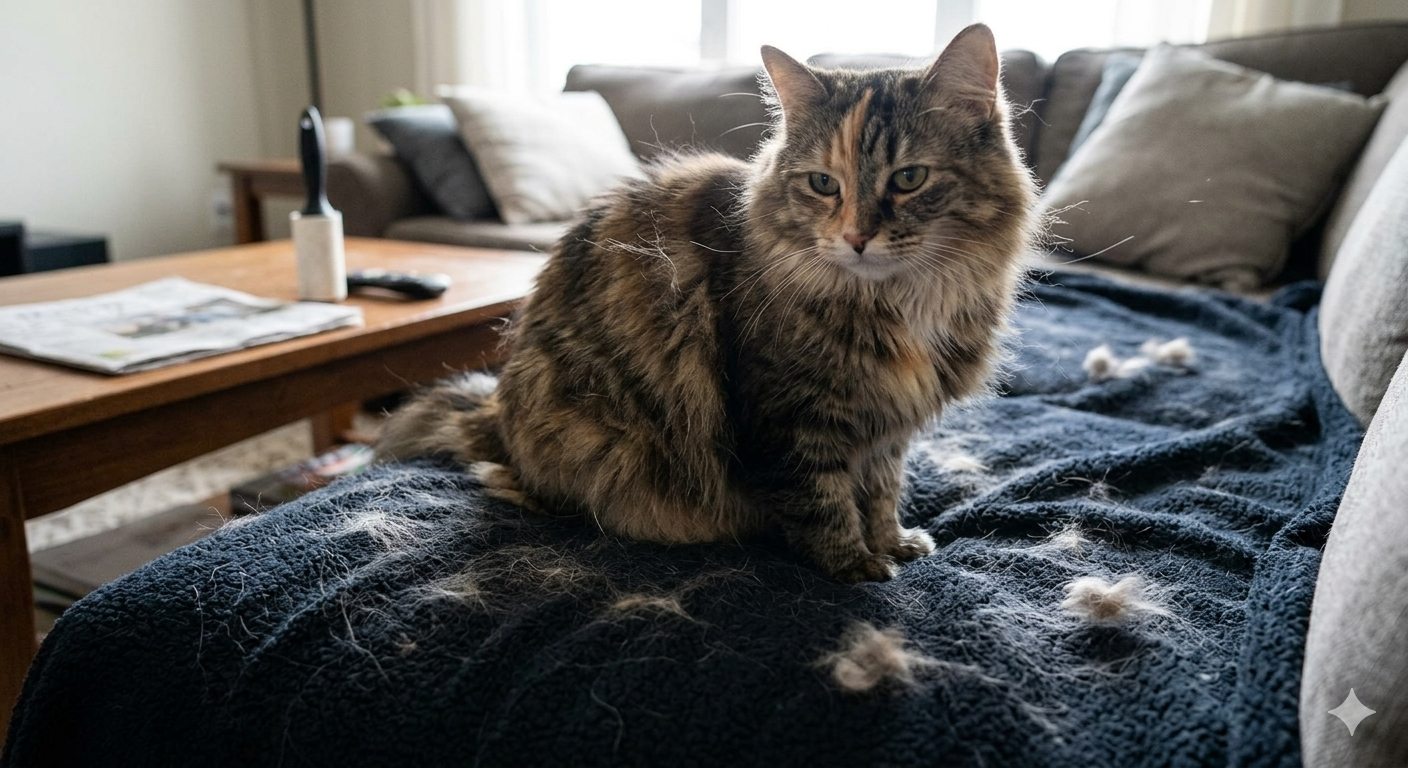

You have just vacuumed the entire house. An hour later, there is already a visible layer of cat fur on the sofa. Your black clothes are unwearable. You find fur in your coffee, your food, and somehow in rooms your cat never enters. You are asking the question every cat owner eventually asks — why is my cat shedding so much?
The honest answer is that some shedding is completely normal and unavoidable. But the amount, the timing, and what accompanies it tells you a great deal about whether your cat is simply going through a natural shed cycle — or whether something else is going on. This guide covers every major reason why cats shed excessively, what is normal versus what needs attention, and exactly what you can do about it.
Is It Normal for Cats to Shed So Much?
Yes — and no. Shedding is a completely natural biological process for all cats with fur. Cats continuously cycle through phases of hair growth and hair loss, and shedding is how dead fur leaves the coat to make room for new growth.
What varies enormously is how much shedding is normal for your specific cat. A Maine Coon will shed dramatically more than a Bengal. A cat going through a seasonal coat change will shed far more than the same cat in a stable temperature environment. An indoor cat under artificial lighting may shed more consistently year-round than an outdoor cat that follows a more distinct seasonal pattern.
The question to ask is not just “is my cat shedding?” — it is “is my cat shedding more than their usual normal?” A sudden or dramatic change from your cat’s baseline is what matters most.
10 Reasons Why Your Cat Is Shedding So Much
Reason 1 — Seasonal Shedding
The most common reason cats shed excessively — and the most natural — is seasonal coat change.
Cats evolved with two primary shedding seasons: spring and autumn. In spring, they shed their heavier winter undercoat to prepare for warmer months. In autumn, they shed the lighter summer coat as the thicker winter coat grows in. During these periods — which can last several weeks — the volume of shed fur can increase dramatically and feel genuinely alarming if you are not expecting it.
Outdoor cats and indoor-outdoor cats tend to follow this seasonal pattern most strongly, as their shedding is triggered by changes in daylight hours and temperature. Indoor cats under consistent artificial lighting and climate control may shed more evenly throughout the year rather than in dramatic seasonal bursts — which can actually mean year-round moderate shedding rather than two intense periods.
If your cat is shedding heavily in summer, in winter, in February, or in August — seasonal cycling, even when it does not align perfectly with the calendar, is usually the explanation.
Reason 2 — Breed and Coat Type
Some cats are simply built to shed more than others. This is genetics, not a problem.
High-shedding breeds:
- Maine Coon — dense double coat, heavy seasonal shedder
- Persian — long, thick coat that sheds consistently and requires daily grooming
- British Shorthair — dense plush coat that sheds significantly, especially seasonally
- Ragdoll — semi-long coat with heavy seasonal shedding periods
- Siberian — triple-layered coat, dramatic spring shed
- Tabby domestic shorthairs — genetically diverse, typically moderate to heavy shedders
Lower-shedding breeds:
- Siamese — short, fine single coat, moderate shedder
- Bengal — short pelt-like coat, one of the lowest shedding breeds
- Cornish Rex and Devon Rex — very short curly coat, minimal shedding
- Sphynx — no fur, no shedding
If you are asking why your Maine Coon, Persian, or British Shorthair is shedding so much — the answer is largely that they are doing exactly what their coat type is designed to do. Consistent grooming with the right tools, as we covered in our guide to the best brush for a long-haired cat, is the most effective management strategy.
Reason 3 — Stress and Anxiety
Stress is one of the most underrecognised causes of excessive shedding in cats. When cats experience acute stress — a vet visit, a car journey, a loud event — they can shed dramatically in a very short time. Many cat owners notice a layer of fur left behind in the carrier after a vet trip.
Chronic stress has a longer-term effect on coat health. A cat living with ongoing anxiety — due to a new pet, a house move, changes in routine, conflict with other animals, or an unstable environment — will often shed more than their baseline as a physiological response to sustained cortisol elevation.
If your cat’s shedding has increased alongside a change in their circumstances — that connection is likely meaningful. As we discussed in our guide to why cats lick me, cats express stress through physical behaviour changes, and excessive shedding is one of the clearest physical manifestations.
Reason 4 — Poor Nutrition and Diet
The coat is one of the most direct reflections of what a cat eats. A diet that is low in high-quality protein, omega-3 and omega-6 fatty acids, or key vitamins and minerals will show up in the coat before almost anywhere else — as increased shedding, dullness, brittleness, or excessive dandruff.
Cats fed low-quality food with fillers, artificial additives, and inadequate protein levels consistently have poorer coat condition than cats on a high-quality diet. Switching to a food with a named protein source as the first ingredient — chicken, salmon, turkey, or similar — alongside appropriate fat content often produces visible coat improvement within 4 to 8 weeks.
Omega-3 supplementation through fish oil is one of the most well-supported nutritional interventions for coat health. A small amount of fish oil added to food daily has been shown to reduce shedding volume, improve coat lustre, and decrease skin dryness and flaking in cats.
If your cat is shedding so much and also has dandruff — diet and skin hydration are the first places to look. Dehydration contributes significantly to coat issues, particularly in cats on a dry food diet. Increasing wet food intake or adding a water fountain to encourage drinking can make a noticeable difference to coat condition.
Reason 5 — Dehydration
Cats that are chronically mildly dehydrated — particularly those on an exclusively dry food diet who do not drink enough water — will often show it in their coat. Dry, dull fur with increased shedding and flaking skin is a common sign of inadequate hydration.
As we covered in detail in our guide to cats drinking a lot of water, hydration has far-reaching effects on feline health beyond thirst. The skin and coat are affected significantly by long-term mild dehydration.
Reason 6 — Parasites — Fleas, Mites, and Lice
External parasites cause intense itching that leads to excessive scratching, over-grooming, and hair loss that can be mistaken for shedding.
Fleas are the most common culprit. Even a cat with a mild flea infestation may scratch and groom intensively enough to pull out significant amounts of fur. Flea allergy dermatitis — an allergic reaction to flea saliva — can cause hair loss even from a very small number of flea bites, particularly along the back, tail base, and belly.
Check for fleas by parting the fur and looking for small dark specks (flea dirt) at the skin level — particularly around the base of the tail and the belly. A flea comb dragged through the coat and wiped on a damp white paper towel will reveal flea dirt as reddish-brown smears.
Ear mites can also trigger excessive head shaking and scratching around the ears and neck that pulls fur loose — as we covered in our guide to how to clean cat ears at home.
Reason 7 — Skin Conditions and Allergies
Cats can develop allergies to environmental allergens, food ingredients, cleaning products, fabrics, and other substances — and the coat and skin are often the primary site where allergic reactions manifest.
Allergic cats tend to over-groom affected areas intensively, which results in symmetrical hair thinning or loss in patterns that are characteristic of allergy rather than normal shedding. Common affected areas include the belly, inner thighs, the base of the tail, and around the face and neck.
Fungal infections — particularly ringworm, which despite its name is a fungus not a worm — cause patchy, circular areas of hair loss with a distinctive scaly appearance at the edges. Ringworm is contagious to other pets and to humans, so any patchy, circular hair loss warrants prompt veterinary attention.
Bacterial skin infections (pyoderma), seborrhea, and other dermatological conditions can also cause increased shedding and hair loss alongside skin changes that would be visible on close examination.
Reason 8 — Hormonal Changes
Hormonal shifts cause significant coat changes in cats. The most common examples include:
Pregnancy and nursing: Queens that are pregnant or nursing often experience increased shedding as the body redirects nutrients to the developing or nursing kittens. This is temporary and resolves after weaning.
Intact females in heat: Unspayed female cats may experience coat changes in association with their reproductive cycle.
Thyroid issues: Hyperthyroidism — an overactive thyroid gland — is very common in cats over ten years old and causes a range of symptoms including a poor, unkempt coat and increased shedding. As we covered in our guide to how to tell if your cat is sick, coat deterioration in a senior cat should always prompt a vet check to rule out thyroid and kidney disease.
Cushing’s disease (hyperadrenocorticism): Rare in cats but does occur — causes hair thinning and fragile skin alongside other symptoms.
Reason 9 — Medical Conditions
Several medical conditions list increased shedding or hair loss among their symptoms:
- Kidney disease: Chronic kidney disease affects the whole body including coat condition — cats with CKD often develop dull, unkempt coats as the disease progresses
- Diabetes: Diabetic cats frequently have poor coat condition alongside the classic symptoms of increased thirst and urination
- Liver disease: Affects the body’s ability to process nutrients, leading to coat deterioration
- Anaemia: Low red blood cell count affects tissue oxygenation throughout the body including the skin and hair follicles
- Cancer: Some cancers directly cause hair loss; others affect coat condition indirectly through systemic effects
When shedding is caused by an underlying medical condition, it will almost always appear alongside other symptoms — weight loss, lethargy, changes in appetite or thirst, changes in litter box habits, or behavioural changes. A cat that is shedding excessively and also showing any of these additional signs needs a vet visit promptly.
Reason 10 — Over-Bathing or Harsh Grooming Products
Bathing too frequently, or using shampoos not formulated for cats, strips the natural oils from the coat and skin — leading to dryness, irritation, increased flaking, and elevated shedding volume.
As we covered in our guide to how often you should bathe a cat, most cats need bathing far less frequently than owners assume. Over-bathing is a surprisingly common cause of temporary coat problems that owners misidentify as a health concern.
If your cat is shedding more after a bath than before it — this is your signal to extend the interval between baths and review your shampoo choice.
Is My Cat Shedding Too Much? How to Tell
The difference between normal heavy shedding and problematic hair loss often comes down to pattern and accompanying signs:
| Type | What It Looks Like | What It Likely Means |
|---|---|---|
| Even shedding across whole coat | General all-over fur loss | Normal seasonal shed or breed trait |
| Patchy circular bald spots | Defined areas of hair loss with scale | Ringworm or fungal infection |
| Symmetrical thinning on belly/flanks | Even bilateral thinning | Allergy or hormonal condition |
| Hair loss at tail base | Concentrated rear-end loss | Flea allergy |
| Clumps coming out in brush | Large amounts at once | Peak seasonal shed — normal |
| Visible bald patches with red skin | Inflamed, raw areas under thinning fur | Skin infection or severe allergy |
| Thinning coat with weight loss | General deterioration alongside other signs | Medical condition — vet promptly |
What to Do When Your Cat Is Shedding So Much
Brush Daily — It Makes the Biggest Difference
The single most effective thing you can do to manage excessive shedding is consistent daily brushing. Brushing removes dead fur from the coat before it sheds onto your furniture, your clothes, and your floor — and it does so in one controlled place where you can dispose of it.
For most cats, 5 to 10 minutes of daily brushing with a suitable tool dramatically reduces the amount of fur that ends up around your home. A slicker brush for surface detangling, an undercoat rake for deeper dead fur removal, and a deshedding tool for peak shedding seasons are the core toolkit — all covered in detail in our guide to the best brush for a long-haired cat.
Improve the Diet
Switch to a high-quality food with a named protein as the first ingredient. Add a small amount of fish oil to food daily. Increase wet food to improve hydration. These three dietary changes produce noticeable coat improvement for most cats within 4 to 8 weeks.
Increase Hydration
Add a cat water fountain. Incorporate wet food. These simple changes improve skin hydration, which directly reduces the dryness and flaking that accompanies excessive shedding in many cats.
Reduce Stress
Identify and address the source of stress where possible. Provide adequate hiding spots, vertical space, consistent feeding times, and positive interaction. A stable, predictable environment reduces cortisol-related shedding for cats dealing with ongoing anxiety.
See Your Vet if Shedding is Accompanied by Other Signs
Normal shedding — even heavy seasonal shedding — does not cause bald patches, inflamed skin, weight loss, lethargy, or changes in eating and drinking. If any of these accompany the shedding, a vet visit is warranted within 24 to 48 hours.
According to the Cornell Feline Health Center, sudden or dramatic changes in coat condition — including excessive shedding, hair loss, and skin changes — should always be investigated professionally to rule out medical causes.
FAQ — Why Is My Cat Shedding So Much?
Q: Why is my cat shedding so much all of a sudden? A: A sudden increase in shedding is most commonly triggered by a seasonal coat change, an acute stressor such as a vet visit or house move, a dietary change, or the onset of an underlying health condition. If the sudden increase is accompanied by bald patches, skin changes, or other symptoms — contact your vet. If your cat is otherwise well and the shedding appeared during spring or autumn — seasonal cycling is the most likely explanation.
Q: Why is my indoor cat shedding so much? A: Indoor cats living under artificial lighting and constant temperatures often shed more evenly throughout the year rather than in distinct seasonal bursts — leading owners to perceive year-round heavy shedding. They are not shedding more in total; it is simply spread more evenly across all seasons rather than concentrated in spring and autumn.
Q: Why is my short-haired cat shedding so much? A: Short hair does not mean low shedding. Many short-haired breeds — British Shorthairs, domestic shorthairs, tabby cats — shed heavily. Short fur is also more visible on furniture and clothing than long fur, which can make the volume seem more than it is.
Q: Why is my cat shedding so much and losing weight? A: This combination is a significant warning sign. Shedding alongside weight loss points to a systemic medical condition — hyperthyroidism, kidney disease, diabetes, or cancer among the most common causes in cats. See your vet within 24 to 48 hours.
Q: Why is my kitten shedding so much? A: Kittens shed their soft baby coat between 6 and 12 months of age as their adult coat grows in. This transition shed can seem dramatic but is completely normal. If a kitten under 6 months is showing significant hair loss with bald patches — that is worth a vet check, as parasites and ringworm are common in young cats.
Q: Why is my cat shedding so much after a bath? A: Bathing loosens dead fur that was already in the shedding phase and brings it to the surface — making post-bath shedding appear heavier than usual. This is normal. If post-bath shedding seems excessive and is accompanied by dry skin or irritation — review your shampoo and extend the time between baths.
Conclusion
Why is my cat shedding so much? Most of the time — seasonal cycling, breed genetics, or a grooming routine that needs improving. These causes are completely manageable with daily brushing, better nutrition, and appropriate hydration.
But shedding that is sudden, accompanied by bald patches, inflamed skin, weight loss, or behavioural changes is your cat’s body telling you something more is happening — and that message deserves a veterinary response within 24 to 48 hours.
Know your cat’s normal. When shedding is their normal — manage it. When shedding has changed from their normal — investigate it. That distinction, more than anything else, is the difference between a lint roller problem and a health concern.
Also read: Best brush for a long-haired cat | How to clean cat ears at home | How often should you bathe a cat? | How to tell if your cat is sick | Is it normal for cats to drink a lot of water? | Why is my cat not eating?