


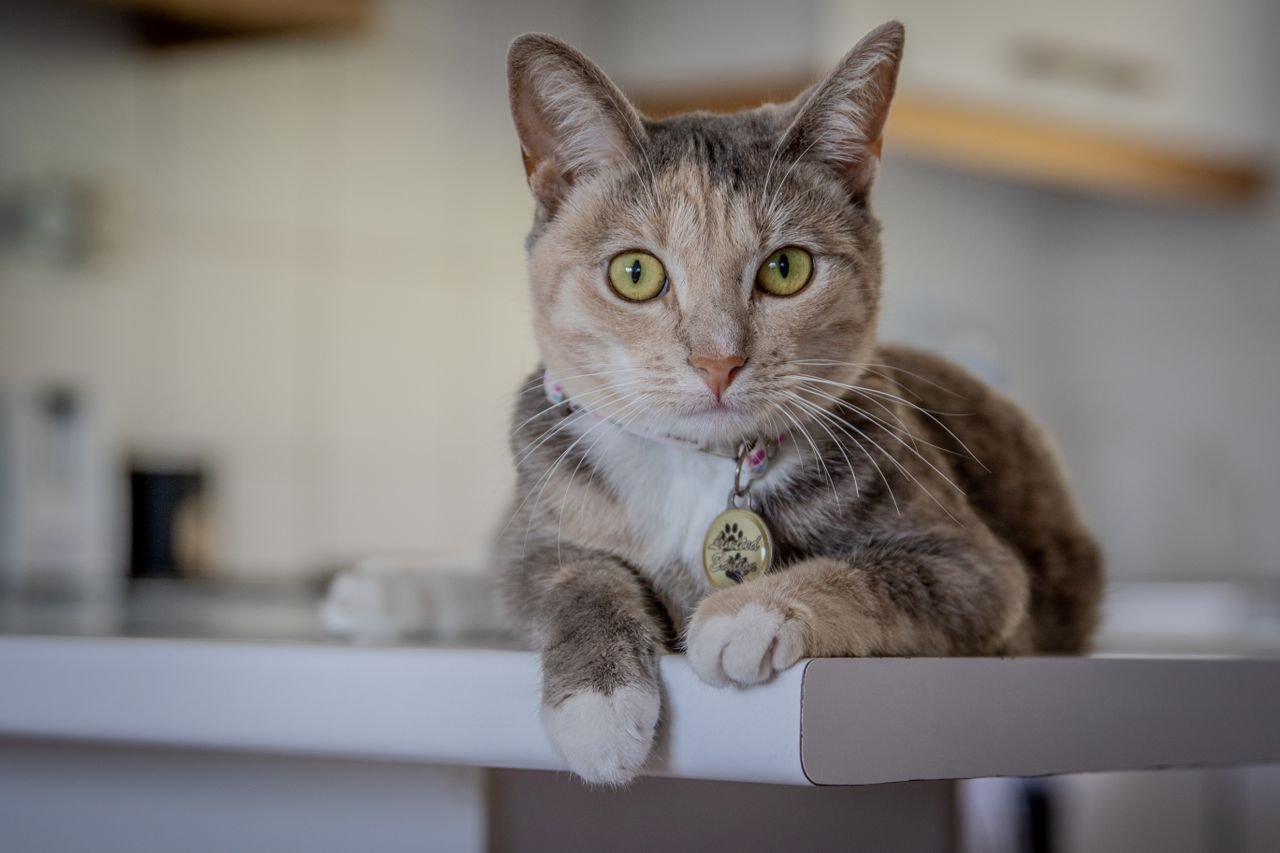

A collar and ID tag are the simplest, most immediate way to identify a lost cat and get them home. Yet cat collars are bought badly more often than almost any other pet product — too tight, wrong safety mechanism, or missing the critical breakaway feature that prevents strangulation.
The best cat collar is one your cat wears safely and consistently, with a visible ID tag that gives a finder everything they need to contact you. This guide covers collar types, safety features, tag options, and the microchipping question — because a collar and chip together give your cat the best possible chance of coming home.
Why Every Cat Needs a Collar — Even Indoor Cats
Indoor cats escape. Windows are left open, doors are left ajar, and even the most reliably indoor cat can bolt outside in a moment of household chaos. When that happens, a collar with an ID tag is the difference between a neighbour returning your cat within the hour and weeks of searching.
A microchip is essential — but a microchip requires a scanner. A collar tag requires only a person who can read. In the first minutes after a cat is found, a visible tag is faster and more accessible than a chip. Use both.
The Most Important Safety Feature — Breakaway Buckle
This is non-negotiable for cat collars. A standard buckle that does not release under tension is dangerous for cats — a collar that catches on a branch, fence, or furniture and does not release can strangle the cat if they panic and pull.
A breakaway buckle (also called a safety release or quick-release buckle) is designed to release under a threshold of sustained pulling force — typically around 6–8 pounds of pressure. Under normal wear the buckle stays closed; under escape-level force it releases and the cat gets free.
Every cat collar should have a breakaway buckle. No exceptions. Do not buy a cat collar without one.
Types of Cat Collars
1. Breakaway Collar — The Standard Safe Choice
A flat nylon or fabric collar with a breakaway buckle as the only fastening. Lightweight, comfortable, and available in every colour and pattern. This is the baseline collar every cat should have.
What to look for: A genuine breakaway buckle (test it — it should release when you pull firmly), a comfortable width (3/8 inch is standard for cats), a D-ring for attaching tags, and a fit that allows two fingers between collar and neck.
2. Elastic / Stretch Insert Collar
A collar with a section of elastic built in alongside the buckle — providing a secondary release mechanism if the breakaway buckle does not trigger. The elastic section also allows slight expansion if the collar twists or catches.
Some collars use elastic throughout the band rather than a breakaway buckle — these are less safe as they do not release completely and a cat whose collar has caught can still be trapped even with elastic, just with slightly more give.
Best option: A collar with BOTH a breakaway buckle AND an elastic insert — the safest combination.
3. Reflective Collar
A standard breakaway collar with reflective stitching or a reflective strip on the band. Significantly improves visibility in low-light conditions — relevant for any cat with outdoor access at dawn, dusk, or night.
Best for: Outdoor and indoor-outdoor cats — the reflective element improves visibility to drivers and pedestrians when the cat is near roads.
4. Personalised / Embroidered Collar
A collar with your phone number or cat’s name embroidered directly into the fabric band — eliminating the need for a separate tag that can fall off or make noise. The information is permanently on the collar and cannot be lost.
Best for: Cats who are bothered by tag noise, owners who want a cleaner look, or as a backup alongside a separate ID tag.
5. GPS Tracking Collar
A collar with an integrated GPS tracker — providing real-time location data through a smartphone app. These are heavier than standard collars and require regular charging, making them unsuitable for some cats. However, for cats who frequently go missing or who roam large distances, a GPS collar adds a layer of security beyond static ID tags.
Best for: Adventurous outdoor cats, cats in areas with high traffic risk, owners who want real-time location tracking.
Limitation: Heavier than standard collars, requires charging every 1–7 days depending on the model, and involves a monthly subscription fee for most GPS services.
ID Tags — Types and What Information to Include
Engraved Metal Tags
The classic option — a metal disc or shaped tag with information engraved into the surface. Durable, legible, and inexpensive. The standard choice for most cat owners.
What information to engrave:
- Your phone number (primary contact) — the single most important piece of information
- A secondary phone number if space allows
- Your cat’s name — helps the finder talk to the cat and can be included if space allows
- “Indoor cat” or “microchipped” — useful additional information
Do not include: Your full home address — this is a security risk if the collar is found without the cat.
Silicone Tags
Silicone ID tags are lightweight, silent (no jingling against the collar), and flexible — conforming to the cat’s body without the hard edges of metal tags. Increasingly popular for cats whose owners find tag jingle disruptive at night.
QR Code Tags
A tag with a QR code that links to an online profile — containing your contact details, your cat’s medical information, vaccination records, and a photo. A finder scans the code with their smartphone and immediately has everything they need.
The advantage over engraved tags: the online profile can be updated (new phone number, new address) without replacing the tag. The limitation: requires a smartphone with camera to scan.
ID Tag Information — Quick Reference
| Information | Include? | Notes |
|---|---|---|
| Phone number | ✅ Essential | Primary contact, always include |
| Cat’s name | ✅ Recommended | Helps finder interact with the cat |
| Secondary number | ✅ If space | Partner, family member, neighbour |
| “Microchipped” | ✅ Useful | Prompts finder to have chip scanned |
| Home address | ❌ Avoid | Security risk |
| Medical conditions | Optional | Only if critical (e.g. diabetic) |
Collar + Microchip — Why You Need Both
A collar tag and a microchip are complementary, not alternatives:
Collar tag: Immediately visible to anyone who finds your cat. No equipment needed. Works within seconds of being found.
Microchip: Permanent — cannot fall off or be removed accidentally. Works even if the collar comes off (as it sometimes will, by design, with a breakaway buckle). Required for vet identification and shelter reunification.
The combination gives your cat two independent routes home. Microchipping is inexpensive (typically $25–$50 at a vet) and lasts the cat’s lifetime — if your cat is not microchipped, book it alongside the next vet visit. See our annual cat vaccines guide for combining microchipping with routine vet appointments efficiently.
Getting the Collar Fit Right
The two-finger rule: You should be able to slide two fingers comfortably under the collar, but it should not slip over the head. A collar that is too loose can catch on things and defeat the safety purpose; too tight and it causes discomfort.
Check regularly: Cat collars loosen over time as the material softens with wear. Check fit monthly and after washing. Adjust as needed.
For kittens: Choose a collar specifically sized for kittens — adult collars are too large and too heavy. Refit as the kitten grows.
Best Cat Collar and ID Tags — FAQ
Should indoor cats wear collars? Yes — indoor cats escape and without a collar they are difficult to identify quickly. A lightweight breakaway collar with an ID tag is appropriate for indoor cats. See our should I neuter my cat guide for other indoor cat safety decisions worth making proactively.
My cat keeps losing their collar — what do I do? This usually means the breakaway buckle is triggering too easily — the release threshold is too low for your cat’s activity level. Try a collar with a slightly higher release threshold, or use an embroidered collar where the information is on the band itself so even a found collar carries useful contact information.
How often should I replace my cat’s collar? When the buckle mechanism shows wear, when the band is fraying or the stitching is failing, or when the tag information becomes outdated. Most quality collars last 1–2 years with regular washing.
Can cats sleep with their collars on? Yes — a properly fitted breakaway collar is safe for 24-hour wear. If your cat seems uncomfortable at night, check the fit and ensure the tag is not catching on bedding.
What is the safest collar for a cat who goes outdoors? A breakaway collar with an elastic insert, a reflective strip for night visibility, and a durable engraved metal or silicone tag. If your cat roams widely, consider adding a GPS tracker. See our why does my cat go outside every day guide for managing outdoor cat safety more broadly.
Also read: Best Cat Carriers for Vet Visits and Travel | Annual Cat Vaccines — Which Does Your Cat Actually Need? | Should I Neuter My Cat? | Why Does My Cat Go Outside Every Day?