


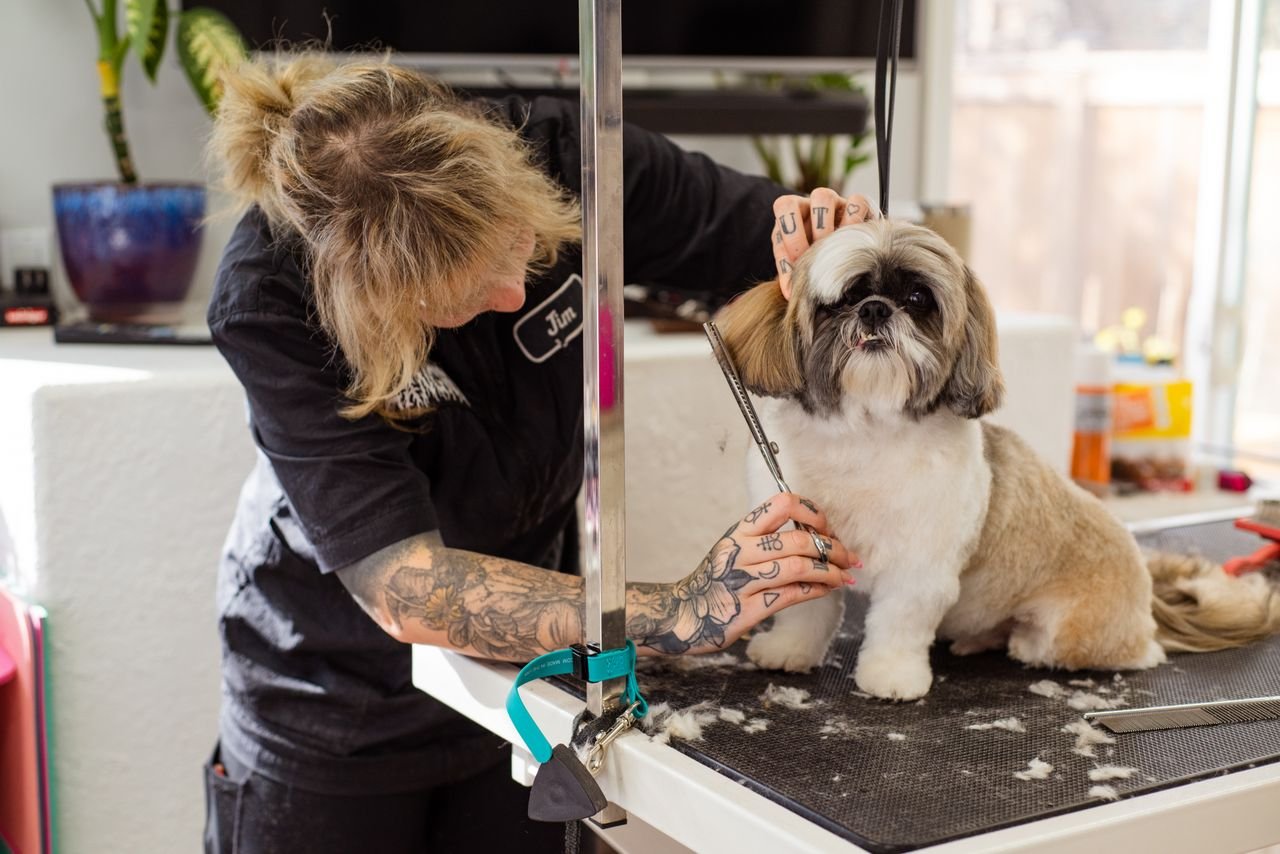

Regular home brushing and bathing goes a long way — but there are things a professional dog groomer can do that simply cannot be replicated at home. From breed-specific styling to early health detection, professional grooming delivers benefits that extend well beyond a clean, good-looking coat.
If you have been wondering whether professional grooming is worth the cost and effort, this guide covers the ten most important reasons why it is.
1. Expert Handling of Breed-Specific Coats
Different breeds require completely different grooming techniques. A Poodle clip, a Schnauzer trim, a Spaniel tidy, or a Husky de-shed all require specific knowledge of the breed’s coat structure, growth pattern, and appropriate styling — knowledge that takes years of professional training to develop.
A professional groomer knows exactly how to handle each coat type to produce the correct result without damaging the coat or causing discomfort. Attempting breed-specific cuts at home without proper training often results in uneven cuts, damaged coat texture, or — in double-coated breeds — incorrect shaving that disrupts the coat’s natural insulating properties.
For double-coated breeds like Golden Retrievers, Siberian Huskies, and Goberians, professional de-shedding treatments remove loose undercoat far more completely than home brushing, dramatically reducing the hair shed around your home for weeks afterward. See our best dog grooming tools guide for the home tools that complement professional de-shedding between appointments.
2. Early Detection of Health Issues
This is one of the most underappreciated benefits of regular professional grooming — and arguably the most important.
A professional groomer examines your dog’s entire body systematically at every appointment. In the process, they regularly identify:
- Lumps and bumps beneath the coat that owners miss during casual petting
- Skin infections, hot spots, or rashes hidden under dense fur
- Ear infections — groomers check and clean ears and often spot early infection before it becomes painful
- Eye discharge or swelling around the eye area
- Dental problems — loose teeth, inflamed gums, or abnormal odour
- Unusual weight changes or muscle loss
- Parasites including fleas, ticks, and mange
Many serious conditions are caught early by groomers before the owner had any idea something was wrong — and early detection makes treatment significantly more effective and less expensive. If your groomer ever mentions something unusual they noticed, take it seriously and mention it to your vet.
3. Proper Nail Care
Nail trimming is one of the most commonly avoided home grooming tasks — and one of the most important to get right. Overgrown nails cause altered gait, joint stress, pain when walking, and can curl back into the paw pad if left too long.
Professional groomers trim nails precisely and safely at every appointment, with the tools and experience to handle dogs who resist nail trimming at home. For large breeds or dogs with very thick nails, professional grinding alongside cutting achieves a smoother, shorter result than most owners can manage at home.
4. Thorough Ear Cleaning
The ear canal of a dog is L-shaped, making thorough cleaning at home genuinely difficult. Professional groomers clean the visible ear canal with appropriate solutions, remove excess ear hair in hairy-eared breeds (Poodles, Schnauzers, Bichons), and assess ear health at every visit.
For floppy-eared breeds — Cocker Spaniels, Basset Hounds, Labrador Retrievers — reduced airflow to the ear canal creates a warm, moist environment ideal for bacterial and yeast growth. Regular professional ear cleaning as part of a grooming appointment is one of the most effective preventive measures against chronic ear infections. See our how to clean dog ears at home guide for maintaining ear health between professional visits.
5. Stress-Free Handling for Anxious Dogs
Dogs who are genuinely anxious about grooming — whether due to past negative experiences, lack of early socialisation, or temperament — are significantly better handled by a professional experienced in low-stress techniques.
Fear Free certified groomers are trained specifically in reducing anxiety during grooming sessions — using appropriate restraint, reading stress signals, adjusting pace to the individual dog, and creating positive associations with the grooming environment. An anxious dog groomed by a skilled professional has a fundamentally different experience from the same dog groomed by an untrained owner using force.
For dogs who are severely anxious, mobile grooming — which eliminates the car journey and waiting room — is often the most effective option. Our mobile dog grooming guide covers whether this service is right for your dog.
6. Professional-Grade Equipment
Professional groomers use commercial-grade tools that are significantly more effective than the home equivalents:
- High-velocity dryers that dry thick double coats completely in minutes — preventing the skin problems that result from inadequately dried coats
- Professional clippers designed for sustained use with multiple blade sizes for precision
- Hydraulic grooming tables at the correct working height — reducing stress on the dog (no slipping, no fear of falling) and the groomer
- Specialised shampoos for different coat types and skin conditions — medicated, whitening, de-shedding, and conditioning formulas appropriate for the individual dog
The difference in finish between a home groom and a professional groom is largely down to equipment quality and technique.
7. Anal Gland Expression
Anal glands are two small sacs on either side of a dog’s anus that produce a scent-marking fluid. Most dogs express these naturally during normal bowel movements. Some dogs — particularly small breeds — do not express them adequately, leading to impaction, discomfort, and eventually infection.
Signs of anal gland problems include scooting, excessive licking of the rear end, and a strong fishy odour. Professional groomers routinely offer external anal gland expression as a standard or add-on service, keeping this uncomfortable and often overlooked issue managed.
8. Improved Coat and Skin Health
Professional grooming is not just cosmetic — it actively improves the health of your dog’s skin and coat.
Regular professional bathing with appropriate products removes accumulated dirt, oil, environmental allergens, and dead skin cells that home bathing misses. Professional conditioning treatments restore moisture to dry or damaged coats. Complete drying prevents the skin problems — bacterial and yeast infections — that develop when moisture is trapped against the skin beneath a dense coat.
For dogs with skin conditions or allergies, a groomer experienced in working with sensitive skin can recommend and use appropriate medicated shampoos that make a real difference to comfort and coat quality. See our dog skin problems and itching guide for understanding the skin conditions that grooming helps manage.
9. Time and Effort Savings for Owners
Grooming a large or heavily-coated dog at home is genuinely hard work — physically demanding, time-consuming, and often frustrating if your dog is resistant. A professional groomer handles the entire process efficiently, typically in 2–4 hours, leaving you with a clean, beautifully groomed dog without the effort.
For busy owners, the time saved by professional grooming easily justifies the cost — particularly when combined with the health benefits and the stress reduction for dogs who are difficult to handle at home.
Understanding what professional grooming costs helps you budget accurately. Our dog grooming prices guide covers typical costs by breed, size, and service type, including how to find low-cost options in your area.
10. Socialisation and Confidence Building
Regular exposure to professional grooming from puppyhood builds confidence and socialisation. A puppy that experiences positive grooming sessions — being handled, having paws touched, being bathed, having nails trimmed — by a calm, skilled professional develops the tolerance and confidence that makes every future grooming session easier.
Dogs who are groomed regularly from a young age are also significantly easier to examine at the vet, easier to handle during illness or injury, and generally more comfortable with physical interaction throughout their lives.
Starting grooming early — even before the full adult coat comes in — is one of the best investments you can make in your dog’s long-term temperament and handleability.
How Often Should You Book Professional Grooming?
The right frequency depends on your dog’s breed and coat type:
| Coat Type | Professional Grooming Frequency |
|---|---|
| Short, smooth coats | Every 8–12 weeks |
| Double-coated breeds | Every 8–12 weeks (more during shedding season) |
| Long, silky coats | Every 4–6 weeks |
| Curly and wool coats (Poodles, Doodles) | Every 4–6 weeks |
| Wire-coated breeds | Every 6–8 weeks |
For full guidance on grooming frequency between professional appointments, see our how often should you groom your dog guide.
Finding a Professional Groomer You Can Trust
Our trusted grooming partner PawCareBuddy offers complete professional dog grooming services including:
- Bath and blow dry
- Full haircut and breed-specific styling
- Nail trimming and grinding
- Ear cleaning
- De-shedding treatments
- Full grooming packages
For owners considering mobile grooming — where the groomer comes to your home — see our mobile dog grooming guide for whether this premium service is worth the extra cost for your specific dog.
Top 10 Benefits of Professional Dog Grooming — FAQ
How do I know if my dog needs professional grooming or if home grooming is enough? Home grooming is excellent for routine maintenance between professional appointments. Professional grooming is essential when breed-specific cuts are needed, when mats have developed beyond home management, when your dog is resistant to home handling, or when health issues are suspected in the coat or skin.
Is professional grooming worth the cost? For most dog owners — yes. The health monitoring, professional equipment, nail and ear care, and time savings justify the cost. For breeds requiring specific cuts, professional grooming is not optional — it is the only way to maintain the coat correctly.
How do I find a reputable professional groomer? Look for groomers certified through recognised organisations such as the National Dog Groomers Association of America (NDGAA). Check Google and Yelp reviews, ask your vet for recommendations, and visit the facility before booking to assess cleanliness and how staff interact with dogs.
At what age should I start professional grooming? As early as possible — typically after vaccination is complete (around 16 weeks). Many groomers offer puppy introduction appointments specifically designed to build positive associations before the full adult coat arrives.
Also read: Dog Grooming Prices — What to Expect | Mobile Dog Grooming — Is It Worth It? | How Often Should You Groom Your Dog | How to Clean Dog Ears at Home