

If you have ever seen a dog with the muscular build of an American Bulldog and the striking blue eyes of a Siberian Husky, you already know exactly why this mix has people stopping in the street. The Siberian Husky Mix with American Bulldog is one of the most visually dramatic crossbreeds in existence — and behind that stunning exterior is a dog with a genuinely fascinating personality.
This guide covers everything you need to know: what this mix actually looks like, what temperament to expect, how to train them, health concerns to watch for, and whether this hybrid is the right fit for your home.
What Is a Siberian Husky Mix with American Bulldog?
This is a first-generation hybrid (F1 cross) between a purebred Siberian Husky and a purebred American Bulldog. Like all first-generation crosses, the puppies can inherit any combination of traits from either parent — which means two puppies from the same litter can look and behave quite differently.
Understanding both parent breeds is essential before you can predict what this mix will be like.
The Siberian Husky
The Siberian Husky originates from northeastern Siberia, where the Chukchi people bred them as endurance sled dogs for thousands of years. They were built to run — covering vast distances across Arctic terrain in freezing temperatures. The modern Siberian Husky is intelligent, vocal, high-energy, and deeply social. They are renowned for their striking appearance: dense double coat, erect ears, and those extraordinary blue or multi-coloured eyes.
Huskies are not guard dogs. They are friendly, sometimes to a fault, and are known to be independent thinkers — which makes training rewarding but occasionally challenging.
The American Bulldog
The American Bulldog has a very different history. Descended from the Old English Bulldog brought to America by working-class immigrants, they were used as farm dogs — catching feral pigs, guarding property, and doing general farm work. The American Bulldog is significantly larger and more athletic than the English or French Bulldog, with a powerful build and a confident, loyal temperament.
Unlike the English Bulldog, the American Bulldog is genuinely athletic and capable of sustained physical activity. They are protective of their families and make excellent guard dogs.
When you combine these two breeds, you get a dog that is physically imposing, visually stunning, and temperamentally complex.
What Does a Siberian Husky American Bulldog Mix Look Like?
Because this is an F1 hybrid, appearance varies considerably. However, most Siberian Husky American Bulldog mixes share some common characteristics.
Size and Build
This is typically a medium to large dog. Expect a weight range of 40–80 pounds (18–36kg) and a height of 18–24 inches at the shoulder. The build is usually broader and more muscular than a purebred Husky but not as heavily built as a pure American Bulldog. They often have the athletic, proportionate body that sits between both parent breeds.
Coat
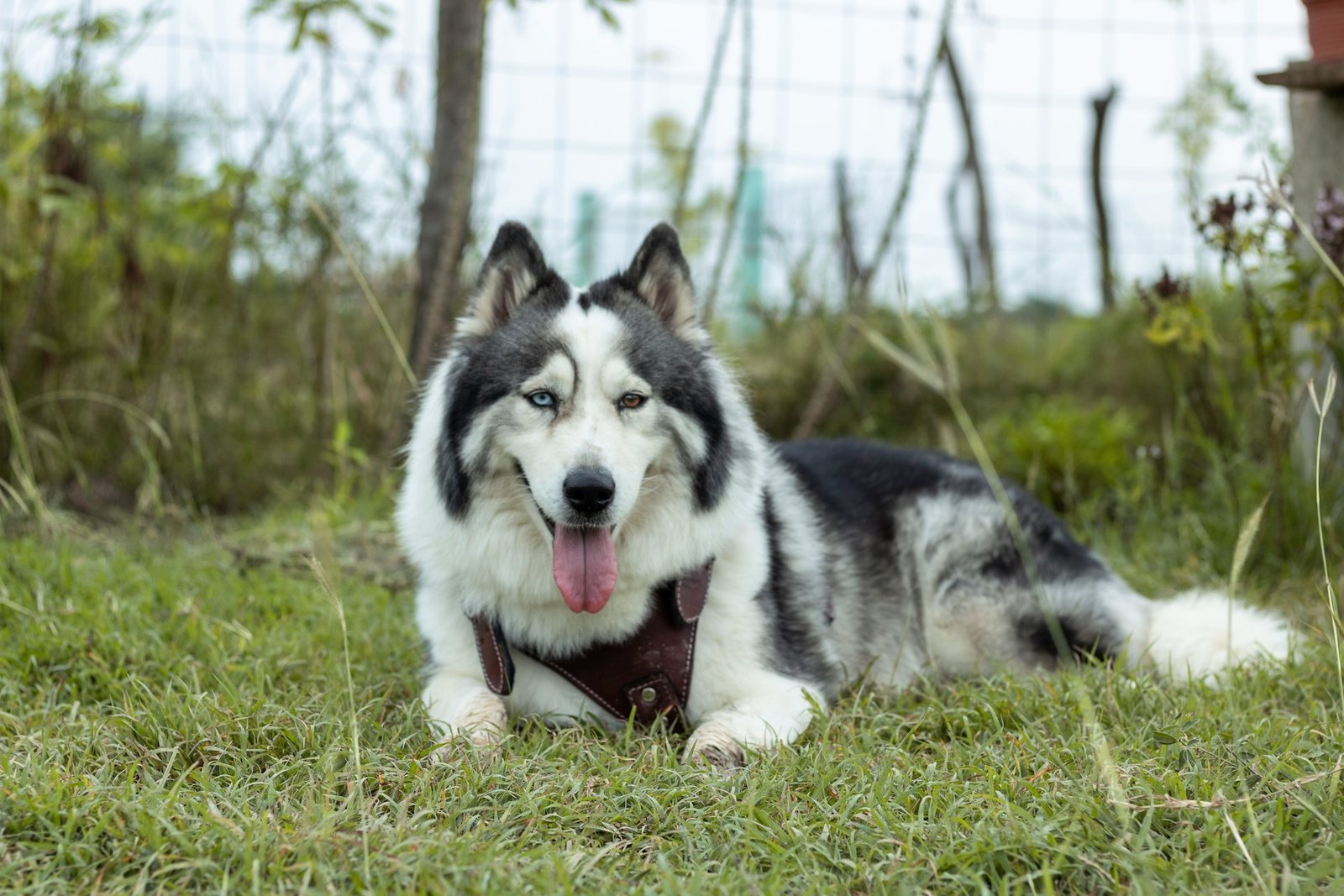
Most hybrids have a dense coat, often shorter than a pure Husky but with a hint of double-coat thickness. Common coat colours include:
- Black and white
- Brown and white
- Brindle with Husky markings
- Fawn with white markings
- Agouti and white (rare but striking)
- Sable and white
Eyes
This is where the Husky genetics often make themselves most dramatically known. Many Siberian Husky American Bulldog mixes inherit the blue eyes or heterochromia (one blue, one brown eye) of the Husky parent. Bi-eyed and parti-eyed expressions are both possible. Even dogs who inherit brown eyes from the Bulldog side typically have an intense, expressive gaze.
Face and Head
The head shape varies significantly. Some puppies inherit the broader, blockier head of the American Bulldog; others have the more refined, wedge-shaped head of the Husky. Many land somewhere between — with a moderately broad skull, defined stop, and a muzzle that is longer than an English Bulldog but shorter than a pure Husky. The ears can be erect like the Husky’s or semi-erect to rose-shaped like the American Bulldog’s.
| Feature | Husky Parent | American Bulldog Parent | Typical Mix |
|---|---|---|---|
| Weight | 35–60 lbs | 60–120 lbs | 40–80 lbs |
| Height | 20–24 inches | 20–28 inches | 18–24 inches |
| Coat | Long double coat | Short, smooth | Medium density |
| Eyes | Blue, brown, or mixed | Brown | Often blue or mixed |
| Build | Athletic, lean | Muscular, broad | Athletic, moderate |
| Ears | Erect | Rose or semi-erect | Variable |
Temperament — What to Expect
The temperament of this mix is one of the most important things to understand before you bring one home. Neither parent breed is a pushover, and this hybrid is genuinely not suited to inexperienced dog owners.
Intelligence and Independence
The Siberian Husky is one of the most independently-minded dog breeds in existence. They were bred to make their own decisions over vast distances — waiting for instruction from a musher who might be miles behind. This intelligence is genuine but it comes with a strong streak of self-reliance that can make training feel like negotiation rather than instruction.
The American Bulldog is also intelligent but significantly more biddable — they were bred to work alongside humans and take direction. The mix often produces a dog that is smart, engaged, but occasionally decides their own plan is better than yours.
Energy and Drive
Expect a high-energy dog that needs significant daily exercise. The Husky genetics bring endurance; the Bulldog genetics bring power. This combination produces a dog with impressive physical capability and a genuine need to burn energy. A bored Siberian Husky American Bulldog mix will find their own entertainment — and you will not always enjoy their choices.
Loyalty and Affection
Both parent breeds are deeply loyal to their families. The American Bulldog is famously devoted — sometimes to a single person in the household. The Husky is social and affectionate but less exclusively bonded. The mix typically produces a dog that is warm, affectionate, and good with family members they know well.
Wariness with Strangers
The American Bulldog’s protective instincts often come through. This mix can be reserved or watchful with strangers, particularly if the American Bulldog influence is strong. Early socialisation is not optional — it is essential for this hybrid to develop appropriate responses to new people and situations.
With Children and Other Pets
Generally good with children in the household when properly raised and socialised. Their size and energy mean supervision with very young children is important — not because of aggression, but because an enthusiastic 70-pound hybrid can easily knock over a toddler.
With other dogs, results vary depending on which parent’s personality dominates. Huskies are generally social; American Bulldogs can be dog-selective. Early socialisation matters enormously here.
Training a Siberian Husky American Bulldog Mix
This is a hybrid that rewards consistency, confidence, and positive reinforcement — and absolutely does not respond to harsh or punitive training methods.
Start Early
Begin training and socialisation from the first day the puppy arrives home. The window between 8 and 16 weeks is particularly critical. Expose your puppy to different people, environments, sounds, and (after vaccination clearance) other dogs. Every positive experience during this period builds confidence and reduces the likelihood of fear-based reactivity later.
Be the Consistent Leader
Both parent breeds respond to calm, clear, consistent leadership. This does not mean dominance theory or physical correction — it means being predictable, fair, and following through on every instruction. A Husky American Bulldog mix will quickly identify and exploit any inconsistency in your training.
Use High-Value Rewards
Both breeds are food motivated, though the Husky can be less reliably so. Use high-value treats — small pieces of cooked chicken, cheese, or commercial training treats — for training sessions. For full guidance on effective training treats, see our best dog training treats guide.
Address Separation Early
Both parent breeds can struggle with being left alone. The Husky is particularly prone to separation anxiety and destructive behaviour when under-stimulated or isolated. Begin building independence from puppyhood — short periods alone, gradually extended. Crate training is highly recommended. Read our complete crate training guide for the step-by-step method.
Mental Stimulation Is Not Optional
A physically tired Husky Bulldog mix that is mentally under-stimulated is still a problem dog. Puzzle feeders, training sessions, scent work, and enrichment toys are as important as physical exercise. Our guide on enrichment toys for dogs covers the best options by size and difficulty.
Exercise Requirements
This is not a low-exercise dog. Plan for a minimum of 60–90 minutes of active exercise per day, split across two sessions.
What works well:
- Long leash walks (build leash manners early — the combination of Husky pulling instinct and Bulldog muscle is formidable)
- Off-lead running in a safely enclosed area
- Swimming (many love water)
- Fetch and structured play
- Hiking with experienced owners
What to avoid:
- Sustained exercise in extreme heat — the Bulldog side can have reduced heat tolerance
- Off-lead in unfenced areas before recall is rock-solid — Husky escape instincts are legendary
- Expecting a quiet indoor dog — this mix needs genuine physical output daily
For dogs who are struggling with weight due to insufficient exercise, our guide on how to help a dog lose weight covers safe, gradual exercise programmes.
Health Considerations
As a hybrid, this mix often benefits from hybrid vigour — a tendency for crossbred dogs to be healthier than either purebred parent. However, they can still inherit health conditions from both sides.
From the Siberian Husky Side
Hip dysplasia — a malformation of the hip joint that causes arthritis and mobility problems. Common in Huskies. Have breeding dogs OFA or PennHIP certified.
Eye conditions — Huskies are prone to hereditary cataracts, progressive retinal atrophy (PRA), and corneal dystrophy. Have eyes checked by a certified veterinary ophthalmologist before breeding.
Hypothyroidism — an underactive thyroid, which causes weight gain, lethargy, and coat problems. Manageable with daily medication once diagnosed.
From the American Bulldog Side
Hip and elbow dysplasia — also prevalent in American Bulldogs, making this a double concern for the mix.
Entropion — a condition where the eyelid rolls inward, causing the lashes to irritate the eye surface. Often surgical to correct.
Skin fold dermatitis — American Bulldogs with pronounced facial folds can develop skin infections in those folds. Keep folds clean and dry.
Brachycephalic concerns — American Bulldogs are not as flat-faced as English Bulldogs, but some individuals have shortened airways that can cause breathing difficulty, particularly in hot weather.
General Health Guidance
| Health Area | Risk Level | Action |
|---|---|---|
| Hip dysplasia | High (both parents) | OFA certification, joint supplements |
| Eye conditions | Moderate (Husky) | Annual ophthalmology check |
| Skin issues | Moderate (Bulldog) | Regular cleaning of any folds |
| Breathing | Low-moderate | Monitor in heat, avoid overexertion |
| Hypothyroidism | Moderate (Husky) | Annual thyroid panel |
Life expectancy for this mix is typically 10–13 years. For managing joint health in later life, see our guide on how to care for a senior dog.
Grooming the Siberian Husky American Bulldog Mix
Grooming needs depend heavily on which parent’s coat dominates.
If the Husky coat dominates: Expect a dense double coat that sheds significantly, with heavy blow-out periods twice yearly. Brush 3–4 times weekly minimum, daily during shedding season. A slicker brush and undercoat rake are essential.
If the Bulldog coat dominates: Short, smooth coat that requires weekly brushing and occasional bathing. Much lower maintenance.
Either way: Clean any facial folds weekly to prevent infection. Check and clean ears monthly. Trim nails every 3–4 weeks. For dogs who resist grooming, our nail cleaning guide covers building tolerance gradually.
Is a Siberian Husky American Bulldog Mix Right for You?
This hybrid is genuinely rewarding — but it is not a dog for everyone. Be honest with yourself about the following:
You will thrive with this mix if:
- You have experience with strong-willed or high-energy breeds
- You can commit to 60–90 minutes of exercise daily
- You have the time and consistency for regular training
- You have a securely fenced property
- You want an impressive, loyal, one-of-a-kind companion
This mix may not be for you if:
- You are away from home for long periods daily
- You live in a small apartment with no outdoor space
- You have never owned a large or working breed before
- You want a low-maintenance, calm companion dog
- You live in a very hot climate without air conditioning
Finding a Siberian Husky American Bulldog Mix
Because this is not a standardised breed, you will not find them through breed-specific rescues or AKC registries. Your options are:
Reputable breeders: Look for breeders who health-test both parent dogs (OFA for hips, ophthalmology certification for Husky parent). A responsible breeder will ask you questions about your lifestyle and experience level — this is a good sign, not an obstacle.
Rescue organisations: Both Husky and American Bulldog rescues occasionally have mixed-breed dogs available. Mixed-breed dog rescues are also worth checking.
Red flags to avoid: Any breeder who cannot provide health clearances, does not allow you to meet the parent dogs, ships puppies at 6–7 weeks, or has multiple litters always available is likely operating a puppy mill. Walk away.
Siberian Husky American Bulldog Mix FAQ
How big does a Siberian Husky American Bulldog mix get? Most adults weigh between 40–80 pounds (18–36kg) and stand 18–24 inches tall. Size varies depending on which parent’s genetics are more dominant and the size of the parent dogs used in the breeding.
Do Siberian Husky American Bulldog mixes shed a lot? If the Husky coat genes are dominant, yes — significantly. This mix can shed heavily year-round with two major blow-out periods annually. If the Bulldog coat is dominant, shedding is moderate and manageable.
Are they good family dogs? Yes, with proper socialisation and training. They are loyal and affectionate with family members they know. Their size and energy means they need supervision with very young children.
Are they easy to train? Moderately challenging. The Husky genetics bring intelligence combined with independence; the Bulldog genetics bring loyalty but stubbornness. Positive reinforcement, consistency, and patience produce excellent results. Harsh methods are counterproductive with this combination.
Do they get along with other dogs? Variable. Huskies tend to be socially confident; American Bulldogs can be dog-selective. Early socialisation dramatically improves outcomes. Introduce carefully to existing dogs before committing to adoption.
How much exercise does this mix need? A minimum of 60–90 minutes of active exercise daily. This is not a breed that will be satisfied by a quick walk around the block. They need genuine physical output to remain calm and well-behaved indoors.
Conclusion
The Siberian Husky Mix with American Bulldog is one of the most striking and personality-rich hybrids you can own. They combine the endurance and independence of one of the world’s great sled dogs with the power and loyalty of one of America’s most capable working breeds.
They are not for the faint-hearted. They need experienced owners, consistent training, significant daily exercise, and early socialisation to become the remarkable companions they are capable of being. But for the right owner — active, experienced, patient, and consistent — this hybrid delivers a bond and a partnership that few other dogs can match.
If you are considering this mix, do your research, find a responsible breeder who health-tests their dogs, and be honest about your lifestyle and experience. Get those things right, and you will have one of the most extraordinary dogs you will ever own.
Always source from responsible breeders who health-test parent dogs, and consult your vet about the specific health screening recommended for this hybrid before breeding or purchasing.
Also read: Bernedoodle — Complete Breed Guide | How to Introduce a Dog to a Cat | Best Pet Insurance for Dogs in the USA | Dog Anxiety — Signs, Causes and Best Treatments | Enrichment Toys for Dogs