


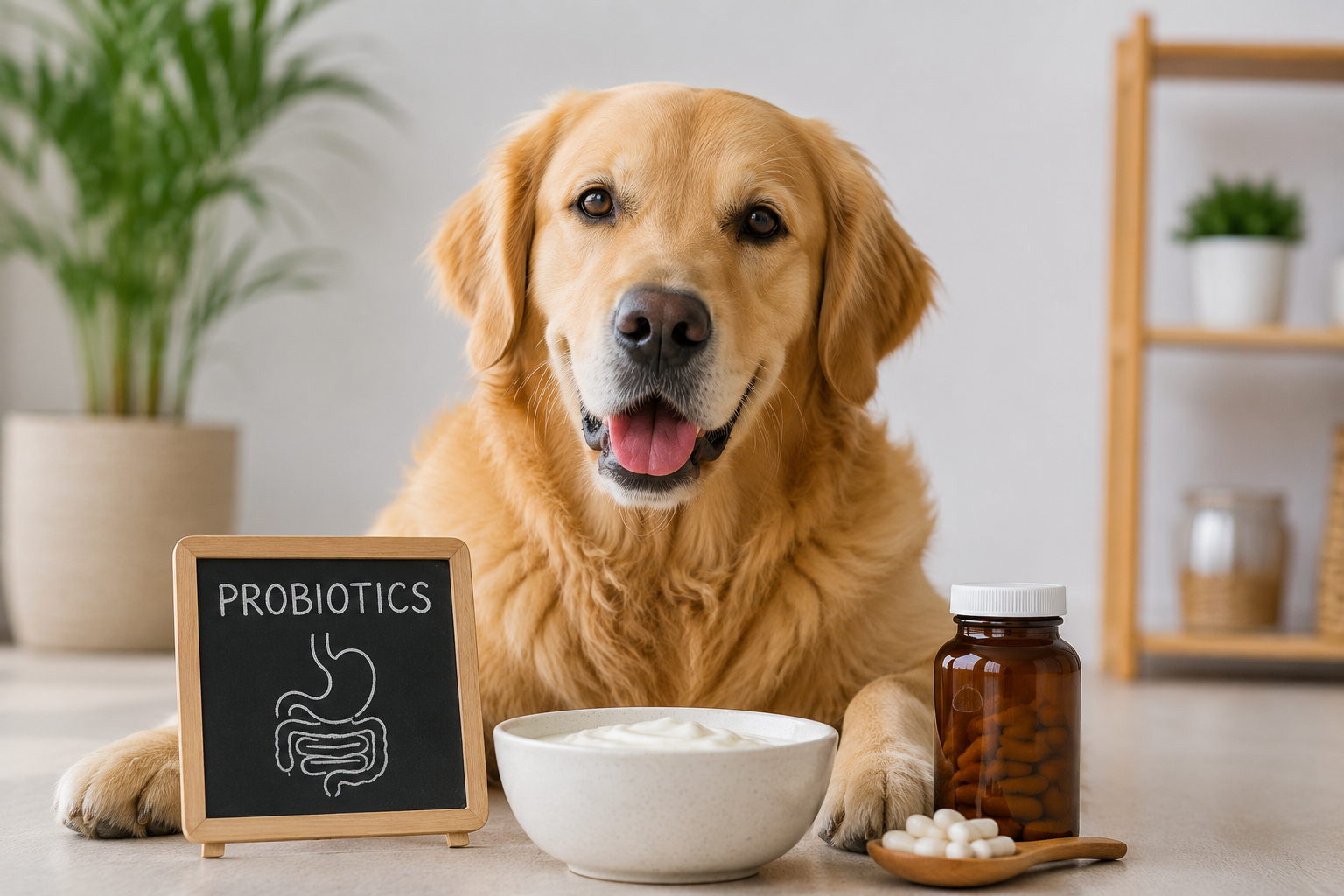

Your dog has been having loose stools. Or they are constantly itchy. Or they just finished a course of antibiotics and their stomach has not been right since. You have heard probiotics might help — but the shelves are full of options and you have no idea which ones actually work.
If you are searching for the best probiotics for dogs, this guide cuts through the noise. We have broken down the top picks by category — best overall, best for diarrhea, best for allergies and itching, best for yeast, best for puppies, and best budget — along with everything you need to know to choose the right one for your dog.
Do Dogs Actually Need Probiotics?
A dog’s gut contains trillions of bacteria — collectively called the gut microbiome. When this community of bacteria is balanced, digestion runs smoothly, the immune system functions well, and the skin and coat stay healthy. When it is disrupted — by antibiotics, illness, stress, dietary changes, or poor diet — the imbalance shows up in symptoms including diarrhoea, gas, itching, ear infections, and low energy.
Probiotics are live beneficial bacteria that help restore and maintain that balance. Research in veterinary medicine consistently supports their use for several conditions — particularly antibiotic-associated diarrhoea, acute gastroenteritis, and immune support. Many vets now recommend probiotics as a daily supplement for dogs with recurring digestive or skin issues.
What to Look for in a Dog Probiotic
Not all dog probiotics are equal. Here is what to check before buying:
CFU Count (Colony Forming Units)
This is the number of live bacteria per dose. For dogs, look for a minimum of 1 billion CFU per serving. Many quality products provide 5–10 billion CFU or more. Higher is not automatically better — strain quality and survivability matter more than raw numbers.
Strain Diversity
Different bacterial strains do different jobs. A product with multiple strains — particularly Lactobacillus and Bifidobacterium species — provides broader benefit than a single-strain product. Look for at least 3–5 strains for general gut health.
Survivability
Probiotics are live organisms. They need to survive stomach acid and reach the intestine to do anything useful. Look for products with enteric coating, freeze-dried technology, or strains that are proven acid-resistant (such as Bacillus coagulans — sometimes called a spore-forming probiotic).
Prebiotics
Prebiotics are fibres that feed the beneficial bacteria in the gut. The best probiotic products combine probiotics with prebiotics (often inulin or chicory root) — this is called a synbiotic and is significantly more effective than probiotics alone.
Form — Chews, Powder, or Capsules
Chews — the easiest to give, most dogs take them readily as a treat. Less stable than powder because moisture can degrade bacteria over time. Powder — most versatile, can be mixed into food. Freeze-dried powders tend to have the best CFU stability. Capsules — good for precise dosing, some dogs are difficult to give capsules to.
Veterinary Recommendation
Products that are recommended by vets or have been through clinical trials carry more weight than those backed only by marketing claims. Purina FortiFlora is the most veterinarian-recommended probiotic in the USA and Canada — largely because it is the most studied.
Best Probiotics for Dogs 2026 — Ranked by Category
1. Purina FortiFlora — Best Overall Probiotic for Dogs
Purina FortiFlora is the most veterinarian-recommended and most clinically studied dog probiotic available. It uses Enterococcus faecium SF68 — a specific probiotic strain that has been through multiple peer-reviewed clinical trials demonstrating effectiveness for diarrhoea management and immune support in dogs.
Key features:
- Single strain (Enterococcus faecium SF68) but highly researched
- 100 million CFU per sachet — lower count but proven efficacy for this strain
- Powder format — mixes easily into food
- Palatable — most dogs eat it readily
- Available at most veterinary clinics, Chewy, and Amazon
- Vet recommended and clinically studied
- Best option for acute diarrhoea and post-antibiotic recovery
Best for: Acute diarrhoea, post-antibiotic gut recovery, vet-recommended option
Purina FortiFlora dog probiotic
2. Zesty Paws Probiotic Bites — Best Probiotic Chews for Dogs
Zesty Paws Probiotic Bites are the top-selling probiotic chews on Amazon for dogs and consistently receive excellent reviews for palatability and effectiveness. They combine a 6-strain probiotic blend with prebiotics, digestive enzymes, and pumpkin for a comprehensive gut health supplement.
Key features:
- 6 probiotic strains — 3 billion CFU per chew
- Includes prebiotics (inulin) and pumpkin fibre
- Digestive enzymes included — amylase, protease, lipase
- Soft chew format — dogs love the taste
- No artificial preservatives
- Available in pumpkin and apple banana flavours
Best for: Daily gut health maintenance, dogs that love chews, owners who want a complete digestive supplement in one product
3. PetLab Co. Probiotic Chews — Best for Skin Allergies and Itching
PetLab Co. Probiotic Chews are specifically formulated for dogs whose gut imbalance is showing up as skin issues — itching, paw licking, hot spots, and recurring ear infections. The formula combines 8 probiotic strains with biotin, inulin, and yucca schidigera for skin and coat support alongside gut health.
Key features:
- 8 probiotic strains — 4 billion CFU per chew
- Biotin for skin and coat health
- Inulin prebiotic
- Yucca schidigera for odour reduction
- Soft chew format
- 90-chew supply per bag
Best for: Dogs with itchy skin, paw licking, recurring ear infections, skin allergies related to gut dysbiosis
4. Doggie Dailies Probiotics — Best Value Probiotic for Dogs
Doggie Dailies offers one of the best value-for-money probiotic supplements available. At a lower price point than premium brands, it still delivers 5 probiotic strains, prebiotics, and digestive enzymes in a palatable soft chew format.
Key features:
- 5 probiotic strains — 5 billion CFU per chew
- Includes prebiotics and digestive enzymes
- Soft chew format
- 225-count supply available — excellent value for multi-dog households
- No artificial colours or flavours
Best for: Budget-conscious owners, multi-dog households, daily maintenance
5. Nusentia Probiotic Miracle — Best Probiotic Powder for Dogs
Nusentia Probiotic Miracle is a highly regarded probiotic powder with a strong following among owners of dogs with chronic digestive issues, IBD, and EPI (exocrine pancreatic insufficiency). It uses 6 freeze-dried strains specifically selected for canine gut health with 1 billion CFU per serving.
Key features:
- 6 freeze-dried probiotic strains — 1 billion CFU per serving
- Freeze-drying preserves viability better than air-dried products
- Unflavoured powder — easy to add to any food without changing taste
- No fillers, artificial ingredients, or sweeteners
- Also suitable for cats
Best for: Dogs with chronic digestive conditions, IBD, EPI, raw-fed dogs, owners who prefer unflavoured powder
6. PetHonesty Digestive Probiotics — Best for Dogs with Diarrhea
PetHonesty’s Digestive Probiotics soft chews are formulated specifically for digestive upset and diarrhoea management. The combination of probiotics, prebiotics, pumpkin, and papaya enzyme makes this a targeted option for dogs with loose stools, gas, and irregular bowel movements.
Key features:
- 6 billion CFU per chew — one of the highest counts in chew format
- Pumpkin powder for fibre and stool firming
- Papaya enzyme for protein digestion support
- No artificial preservatives or sweeteners
- Duck flavour — highly palatable
Best for: Dogs with frequent loose stools, diarrhoea, gas, irregular digestion
PetHonesty Digestive Probiotics
7. Fera Pet Organics Probiotics — Best Organic Probiotic for Dogs
Fera Pet Organics offers a USDA-certified organic probiotic powder with 12 probiotic strains — the highest strain diversity on this list. It is third-party tested for purity and potency and is suitable for both dogs and cats.
Key features:
- 12 probiotic strains — 5 billion CFU per serving
- USDA organic certified
- Third-party tested
- No fillers, artificial ingredients, or allergens
- Suitable for dogs and cats
- Powder format — unflavoured
Best for: Owners who prioritise organic, certified products, multi-pet households
Dog Probiotic Comparison Table
| Product | Form | CFU | Strains | Prebiotics | Best For | Price Range |
|---|---|---|---|---|---|---|
| Purina FortiFlora | Powder | 100M | 1 (proven) | No | Acute diarrhea, vet-recommended | $$ |
| Zesty Paws Probiotic Bites | Soft chew | 3B | 6 | Yes | Daily maintenance, taste | $$ |
| PetLab Co. | Soft chew | 4B | 8 | Yes | Skin allergies, itching | $$$ |
| Doggie Dailies | Soft chew | 5B | 5 | Yes | Budget, multi-dog | $ |
| Nusentia Probiotic Miracle | Powder | 1B | 6 (freeze-dried) | No | Chronic conditions, IBD | $$ |
| PetHonesty Digestive | Soft chew | 6B | 6 | Yes | Diarrhea, loose stools | $$ |
| Fera Pet Organics | Powder | 5B | 12 | No | Organic, multi-pet | $$$ |
Best Probiotic for Dogs with Diarrhea
For acute diarrhoea, Purina FortiFlora is the top pick — it is the most clinically studied and most recommended by vets specifically for this use. The Enterococcus faecium SF68 strain has been shown in studies to reduce duration of diarrhoea and improve stool consistency.
For ongoing or recurring loose stools, PetHonesty Digestive Probiotics with added pumpkin fibre provides both probiotic support and dietary fibre to firm up stools.
Important: diarrhoea that lasts more than 48 hours, contains blood, or is accompanied by vomiting and lethargy requires a vet visit — probiotics alone are not sufficient treatment for serious digestive illness.
For more on digestive problems in dogs, read our guide on best food for dogs with sensitive stomachs.
Best Probiotic for Dogs with Allergies and Itchy Skin
The gut-skin connection is well established in veterinary medicine. Up to 70% of a dog’s immune system is housed in the gut — when the gut microbiome is imbalanced, immune dysregulation often shows up as skin inflammation, itching, and allergies.
PetLab Co. Probiotic Chews are the top pick for dogs whose primary symptoms are skin-related — itching, paw licking, hot spots, and recurring ear infections. The 8-strain formula with added biotin specifically targets the gut-skin axis.
For dogs with seasonal allergies that also have digestive symptoms, combining a probiotic with an omega-3 supplement provides both gut and skin anti-inflammatory support.
If your dog is constantly licking their paws, read our guide on why does my dog lick his paws — gut dysbiosis and food allergies are among the most common causes.
Best Probiotic for Dogs with Yeast Infections
Yeast overgrowth in dogs — manifesting as ear infections, paw licking, musty smell, and skin redness — is often related to gut microbiome imbalance. A diet high in carbohydrates feeds yeast growth, and gut dysbiosis reduces the beneficial bacteria that normally keep yeast in check.
For dogs with yeast issues, the most effective approach is a combination of:
- A multi-strain probiotic — Zesty Paws or PetLab Co. work well
- A low-carbohydrate, high-protein diet
- Regular ear cleaning and paw washing
- Veterinary treatment for active yeast infections
Probiotics support the long-term prevention of yeast overgrowth by restoring the gut balance that keeps yeast populations in check — but they will not clear an active yeast infection on their own. Your vet will need to treat an active infection with antifungal medication.
Best Probiotic for Puppies
Puppies can benefit significantly from probiotics — particularly during weaning, after vaccination stress, or when first transitioning to solid food. However, not all adult dog probiotics are formulated with puppies in mind.
Purina FortiFlora is the most recommended option for puppies because it is the most studied and is specifically approved for use in young dogs. Zesty Paws also works well for puppies over 8 weeks.
Start with a half dose for the first few days when introducing any probiotic to a puppy and gradually increase to the recommended amount.
For more puppy care guidance, read our guide on how to crate train a puppy.
Best Probiotic for Dogs After Antibiotics
Antibiotics do not discriminate — they kill beneficial gut bacteria alongside the harmful bacteria they are targeting. This is why antibiotic-associated diarrhoea is so common in dogs, and why vets often recommend starting probiotics during or immediately after a course of antibiotics.
Key timing rule: Give probiotics at least 2 hours apart from antibiotic doses so the antibiotic does not kill the probiotic bacteria before they reach the gut.
Purina FortiFlora is the most recommended option during and after antibiotic treatment. Continue for at least 2–4 weeks after finishing antibiotics to allow the gut microbiome to fully re-establish.
Best Probiotic for Senior Dogs
Senior dogs often have reduced gut microbiome diversity compared to younger dogs — which can contribute to decreased immunity, digestive irregularity, and cognitive decline. Probiotics become increasingly beneficial as dogs age.
Nusentia Probiotic Miracle (powder format, no fillers) is a particularly good option for senior dogs that may have dietary sensitivities or be on multiple medications — the unflavoured powder can be added to any food without interference.
For a complete guide to caring for older dogs, read our guide on how to care for a senior dog.
Digestive enzyme and probiotic combination for senior dogs
Can You Give Dogs Human Probiotics?
Technically, many strains used in human probiotics (such as Lactobacillus acidophilus) are safe for dogs. However, human probiotic products are formulated for human gut biology — the strain ratios, CFU counts, and additional ingredients are calibrated for humans, not dogs.
The bigger risk with human probiotics is the other ingredients in the product. Many human probiotic capsules and chews contain xylitol, artificial sweeteners, or other ingredients that are toxic to dogs. Always check the full ingredient list before giving your dog any human supplement.
For consistent results and safety, use a probiotic specifically formulated for dogs.
How Long Do Dog Probiotics Take to Work?
For acute diarrhoea: most dogs show improvement within 24–72 hours of starting FortiFlora or a similar probiotic.
For chronic digestive issues: allow 3–4 weeks of consistent daily use before assessing effectiveness. Gut microbiome changes take time.
For skin and allergy issues: the gut-skin connection means improvement in skin symptoms from probiotics can take 6–8 weeks of consistent use — be patient.
For immune support and general wellness: benefits are cumulative and ongoing. Daily probiotic use is most effective as a long-term habit rather than a short-term course.
Frequently Asked Questions
What is the best probiotic for dogs recommended by vets? Purina FortiFlora is the most veterinarian-recommended probiotic for dogs in the USA and Canada. It is the most clinically studied option, particularly effective for diarrhoea management and post-antibiotic recovery, and widely available at veterinary clinics and online.
What are the best probiotics for dogs with diarrhea? Purina FortiFlora is the top pick for acute diarrhoea — it is the most studied and most recommended by vets for this specific use. PetHonesty Digestive Probiotics with added pumpkin is a good option for ongoing loose stools.
Can I give my dog probiotics every day? Yes — daily probiotic supplementation is safe for most dogs and is in fact how probiotics work best. Gut microbiome support is a cumulative, ongoing process rather than a short-term fix.
How long should I give my dog probiotics after antibiotics? Continue probiotics for at least 2–4 weeks after finishing a course of antibiotics to allow the gut microbiome to fully recover. Give probiotics at least 2 hours apart from antibiotic doses during the course itself.
Are probiotics safe for puppies? Yes — Purina FortiFlora and Zesty Paws are both safe for puppies over 8 weeks. Start with a reduced dose for the first few days and build up gradually.
Do probiotics help with dog allergies and itching? For dogs whose skin issues are related to gut dysbiosis or food allergies, probiotics can significantly improve symptoms over 6–8 weeks of consistent use. PetLab Co. Probiotic Chews are specifically formulated for this use. Probiotics work best as part of a comprehensive approach including diet management.
Conclusion
The best probiotics for dogs in 2026 depend on what you are trying to address. For acute diarrhoea and post-antibiotic recovery, Purina FortiFlora is the gold standard — clinically studied and vet-recommended. For daily gut health maintenance, Zesty Paws Probiotic Bites deliver multiple strains with prebiotics in a format dogs love. For skin and allergy issues, PetLab Co. targets the gut-skin connection specifically. For chronic conditions, Nusentia Probiotic Miracle powder provides clean, freeze-dried strains without fillers.
Whatever you choose, consistency is key — probiotics work best as a daily habit, not an occasional supplement.
For more dog health and nutrition advice, read our guides on best food for dogs with sensitive stomachs, why does my dog lick his paws, and how to care for a senior dog.
Always consult your vet before starting any new supplement, particularly if your dog has an existing health condition or is on medication. Probiotics are generally safe but are not a substitute for veterinary diagnosis and treatment of underlying conditions.
Also read: Best Food for Dogs with Sensitive Stomachs | Why Does My Dog Lick His Paws? | How to Care for a Senior Dog | Gabapentin for Dogs | Best Pet Insurance for Dogs in the USA