

You are trying to sleep and somewhere in the darkness you hear it — that persistent, rhythmic licking sound. Or you are watching television and notice your dog has been working at the same paw for ten minutes without stopping. Or you pick up your dog’s paw and find the fur stained a rusty reddish-brown that was not there last month.
Why does my dog lick his paws? It is one of the most common concerns dog owners bring to the vet — and with good reason. Occasional paw licking is completely normal. Persistent, obsessive, or damaging paw licking is not. Understanding the difference, and knowing which of the nine real causes applies to your dog, is what determines whether you need to act and what that action should be.
Is Some Paw Licking Normal?
Yes — some paw licking is completely normal dog behaviour. Dogs lick their paws as part of grooming, particularly after walks when they are cleaning dirt and debris from between their toes. A dog that licks their paws briefly and then moves on is not a concern.
The line into problematic territory is crossed when:
- The licking is frequent, prolonged, and difficult to interrupt
- The fur on the paws has turned reddish-brown from saliva staining
- The skin on the paws is visibly red, raw, swollen, or broken
- Your dog is losing sleep or losing interest in normal activities because of the licking
- The licking is accompanied by biting, chewing, or scratching at the paws
Any of these signs tells you that something is driving the behaviour beyond simple grooming — and finding that something is what this guide is for.
What Does Reddish-Brown Fur on Dog Paws Mean?
Before getting into causes, this specific sign deserves its own mention because it is one of the most telling indicators of chronic paw licking.
The reddish-brown or rust-coloured staining you see on the fur of dogs that lick their paws excessively is caused by porphyrins — compounds found in dog saliva that oxidise and stain the fur when they are in contact with it repeatedly over time. It is particularly visible on light-coloured or white dogs.
If you see this staining — especially between the toes or on the top of the paws — your dog has been licking that area persistently enough to leave a permanent pigment change. This is a clear signal that the licking is chronic and the cause needs to be identified.
9 Real Reasons Why Your Dog Licks His Paws
Reason 1 — Allergies: The Most Common Cause
Allergies are the single most frequent reason for chronic paw licking in dogs — and this category is broader and more nuanced than most owners realise.
Dogs can be allergic to environmental allergens, food ingredients, or both — and the paws are one of the primary sites where allergic reactions manifest physically. The mechanism is the same as in humans with contact allergies: the immune system reacts to a substance, releases histamine, and the area becomes intensely itchy.
Environmental allergies (atopy): Pollen, grass, mould, dust mites, and other airborne or contact allergens trigger intense itchiness in susceptible dogs. The paws are particularly affected because they have direct contact with grass and ground-level allergens on every walk. Dogs with environmental allergies often also rub their faces, scratch their ears, and lick their bellies — a pattern that is very characteristic of atopic dermatitis.
Food allergies: Food-related allergies in dogs most commonly involve protein sources — chicken, beef, dairy, and wheat are the most frequent culprits simply because they are the most commonly fed ingredients. Food allergy symptoms often show on the skin and paws rather than the digestive system, which surprises many owners.
Contact allergies: Reactions to specific substances the paw contacts directly — lawn chemicals, cleaning products, road salt in winter, certain floor cleaners, or even specific types of grass. <!– AFFILIATE LINK OPPORTUNITY: “dog allergy supplement” or “dog antihistamine” — recommend a vet-approved omega-3 supplement or allergy chew product here via Amazon/Chewy affiliate link. Natural anchor text: “omega-3 fatty acid supplements designed for dogs” –>
If your dog licks their paws seasonally — worse in spring and summer when pollen counts are high — environmental allergy is very likely. If the licking is year-round and consistent regardless of season, food allergy or a non-seasonal environmental allergen like dust mites is more probable.
What to do: A vet consultation is the most direct route to diagnosis. Allergy testing, an elimination diet trial, or both may be recommended depending on the suspected cause. In the meantime, wiping your dog’s paws with a damp cloth after every walk removes surface allergens before they can cause a reaction — a simple intervention that makes a meaningful difference for many allergic dogs.
Reason 2 — Skin Infections (Bacterial and Yeast)
Chronic paw licking creates a warm, moist environment between the toes that is ideal for bacterial and yeast overgrowth — and here is the vicious cycle: the infection causes itching, the itching causes licking, the licking creates more moisture and warmth, which worsens the infection, which causes more itching.
Yeast infections (Malassezia): Yeast infections on the paws produce a characteristic musty, corn-chip-like smell that owners often describe as “Fritos feet.” The affected skin between the toes is typically red, greasy-looking, and intensely itchy. Yeast overgrowth is often secondary to an underlying allergy that has altered the skin environment.
Bacterial infections: Bacteria — most commonly Staphylococcus — can infect the skin between the toes, producing redness, swelling, crusting, and sometimes discharge. Interdigital furuncles (infected cysts between the toes) are a related condition that causes significant pain and persistent licking.
Both bacterial and yeast infections require veterinary treatment — antifungal or antibiotic medications, medicated shampoos, or both. Attempting to manage these at home without diagnosis can delay effective treatment and allow the infection to worsen.
Reason 3 — Injury or Pain
A dog that suddenly starts licking one specific paw is often doing so because something hurts. This is one of the most immediate and practical causes to check for before assuming anything more complex.
Examine the paw carefully. Look between every toe, check the paw pads for cuts, cracking, or foreign objects (grass seeds and thorns are common culprits), and check the nails for breaks or unusual growth. Press gently on each area and watch your dog’s reaction — flinching, pulling away, or vocalising points to the painful spot.
Grass seeds (foxtails) deserve special mention — these sharp, barbed seeds can penetrate the skin between a dog’s toes and migrate inward, causing persistent licking, swelling, and serious infection if not removed. If your dog has been in tall grass and develops sudden intense one-paw licking, a grass seed is a strong candidate.
Cracked or dry paw pads — particularly in winter from cold, salt, and hard ground — also cause licking as dogs try to soothe the discomfort. <!– AFFILIATE LINK OPPORTUNITY: “dog paw balm” or “paw wax” — recommend a paw balm product for dry/cracked pads here via Amazon/Chewy affiliate link. Natural anchor text: “a dog-safe paw balm” –>
As we covered in our guide to how to trim cat nails without getting scratched, regular nail care matters for paw health across species — and the same is true for dogs. An overgrown or broken nail causes abnormal weight distribution on the paw that contributes to paw discomfort and compensatory licking.
Reason 4 — Anxiety and Stress
Paw licking is a common displacement behaviour in anxious or stressed dogs. In the same way that stressed humans might bite their nails or tap their feet, anxious dogs often redirect their stress into repetitive physical behaviours — and licking the paws is one of the most common.
Anxiety-driven paw licking tends to be:
- Worse during specific triggers — storms, fireworks, owner absences, changes in routine
- More frequent during periods of environmental change — moving house, a new pet, a new baby
- Present alongside other anxiety markers — restlessness, panting, whining, following the owner closely
As we covered in our guide to how long dogs can be left alone, separation anxiety in particular is a common driver of repetitive self-soothing behaviours including paw licking. A dog that licks their paws primarily when you are away — evidenced by worsening staining over periods of regular absence — may be self-soothing in response to separation distress.
If anxiety is the primary driver, treating the licking without addressing the underlying anxiety will not produce lasting results. A veterinary behaviourist or certified dog trainer can design a structured anxiety management programme far more effectively than general advice.
Reason 5 — Boredom and Under-Stimulation
A dog that does not receive adequate physical exercise and mental stimulation will find their own ways to occupy themselves. Repetitive paw licking can develop as a boredom behaviour — it is self-stimulating, occupying, and something to do when there is nothing else.
Boredom-driven paw licking tends to occur most during long quiet periods at home — when the household is settled and the dog has nothing to engage with. It is typically less intense than allergy or infection-driven licking, and usually stops when the dog is given something engaging to do.
Adding enrichment — puzzle feeders, long-lasting chews, interactive toys, training sessions — and ensuring adequate daily exercise addresses boredom at the source. As we discussed in our guide to why dogs eat grass, boredom is an underrated driver of many repetitive dog behaviours that owners attribute to physical causes. <!– AFFILIATE LINK OPPORTUNITY: “puzzle feeder for dogs” or “dog enrichment toy” — recommend a puzzle feeder or Kong product here via Amazon/Chewy affiliate link. Natural anchor text: “a puzzle feeder or stuffed Kong” –>
Reason 6 — Parasites (Fleas, Mites, and Mange)
External parasites cause intense itching that dogs address by licking, biting, and scratching. While fleas more commonly cause symptoms along the back and tail base, they can cause generalised itching that manifests as paw licking in some dogs.
Demodex mites — which cause demodectic mange — specifically affect the hair follicles and can cause significant paw symptoms including hair loss, redness, and irritation between the toes that drives persistent licking.
Sarcoptic mange (scabies) causes intense, generalised itching that often affects the paws and legs alongside the ears, elbows, and abdomen.
If you notice hair loss alongside the licking — particularly patchy hair loss between the toes or on the paws — a vet visit for skin scraping and microscopic examination is warranted to rule out mite infestation.
Reason 7 — Hormonal Conditions
Certain hormonal imbalances cause changes to the skin and coat that result in secondary skin infections and itching — which then drive paw licking.
Hypothyroidism — an underactive thyroid gland — causes a range of skin and coat changes including dry, flaky skin, dull coat, and susceptibility to secondary infections. Dogs with hypothyroidism may lick their paws as a response to the skin discomfort caused by the underlying hormonal condition.
Cushing’s disease (hyperadrenocorticism) — excess cortisol production — causes thin, fragile skin, increased susceptibility to skin infections, and coat changes that can all drive paw licking.
Both conditions are diagnosable through blood tests and very manageable with appropriate veterinary treatment. As we covered in our guide to how to tell if your cat is sick, hormonal conditions in pets affect the skin and coat early — making coat and skin changes valuable early warning signals.
Reason 8 — Environmental Irritants
Direct contact with irritating substances causes immediate paw discomfort that dogs address by licking. Common culprits include:
- Road salt and ice melt products in winter — these chemicals are harsh on paw pads and cause significant irritation, cracking, and burning that drives immediate licking after walks
- Lawn chemicals — herbicides, pesticides, and fertilisers applied to grass leave residue that can irritate the paw pads and skin between the toes
- Cleaning products — floor cleaners, carpet cleaners, and disinfectants that dogs walk through can cause contact irritation
- Hot pavement and surfaces — heat damage to the paw pads is painful and causes licking in the immediate aftermath of exposure
The solution for environmental irritant licking is practical: wipe paws thoroughly after every walk with a damp cloth or dog-specific paw wipe, use dog-safe paw wax before walks on salt-treated surfaces, and avoid known chemical exposures where possible. <!– AFFILIATE LINK OPPORTUNITY: “dog paw wipes” or “dog boots for winter” — recommend paw wipes and/or dog boots here via Amazon/Chewy affiliate link. Natural anchor text: “dog paw wipes” and “protective dog boots” –>
Reason 9 — Obsessive Compulsive Disorder (Canine OCD)
In some dogs — particularly those with a genetic predisposition or a history of significant anxiety or trauma — paw licking becomes a compulsive behaviour that persists even after the original trigger has been resolved.
Canine compulsive disorder presents as behaviours that are performed repetitively, are difficult or impossible to interrupt, and continue well beyond any practical function. A dog with compulsive paw licking will lick until the paws are raw, resume licking shortly after being redirected, and show increasing fixation on the behaviour over time.
Compulsive paw licking requires veterinary intervention — a combination of behavioural modification and, in some cases, medication (typically SSRIs or similar) as prescribed by a veterinary behaviourist. It cannot be resolved through enrichment or training alone once it has become compulsive.
The Reddish-Brown Staining — How to Read the Clues
The location and pattern of paw staining tells you a great deal about the cause:
| Pattern | Most Likely Cause |
|---|---|
| All four paws, between toes | Environmental allergy or yeast infection |
| One paw only | Injury, foreign body, or localised infection |
| Top of paws and legs | Environmental contact allergy or mite irritation |
| Paw pads cracked or dry | Winter irritants or dry skin condition |
| Paws plus face rubbing and ear scratching | Atopic dermatitis (environmental allergy) |
| Seasonal — worse spring and summer | Pollen or grass allergy |
| Year-round, consistent | Food allergy or dust mite allergy |
| Accompanied by strong smell | Yeast infection |
What to Do When Your Dog Won’t Stop Licking Their Paws
Step 1 — Examine the Paws Thoroughly
Before anything else, look carefully at every part of the paw — between every toe, the paw pads, the nails, and the skin above the paw. A grass seed, a cut, a broken nail, or visible redness between the toes might explain everything and be immediately addressable.
Step 2 — Wipe Paws After Every Walk
A damp cloth or dog paw wipe after every outdoor walk removes grass pollen, lawn chemicals, road salt, and environmental debris before they can cause ongoing irritation. This single daily habit makes a meaningful difference for allergy-prone dogs and those with contact sensitivities.
Step 3 — Consider Dietary Changes
If the licking is year-round and not associated with specific environmental exposures, a food trial with a limited ingredient or novel protein diet is worth discussing with your vet. Food allergy elimination trials take 8 to 12 weeks to show results and need to be followed strictly — no treats, no flavoured medications, no table scraps during the trial period. <!– AFFILIATE LINK OPPORTUNITY: “limited ingredient dog food” or “sensitive stomach dog food” — recommend a novel protein or limited ingredient food here via Amazon/Chewy affiliate link. Natural anchor text: “a limited ingredient or novel protein diet” –>
Step 4 — Address Environmental Factors
Check what your dog walks on. If walks involve treated lawns, switch routes or wipe paws afterward. If your home is cleaned with strong chemicals, switch to pet-safe cleaning products. In winter, use paw wax before walks and boots if your dog tolerates them.
Step 5 — Increase Exercise and Mental Stimulation
If boredom or anxiety is a contributing factor, addressing it directly produces results that redirecting the licking alone will not. More exercise, more enrichment, and a more stimulating daily routine reduce the behavioural component of paw licking meaningfully.
Step 6 — See Your Vet
If home management over one to two weeks has not produced improvement, or if the paws are visibly red, swollen, raw, or smell unusual — a vet visit is the right next step. Your vet can perform skin cytology, allergy testing, or blood tests to identify the underlying cause and recommend targeted treatment.
According to the American Kennel Club, chronic paw licking that results in hair loss, redness, or skin damage always warrants professional evaluation — home management alone is rarely sufficient when the paws are visibly affected.
FAQ — Why Does My Dog Lick His Paws?
Q: Why does my dog lick his paws at night? A: Nighttime paw licking is often more noticeable simply because the house is quiet — but it can also be genuine. Allergies tend to cause more intense itching at night when cortisol levels are lower and histamine activity increases. Anxiety-driven licking also tends to peak during quiet, unsupervised periods. If your dog licks exclusively at night and is otherwise well, allergies are the most likely explanation.
Q: Why does my dog lick his paws after a walk? A: Post-walk licking is most commonly caused by contact with grass pollen, lawn chemicals, or road salt. Wiping your dog’s paws thoroughly with a damp cloth immediately after walks often resolves this. If it continues despite paw cleaning, an environmental allergy to grass or pollen is likely and worth discussing with your vet.
Q: Why does my dog lick his paws raw? A: Licking to rawness indicates either severe allergic reaction, active skin infection, significant pain, or compulsive behaviour. A dog licking their paws raw needs veterinary attention — not to stop the licking, but to identify and treat what is driving it. A physical barrier like a cone or paw boot can prevent further damage while the cause is being addressed.
Q: Why does my dog only lick one paw? A: Single-paw licking almost always points to a localised cause — a foreign body (grass seed, thorn), an injury, a broken nail, a localised infection, or a contact irritant affecting one paw specifically. Examine the affected paw very carefully, including between every toe, before assuming a systemic cause.
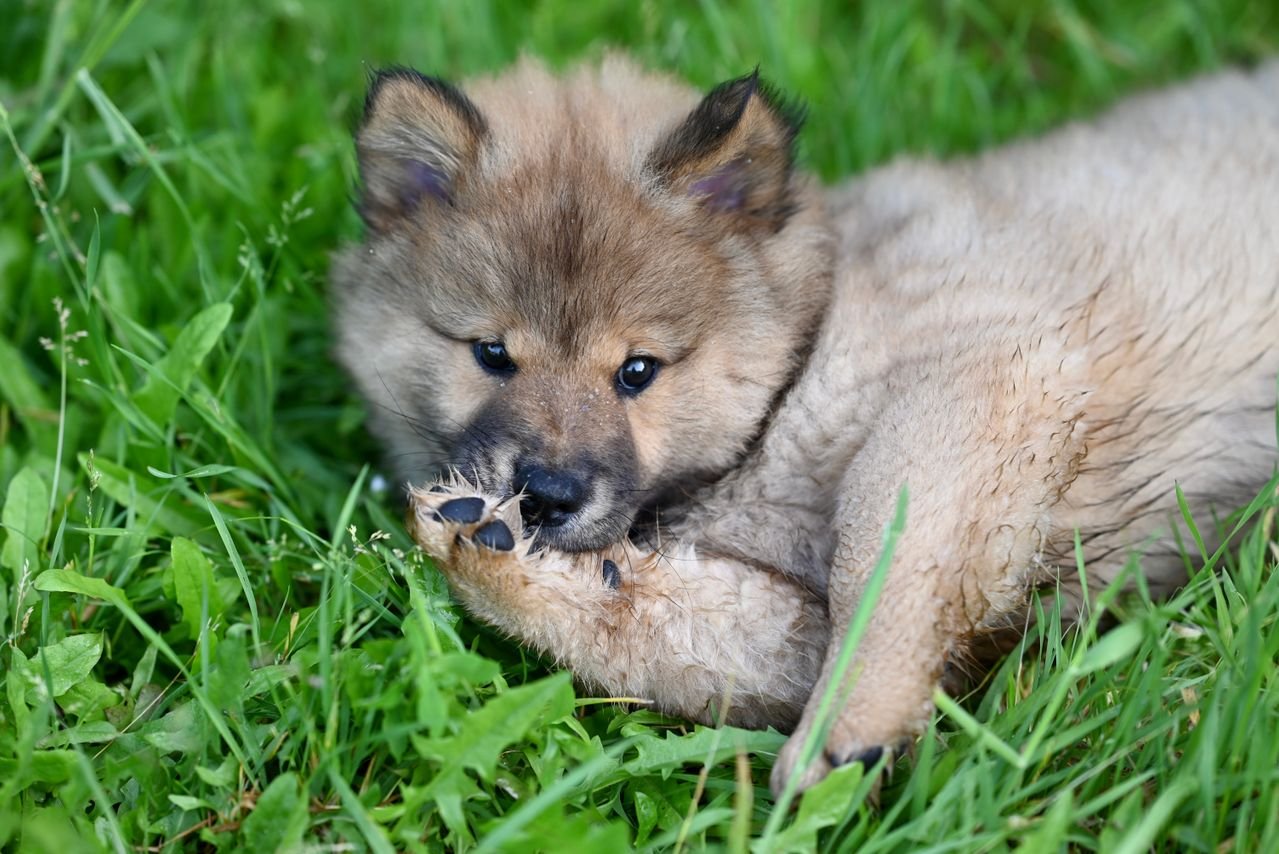
Q: Why does my puppy lick his paws? A: Puppies explore through their mouths and lick their paws as part of normal self-discovery. Occasional paw licking in a young puppy is usually nothing to worry about. If a puppy is licking persistently, the paws are red or swollen, or the behaviour is interfering with sleep and normal activity, a vet check is warranted.
Q: When should I take my dog to the vet for paw licking? A: See your vet if the licking is persistent and cannot easily be interrupted, if the fur on the paws is reddish-brown stained, if the skin is red, swollen, cracked, or raw, if there is a noticeable smell from the paws, or if the licking is accompanied by lameness or behavioural changes. As we covered in our guide to how often dogs should be bathed, regular physical checks of your dog during grooming sessions are one of the most effective ways to catch paw issues early.
Conclusion
Why does my dog lick his paws? Most of the time — allergies, infection, irritation, or pain. Occasionally — anxiety, boredom, or compulsive behaviour. Rarely — a single simple cause. More commonly, a combination of factors that reinforce each other in a cycle that keeps the behaviour going even after the initial trigger has improved.
The reddish-brown fur staining, the location and pattern of licking, the timing, and whether all four paws or just one is affected all give you meaningful clues. Start with a thorough paw examination, add daily paw wiping after walks, and see your vet if the licking is persistent, damaging, or accompanied by visible skin changes. Early intervention prevents a manageable issue from becoming a chronic one.
Your dog cannot tell you their paws are itchy. But they are absolutely showing you — one persistent lick at a time.
Also read: How long can a dog be left alone? | Why does my dog eat grass? | How often should I bathe my dog? | How to tell if your cat is sick | How to trim cat nails without getting scratched | Why is my cat not eating?