


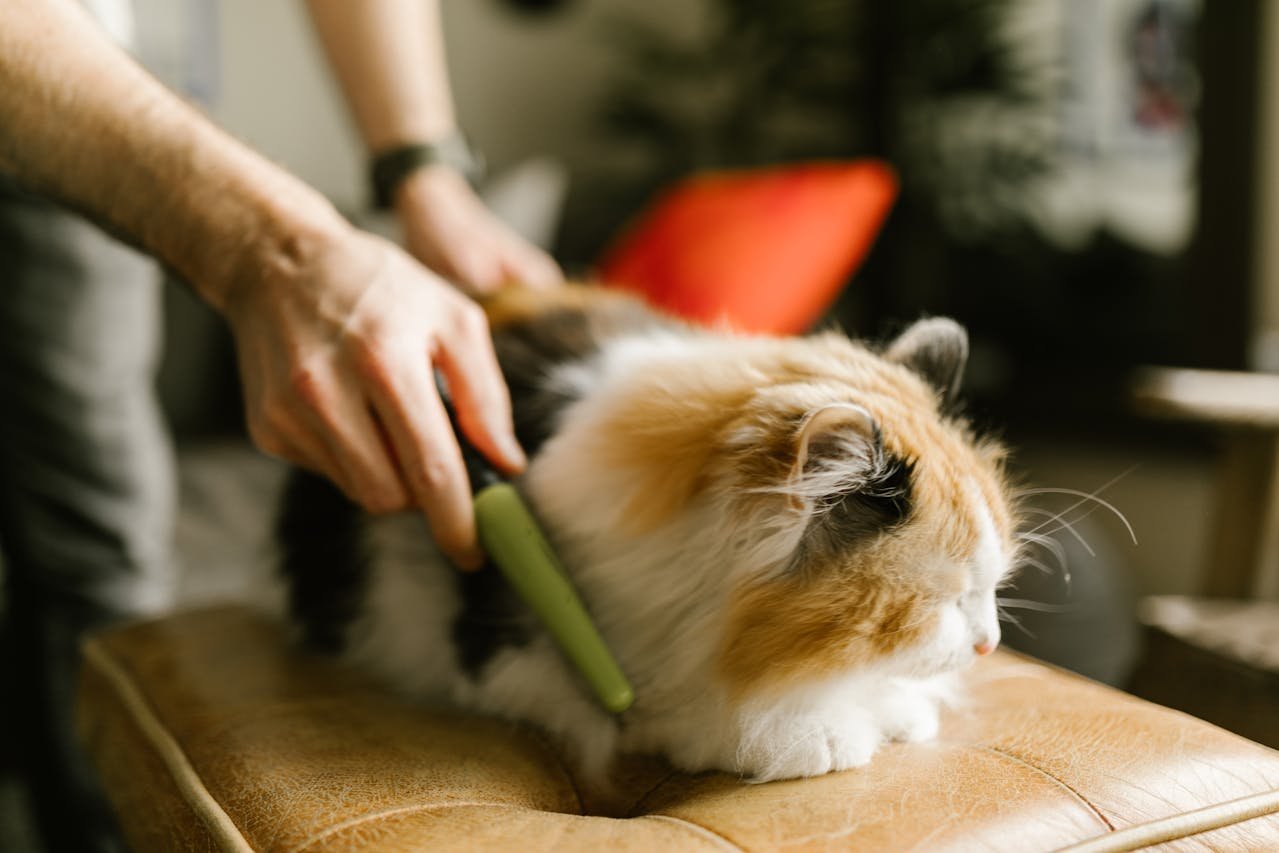

You love your long-haired cat. You do not love the matted fur behind their ears, the daily tumbleweeds rolling across your floor, or the knots that seem to appear overnight in their tail. If you are asking what the best brush for a long-haired cat actually is — you are in the right place.
The best brush for a long haired cat is not a single tool. It is knowing which tool does what job — and using the right one at the right time. This guide breaks down every type of brush and grooming tool your long-haired cat needs, what each one does, how often to use it, and exactly what to look for when choosing one. No filler, no vague recommendations — just practical guidance from someone who understands what long-haired coats actually require.
I love this pet brush! It keeps my dog’s fur clean and tidy. Great for shedding seasons.
Why Long-Haired Cats Need Different Grooming Tools
Long-haired cats — Persians, Maine Coons, Ragdolls, Siberians, Norwegian Forest Cats — have coat structures that are fundamentally different from short-haired breeds. Their coats consist of multiple layers: a dense, soft undercoat and longer guard hairs on top. This layered structure is what creates that beautiful, flowing appearance — and also what makes it prone to matting, tangling, and excessive shedding.
A standard bristle brush designed for short-haired cats will barely penetrate the surface of a long-haired coat. The tools that actually work reach through the outer layer to address the undercoat — where tangles begin, where loose fur accumulates, and where matting forms before it becomes visible on the surface.
Getting the right tools is not about spending more money. It is about understanding the coat and matching the tool to the job.
The 7 Best Types of Brush for a Long-Haired Cat
1 — The Slicker Brush: Your Daily Essential
The slicker brush is the single most important grooming tool for long-haired cats — the one that belongs in your daily routine above everything else.
A slicker brush has a flat or slightly curved head covered in fine, short wire pins set close together. These pins penetrate the outer coat and reach into the undercoat, removing loose fur, detangling minor knots before they tighten into mats, and distributing natural oils through the full length of the coat.
What to look for in a slicker brush for long-haired cats:
- Flexible pin head — rigid heads are uncomfortable and can scratch the skin
- Fine, closely spaced pins — wider-spaced pins miss the undercoat entirely
- A comfortable, non-slip handle — you will be using this daily
- Medium to large head size — appropriate for covering the coat efficiently
How to use it: Work in sections, brushing in the direction of hair growth with gentle, even strokes. Start at the tips of the fur and work toward the skin in stages — never drag the brush through a tangle from root to tip in one stroke.
How often: Daily for most long-haired cats. For Persians and other very dense-coated breeds — twice daily is not excessive.
A high-quality self-cleaning slicker brush — where the pins retract at the push of a button to release collected fur — is one of the most genuinely useful features to look for and is well worth the small additional cost.
This self-cleaning slicker brush is the one we’d point to first — the retractable pins make daily brushing genuinely fast instead of a 10-minute fur-pulling chore.
2 — The Wide-Tooth Comb: Your Tangle Detector
A wide-tooth metal comb is the tool that tells you how well your brushing session actually went — because you cannot truly assess a long-haired coat by feel or appearance alone.
After brushing with a slicker brush, running a wide-tooth metal comb through the coat reveals any tangles or knots the brush missed. If the comb moves through the coat smoothly from root to tip without catching — the coat is genuinely tangle-free. If it catches — there is still work to do.
This grooming rake is amazing for dogs with long hair. Keeps shedding down to a minimum.
What to look for:
- Stainless steel — not plastic, which bends, breaks, and generates static
- Wide teeth on one end, medium teeth on the other — dual-sided combs offer versatility
- Rounded tips — sharp teeth scratch the skin and cause your cat to resist grooming
- Sturdy construction — cheap combs flex under pressure and are useless for dense coats
How to use it: Work from the tips up toward the skin, gently working through any catches rather than forcing the comb through. The wide-tooth end for initial detangling, the medium-tooth end for finishing and checking.
How often: Every brushing session, after the slicker brush. Think of it as the quality check.
3 — The Dematting Comb: Your Mat Emergency Tool
Every long-haired cat owner will encounter mats eventually — even with consistent brushing. A dematting comb is the specialised tool designed to address them safely, without scissors and without causing your cat pain.
Dematting combs have staggered, blade-edged or serrated teeth that work through the mat by cutting through the tangled fibres rather than forcing them apart. Good dematting combs do this efficiently without pulling at the surrounding healthy fur or dragging on the skin.
I’m using these for my pets and they’re making grooming a breeze!
What to look for:
- Stainless steel blades — durable and effective
- Safety-edged teeth — the cutting edge should face away from the skin
- A comfortable, non-slip handle — dematting requires controlled pressure
- Multiple tooth spacings — wider for large mats, finer for smaller tangles
Important note on mats: Never cut a mat with scissors pointing toward your cat’s skin — the skin of cats is surprisingly thin and tears easily. If a mat is very close to the skin, very large, or causing your cat discomfort, a professional groomer or veterinarian should address it. As we covered in our guide to how often to bathe a cat — regular bathing alongside brushing is the most effective way to prevent mats from forming in the first place.
How often: As needed — not a routine tool but an essential one to have available.
4 — The Undercoat Rake: Your Shedding Solution
If your long-haired cat is leaving fur on every surface in your home, an undercoat rake is the tool that addresses the source of the problem.
An undercoat rake has long, widely-spaced metal teeth designed to penetrate the full depth of a long-haired coat and remove loose, dead undercoat fur before it can shed onto your furniture, clothing, and floors. It is particularly effective during seasonal shedding periods — spring and autumn — when the undercoat releases in larger quantities.
What to look for:
- Long teeth — short teeth do not reach the undercoat on long-haired cats
- Rotating teeth — some undercoat rakes have teeth that rotate as they move through the coat, which significantly reduces pulling and discomfort
- Sturdy construction — the rake needs to work against a dense coat without flexing
How to use it: Work in the direction of hair growth, using gentle, sweeping strokes. Do not press hard — the weight of the tool and the movement does the work. Pay particular attention to areas where undercoat accumulates most heavily — the neck, chest, and behind the ears.
How often: Weekly for most long-haired cats. During peak shedding season — every 2 to 3 days.
If you are wondering why your cat is shedding so heavily, our guide to excessive cat shedding covers every cause and solution in detail.
5 — The Deshedding Tool: Your High-Volume Fur Remover
Deshedding tools — of which the Furminator is the most widely known brand — are designed to reach deep into the undercoat and remove loose fur with exceptional efficiency. Used correctly on a long-haired coat, a deshedding tool can dramatically reduce the volume of fur shed around your home.
This long-hair deshedding tool uses the same undercoat-reaching design and includes an eject button to clear collected fur without touching it.
The distinction between a deshedding tool and an undercoat rake is primarily one of intensity. Deshedding tools are more aggressive and remove a higher volume of fur in each session — which also means they require more careful use to avoid over-stripping the coat.
What to look for in a deshedding tool for long-haired cats:
- A long-hair specific version — deshedding tools designed for short-haired cats have different tooth spacing and will not work effectively
- An edge guard or safety mechanism — to protect the skin during use
- Stainless steel teeth — durability and effectiveness
- A comfortable grip for extended grooming sessions
How to use it: Use on a clean, dry coat. Work in the direction of fur growth. Do not use on the same area repeatedly in one session — this can cause coat thinning. Limit sessions to 10-15 minutes maximum.
How often: Once a week or every two weeks is sufficient for most long-haired cats. More than this risks over-stripping the coat and removing healthy fur alongside dead fur.
6 — The Pin Brush: Your Finishing Tool
A pin brush looks similar to a human hairbrush — a cushioned base with widely-spaced metal pins, often with protective balls on the tips. For long-haired cats, a pin brush is not a primary grooming tool — it is a finishing tool used after detangling and deshedding to smooth the coat and distribute oils.
This cat brush is a game-changer! My furball loves it and it makes grooming a breeze.
What to look for:
- Widely-spaced, long pins — to move through long fur without resistance
- Ball-tipped pins — to protect the skin and increase comfort
- A flexible cushion base — absorbs pressure and prevents scratching
How to use it: Use after the slicker brush and comb as the final step — it smooths the coat, adds shine, and leaves it looking its best.
How often: Every brushing session, as the final step. It is gentle enough to use daily.
7 — The Flea Comb: Your Health Monitoring Tool
A flea comb is a fine-toothed comb with teeth spaced close enough together to trap fleas, flea eggs, and flea dirt as it passes through the coat. For long-haired cats — where fleas can hide effectively beneath a dense coat — a flea comb is both a detection and management tool.
This flea comb makes it easy to keep your pets clean and itch-free!
What to look for:
- Very fine, closely-spaced teeth — this is what makes it effective
- Stainless steel — does not bend or break under the pressure needed for effective use
- A comfortable handle — flea combing requires systematic, thorough coverage
How to use it: Work through the entire coat methodically, wiping the comb on a white paper towel after each stroke to check for flea dirt (which appears as small black specks that turn red-brown when wet). Pay particular attention to the neck, belly, and base of the tail — where fleas prefer to congregate.
How often: Weekly as a monitoring routine. More frequently if fleas are suspected or confirmed.
The Complete Long-Haired Cat Grooming Toolkit — At a Glance
| Tool | Primary Job | How Often |
|---|---|---|
| Slicker brush | Daily detangling and coat maintenance | Daily |
| Wide-tooth metal comb | Tangle detection and finishing | Every session |
| Dematting comb | Removing established mats | As needed |
| Undercoat rake | Removing loose undercoat, reducing shed | Weekly / every 2–3 days in shedding season |
| Deshedding tool | High-volume undercoat removal | Every 1–2 weeks |
| Pin brush | Finishing, smoothing, shine | Every session |
| Flea comb | Flea detection and monitoring | Weekly |
What to Look for When Buying a Brush for a Long-Haired Cat
Beyond tool type, here are the key quality indicators that separate a genuinely useful grooming tool from one that frustrates both you and your cat:
Material matters. Stainless steel teeth and combs are more durable, more effective, and easier to clean than plastic alternatives. Plastic teeth bend, create static, and wear down quickly with regular use.
Ergonomics matter too. You are going to use these tools regularly — possibly daily. A handle that is uncomfortable to hold, heavy, or poorly balanced will make grooming sessions feel like a chore for both of you.
Size appropriately. A brush that is too small for a large Maine Coon, or too large for a smaller Persian, is inefficient. Match the size of the brush head to the size of your cat.
Avoid tools with sharp tips. Any pin, tooth, or edge that is sharp rather than rounded increases the risk of skin irritation and makes your cat associate grooming with discomfort — which makes future grooming progressively harder.
How to Make Grooming Easier for You and Your Cat
The best brush in the world is only as effective as the grooming session allows. If your long-haired cat resists brushing — an extremely common challenge — the approach matters as much as the tools.
Start young. Cats introduced to grooming tools gently and positively in kittenhood are significantly more tolerant of grooming as adults. If you have a kitten, begin handling their paws, ears, and coat daily — even without actual grooming — to build acceptance.
Keep sessions short. Five minutes of positive grooming daily is far more effective than a 30-minute battle once a week. Short, consistent sessions build tolerance and prevent the backlog of tangles that make longer sessions necessary.
Choose the right moment. Brush your cat when they are relaxed and calm — after a meal, after a nap, during a period when they are naturally settled. Attempting to brush an active or agitated cat is a losing battle.
Work from the ends inward. Always begin detangling at the tips of the fur and work toward the skin — never drag a brush or comb from root to tip through a tangle in a single stroke. This causes pain and damages the coat.
Reward consistently. A high-value treat at the end of every grooming session — and occasionally during — creates a positive association that makes each subsequent session easier. As we discussed in our guide to why cats lick me — cats are extraordinarily responsive to positive reinforcement in their human relationships.
How Often Should You Groom a Long-Haired Cat?
For most long-haired cats — daily brushing with a slicker brush and comb is the baseline. This prevents the accumulation of tangles that become mats, removes loose fur before it can shed around your home, and keeps the coat in the condition where all other grooming tasks stay manageable.
The cats that end up at groomers with severe matting requiring sedation and a full clip are almost always cats whose owners were brushing once a week or less. Daily brushing takes 5 to 10 minutes. Addressing severe matting takes hours — and is deeply stressful for the cat.
For breed-specific bathing frequency to complement your brushing routine, refer to our complete guide to how often you should bathe a cat. Bathing and brushing work together — a clean coat brushes more easily, and a brushed coat is easier to bathe thoroughly.
Signs Your Long-Haired Cat Needs Professional Grooming
Even with the best tools and the most consistent home routine, some situations require professional intervention:
- Mats that are very close to the skin or covering a large area
- A coat that has been neglected and is severely tangled throughout
- A cat that is too painful, anxious, or aggressive to groom safely at home
- Senior or unwell cats whose coat has deteriorated due to reduced self-grooming
A professional groomer experienced with long-haired cats can address severe matting, perform a full grooming service including bathing, and advise you on a maintenance routine to prevent recurrence. If your cat is showing signs of illness alongside coat deterioration, our guide to how to tell if your cat is sick will help you assess what might be happening.
FAQ — Best Brush for a Long-Haired Cat
Q: What is the best brush for a long-haired cat that hates being groomed? A: Start with the least intrusive tool — a soft pin brush or wide-tooth comb — and work in very short sessions of 2 to 3 minutes maximum. Build up gradually over weeks, always pairing grooming with treats. Never force the session — ending on a positive note with a treat is more valuable than completing a full brush out.
Q: What is the best deshedding tool for a long-haired cat? A: Look for a deshedding tool specifically labelled for long hair — the tooth spacing is different from short-hair versions and matters significantly for effectiveness. Use it no more than once every 1 to 2 weeks to avoid over-stripping the coat.
Q: Can I use a human hairbrush on my long-haired cat? A: Not effectively. Human hairbrushes are designed for human hair — the spacing, flexibility, and length of the pins are not appropriate for a cat’s layered coat structure. A proper cat slicker brush or pin brush designed for long-haired cats will always outperform a human hairbrush.
Q: What is the best comb for detangling a long-haired cat? A: A wide-tooth stainless steel comb with rounded tips. Work from the ends of the fur toward the skin, never the other way. For established mats, use a dematting comb rather than forcing a regular comb through — this prevents pain and breakage.
Q: How do I stop my long-haired cat from matting? A: Daily brushing with a slicker brush followed by a wide-tooth comb is the most effective prevention. Regular bathing every 4 to 6 weeks also helps — clean fur mats significantly less readily than dirty or oily fur. Keep the fur around particularly mat-prone areas — behind the ears, under the armpits, around the collar — especially well maintained.
Conclusion
The best brush for a long-haired cat is not a single product — it is a toolkit of the right tools used consistently and correctly. The slicker brush is your daily workhorse. The wide-tooth comb is your quality check. The undercoat rake and deshedding tool manage shedding. The dematting comb handles emergencies. The pin brush finishes and shines. The flea comb monitors health.
Build the right toolkit, use it daily, and your long-haired cat’s coat will reward you with everything it promises — that flowing, beautiful fur that attracted you to the breed in the first place — without the mats, the tumbleweeds, and the grooming battles that come with neglect.
Grooming is not just about appearance. It is one of the most direct ways you maintain your long-haired cat’s comfort, health, and wellbeing — and it is time well spent together.
Also read: How often should you bathe a cat? | Why is my cat shedding so much? | How to tell if your cat is sick | Why does my cat lick me? | How long do indoor cats live? | How often should I take my cat to the vet?