

Cats are masters at hiding pain. This is not stubbornness — it is a survival instinct deeply hardwired from thousands of years of evolution. In the wild, showing weakness invites predators. So cats suppress pain signals and carry on as normally as possible, even when they are suffering significantly.
The result is that by the time most owners notice something is wrong, their cat has often been in pain for days, weeks, or even months. Learning how to tell if your cat is in pain is one of the most valuable skills you can develop as a cat owner — and the signs are very different from what most people expect.
This guide covers all 12 warning signs, explains why cats hide pain so effectively, covers pain by specific body area, and tells you exactly when to act.
Why Cats Hide Pain So Well
Understanding why cats hide pain helps you look for the right signals.
Cats are both predators and prey animals. As prey, showing pain or weakness signals vulnerability to other animals. This evolutionary pressure created an instinct to suppress obvious pain behaviours even when the pain itself is genuine and significant.
This means your cat is not being stoic — they are biologically programmed to appear fine even when they are not. The signs of pain in cats are almost entirely subtle behavioural and postural changes rather than the obvious vocalisation and limping many owners expect.
A cat crying out in pain is usually in severe, acute pain. Chronic or moderate pain almost never produces vocalisation — instead it produces the quiet, gradual changes covered in this guide.
The 12 Warning Signs Your Cat Is in Pain
Sign 1 — Changes in Grooming
This is one of the most reliable and commonly missed pain signals. Cats in pain groom differently in two opposite ways:
Over-grooming a specific area: If your cat is repeatedly licking, biting, or chewing a particular spot on their body, they are almost certainly experiencing pain or discomfort in that area. This is particularly common with skin pain, joint pain, and internal abdominal discomfort.
Under-grooming or complete grooming neglect: A cat that stops grooming themselves — producing a dull, matted, greasy, or unkempt coat — is often in too much pain to perform the physical movements grooming requires. Senior cats with arthritis frequently cannot reach certain areas of their body comfortably.
Any significant change in your cat’s grooming habits warrants investigation.
Sign 2 — Withdrawal and Hiding
Cats in pain instinctively seek out quiet, dark, enclosed spaces away from activity and other animals. If your normally sociable cat is suddenly spending most of their time under the bed, in a wardrobe, or in a room they rarely used before — take this seriously.
Hiding is one of the most consistent pain signals in cats. It is also a signal of general illness, so any cat that is hiding persistently should see a vet regardless of whether other pain signs are present.
Sign 3 — Changes in Facial Expression
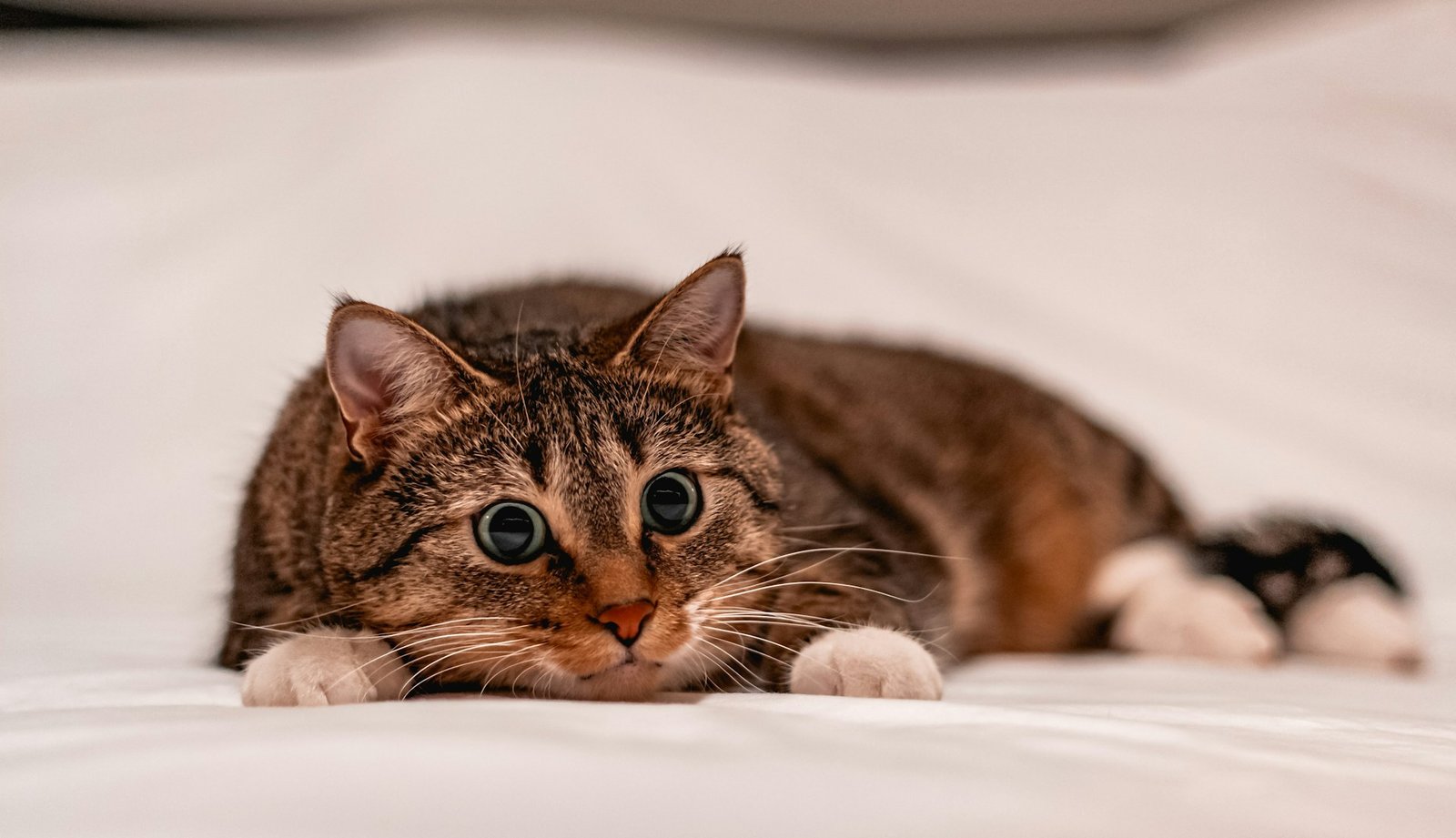
Researchers have developed validated pain assessment tools for cats based on facial expression — the Feline Grimace Scale (FGS). Pain-related facial changes include:
- Orbital tightening — the eyes appear partially closed or squinted rather than fully open
- Ear position changes — ears flattened or rotated outward and downward rather than upright and forward
- Whisker position changes — whiskers pulled back flat against the face or pushed rigidly forward
- Muzzle tension — tension around the muzzle and cheeks, giving the face a tighter appearance
- Head position — head lowered below the level of the shoulders
A cat with normal, relaxed facial expression — wide open eyes, ears forward, soft whiskers — is unlikely to be in significant pain. A cat with multiple of these changes is likely uncomfortable.
Sign 4 — Reduced Activity and Mobility Changes
A cat in pain conserves movement. Signs include:
- Reluctance to jump — onto furniture, cat trees, or windowsills they previously used freely
- Slower movement — moving more carefully and deliberately than usual
- Stiffness — particularly visible when rising from rest, or in the first few steps after lying down
- Changes in posture — a hunched, rounded back posture rather than their usual relaxed position
- Avoiding stairs — choosing to stay on one level when they previously used the whole house
These mobility changes are classic signs of musculoskeletal pain — arthritis, injury, and dental pain that makes movement painful when eating at floor level.
Sign 5 — Aggression or Personality Changes
A cat that has never been aggressive suddenly biting, hissing, or scratching — particularly when touched in a specific area — is almost certainly in pain in that location. This is called pain-induced aggression and it is one of the most reliable indicators of localised pain.
Conversely, some cats in pain become unusually clingy and attention-seeking — seeking warmth and physical comfort from their owner more than normal.
Any sudden change in personality — a friendly cat becoming withdrawn, or a typically independent cat becoming unusually needy — is always worth investigating.
Sign 6 — Changes in Litter Box Behaviour
Pain significantly affects litter box use. Watch for:
- Avoiding the litter box — pain when climbing in or squatting may cause a cat to go elsewhere
- Crying or vocalising in the litter box — this is one of the few times a cat in pain will verbalise, and almost always indicates urinary or bowel pain
- Posture changes while toileting — standing rather than squatting, or squatting in an unusual position
- Incomplete elimination — spending a long time in the box but producing very little
- Frequent attempts with no result — strongly suggests urinary blockage, which is a veterinary emergency
Any change in litter box behaviour should be taken seriously. For more on litter box management, read our guide on best automatic litter box — an automatic litter box also lets you monitor elimination frequency easily.
Sign 7 — Changes in Eating and Drinking
Pain — particularly dental pain, abdominal pain, and nausea — directly affects appetite and eating behaviour.
Signs to watch for:
- Reduced appetite or complete refusal to eat — any cat not eating for more than 24–48 hours needs a vet visit
- Dropping food from the mouth — a classic sign of dental pain
- Eating on one side only — suggests pain on the other side of the mouth
- Approaching the food bowl then walking away — wanting to eat but pain preventing it
- Changes in water intake — dramatically increased or decreased drinking can signal underlying conditions causing pain
For more on appetite changes, read our guide on why is my cat not eating.
Sign 8 — Vocalisation Changes
While cats typically do not cry out from chronic pain, certain vocal changes are associated with pain:
- Increased vocalisation at night — particularly in senior cats, which can signal pain, cognitive dysfunction, or hypertension
- Growling or hissing when touched — acute pain response to pressure on an affected area
- Yowling in the litter box — urinary pain or obstruction
- Unusual purring — cats purr when stressed or in pain as well as when content. Purring alone does not mean a cat is comfortable. A cat purring while also showing other pain signs is not purring from contentment
Sign 9 — Breathing Changes
Pain — particularly chest pain, abdominal pain, or severe systemic pain — affects how a cat breathes:
- Rapid, shallow breathing — can indicate significant pain or respiratory distress
- Open-mouth breathing in a cat at rest — almost never normal in cats and requires immediate veterinary attention
- Laboured breathing or visible chest wall movement — emergency
- Altered respiratory rate — normal resting respiratory rate in cats is 20–30 breaths per minute. Count over 30 seconds and double. Above 40 at rest warrants urgent investigation
Sign 10 — Abnormal Posture and Body Position
How a cat holds their body when resting reveals a great deal about their comfort level:
- Hunched posture — a rounded back with the head lowered and paws tucked under the body tightly. This “loaf” position with visible tension is different from a relaxed loaf
- Prayer position — front end lowered with back end elevated. Often associated with abdominal pain
- Reluctance to lie in their usual position — a cat that always slept on their side suddenly sleeping only in a hunched position
- Restlessness — inability to find a comfortable position, repeatedly shifting
Sign 11 — Eye Changes
The eyes reveal significant information about pain:
- Dilated pupils — persistent dilation unrelated to light levels can indicate pain or fear
- Squinting or partial closure — painful eyes, headache, or general pain discomfort
- Glazed or dull appearance — a cat in significant pain often has eyes that appear less bright and alert than normal
- Unequal pupil size — requires immediate veterinary attention
Sign 12 — Changes in Sleep Patterns
Cats normally sleep 12–16 hours per day. Pain disrupts normal sleep patterns:
- Sleeping significantly more than usual — pain is exhausting. A cat spending 18–20+ hours sleeping may be unwell
- Restless sleep — frequently changing position, appearing unable to settle
- Sleeping in unusual locations — avoiding their normal sleeping spot may indicate it is painful to reach or uncomfortable to lie in
- Sleeping in a tightly curled, guarded position — rather than their normal relaxed spread
Pain by Body Area — What to Look For
Head and Mouth Pain
Dental disease is one of the most common and most painful conditions in cats — affecting an estimated 50–90% of cats over 3 years old. Yet it is almost always silent until severe.
Signs of mouth or dental pain specifically:
- Pawing at the mouth or face
- Dropping food while eating
- Eating on one side only
- Drooling more than usual
- Bad breath (beyond normal cat breath)
- Reluctance to eat hard food or treats
- Facial swelling
If your cat’s teeth hurt, read our guide on how to tell if your cat is sick for more on dental warning signs.
Abdominal Pain
Abdominal pain in cats is common and has many causes — from constipation to bladder stones to intestinal obstruction to pancreatitis.
Signs of abdominal pain:
- Hunched or prayer posture
- Sensitivity or flinching when the belly is touched
- Reluctance to be picked up
- Reduced appetite
- Constipation or diarrhoea
- Vomiting
- Distended or visibly swollen abdomen — emergency
Joint and Musculoskeletal Pain
Arthritis affects an estimated 90% of cats over 12 years old — yet is diagnosed in fewer than 5% of senior cats because the signs are so subtle.
Signs of joint pain:
- Stiffness when rising
- Reluctance to jump or climb
- Reduced grooming of difficult-to-reach areas
- Muscle wasting — visible over the spine and hindquarters
- Reduced activity overall
- Sensitivity when the affected joint area is touched
For more on senior cat health, read our guide on how long do cats live which covers age-related conditions in detail.
Urinary Pain
Urinary pain is common in cats — from simple urinary tract infections to life-threatening urethral blockages in male cats.
Signs of urinary pain:
- Frequent trips to the litter box with little production
- Vocalising in the litter box
- Blood in urine
- Going outside the litter box
- Overgrooming the genital area
- Straining with no urine produced — EMERGENCY, especially in male cats
A male cat that is straining to urinate with no production is a veterinary emergency — urethral blockage can be fatal within 24–48 hours without treatment.
The Feline Grimace Scale — A Simple Pain Assessment Tool
Developed by researchers at the University of Montreal, the Feline Grimace Scale (FGS) is a validated tool for assessing pain in cats based on five facial action units. Each is scored 0 (absent), 1 (moderate), or 2 (obvious):
| Facial Action Unit | 0 — Absent | 1 — Moderate | 2 — Obvious |
|---|---|---|---|
| Orbital tightening | Eyes wide open | Partially open | Squinting or closed |
| Ear position | Forward, upright | Slightly flattened | Flat against head |
| Muzzle tension | Relaxed, rounded | Mild tension | Tense, angular |
| Whisker position | Relaxed, sideways | Slightly forward | Rigidly forward or back |
| Head position | Level or above shoulders | Below shoulders level | Well below shoulders |
A total score of 4 or above (out of 10) indicates pain requiring veterinary attention. This is a tool used by vets but owners can use it as a helpful framework when assessing their cat at home.
Is My Cat Suffering? When to Act Immediately
Some signs of pain require emergency veterinary care — do not wait for a routine appointment:
| Sign | Action |
|---|---|
| Open-mouth breathing at rest | Emergency vet immediately |
| Male cat straining to urinate with no output | Emergency vet immediately |
| Sudden paralysis or inability to use back legs | Emergency vet immediately |
| Visible trauma — hit by car, fall from height | Emergency vet immediately |
| Distended, hard abdomen | Emergency vet immediately |
| Collapse or extreme weakness | Emergency vet immediately |
| Continuous vocalisation from pain | Same-day vet visit |
| Not eating for more than 48 hours | Vet within 24 hours |
| Hiding combined with other pain signs | Vet within 24–48 hours |
How Pain Is Assessed and Treated by Vets
When you bring a cat in for pain assessment, your vet will typically:
- Take a detailed history of the changes you have observed and when they started
- Perform a full physical examination including palpating the abdomen, joints, and spine
- Assess facial expression and response to gentle pressure over different areas
- Take blood and urine samples to identify underlying causes
- Recommend X-rays, ultrasound, or other imaging if musculoskeletal or internal pain is suspected
Pain treatment depends entirely on the cause. Options include:
- NSAIDs for cats — meloxicam is the most commonly used NSAID for cats and is very effective for inflammatory and joint pain. Must be used only as prescribed — never give human NSAIDs (ibuprofen, aspirin, naproxen) to cats as they are severely toxic.
- Gabapentin — for neuropathic and chronic pain. Read our guide on gabapentin for dogs — the same medication is used in cats under vet supervision.
- Buprenorphine — a partial opioid used for moderate to severe acute pain in cats
- Joint supplements — glucosamine, chondroitin, and omega-3 for arthritis management
- Environmental modifications — ramps, low-sided litter boxes, raised food bowls for arthritic cats
How Pet Insurance Helps With Unexpected Pain
One of the most common reasons owners delay seeking veterinary care for a cat in pain is cost. Diagnostic workups — bloodwork, X-rays, ultrasound — can run $500 to $1,500 before treatment even begins. Specialist care and surgery can run into thousands.
Pet insurance changes this calculation entirely — covering the majority of unexpected veterinary costs so you can act on pain signs immediately without financial hesitation.
For a complete guide to protecting your pet financially, read our guide on best pet insurance for dogs in the USA — the same providers cover cats and the same principles apply.
Frequently Asked Questions
How can I tell if my cat is in pain? The most reliable signs are changes in behaviour — hiding more, grooming changes, reduced activity, reluctance to jump, changes in appetite, and litter box behaviour changes. Facial expression changes (squinting, flattened ears, muzzle tension) are also reliable indicators. Cats rarely vocalise from chronic pain.
Do cats purr when they are in pain? Yes — cats purr when stressed or in pain as well as when content. Purring is a self-soothing behaviour. A cat purring while also showing other pain signs (hiding, not eating, abnormal posture) should be assessed by a vet.
How can I tell if my cat has a toothache? Signs of dental pain include dropping food from the mouth, eating on one side only, pawing at the face, drooling, bad breath, and reluctance to eat hard food or be touched on the face. Dental pain is extremely common in cats and almost always requires veterinary dental treatment.
How do I know if my old cat is in pain? Senior cats are prone to arthritis, kidney disease, dental disease, and hyperthyroidism — all of which cause pain or discomfort. Signs specific to older cats include stiffness when rising, muscle wasting, reduced grooming, increased vocalisation at night, and changes in social behaviour. Twice-yearly vet visits for senior cats allow early detection.
Can cats hide pain completely? Cats are extremely effective at hiding pain — this is why the signs are subtle behavioural changes rather than obvious distress. However, they cannot hide it completely. The 12 signs in this guide — particularly behavioural and postural changes — are visible to an observant owner.
What should I do if I think my cat is in pain? Contact your vet. Do not give your cat any human pain medication — paracetamol, ibuprofen, aspirin, and naproxen are all severely toxic to cats. Even a small amount of paracetamol (acetaminophen) can be fatal to a cat.
Conclusion
How to tell if your cat is in pain is about knowing what to look for — and most of it is not what you would expect. Cats in pain do not usually cry or limp dramatically. They hide, they groom differently, their face changes subtly, they stop jumping, they eat less, and they sleep more.
The 12 signs in this guide are your toolkit for catching pain early — before it becomes severe, before it causes lasting damage, and while it is most treatable. If your cat shows several of these signs, do not wait to see if they improve. Book a vet appointment and let a professional assess what is happening.
For more cat health advice, read our guides on how to tell if your cat is sick, why is my cat losing weight, and how long do cats live.
Never give your cat human pain medication. Paracetamol, ibuprofen, aspirin, and naproxen are all severely toxic to cats and can be fatal even in small doses. Always consult your vet for pain management.
Also read: How to Tell If Your Cat Is Sick | Why Is My Cat Losing Weight? | Why Is My Cat Not Eating? | How Long Do Cats Live? | Best Automatic Litter Box