


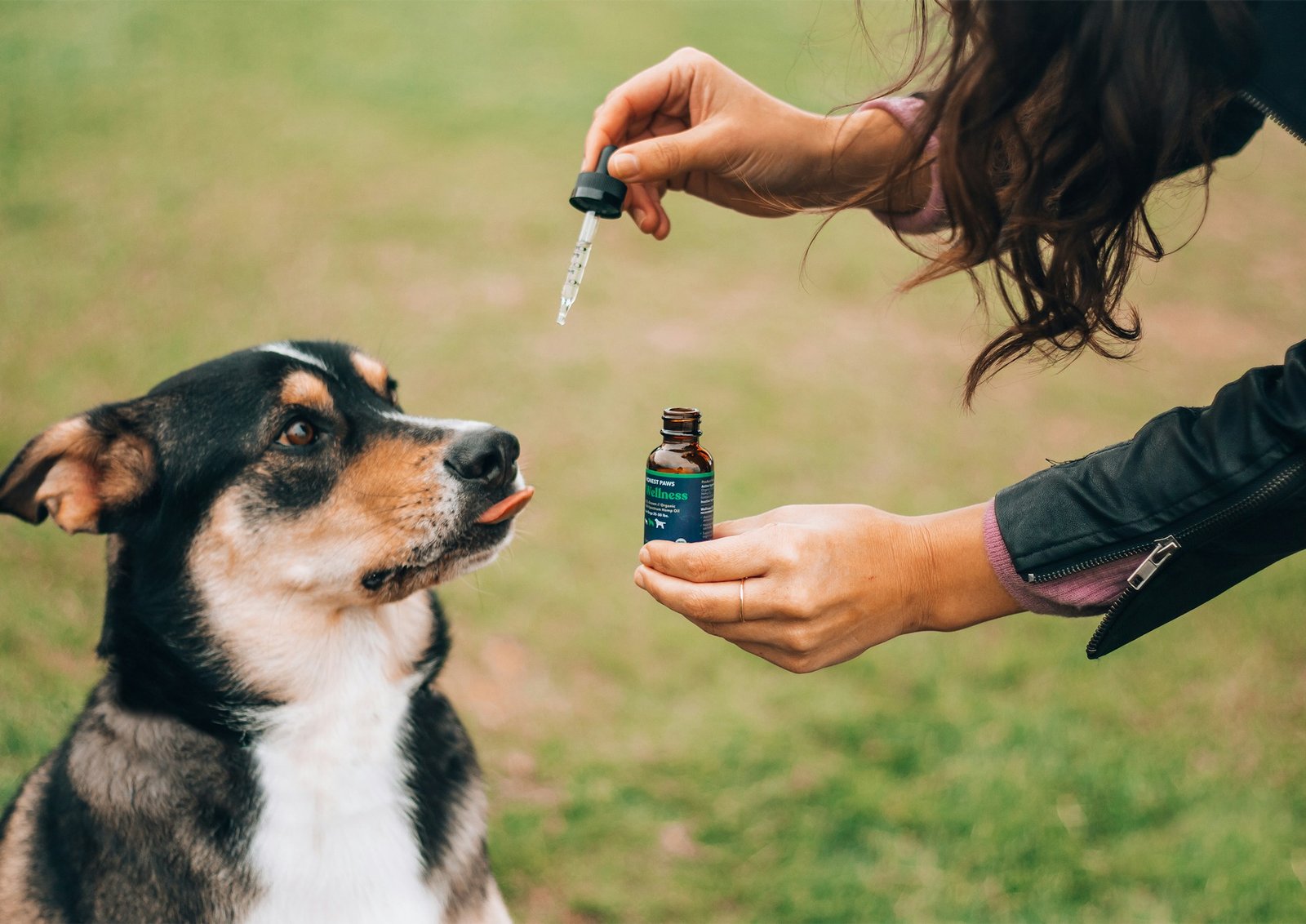

You have seen it everywhere — CBD oil for dogs marketed as a solution for anxiety, pain, seizures, and inflammation. But with so many bold claims and so little regulation, it is hard to know what is real and what is marketing.
CBD oil for dogs is one of the fastest-growing segments in the pet industry. Sales have increased dramatically since 2019, and many dog owners report genuine improvements in their dogs’ anxiety, pain, and quality of life. But the science is still catching up with the market — and there are important things every dog owner needs to understand before trying it.
This guide covers what CBD actually is, what the research says, what it may genuinely help with, what to look for in a quality product, and — most importantly — why your vet should always be part of the decision.
Important: This article is for general informational purposes only. Always consult your veterinarian before giving your dog CBD oil or any new supplement. CBD can interact with medications and is not appropriate for all dogs.
What Is CBD Oil for Dogs?
CBD (cannabidiol) is a naturally occurring compound found in the hemp plant — a variety of Cannabis sativa that contains less than 0.3% THC (tetrahydrocannabinol). THC is the psychoactive compound that causes intoxication. CBD does not cause a high.
CBD for dogs is typically extracted from hemp plants, mixed with a carrier oil (usually hemp seed oil or MCT coconut oil), and sold as a tincture, capsule, or treat.
The critical distinction: CBD from hemp (less than 0.3% THC) is legal in the USA under the 2018 Farm Bill. Products made from marijuana-derived CBD contain higher THC levels and are not safe for dogs — THC is toxic to dogs even in small amounts.
Always confirm any CBD product for your dog is derived from hemp, not marijuana, and contains less than 0.3% THC.
How Does CBD Work in Dogs?
Dogs — like humans — have an endocannabinoid system (ECS). This is a network of receptors throughout the body that regulates mood, pain perception, inflammation, immune function, and sleep. The ECS has two main types of receptors: CB1 (primarily in the brain and nervous system) and CB2 (primarily in the immune system and peripheral tissues).
CBD interacts with the endocannabinoid system by influencing these receptors — not by binding to them directly like THC, but by modulating their activity. The result is a range of potential effects including reduced inflammation, calmer nervous system response, and altered pain perception.
Because dogs have a more extensive endocannabinoid system than humans — with more CB1 receptors particularly — they may be more sensitive to cannabinoids than people. This is why THC is dangerous for dogs at much lower doses than for humans, and also why CBD may have meaningful effects at relatively low doses.
What Does the Research Actually Say?
This is where honesty matters. The research on CBD for dogs is promising but still limited. Here is what the science currently shows:
What Is Supported by Research
Arthritis and pain: A 2018 study published in Frontiers in Veterinary Science (Cornell University) found that dogs with osteoarthritis given 2 mg/kg of CBD twice daily showed significant decreases in pain scores and increases in mobility compared to placebo. This is the most cited and well-designed study in canine CBD research to date.
Epilepsy and seizures: A 2019 Colorado State University study found that 89% of dogs with epilepsy that received CBD had a reduction in seizure frequency. However, the reduction was modest and not all dogs responded. CBD is not a replacement for prescribed seizure medication but may be a useful add-on therapy under vet supervision.
Safety profile: Multiple studies have confirmed that CBD is generally well-tolerated by dogs at appropriate doses, with the most common side effects being increased liver enzyme levels (ALP) at higher doses and mild sedation.
What Is Not Yet Well-Supported
Anxiety: While many owners report improvements in their dogs’ anxiety with CBD, the research specifically on canine anxiety is limited. One small study showed some improvement in noise phobia, but larger, better-controlled studies are needed. The anecdotal evidence from dog owners is substantial — but anecdotal evidence is not the same as clinical proof.
Cancer: There is early laboratory research suggesting CBD may have anti-tumour properties, but there are no peer-reviewed clinical studies in dogs confirming this. Do not use CBD as a cancer treatment without veterinary guidance.
General wellness: CBD marketed for general wellness, immune support, or longevity in dogs has essentially no peer-reviewed research supporting these specific claims.
The honest summary: CBD has genuine, research-supported benefit for canine arthritis pain and may have utility for epilepsy as an add-on therapy. For anxiety and other conditions, the evidence is promising but not yet definitive.
What Can CBD Oil Help With in Dogs?
Based on current research and widespread veterinary and owner experience, CBD may genuinely help with:
Arthritis and Joint Pain
The Cornell study provides solid evidence that CBD reduces pain and improves mobility in arthritic dogs. For senior dogs with chronic joint pain who cannot tolerate NSAIDs long-term, CBD represents a genuinely promising option to discuss with your vet.
For more on managing pain in senior dogs, read our complete guide on how to care for a senior dog.
Anxiety and Stress
Many dog owners report significant improvements in anxiety-related behaviours — separation anxiety, noise phobia, situational anxiety at the vet or grooming — with CBD. The calming effect appears real based on owner reports and the known mechanism of CBD on the nervous system, even if the clinical research is not yet conclusive.
CBD works best for anxiety as a complement to behaviour modification, not a replacement for it. For a full guide to managing dog anxiety, read our guide on dog anxiety.
Seizure Frequency
For dogs with epilepsy, CBD as an add-on to existing medication may reduce seizure frequency. This must always be done under veterinary supervision — never replace prescribed seizure medication with CBD.
Inflammation
CBD has well-documented anti-inflammatory properties. Dogs with inflammatory conditions — IBD, skin allergies, inflammatory joint disease — may benefit from CBD’s effect on inflammatory pathways.
Nausea and Appetite
CBD may reduce nausea and stimulate appetite in dogs that are struggling to eat — particularly those on medications that cause nausea or dogs with cancer-related appetite loss.
End-of-Life Comfort
Many veterinary oncologists and palliative care vets now recommend CBD as part of end-of-life comfort care for dogs, particularly for pain management and anxiety reduction when a dog is in their final weeks or months.
Is CBD Safe for Dogs?
Based on current research, CBD is generally safe for dogs when:
- It is derived from hemp (not marijuana)
- It contains less than 0.3% THC
- It is dosed appropriately for the dog’s weight
- It is used under veterinary supervision
Side Effects of CBD in Dogs
The most commonly reported side effects include:
Sedation — CBD has a calming effect that can manifest as mild sedation, particularly at higher doses. Most dogs adjust after a few days.
Dry mouth — CBD may reduce saliva production, causing increased thirst. Ensure fresh water is always available.
Lowered blood pressure — at high doses, CBD can cause a brief drop in blood pressure, which may manifest as brief light-headedness.
Elevated liver enzymes (ALP) — the most significant finding in studies. CBD at higher doses can increase alkaline phosphatase levels. This does not always indicate liver damage, but dogs on long-term CBD should have periodic liver function monitoring through bloodwork.
Diarrhoea — some dogs experience loose stools when first starting CBD, particularly at higher doses. Starting with a low dose and building up gradually reduces this.
When CBD Is Not Recommended
- Dogs on blood-thinning medications — CBD can affect how these drugs are metabolised
- Dogs with liver disease — CBD is metabolised by the liver
- Pregnant or nursing dogs
- Puppies under 12 months — insufficient research on developing dogs
- Dogs on seizure medication — without vet guidance on dose adjustment
This is why consulting your vet before starting CBD is not just a legal disclaimer — it is genuinely important medical guidance.
What to Look for in a Quality CBD Oil for Dogs
The CBD pet product market is almost entirely unregulated. There is no FDA approval for CBD dog products, and independent testing has found that many products contain significantly more or less CBD than labelled, and some contain detectable THC levels. Choosing a quality product requires due diligence.
Third-Party Lab Testing (COA)
This is the single most important quality indicator. A Certificate of Analysis (COA) from an independent third-party laboratory confirms:
- The actual CBD content matches the label
- THC content is below 0.3%
- No pesticides, heavy metals, or solvents are present
Never buy a CBD product for your dog that does not have a publicly available, current COA from an independent lab. Reputable brands make these easy to find on their website.
Full-Spectrum, Broad-Spectrum, or Isolate
Full-spectrum CBD contains all cannabinoids from the hemp plant including trace THC (under 0.3%), terpenes, and flavonoids. The “entourage effect” theory suggests these compounds work better together than CBD alone. Most effective option but contains trace THC.
Broad-spectrum CBD contains multiple cannabinoids and terpenes but with THC removed entirely. A good middle ground — some entourage benefit without any THC.
CBD isolate is pure CBD with nothing else. Predictable and THC-free but may be less effective than full or broad-spectrum options.
For dogs, broad-spectrum is generally the most recommended option — entourage effect benefit without THC risk.
Carrier Oil
CBD is fat-soluble and must be delivered in a carrier oil. Hemp seed oil and MCT (coconut) oil are both safe and effective. Avoid products using carrier oils not suitable for dogs.
Concentration and Dosing
CBD tinctures are sold in various concentrations — typically 150mg to 3000mg per bottle. Higher concentration means fewer drops needed per dose. Always calculate dosage by mg of CBD per kg of body weight, not by number of drops.
Organic and Non-GMO
Hemp is a bioaccumulator — it absorbs whatever is in the soil it grows in. Organic, non-GMO hemp grown in clean soil is significantly less likely to contain pesticides and heavy metals.
CBD Dosage for Dogs — General Guidelines
The following is general information only. Your vet should determine the appropriate dose for your specific dog based on their weight, condition, and any medications they are taking.
The most commonly cited starting dose in research is 1–2 mg of CBD per kg of body weight, given once or twice daily. Most experts recommend starting at the lower end and increasing gradually over 2–4 weeks while monitoring for effects and side effects.
| Dog Weight | Starting Dose (1 mg/kg) | Typical Therapeutic Dose (2 mg/kg) |
|---|---|---|
| 5 kg (11 lbs) | 5 mg | 10 mg |
| 10 kg (22 lbs) | 10 mg | 20 mg |
| 20 kg (44 lbs) | 20 mg | 40 mg |
| 30 kg (66 lbs) | 30 mg | 60 mg |
| 40 kg (88 lbs) | 40 mg | 80 mg |
Give CBD with food to increase absorption and reduce the chance of digestive upset. Effects for chronic conditions (arthritis, anxiety) may take 2–4 weeks of consistent dosing to become fully apparent.
CBD Dog Treats vs CBD Oil — Which Is Better?
CBD oil (tincture) is generally preferred over treats for several reasons:
- More precise dosing — you control exactly how many milligrams your dog receives
- Faster absorption when applied under the tongue (though most dogs require it mixed with food)
- No added ingredients that might not suit every dog
CBD treats are more convenient and most dogs take them readily without any persuasion. However:
- Dosing is less flexible — you are limited to the mg per treat
- The CBD may be less bioavailable as it passes through the digestive system
- Quality varies enormously across brands
For dogs with specific medical needs where precise dosing matters — epilepsy, serious pain management — CBD oil is the better choice. For general anxiety support and wellness use, high-quality CBD treats are a practical option.
What Vets Say About CBD for Dogs
Veterinary opinion on CBD has shifted significantly in recent years. Most vets in the USA and Canada now acknowledge the potential benefits — particularly for pain and anxiety — while appropriately noting the limitations of current research.
The American Veterinary Medical Association (AVMA) has called for more research and notes that while vets cannot legally prescribe CBD products (they are not FDA-approved drugs), they can discuss them with clients and provide guidance on use.
Many integrative and holistic vets actively recommend CBD as part of a comprehensive wellness or pain management plan. Conventional vets are generally more cautious but increasingly open to discussing it as an option.
The key is transparency with your vet — always tell them if your dog is taking CBD, particularly if they are also on prescription medications, as drug interactions can occur.
Frequently Asked Questions
Does CBD oil actually work for dogs? The research supports genuine benefit for arthritis pain and may benefit epilepsy as an add-on therapy. For anxiety, the evidence is promising but not yet conclusive through clinical trials. Many dog owners report significant improvements. The honest answer is: it works for some dogs and some conditions more clearly than others.
Is CBD safe for dogs? CBD derived from hemp (under 0.3% THC) is generally safe for dogs at appropriate doses. The most notable concern at higher doses is elevated liver enzyme levels. Always use third-party tested products and consult your vet before starting — especially if your dog is on any medication.
What is the best CBD oil for dogs? Look for broad-spectrum CBD from organic hemp, with a current third-party Certificate of Analysis confirming CBD content and THC levels. Reputable brands include Honest Paws, cbdMD Paws, and Medterra. Always prioritise third-party testing over marketing claims.
How long does CBD take to work in dogs? For acute situations (anxiety before a vet visit), CBD may take effect within 30–60 minutes. For chronic conditions like arthritis or generalised anxiety, consistent daily dosing for 2–4 weeks is typically needed before full benefit is apparent.
Can CBD make my dog high? No — hemp-derived CBD with less than 0.3% THC will not make your dog high. THC is what causes intoxication and is toxic to dogs. Always confirm the product you use is hemp-derived and third-party tested for THC content.
Should I ask my vet before giving my dog CBD? Yes — always. This is not just a legal disclaimer. CBD can interact with medications your dog may be taking, is not appropriate for dogs with certain conditions, and your vet can help you choose an appropriate product and dose. Be transparent with your vet about any supplements your dog takes.
Conclusion
CBD oil for dogs is not snake oil — the research, while still developing, supports real benefit for canine arthritis pain and shows promise for anxiety and epilepsy. For many dogs, particularly seniors with chronic pain or dogs with anxiety disorders that have not fully responded to other approaches, CBD represents a genuinely worthwhile option to explore with your vet.
The key principles: always use third-party tested broad-spectrum hemp CBD, start at a low dose and increase gradually, tell your vet, and monitor your dog for any changes — positive or negative. Used correctly, CBD can be a valuable part of a comprehensive wellness or pain management plan for the right dog.
For more dog health advice, read our guides on how to care for a senior dog, dog anxiety, and gabapentin for dogs.
This article is for general informational purposes only and does not constitute veterinary medical advice. Always consult a licensed veterinarian before giving your dog CBD oil or any new supplement. Individual dogs respond differently and drug interactions are possible.
Also read: How to Care for a Senior Dog | Dog Anxiety — Signs, Causes and Treatments | Gabapentin for Dogs | Best Probiotics for Dogs | Best Pet Insurance for Dogs in the USA